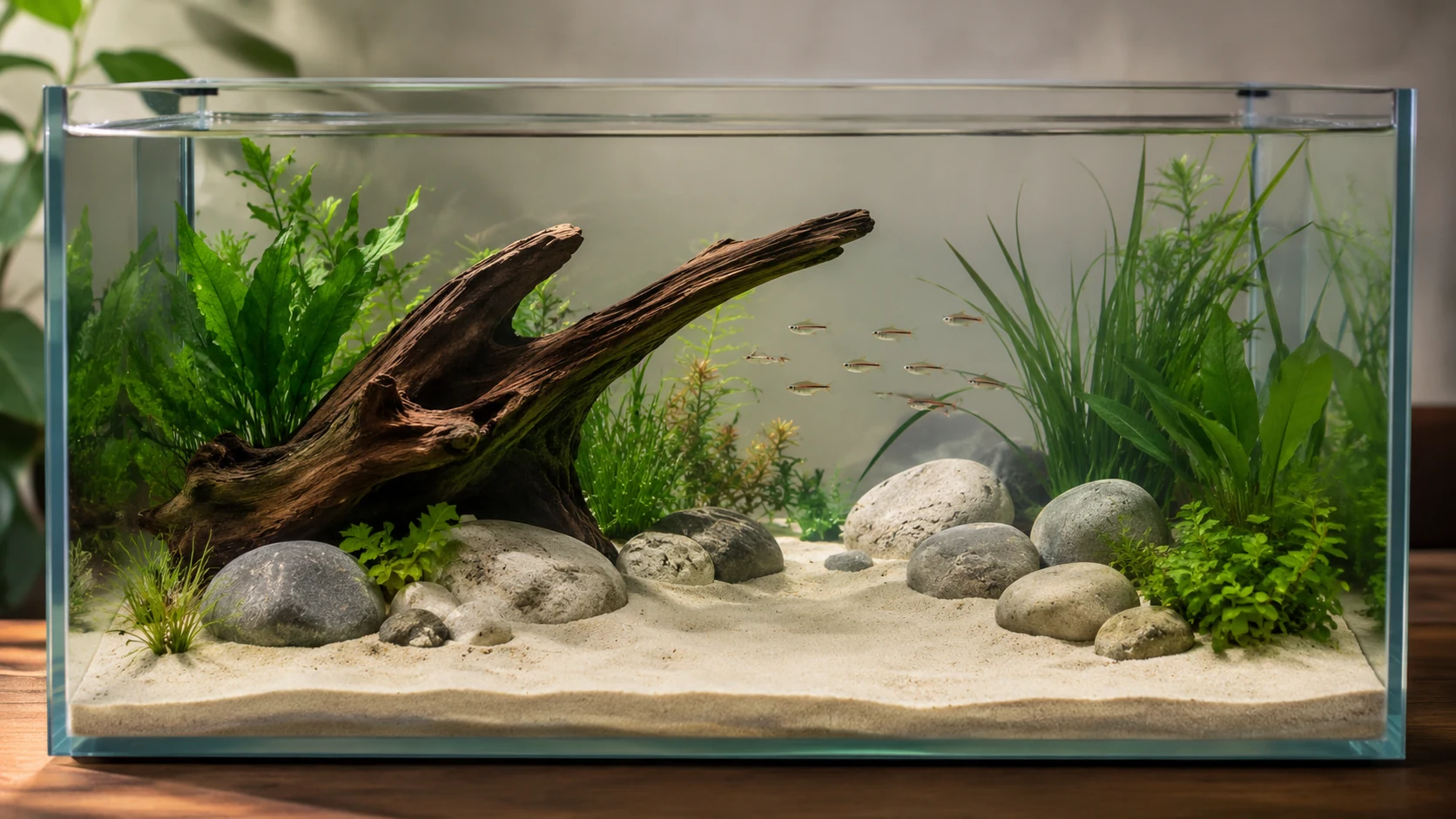
Substrate and decor are not just design choices.
They decide where waste collects, whether bottom fish can feed safely, whether plants root well, whether shrimp can graze, and whether you can clean the tank without triggering a hidden mess. A beautiful aquascape that traps rotting food under sharp rocks is not a healthy aquarium. It is a slow water-quality problem with nice lighting.
The safest aquarium layout is not the fanciest one. It is the one your fish can live in and you can maintain consistently.
Substrate and decor at a glance
| Choice | Best use | Main risk |
|---|---|---|
| Bare-bottom | Quarantine, goldfish, breeding, messy fish | Looks plain; little plant rooting |
| Smooth sand | Corydoras, goldfish, natural look | Can compact if neglected |
| Fine rounded gravel | Easy beginner tanks, many plants | Traps food if too deep or dirty |
| Coarse gravel | Some decorative tanks | Food traps, bad for small bottom fish |
| Sharp rock/crushed gravel | Usually avoid | Mouth/barbel injury |
| Wood | Natural cover, tannins, biofilm | Must be aquarium-safe |
| Plastic decor | Easy layout | Sharp edges, paint, trapped debris |
| Dense hardscape | Natural look | Dead spots and inaccessible waste |
Start with the fish, not the look
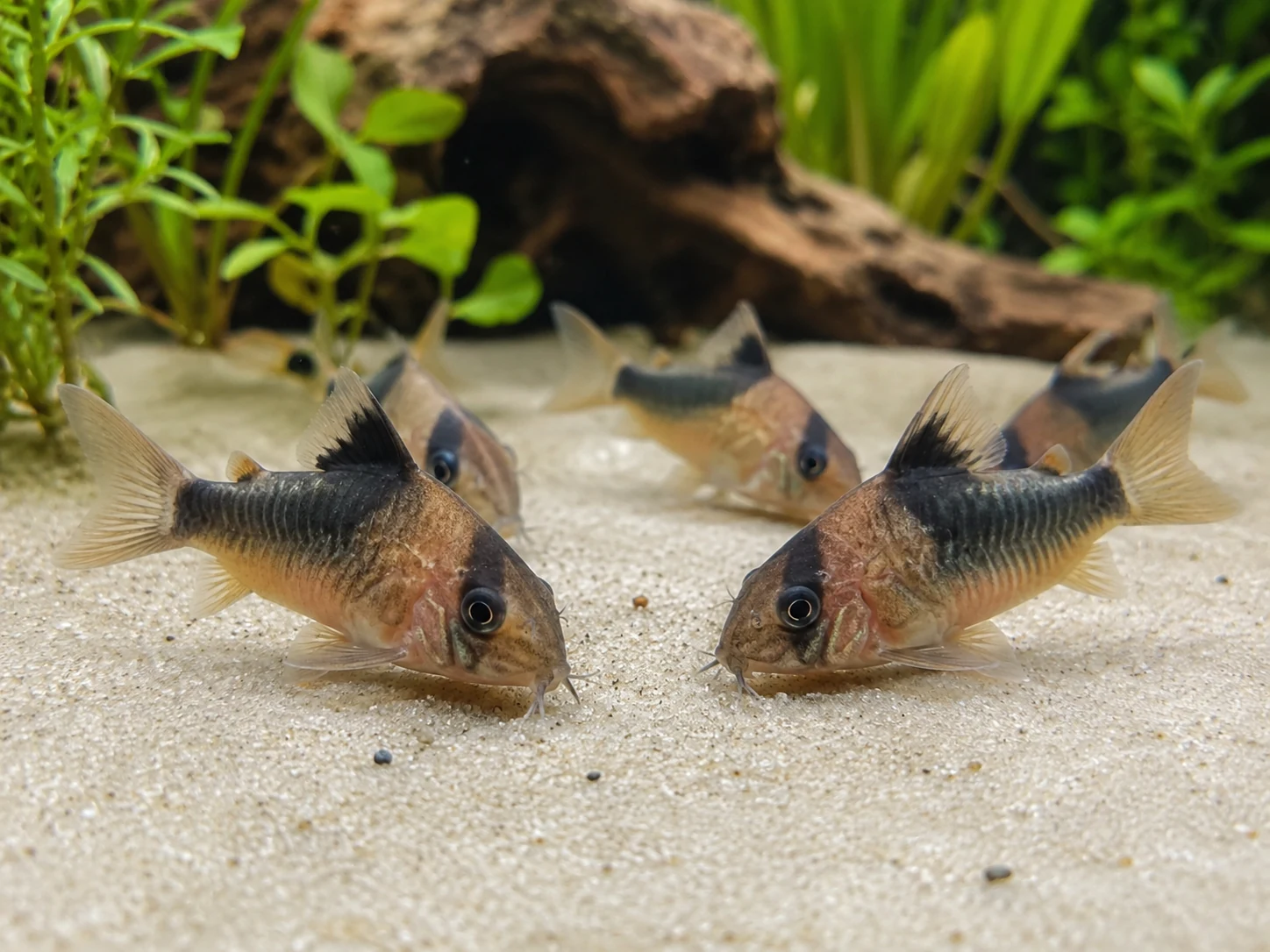
The first question is not “what looks best?” It is “how does this animal use the bottom?”
Corydoras sift sand. Goldfish mouth substrate. Shrimp graze surfaces. Loaches dig and squeeze under objects. Bettas rest on leaves and avoid sharp fins hazards. Fish with delicate fins can tear themselves on rough plastic plants or jagged rocks.
Technical action: match substrate and decor to animal behavior.
Danger/trap: copying an aquascape without considering the species can injure fish or create maintenance problems.
Safe process: list the fish’s feeding level, mouth behavior, digging behavior, fin shape, and adult size before choosing substrate.
Bare-bottom tanks are not ugly mistakes
Bare-bottom tanks are practical. They are especially useful for quarantine, breeding, fry, hospital tanks, and messy fish such as goldfish.
Advantages:
- waste is easy to see;
- siphoning is simple;
- no hidden gravel debris;
- safer for treatment and observation;
- useful for fish that produce heavy waste.
Disadvantages:
- less natural appearance;
- fewer rooting options for plants;
- less surface area than substrate;
- some fish feel more secure with a darker bottom or cover.
Bare-bottom is a tool. Use it when function matters more than appearance.
Sand: natural but not maintenance-free
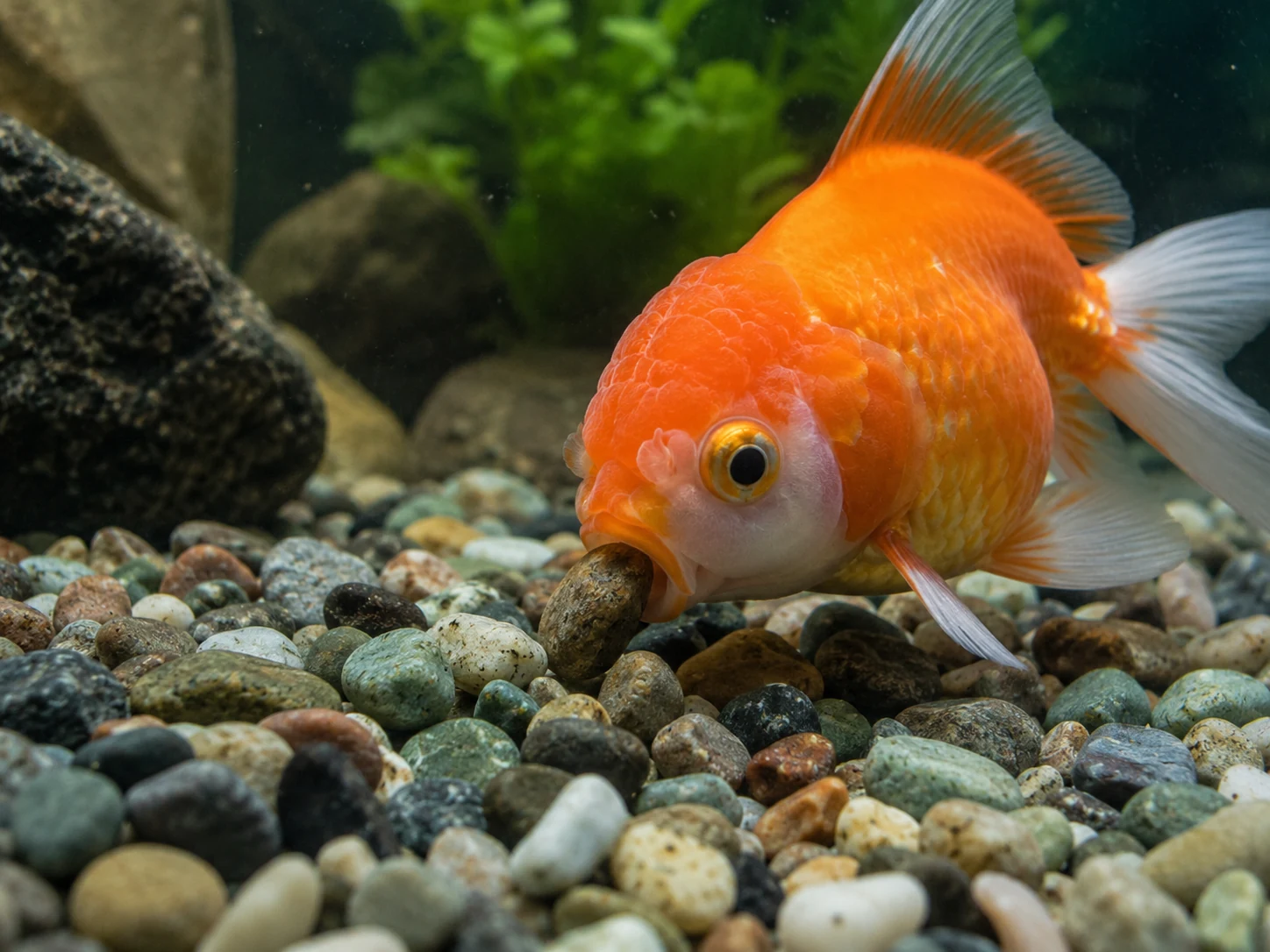
Smooth sand can be excellent for Corydoras, loaches, goldfish, and many natural aquariums. But sand still needs management.
The danger is compaction and buried organic debris. Deep neglected sand can create low-oxygen pockets where anaerobic processes occur. The biggest mistake is not that sand exists. The mistake is ignoring it for months and then stirring the whole bed aggressively.
Technical action: keep sand shallow and clean.
Danger/trap: deep-stirring old sand can release foul trapped water and debris into the tank.
Safe process: keep beginner sand beds modest, usually around 1–2 inches unless you are intentionally managing a planted system. During water changes, hover the siphon just above the surface to lift waste. If you must disturb a suspicious pocket, disturb only a small area while siphoning directly at that point so the dirty water leaves the tank.
If you smell rotten eggs, stop stirring broadly. Siphon locally, add aeration, and proceed gradually.
The deep-bed hazard: hydrogen sulfide pockets
Fine sand and planted substrates are useful, but depth changes the biology of the substrate.
When beginners pile fine substrate very deep to create dramatic slopes, water movement and oxygen exchange can drop in the lowest layers. In oxygen-poor zones, organic debris may decompose differently. In neglected deep beds, this can create foul anaerobic pockets, sometimes associated with hydrogen sulfide, the “rotten egg” smell aquarists worry about.
This does not mean every sand tank is dangerous. It means deep, dirty, compacted substrate should be designed and maintained deliberately.
Technical action: control substrate depth and structure.
Danger/trap: a deep bed of fine substrate over trapped organic waste can develop low-oxygen pockets. Disturbing a large neglected area all at once can release foul water and stress fish.
Safe process: for most beginner tanks, keep sand or fine substrate around 1–2 inches / 2.5–5 cm where possible. If you need a deeper rear slope, build the height with porous lava rock in mesh bags or stable hardscape first, then cap with a thinner substrate layer. This keeps the lower structure more open and reduces the amount of compacted fine material. If you ever smell rotten eggs, do not stir the whole tank. Siphon a small localized area directly at the disturbance point and increase aeration.
Gravel: easy until it becomes a food trap
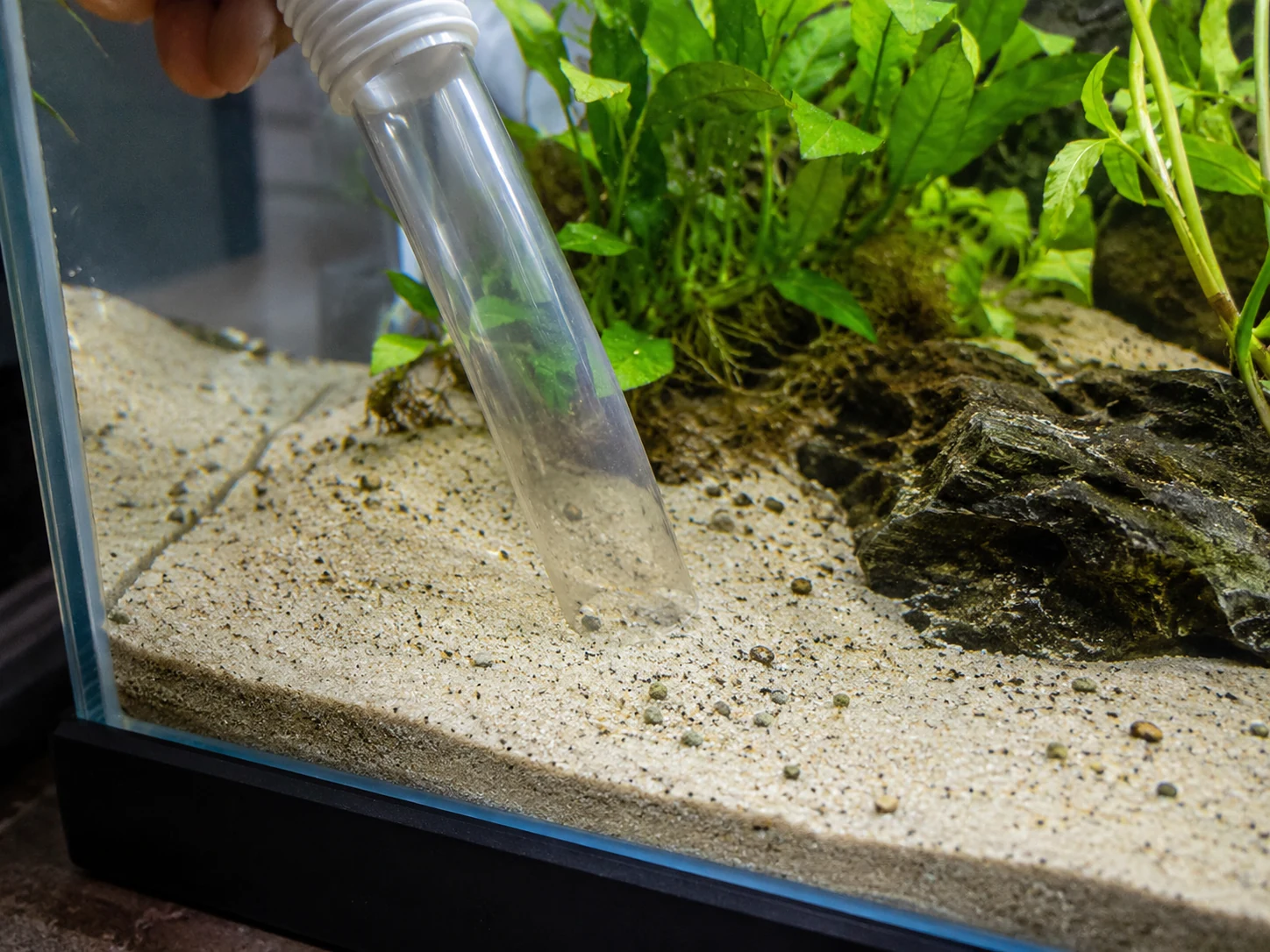
Rounded fine gravel is forgiving in many beginner tanks. It is heavy enough not to fly into the siphon as easily as sand and easy to plant in.
But gravel spaces trap food, fish waste, plant leaves, and mulm. That trapped material breaks down into ammonia and nitrate over time.
Technical action: vacuum gravel regularly.
Danger/trap: pushing debris deep into gravel while cleaning decor can turn the substrate into a hidden waste bank.
Safe process: during regular water changes, use a gravel siphon in open areas. Do not uproot the whole tank every week. Clean sections gradually so the tank stays stable.
Avoid gravel that is sharp, metallic-looking, painted poorly, or sized perfectly for fish to swallow.
Decor safety checklist
Before putting anything in a tank, ask:
- Is it aquarium-safe?
- Are there sharp edges?
- Can a fish get stuck inside it?
- Can water flow around it?
- Can I clean behind or under it?
- Will it change pH, hardness, or water chemistry?
- Is it painted, coated, glued, or unknown?
Ceramic aquarium caves can be useful. Smooth natural stones can be safe if inert. Driftwood can add cover and biofilm. Plastic plants can work, but silk or soft plants are safer for long fins.
Unknown outdoor rocks, shells, metal objects, painted toys, and household decorations are not safe by default.
The trapped-fish problem
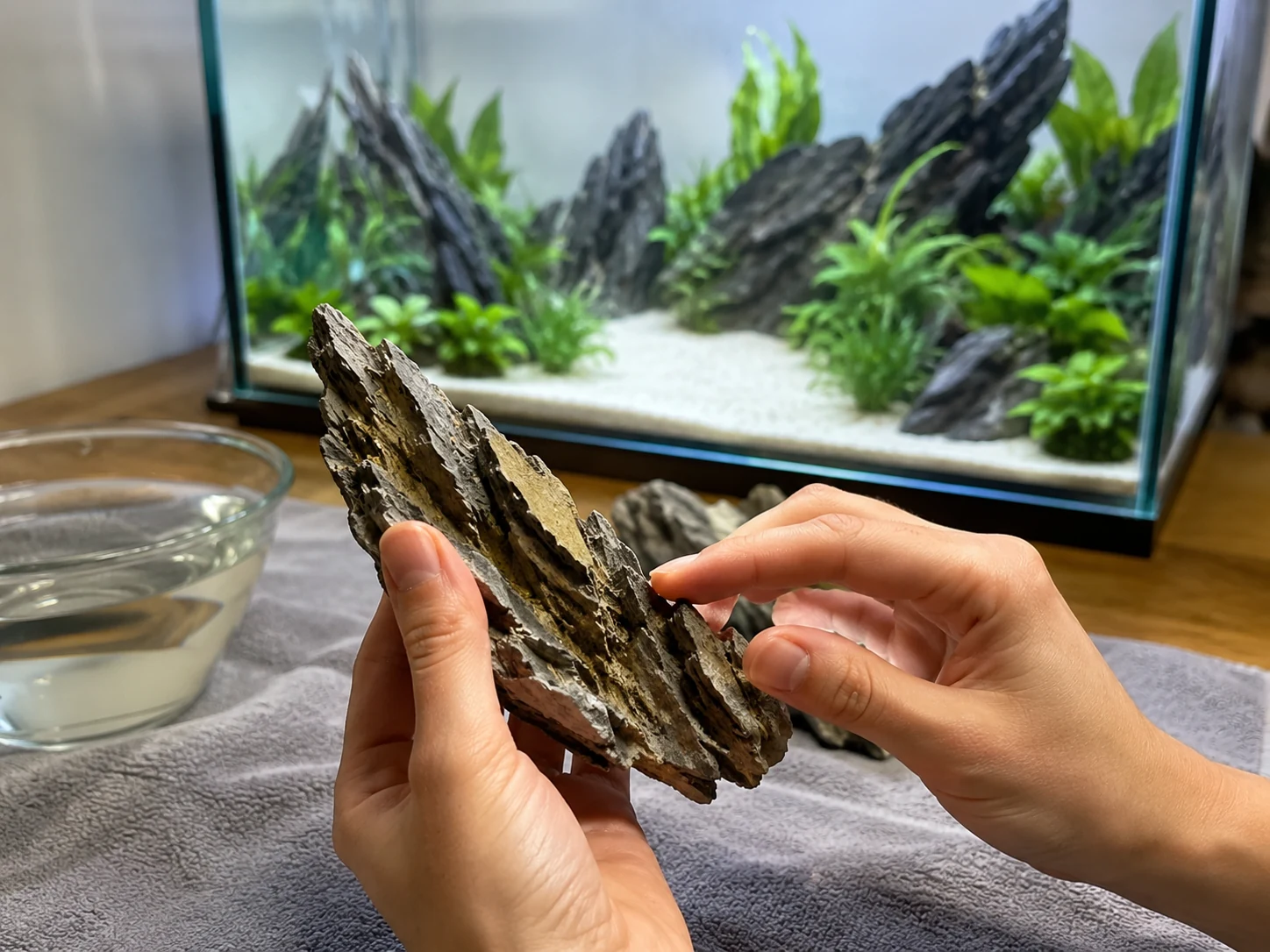
Fish do not understand that a hole is decorative.
Small fish can wedge into ornaments. Bettas can tear fins on rough plastic. Goldfish can get stuck in tight caves. Loaches can force themselves under unstable rocks. Shrimp and fry can disappear into filter compartments or decor cracks.
Technical action: inspect every opening.
Danger/trap: if a fish can enter a hole but not turn around, it may become a trap.
Safe process: choose simple caves with wide openings, smooth interiors, and no narrow dead ends. Stabilize rocks so digging fish cannot collapse them.
Decor and flow
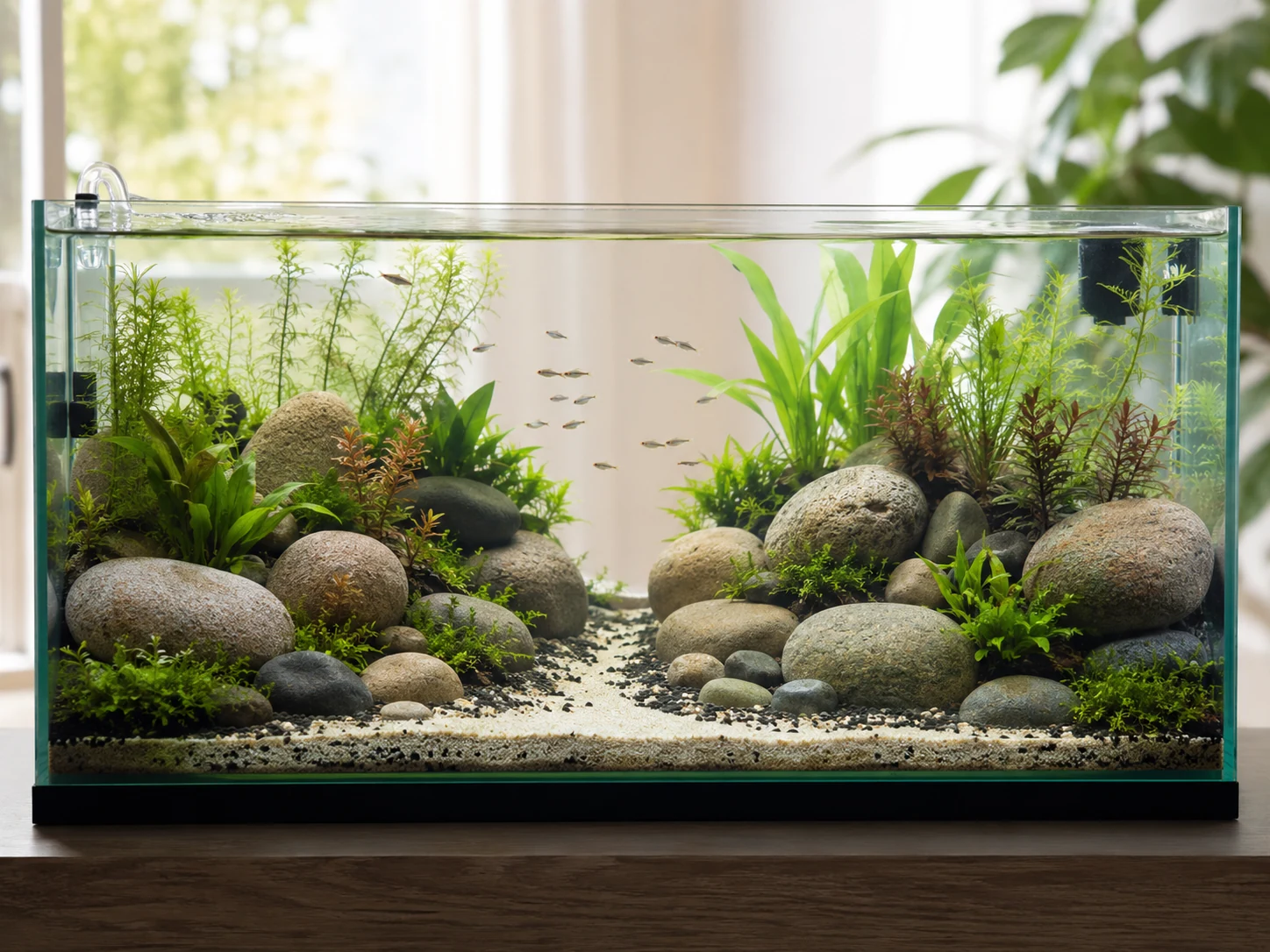
A tank can have a strong filter and still contain dead spots.
Dense decor can block circulation. Waste then collects behind rocks, under wood, or inside plant thickets. That area may become the source of odor, algae, or sudden debris clouds during maintenance.
Technical action: leave cleaning access.
Danger/trap: a beautiful wall of decor across the back may hide waste where no siphon can reach.
Safe process: create channels around hardscape, leave a little open substrate for siphoning, and check after feeding where particles settle.
Substrate depth by setup type
| Setup | Practical beginner depth |
|---|---|
| Bare-bottom | none |
| Goldfish | bare-bottom or thin fine sand |
| Corydoras | shallow smooth sand |
| Shrimp tank | thin sand or fine planted substrate with gentle cleaning |
| Low-tech planted tank | enough for roots, often 1.5–3 inches depending on plants |
| Quarantine tank | bare-bottom |
| Heavy root-feeder planted tank | deeper planned substrate, not random deep gravel |
Deeper substrate is not automatically better. It is only useful if the tank design and maintenance plan support it.
Planted tank substrates: do not mix every product at once
Many beginners see planted-tank content and assume they need soil, root tabs, nutrient sand, crushed coral, botanicals, and liquid fertilizer all at once. That can turn a simple tank into a chemistry experiment.
Nutrient-rich aquasoils can lower pH and release ammonia early. Crushed coral can raise KH and hardness. Root tabs add nutrients into the substrate. Botanicals add tannins and organic matter. None of these are automatically bad, but stacking them without a goal can create unstable water.
Technical action: choose substrate based on the plant and animal plan.
Danger/trap: mixing buffering substrates and mineral-raising materials can make pH and KH unpredictable.
Safe process: for beginner low-tech tanks, keep the system simple. Use inert sand or fine gravel with root tabs only where root-feeding plants need them, or use a planted substrate with the understanding that it may affect water chemistry early. Test before adding sensitive fish or shrimp.
Decor placement: maintenance access is part of the design
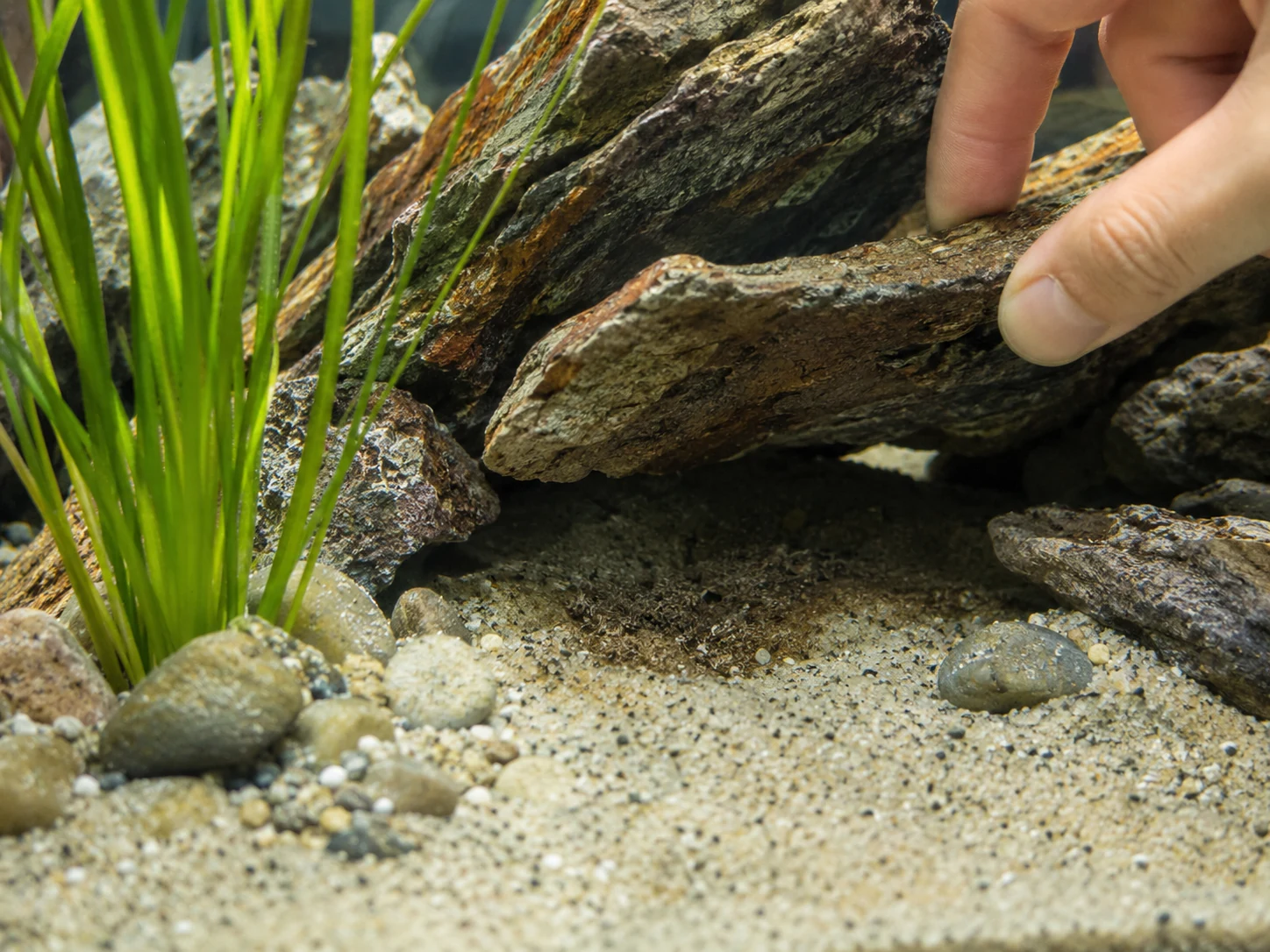
The best-looking layout can still fail if it cannot be cleaned.
A big rock wall pushed against the back glass may look natural, but food and waste can collect behind it. A dense pile of wood can block flow. A cave with one tiny opening can trap a fish. A heavy stone stack can shift if a digging fish undermines it.
Technical action: design cleaning access before filling the tank.
Danger/trap: if you cannot get a siphon, baster, or brush near a dead spot, that area will eventually become a water-quality problem.
Safe process: leave narrow channels behind hardscape, keep at least one open feeding/cleaning area, stabilize heavy rocks on the tank bottom before adding substrate around them, and avoid narrow decorative holes. After feeding, watch where particles settle. That is your future maintenance map.
Substrate changes in an established tank
Changing substrate is one of the most disruptive aquarium jobs.
Old substrate contains bacteria, mulm, trapped waste, plant roots, and chemistry history. Removing all of it at once can cloud the water, release debris, damage plant roots, and reduce biological surface area. Adding a new substrate can also shift pH, hardness, or ammonia depending on the product.
Technical action: plan substrate changes as a controlled reset, not a quick decoration swap.
Danger/trap: removing all substrate, scrubbing the filter, and doing a large water change on the same day can destabilize the tank.
Safe process: move fish temporarily if the job is major, keep filter media wet in old tank water, preserve as much mature biofilter as possible, and monitor ammonia/nitrite for several days afterward. For minor changes, work in sections over time.
Common substrate and decor mistakes
Choosing sharp gravel for bottom fish
Corydoras and other bottom feeders suffer when the substrate damages mouths or traps waste.
Using medium gravel with goldfish
Goldfish mouth substrate. Medium gravel can become a choking hazard as fish grow.
Deep-stirring old substrate
This can release foul debris and stress fish. Clean gradually and siphon directly.
Adding outdoor objects without testing
Rocks, shells, and wood can leach minerals, rot, or carry contaminants.
Making the tank impossible to clean
A tank that cannot be cleaned will eventually punish the fish.
Substrate and Decor Safety Toolkit
Useful items:
- smooth sand or fine rounded gravel;
- gravel siphon;
- turkey baster for tight areas;
- aquarium-safe tweezers;
- soft-bristle brush for decor;
- test kit for ammonia, nitrite, nitrate, pH, GH/KH;
- pre-filter sponge;
- aquarium-safe rock/wood only.
FAQ
What is the best substrate for beginners?
Fine rounded gravel is easy for many beginner tanks. Smooth sand is better for Corydoras, goldfish, and many bottom-sifting fish.
Is sand dangerous in aquariums?
Sand is not dangerous by itself. Deep neglected sand can trap waste or compact. Keep it reasonably shallow and clean the surface gently.
Should I stir aquarium sand?
Do not broadly deep-stir old sand. If you need to disturb a suspicious area, do it locally while siphoning directly at the disturbance point.
What substrate is safest for Corydoras?
Smooth sand is safest because Corydoras sift the substrate with delicate barbels.
What substrate is safest for goldfish?
Bare-bottom or ultra-fine sand is safer than medium gravel, which can become a choking hazard.
Can I use rocks from outside?
Only if you can identify and clean them properly and confirm they are safe. Unknown rocks are not worth the risk for beginners.
Are plastic aquarium decorations safe?
Some are safe, but check for sharp edges, peeling paint, narrow holes, and trapped debris.
How deep should aquarium substrate be?
For many beginner tanks, 1–2 inches is enough. Planted tanks may need more depending on plant type.
Does substrate hold beneficial bacteria?
Yes, but the main biofilter should still be protected in the filter media. Do not rely on dirty substrate as your only biological filter.
Why does my substrate smell bad?
A rotten smell can indicate trapped organic waste or low-oxygen pockets. Stop stirring broadly, siphon locally, improve maintenance, and test the water.
How deep is too deep for aquarium sand?
For most beginner tanks, 1–2 inches is easier and safer to maintain. Deeper slopes can work, but they should be built deliberately with porous support material or hardscape rather than a thick compacted mass of fine sand.
What should I do if my substrate smells like rotten eggs?
Stop stirring broadly. Use a siphon directly over the small affected area, remove foul water as you disturb it, increase aeration, and proceed gradually. A rotten-egg smell suggests a neglected low-oxygen pocket or trapped organic waste.
Related Guides
- Corydoras Care Guide
- Freshwater Shrimp Care Guide
- Goldfish Care Guide
- Aquarium Maintenance Schedule
- How to Cycle a Fish Tank
- Aquarium Water Care Guide
Author Box
Written by the Healthy Aquariums editorial team. We focus on aquarium choices that support fish behavior, water stability, and maintenance instead of decoration alone.
Editorial Note
This guide intentionally avoids one-size-fits-all substrate advice. The safest substrate depends on the fish, the maintenance routine, and whether the layout can be cleaned without destabilizing the tank.
References
- Aqueon. Corydoras Catfish Care Guide. https://www.aqueon.com/resources/care-guides/corydoras-catfish
- The Spruce Pets. How to Clean Aquarium Sand. https://www.thesprucepets.com/how-to-keep-aquarium-sand-clean-7565612
- The Spruce Pets. Should You Vacuum Your Aquarium Gravel? https://www.thesprucepets.com/vacuum-the-aquarium-gravel-1379943
- Merck Veterinary Manual. Environmental Diseases of Aquatic Animals in Aquatic Systems. https://www.merckvetmanual.com/exotic-and-laboratory-animals/aquatic-systems/environmental-diseases-of-aquatic-animals-in-aquatic-systems