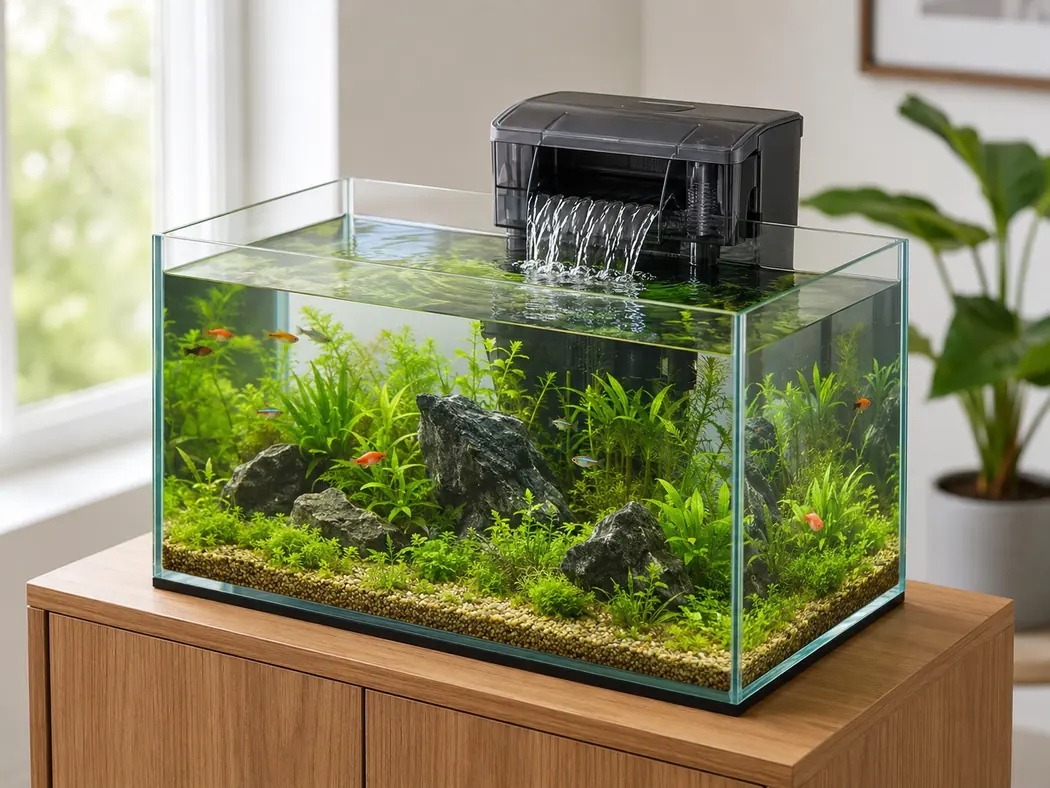
Aquarium equipment should support a stable biological system. It should not force beginners into constant adjustments, sudden corrections, or expensive upgrades that create new problems.
This hub helps you choose gear by what it changes in the tank: water movement, oxygen, temperature, light energy, waste processing, and maintenance routine. The right equipment is not always the largest, brightest, or most powerful option.
Start With the System, Not the Product
Before buying equipment, identify the job it must do. A filter must move dirty water through media, not just make the surface look active. A heater must stabilize the whole tank, not just warm the corner it sits in. A light must support plants and viewing without feeding algae all day.
Every upgrade should be judged by its effect on chemistry, biology, and physics. More flow can improve oxygen but stress fish. More light can grow plants but also algae. More heat can help tropical fish but reduce oxygen and increase ammonia toxicity risk if water quality is poor.
Core Equipment Categories
Filters handle mechanical debris and biological conversion. Choose them for media capacity, flow control, and maintenance access.
Heaters stabilize tropical tanks, but they need thermometer verification and safe water-change habits.
Lights control plant energy, algae pressure, and fish day/night rhythm. Dimming and timer control are often more important than brightness.
Water pumps move water for sumps, returns, or circulation. Match pump output to head height, pipe size, and livestock comfort.
Air pumps support oxygen and sponge filters. Use check valves correctly, with the arrow pointing toward the aquarium.
Water-care tools include test kits, conditioners, siphons, buckets, and thermometers. These are not optional extras; they prevent most beginner emergencies.
Beginner Equipment Foundation: A stable starter kit includes a correctly sized filter, heater if needed, thermometer, light timer, water conditioner, liquid test kit, siphon, bucket, and backup aeration plan.
Equipment Priorities by Tank Type
A betta tank should prioritize gentle filtration, stable heat, covered rest areas, and low-stress lighting. Strong flow, sudden brightness, and oversized equipment can make the tank technically “powerful” but behaviorally stressful.
A planted beginner tank should prioritize controllable lighting, enough filtration to move nutrients gently, and tools for removing melting leaves or trapped debris. Plant success comes from stable routines, not constant hardware changes.
A community tank should prioritize oxygen, biofiltration, and maintenance access. Equipment that is hard to clean often becomes neglected, and neglected equipment eventually becomes a water-quality problem.
Upgrade Order for Safer Progress
The safest upgrade order is usually testing and maintenance first, then filtration, then temperature stability, then lighting control, then optional convenience equipment. This sequence prevents a common beginner trap: making the tank look better before the water is actually safer.
If a tank is already unstable, avoid changing several equipment categories at once. A new filter, new light schedule, new food, and large cleaning session in the same week makes it hard to identify what helped or harmed the system.
Related Guides
- Aquarium Filters
- Aquarium Heaters
- Aquarium Lights
- Water Pumps
- Water Care Equipment
- Best Aquarium Test Kits
FAQ
What aquarium equipment should beginners buy first?
Start with a filter, heater if needed, thermometer, conditioner, test kit, siphon, bucket, and appropriate light.
Should I buy the strongest filter?
No. Choose flow and media capacity that match the tank and livestock.
Is a heater always needed?
Tropical fish usually need one unless the room is consistently warm and stable.
Do fish-only tanks need lights?
They need a day/night rhythm, but not intense planted-tank lighting.
What equipment prevents most emergencies?
A liquid test kit, conditioner, thermometer, siphon, and backup air pump prevent many common emergencies.
Can equipment fix overstocking?
Only partly. Better equipment helps, but it does not erase biological limits.
Should I upgrade everything at once?
No. Change one system at a time and monitor fish and water tests.
What should I keep as backup?
Keep conditioner, test kit, thermometer, spare air pump, airline, check valve, and sponge filter.
Are cheap products always bad?
No. Simple gear can work well if it is safe, controllable, and easy to maintain.
What makes equipment beginner-friendly?
Clear setup, easy cleaning, stable output, and low risk of sudden failure.
References
- Merck Veterinary Manual. Aquarium fish health and environmental disease guidance. https://www.merckvetmanual.com/exotic-and-laboratory-animals/aquarium-fish
- University of Florida IFAS Extension. Aquarium fish management and water quality resources. https://edis.ifas.ufl.edu/
- API Fishcare. Freshwater aquarium testing and water-care education. https://www.apifishcare.com/