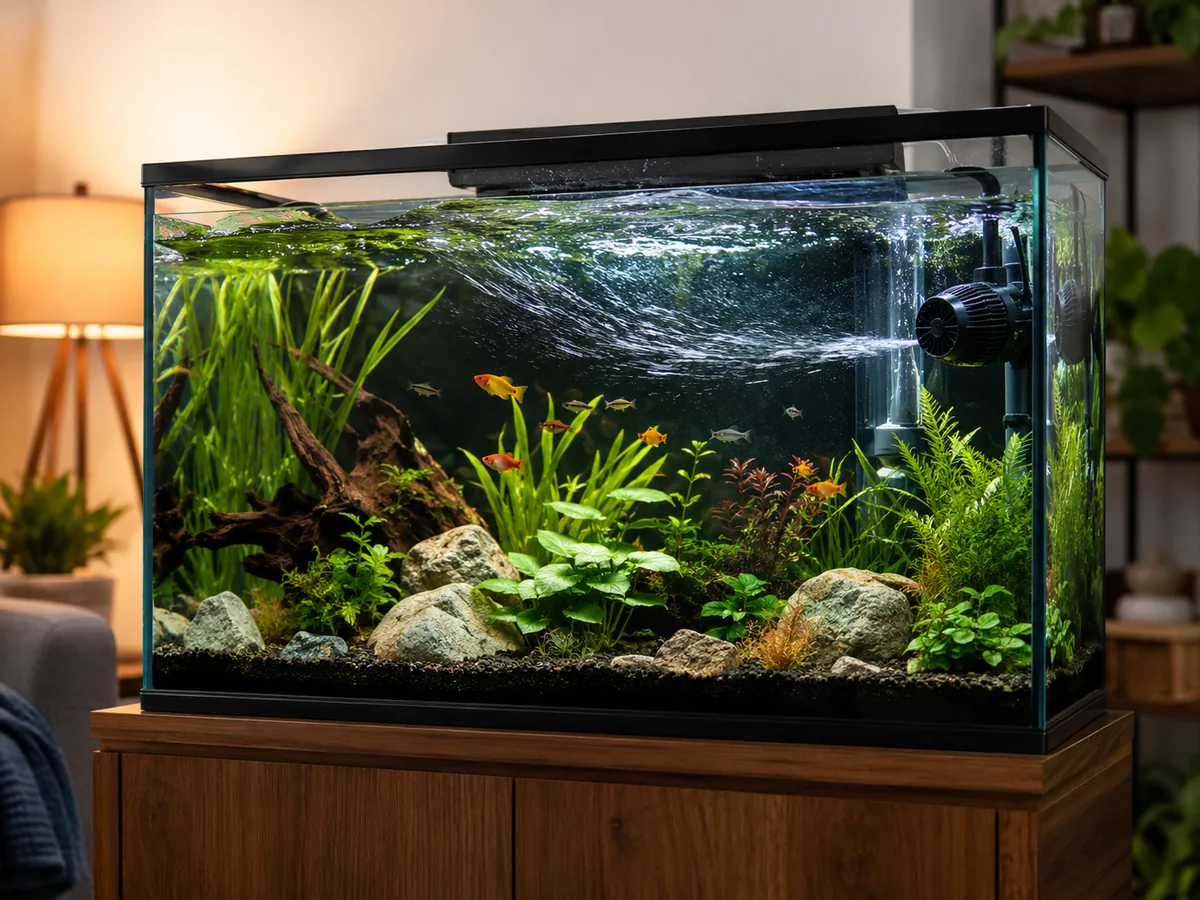
A water pump does more than move water from one place to another. In a closed aquarium, pump choice changes oxygen exchange, waste suspension, filter performance, fish swimming effort, and how quickly debris collects in pipes.
Use this page to think in real operating conditions instead of box ratings. The best pump for a beginner tank is not always the strongest model; it is the one that gives steady usable flow after head height, tubing, sponge prefilters, and maintenance are accounted for.
Equipment in real aquarium setups
Real Flow Is Not the Number on the Box
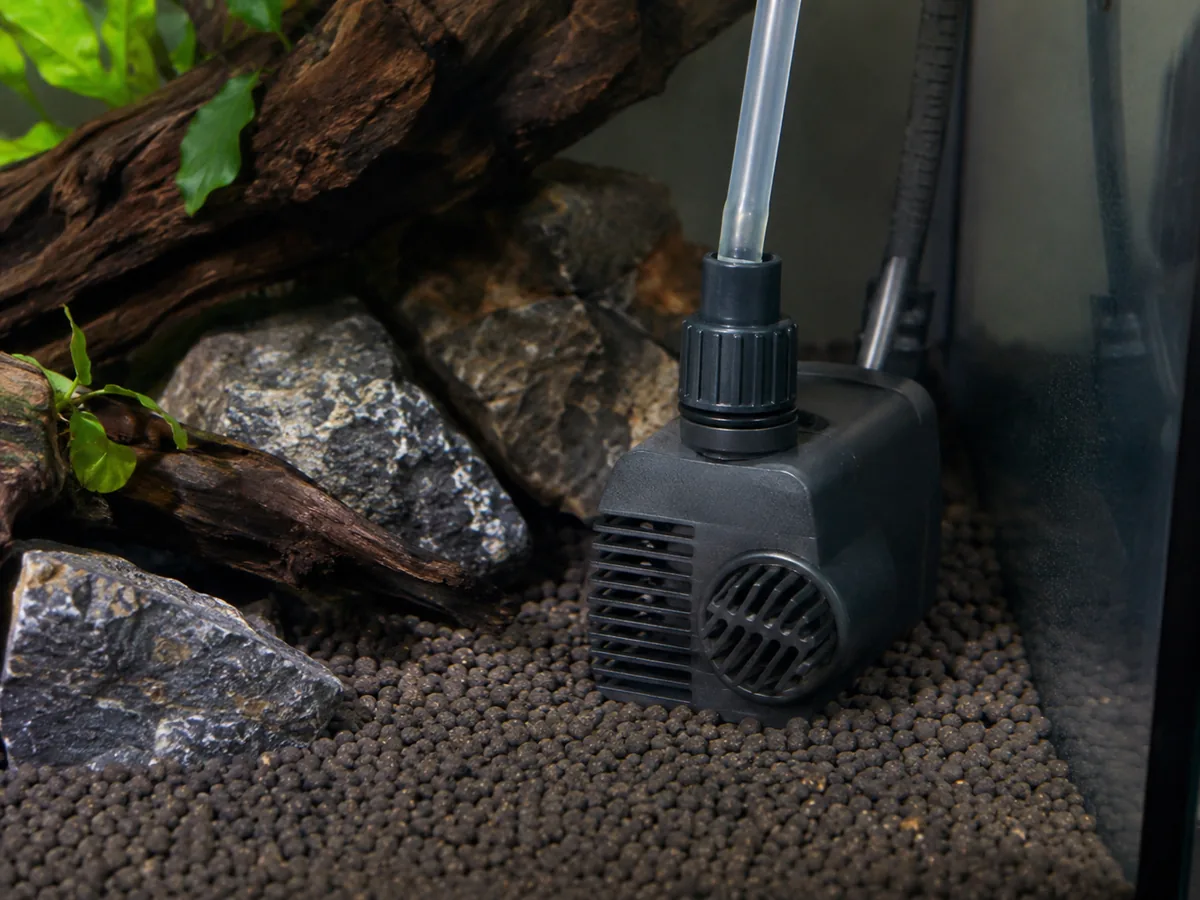
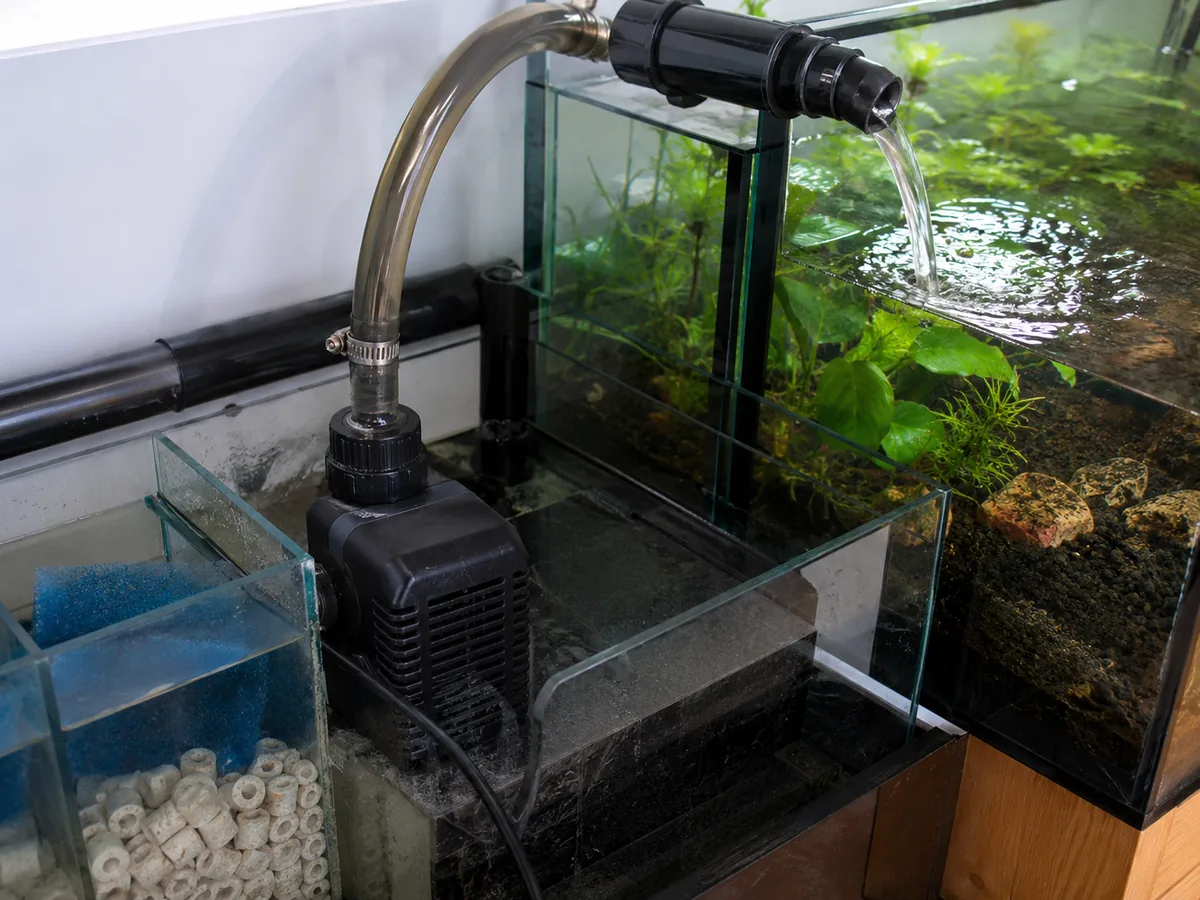
Pump ratings are usually measured under ideal conditions. In a real aquarium, head height, elbows, tubing slime, pre-filters, and media resistance all reduce output. A safer pump choice starts with the actual plumbing path, not only the advertised liters per hour.
Flow Should Move Waste Without Bullying Fish
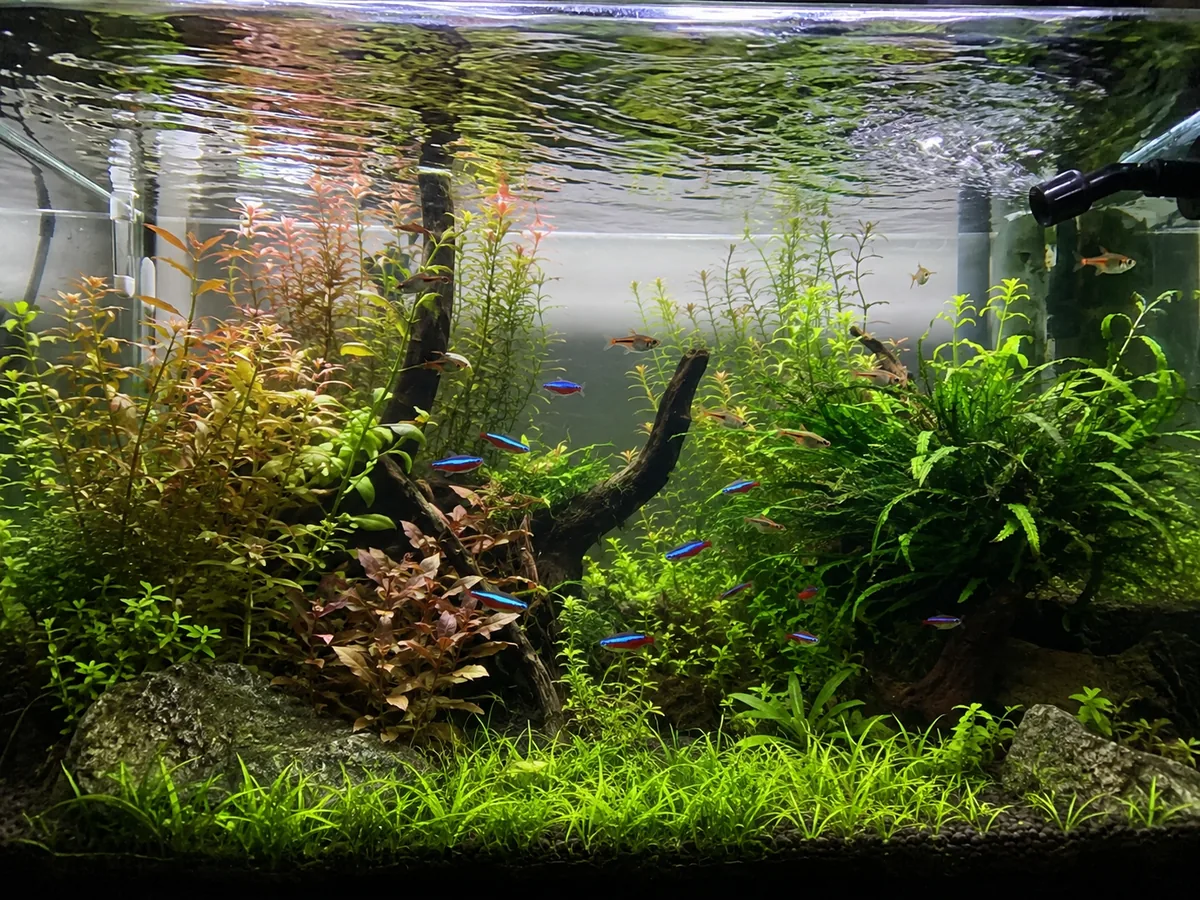
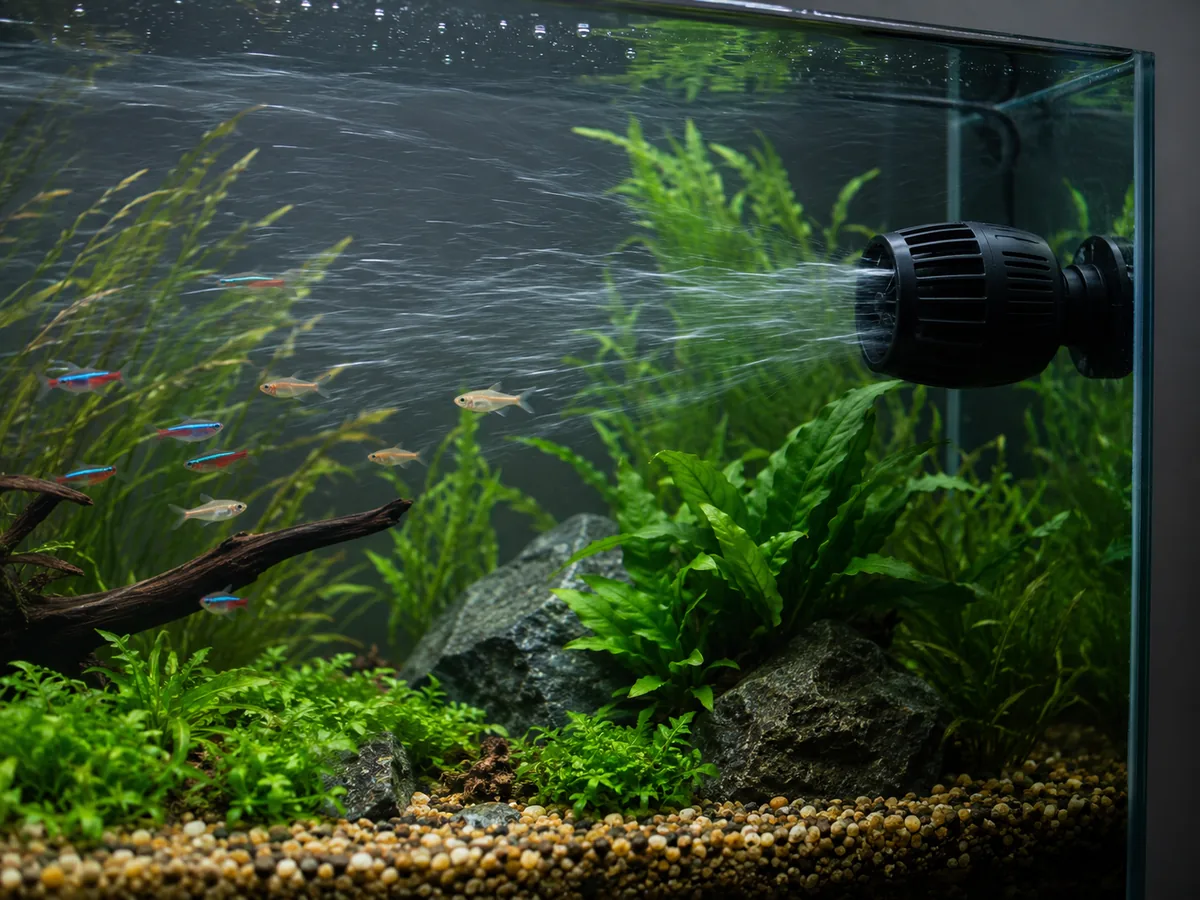
Good flow carries debris toward the filter and refreshes oxygen at the surface. Bad flow pins fish in corners, leaves dead spots behind decor, or blasts substrate into the water column. For planted tanks, the goal is a slow whole-tank circulation pattern rather than a narrow jet.
Safe Flow and Pump Maintenance Kit
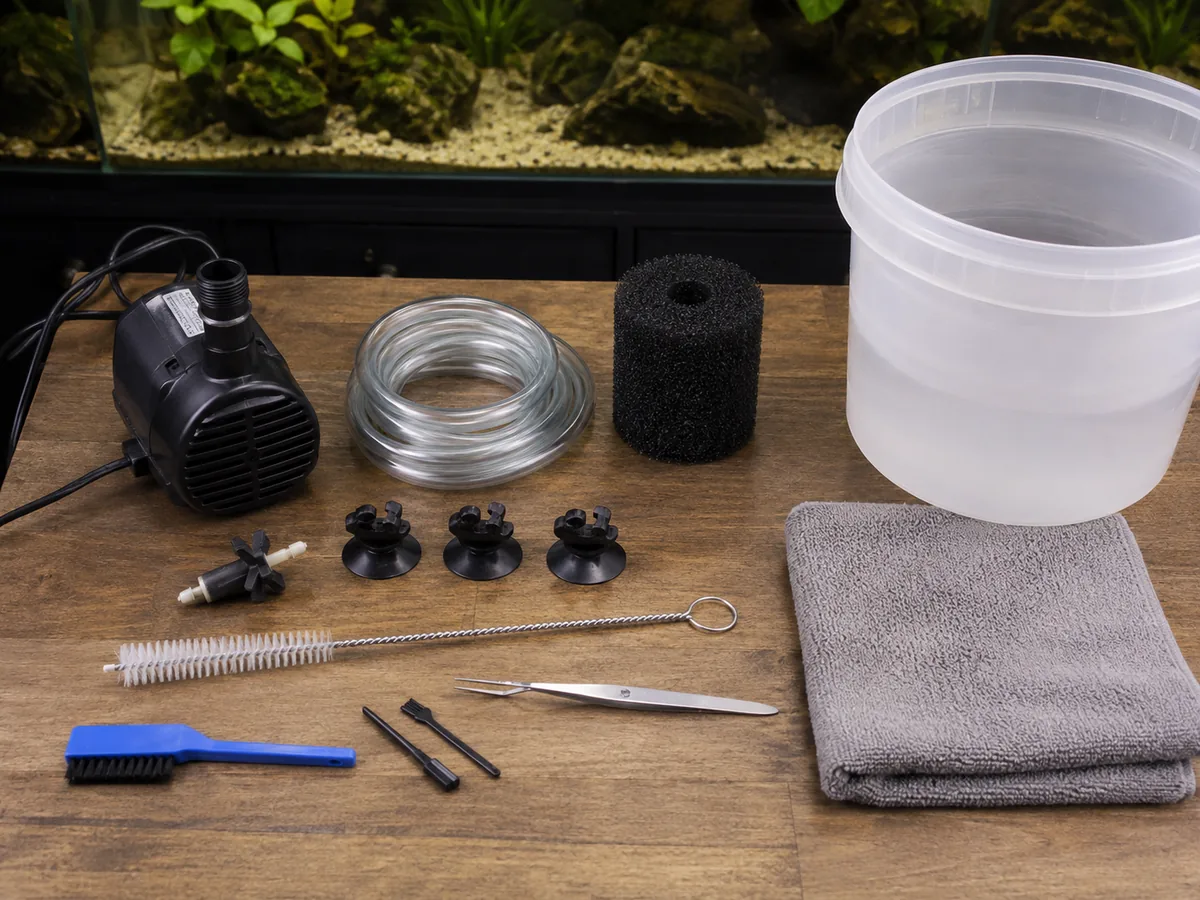
A practical starter setup for this topic should include:
• properly sized return pump or circulation pump
• flexible pipe brush for hose sludge
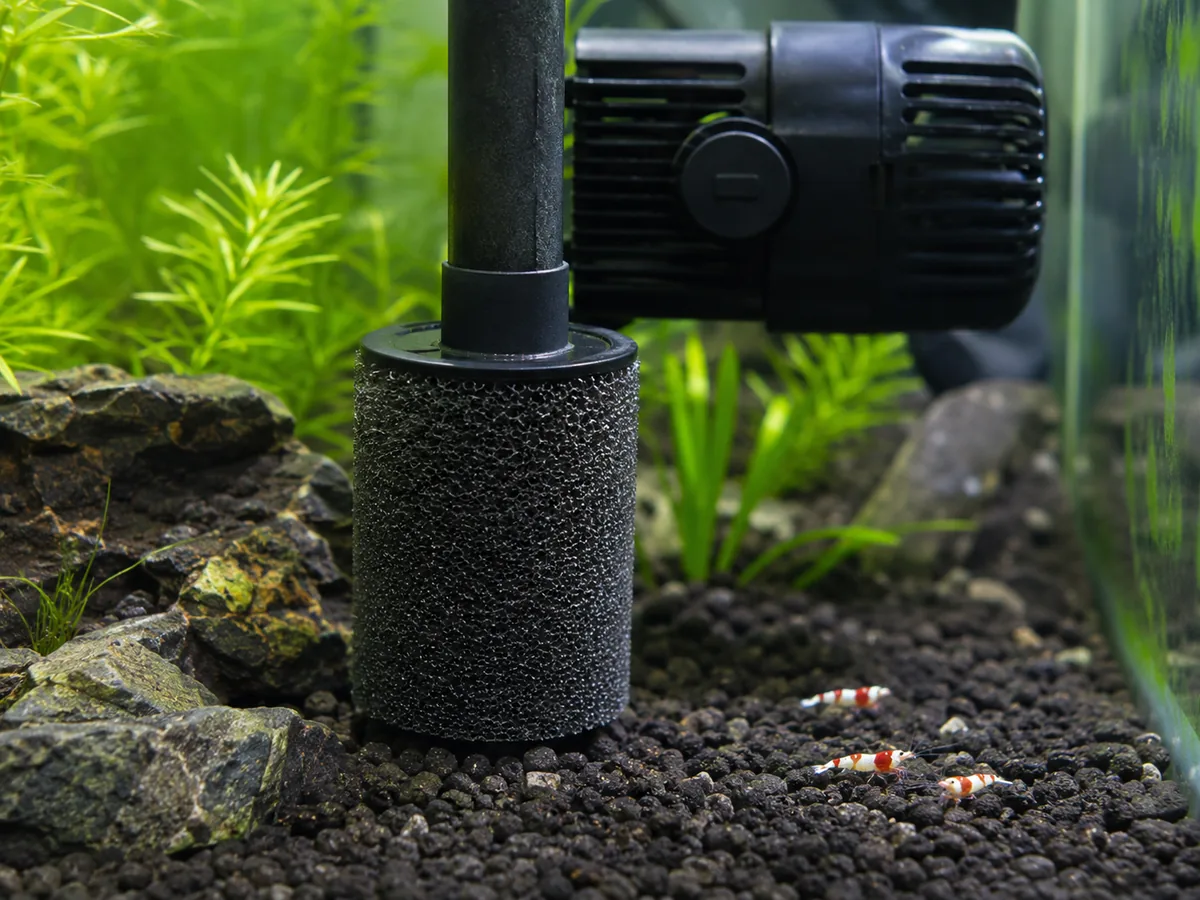
• pre-filter sponge for intake protection
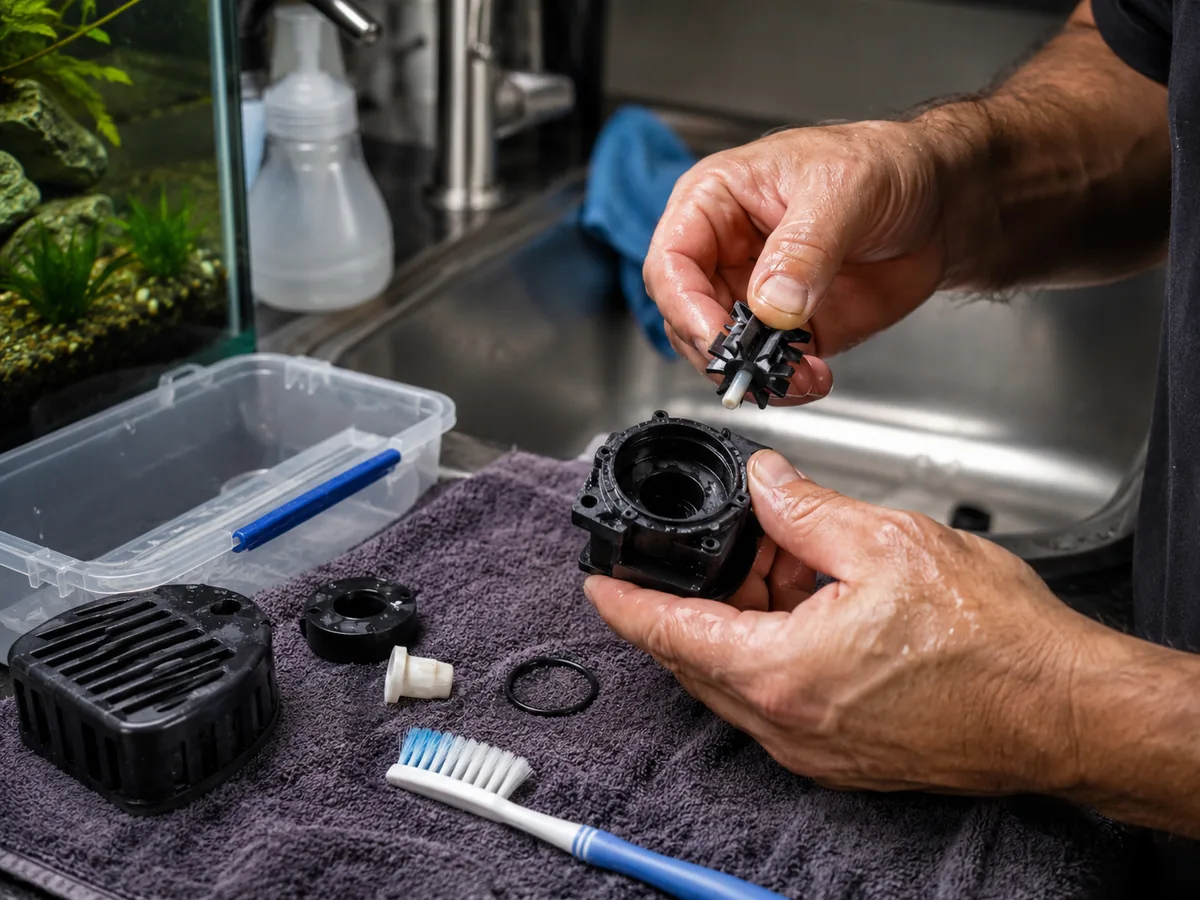
• spare impeller cover or O-ring if available
• 100% aquarium-safe silicone grease for seals only
Use this as a safety checklist, not a shopping command. Buy only what solves the actual tank problem you can observe or test.
Related Guides
- /aquarium-equipment/filters/
- /tank-problems/filter-not-working/
- /tank-problems/black-beard-algae/
- /tank-problems/hair-algae/
- /best-products/best-aquarium-filters/
- /aquarium-equipment/air-pumps/
FAQ
How do I choose aquarium pump flow?
Start with the job: return flow, circulation, or filtration support. Then account for head height, pipe diameter, elbows, media resistance, and the livestock’s flow tolerance.
Why is head height important?
Head height reduces real flow. A pump rated high at zero lift may deliver much less water once it pushes upward through tubing and elbows.
Can too much pump flow stress fish?
Yes. Fish forced to swim constantly against current may clamp fins, hide, gasp, or fail to feed well. Diffuse or reduce flow if behavior changes.
Can dirty tubing reduce pump performance?
Yes. Sludge inside flexible hose can narrow the path and lower flow. Use a flexible pipe brush rather than only cleaning the pump body.
Should I restrict a pump by squeezing the intake?
Avoid choking the intake. It can strain the impeller and reduce cooling. Use the pump’s proper flow control or a safe valve on the output side if designed for it.
Can pumps cause oxygen problems?
A pump does not add oxygen by itself unless it improves surface movement. In warm, stocked, or medicated tanks, watch fish behavior and surface agitation.
What lubricant is safe for pump O-rings?
Only use 100% aquarium-safe or food-grade silicone grease if lubrication is needed. Do not use WD-40, machine oil, or petroleum grease.
Why did my pump blast sludge after restart?
Stopped hoses and chambers can release built-up sludge when flow returns. Restart pumps gently after maintenance and inspect tubing if the tank clouds suddenly.
Can pump flow affect algae?
Yes. Poor circulation creates debris traps, while harsh localized flow can favor certain algae on hardscape. The goal is even, gentle movement with no stagnant pockets.
How often should I clean a pump?
Inspect flow weekly and clean the impeller, intake, and tubing when flow drops, noise increases, or debris builds up.
Author Box
Written by the HealthyAquariums editorial team for beginner freshwater aquarists who want practical, stability-first advice instead of generic product lists.
Editorial Note
This page is part of the this practical equipment guidance. The recommendations prioritize water stability, fish behavior, biofilter safety, and beginner-operable maintenance. Product mentions should be treated as category suggestions, not fixed brand endorsements.
References
- https://www.merckvetmanual.com/exotic-and-laboratory-animals/aquarium-fish/environmental-diseases-of-fish
- https://edis.ifas.ufl.edu/publication/FA051
- https://www.apifishcare.com/post/why-is-my-aquarium-cloudy