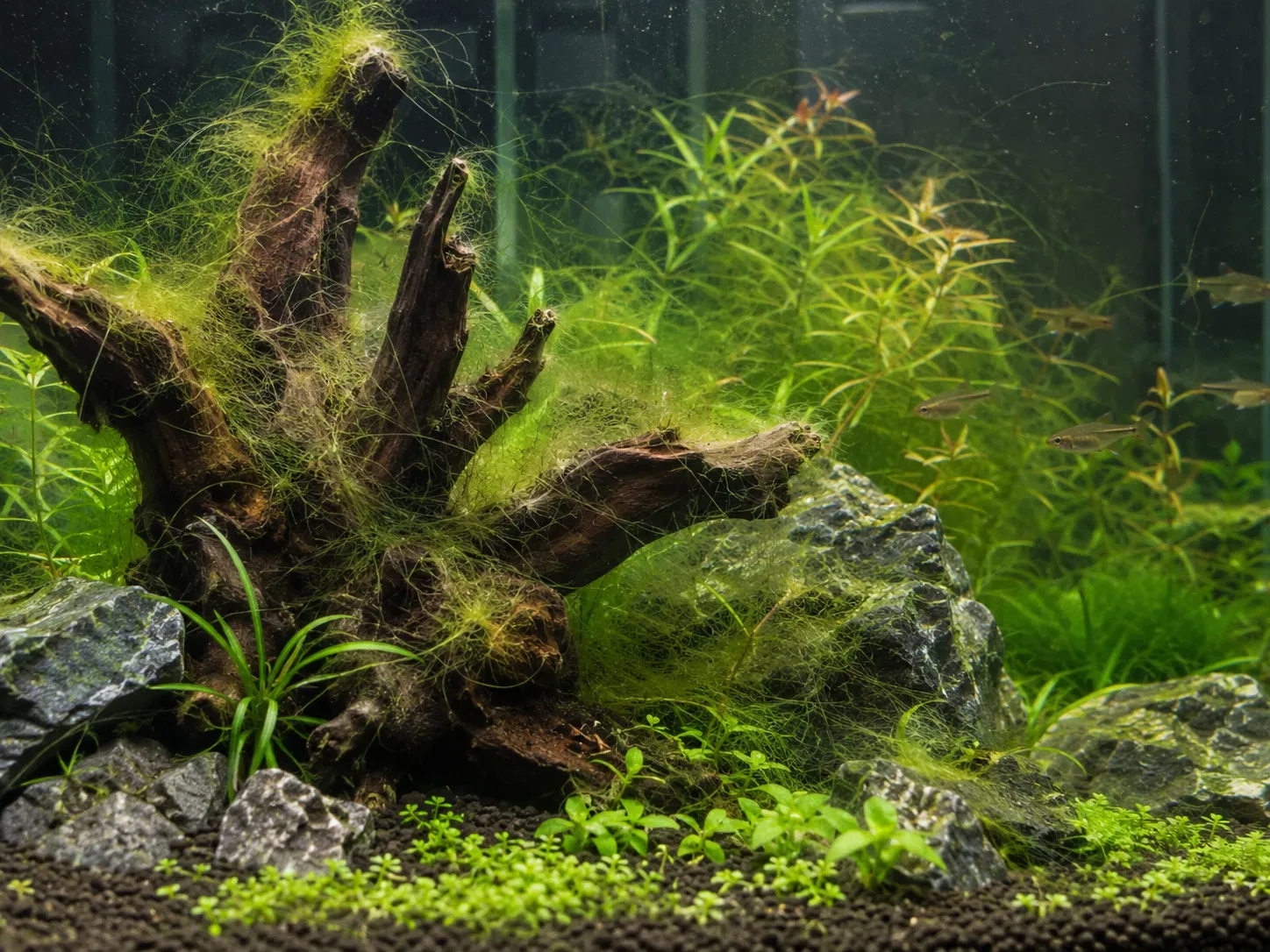
Hair algae is frustrating because it makes a tank look neglected even when the water is clear. Long green threads catch on plant tips, filter intakes, driftwood, moss, and decorations. You pull it out, and a week later it seems to be woven through the same places again.
Hair algae usually appears when the aquarium is producing more algae opportunity than plant competition. That can come from too much light, too long a photoperiod, excess feeding, weak plant growth, decaying leaves, poor flow, or a filter that catches waste but is not cleaned often enough.
The safe fix is not one dramatic blackout or chemical strike. The safe fix is reducing algae fuel while helping plants become the stronger competitor.
What hair algae looks like
Hair algae forms threads or strands. It may be soft and green, tangled like cotton, or long enough to wave in the current. It often starts on moss, stem plants, older leaves, or hardscape where light is strong and waste collects.
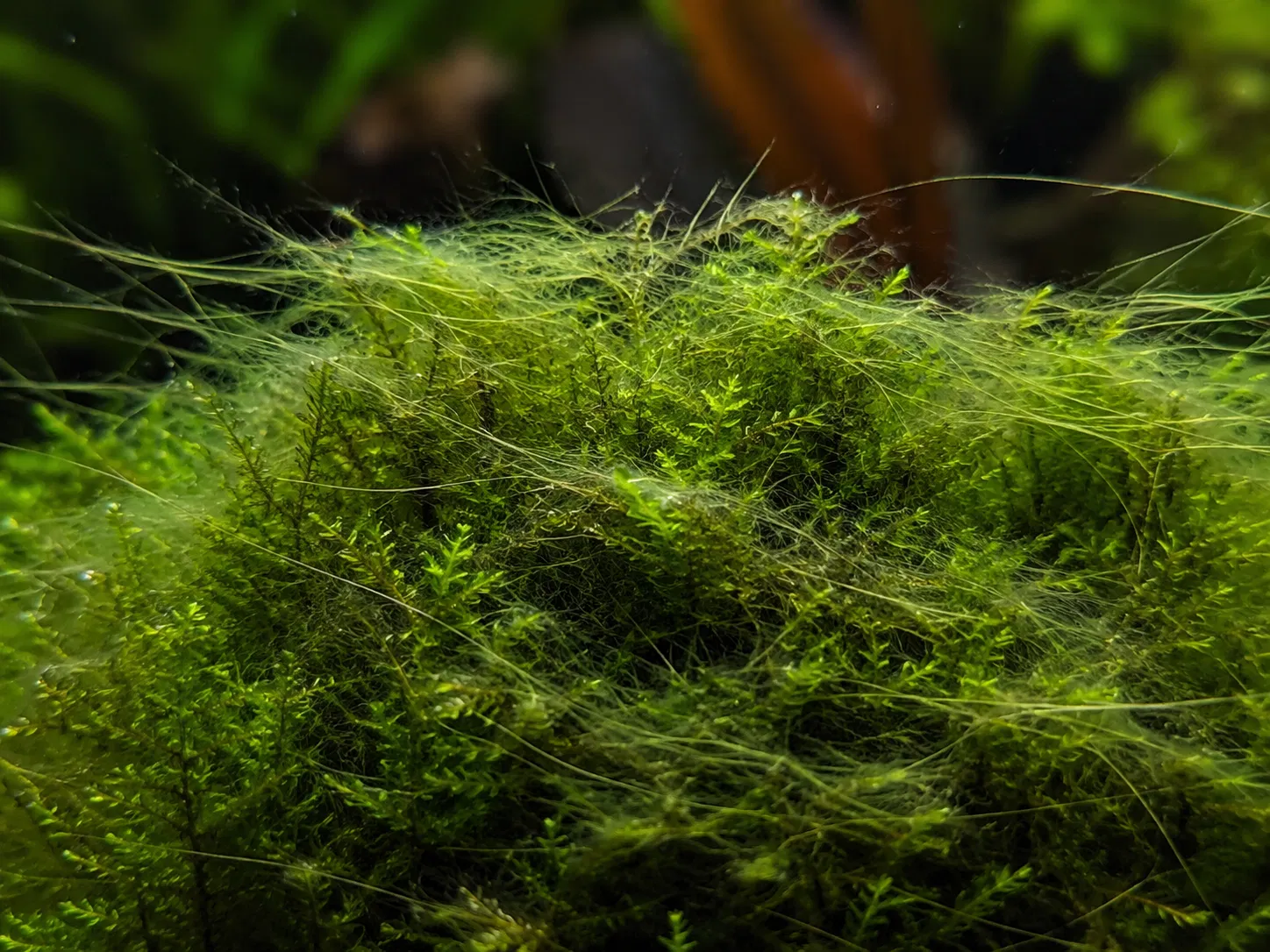
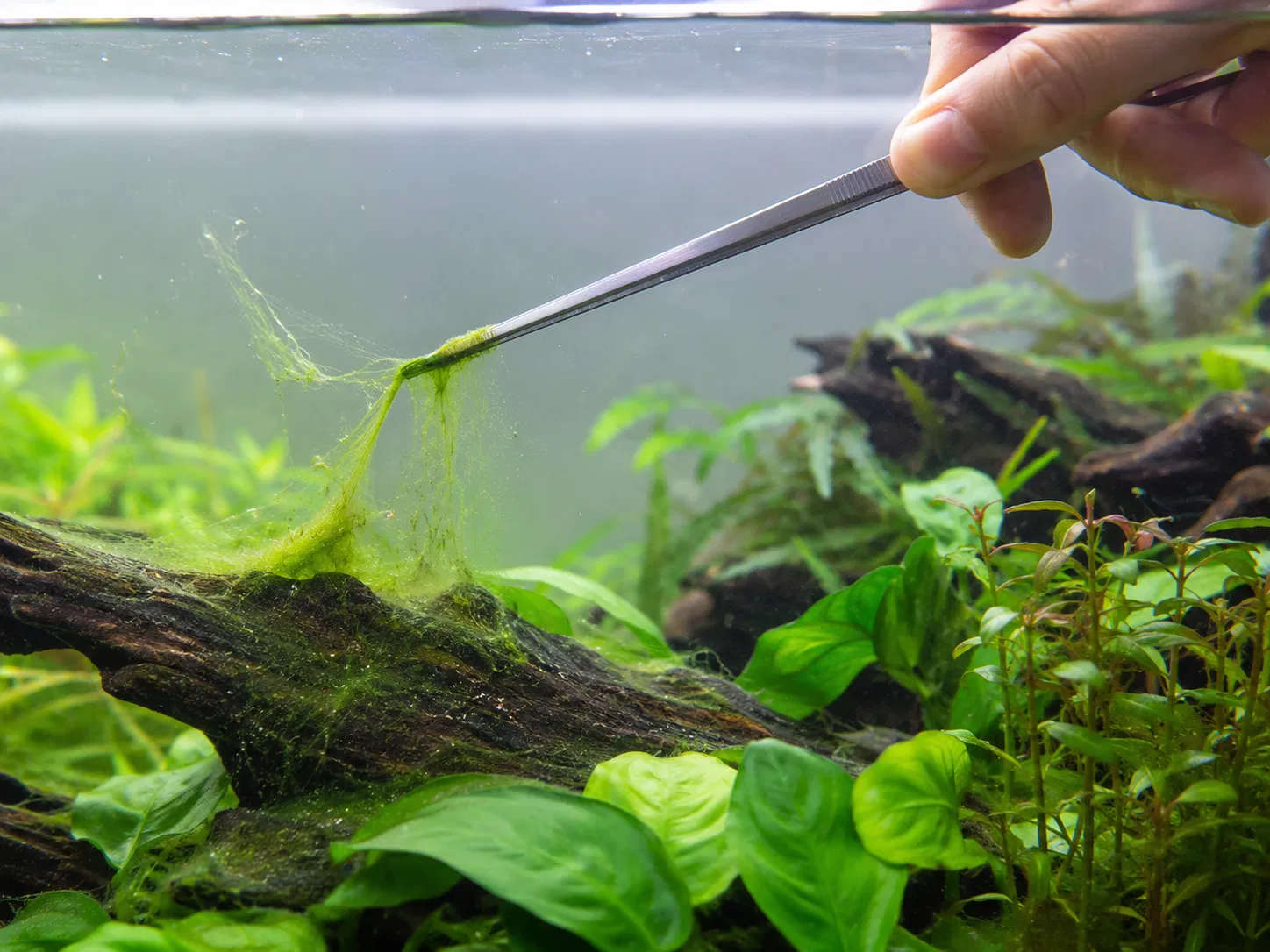
It is different from green water, which turns the water column green. It is different from brown diatoms, which wipe away like dust. Hair algae has structure. You can often twirl it around a toothbrush or pull it out with tweezers.
The light problem
Many beginner planted tanks have more light than plant mass. A bright LED over a lightly planted tank can create more energy than the plants can use. The algae uses the excess opportunity.
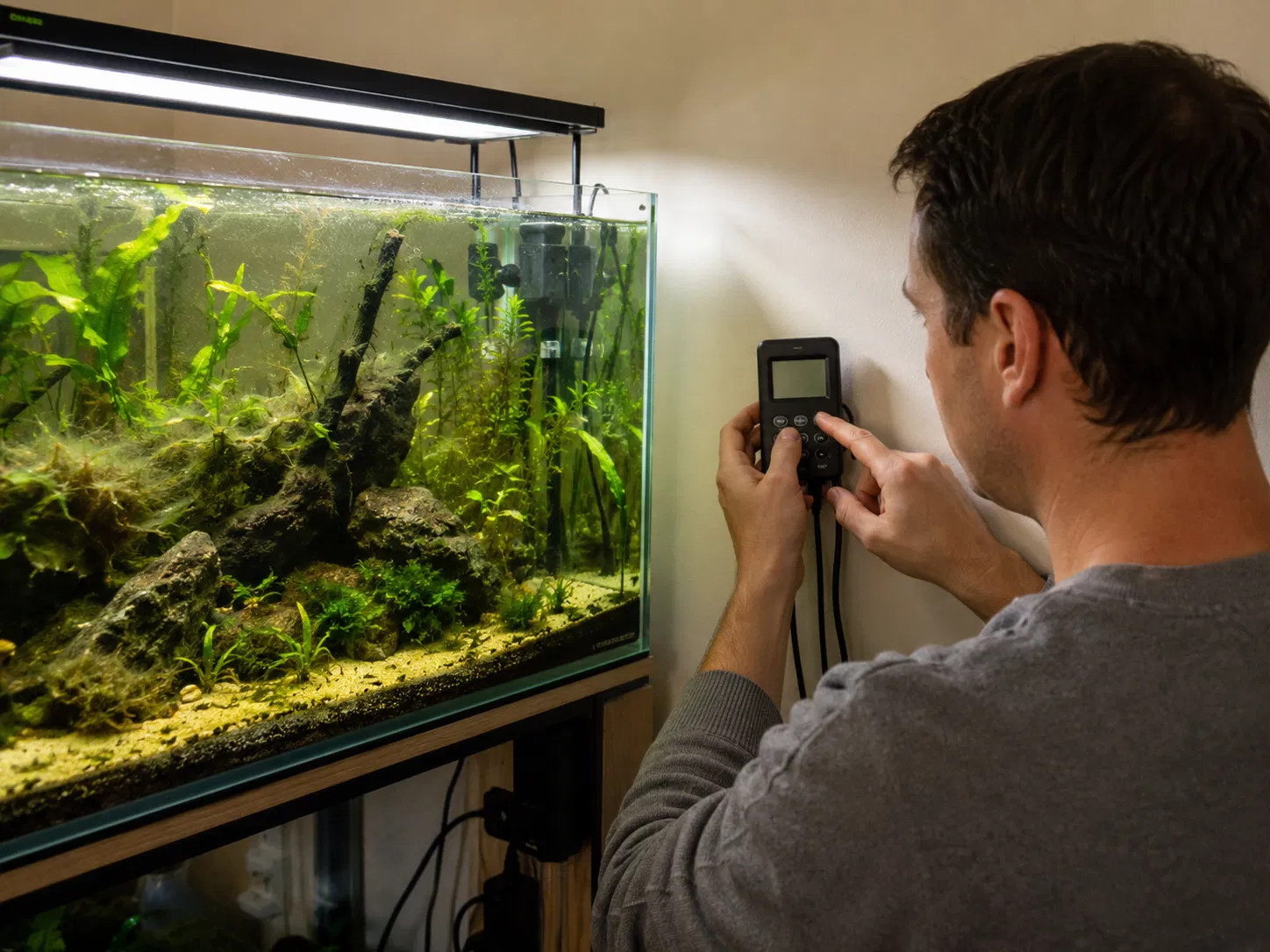
Reduce the photoperiod before you reduce everything else. A stable 6 to 7 hour schedule is a good correction point for many low-tech tanks. If your light is dimmable, lower intensity instead of only shortening the day. Do not run blue moonlight overnight; fish need a dark rest period and algae does not need extra light encouragement.
Nutrients are not always the villain
Beginners often blame fertilizer immediately, but hair algae is rarely solved by starving the whole tank. If plants are pale, melting, or barely growing, removing all nutrients can make plant competition weaker.
Look at feeding, fish load, nitrate, phosphate if you test it, plant mass, and dead leaves. The goal is balance, not zero nutrients. A planted tank with hungry plants and stable light can handle nutrients better than a weak tank with random bright light.
Manual removal without destabilizing the tank
Remove as much hair algae as you can by hand. Use a toothbrush, tweezers, or your fingers. Work during a water change and siphon loosened strands before they spread. Trim leaves that are heavily tangled and already declining.
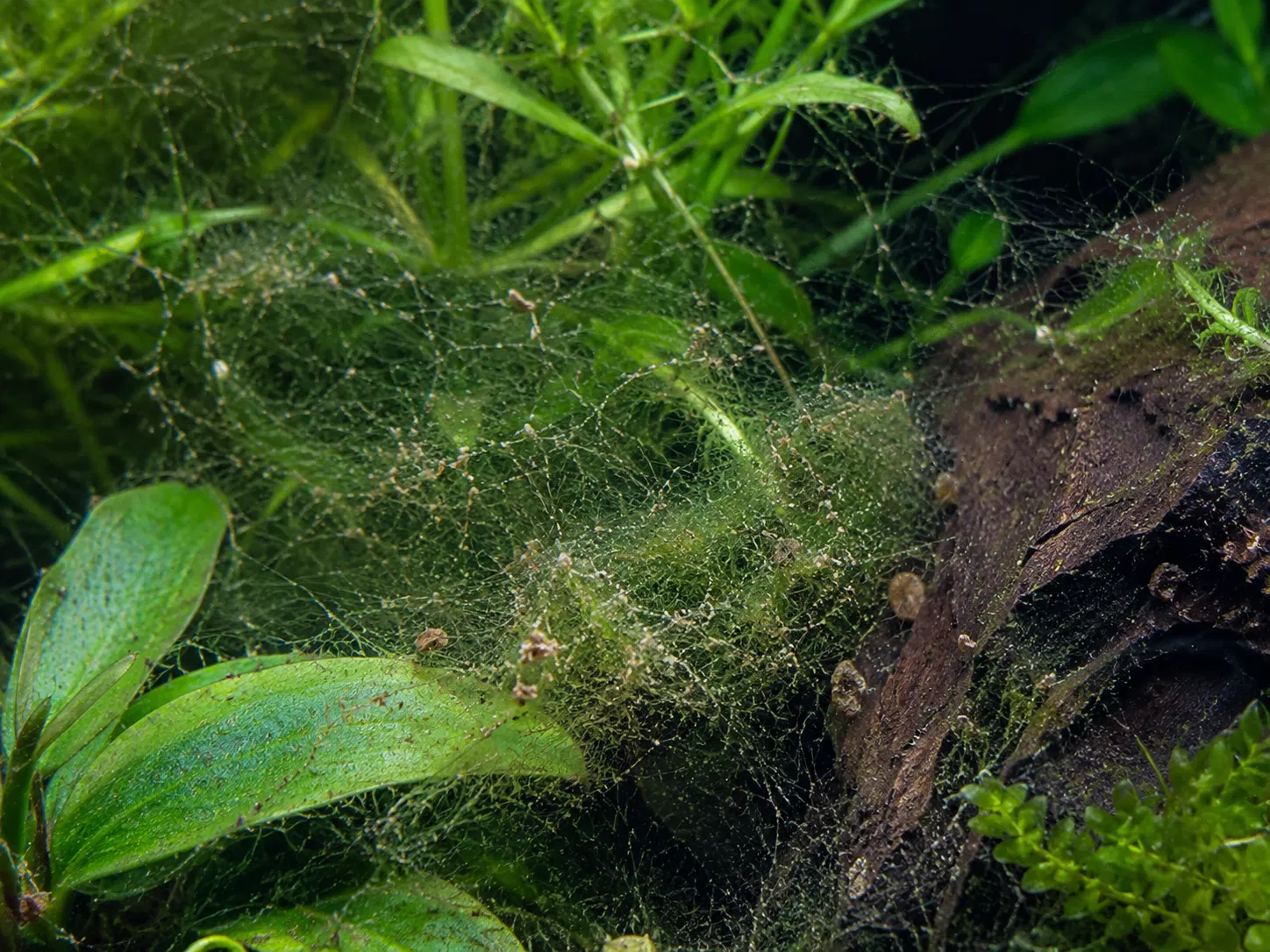
Do not rip up half the aquascape unless absolutely necessary. Disturbing roots, substrate, and filter media at the same time can create a second problem. Clean the algae, not the whole ecosystem.
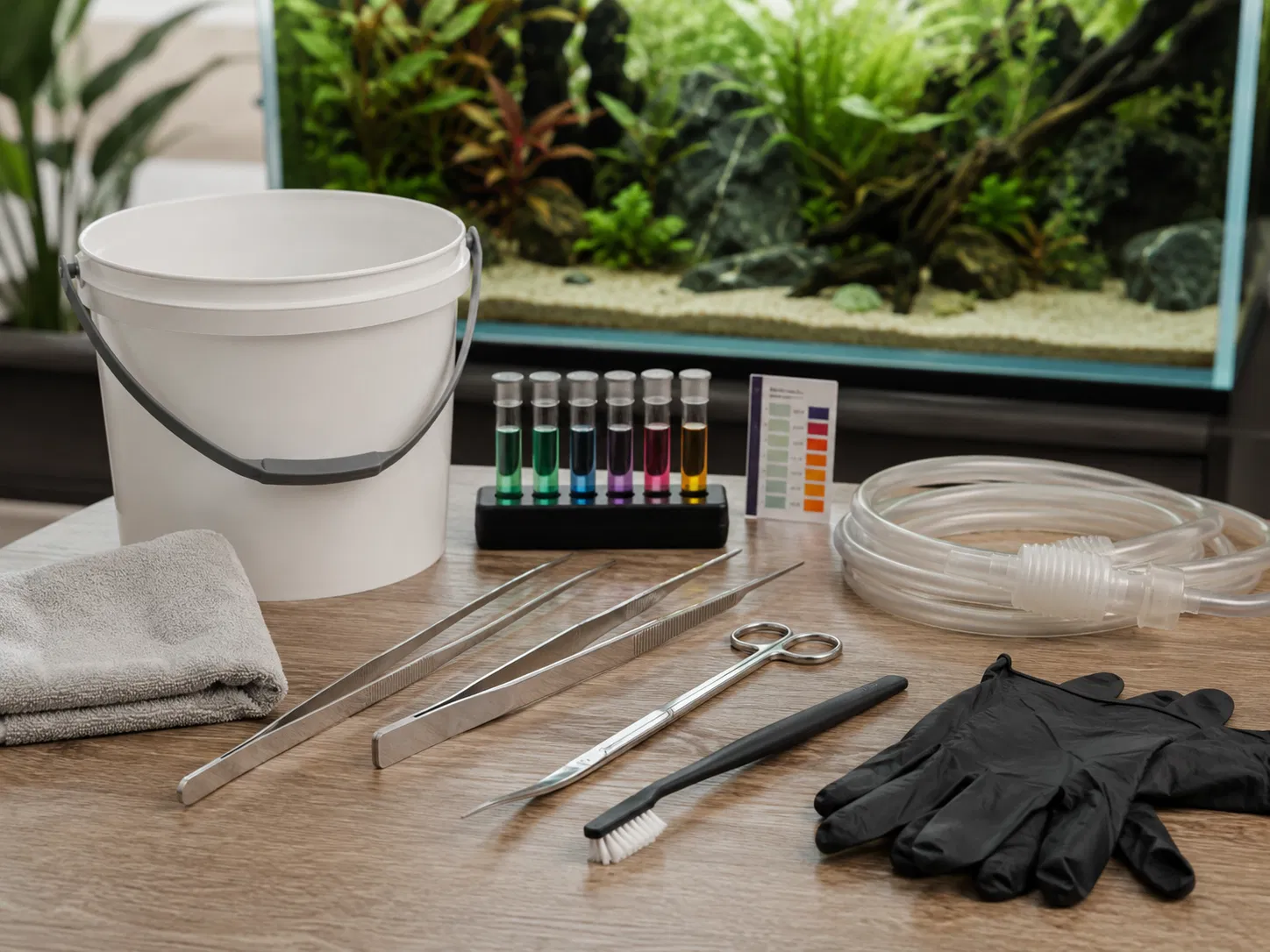
Hair Algae Control Kit
Useful items include a toothbrush, long tweezers, curved scissors, small siphon, liquid test kit, timer, dimmable light, and filter floss. For planted tanks, the best “product” is a stable light schedule paired with enough healthy plant growth to compete.
Flow and debris traps
Hair algae often starts where fine debris catches. Moss clumps, plant stems, filter intake guards, and wood branches can trap food dust and plant fragments. If flow is too weak, waste settles. If flow is too hard, delicate plants may stress and shed leaves.
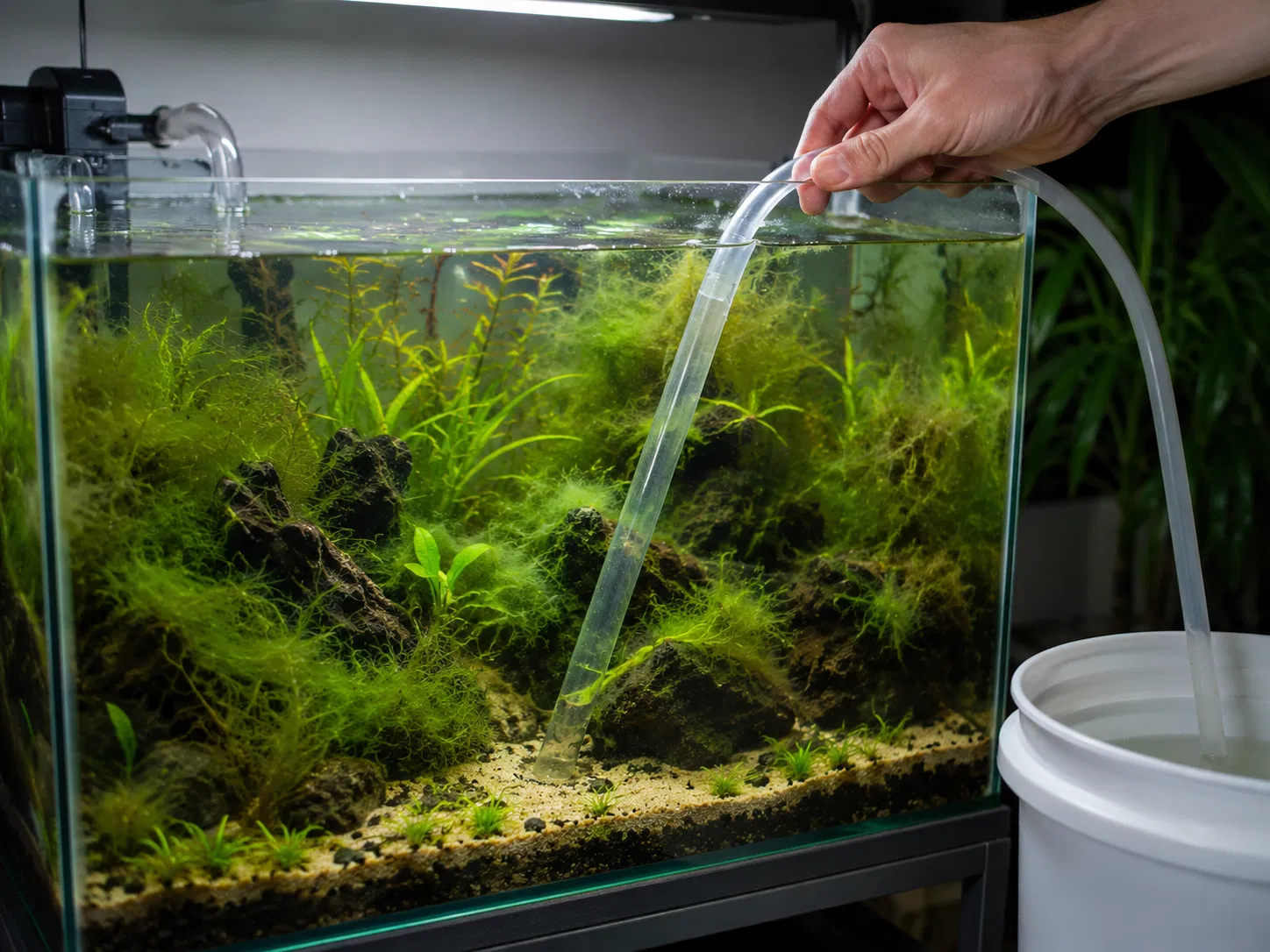
Aim for gentle circulation that moves fine particles toward the filter without blasting fish. Clean mechanical media before it becomes a sludge reservoir.
When blackout is a bad idea
A short blackout may weaken some algae, but it does not fix the reason hair algae grew. It can also stress plants, disrupt fish routines, and lead to oxygen issues if a large algae mass dies at once. If you blackout, remove as much algae as possible first and watch fish breathing carefully.
In most beginner tanks, steady manual removal plus light correction is safer than blackout-first thinking.
FAQ
What causes hair algae in aquariums?
Usually a mismatch between light, plant growth, nutrients, flow, and maintenance. Too much light over weak plant growth is one of the most common beginner patterns.
Can I just pull hair algae out?
Yes, manual removal is one of the safest first steps. Pull or twirl it out during a water change and siphon loose strands so they do not settle elsewhere.
Should I stop fertilizing my plants?
Not automatically. If plants are already weak, starving them can reduce competition. Review light and feeding first, then adjust fertilizer based on plant response and water tests.
How long should my light be on?
For a struggling low-tech planted tank, start with about 6 to 7 hours of stable light. Increase only after plants are growing cleanly and algae is under control.
Does blue light cause hair algae?
Blue-heavy light and overnight blue moonlight can contribute to algae pressure if the overall schedule is too long or intense. Fish also need darkness, so avoid leaving blue light on all night.
Will shrimp or algae eaters fix hair algae?
They may help with soft young growth, but they rarely solve the root cause. Do not add livestock to an unstable tank just to clean algae.
Can hair algae hurt fish?
Usually it is not toxic, but thick growth can trap waste, reduce plant health, and make maintenance harder. The underlying water or oxygen issues may matter more than the algae itself.
Should I use algaecide?
Only with caution and only according to label instructions. Killing a large algae mass can create oxygen and waste problems as it decomposes.
Why does hair algae grow in my moss first?
Moss traps fine debris and sits close to light. Thin it, clean it gently, and improve circulation around it.
How do I know hair algae is improving?
It should return slower, grow shorter, and become easier to remove. Plant tips should start producing cleaner new growth.
Related Guides
/tank-problems/algae-problems/— Broader algae troubleshooting hub./best-products/best-aquarium-lights/— Light control is central to hair algae prevention./guides/best-aquarium-plants-for-beginners/— More healthy plant mass helps compete with algae./guides/aquarium-maintenance-schedule/— Routine cleanup limits algae fuel./best-products/best-aquarium-test-kits/— Testing prevents blind nutrient guessing.
Author Box
Written by the Healthy Aquariums editorial team for everyday freshwater keepers. This guide prioritizes fish health, water stability, and practical maintenance over quick fixes that only make the tank look cleaner for a day.
Editorial Note
This article is written for beginner and intermediate hobbyists. It does not replace veterinary advice for sick fish, and it avoids one-size-fits-all chemical fixes. When algae or plant problems appear, test the water, review recent changes, and correct the underlying imbalance before making aggressive changes.
References
- API Fishcare. Green Water, Cloudy Water: What Should I Do? https://www.apifishcare.com/blog/green-water-cloudy-water-what-should-i-do-aquarium
- API Fishcare. Freshwater Aquarium Water Problem Solving. https://www.apifishcare.com/simple-care-guide/freshwater/water-problem-solving
- Penn State Extension. Preventing Excessive Aquatic Plant and Algae Growth. https://extension.psu.edu/preventing-excessive-aquatic-plant-and-algae-growth
- Penn State Extension. Filamentous Algae. https://extension.psu.edu/filamentous-algae/