Quick answer
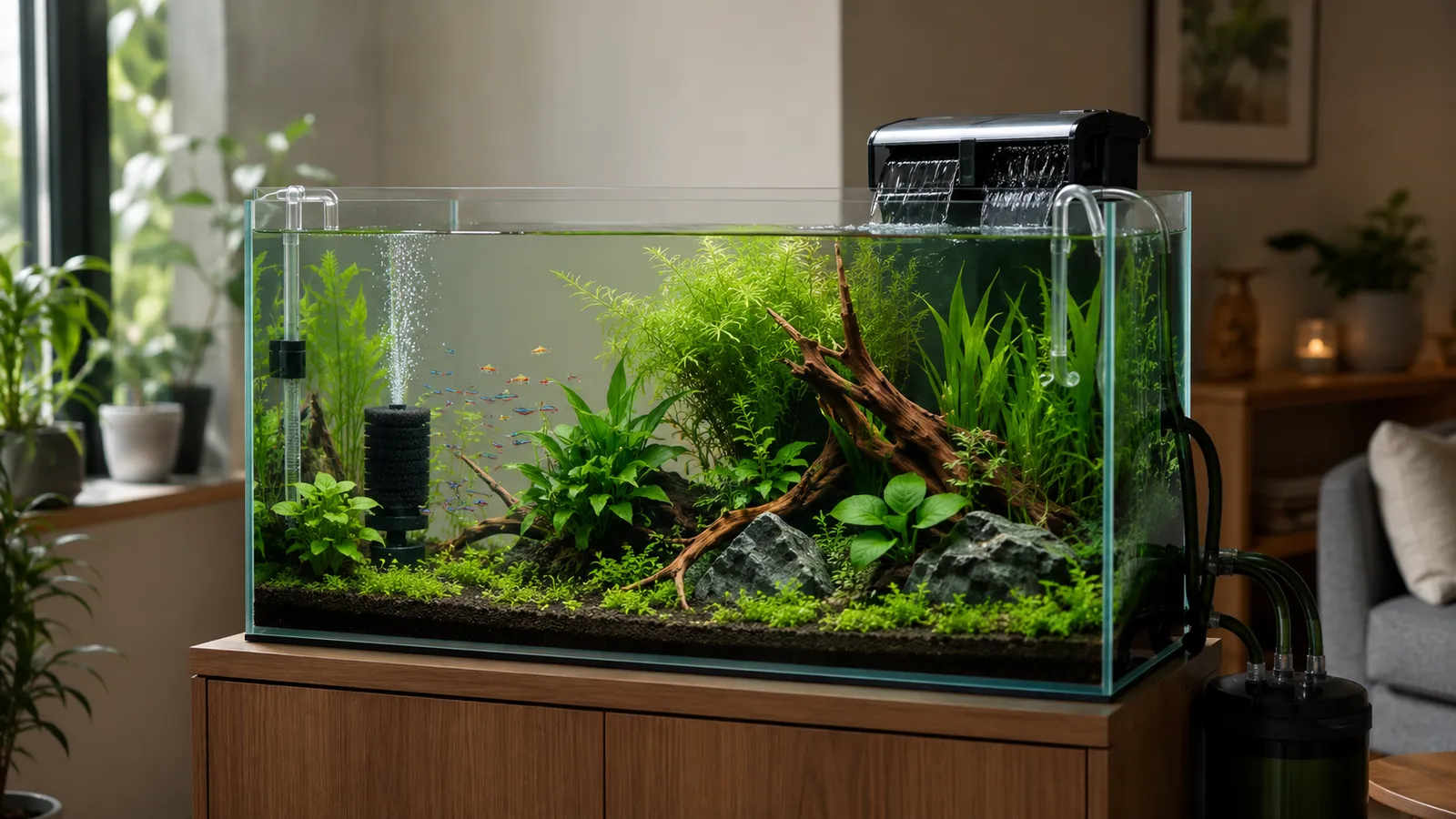
Do not choose an aquarium filter by gallons-per-hour alone. Choose a filter that gives enough mechanical pickup for visible debris, enough protected bio-media for ammonia and nitrite processing, and flow that your fish can handle without stress.
For a small or medium freshwater community tank, an adjustable hang-on-back filter or sponge filter is usually easier to maintain than an oversized high-flow unit. For messy fish, larger tanks, or heavy stocking, prioritize extra media capacity and easy access for cleaning.
What a filter actually does
A filter supports three different jobs. Mechanical filtration traps particles. Biological filtration gives nitrifying bacteria oxygen-rich surface area to convert ammonia into nitrite and then nitrate. Chemical media can help with specific issues, but it should not be used as a substitute for water changes, testing, or proper stocking.
The biological part is the one beginners most often damage. Rinsing all media under tap water, replacing every cartridge at once, or letting clogged media sit without flow can reduce the bacteria that keep ammonia and nitrite under control.
Filter types compared
| Filter type | Best use | Watch out for |
|---|---|---|
| Sponge filter | Betta tanks, fry tanks, shrimp tanks, quarantine tanks, gentle community tanks | Needs an air pump and does less visible polishing unless paired with routine siphoning |
| Hang-on-back filter | Most beginner community tanks where easy access matters | Disposable cartridges can tempt beginners to throw away the biofilter |
| Canister filter | Larger aquariums, planted tanks, high-media setups, messy fish | Can hide sludge in hoses and trays if maintenance is delayed |
| Internal filter | Compact tanks where external space is limited | Can take up swimming space and may create too much direct current in small tanks |
Choose by fish load, not only tank size
A lightly stocked 20-gallon planted tank and a 20-gallon goldfish tank do not need the same filtration approach. Fish size, feeding style, waste output, oxygen demand, plant mass, and maintenance frequency all change the real load on the filter.
Use manufacturer tank ratings as a starting point, not a guarantee. If you keep messy fish, feed heavily, or see debris building up quickly, you need more usable media and better maintenance access, not just a bigger number on the box.
Flow control matters
Strong flow can be helpful for oxygen and debris pickup, but it can also exhaust bettas, long-finned fish, small shrimp, or weak fish. Look for adjustable output, baffling options, intake protection, and enough surface movement without blasting the whole aquarium.
Do not solve every water-quality problem by adding a stronger filter. First test ammonia, nitrite, nitrate, pH, and temperature. If the problem is overfeeding, an uncycled tank, clogged media, or poor water-change habits, more flow can hide the symptom without fixing the cause.
Maintenance access is part of the purchase
The best filter is the one you can clean correctly. Reusable sponge, ceramic media, pre-filter sponges, and accessible impellers make routine care easier. Avoid systems that force you to replace all media at once. If you do replace media, seed the new media beside the old media first whenever possible.
For canisters and hang-on-back filters, watch for hydraulic bypassing: water taking the easiest path around clogged media instead of through it. A filter can appear to run while the media is doing less work than expected.
Related Guides
- What Size Aquarium Filter Do I Need?
- Aquarium Filter Maintenance
- Sponge Filter vs HOB Filter
- Ammonia, Nitrite, and Nitrate Guide
FAQ
Is a bigger aquarium filter always better?
No. Extra media capacity can help, but excessive flow can stress fish and push debris around the tank. Choose more capacity with controllable flow.
Should I replace filter cartridges every month?
Usually no. Replacing all filter media at once can remove too much beneficial bacteria. Rinse reusable media in removed tank water and replace media gradually only when it is falling apart.
Can a filter replace water changes?
No. A filter helps process waste, but nitrate, dissolved organics, minerals, and debris still need routine water changes and maintenance.