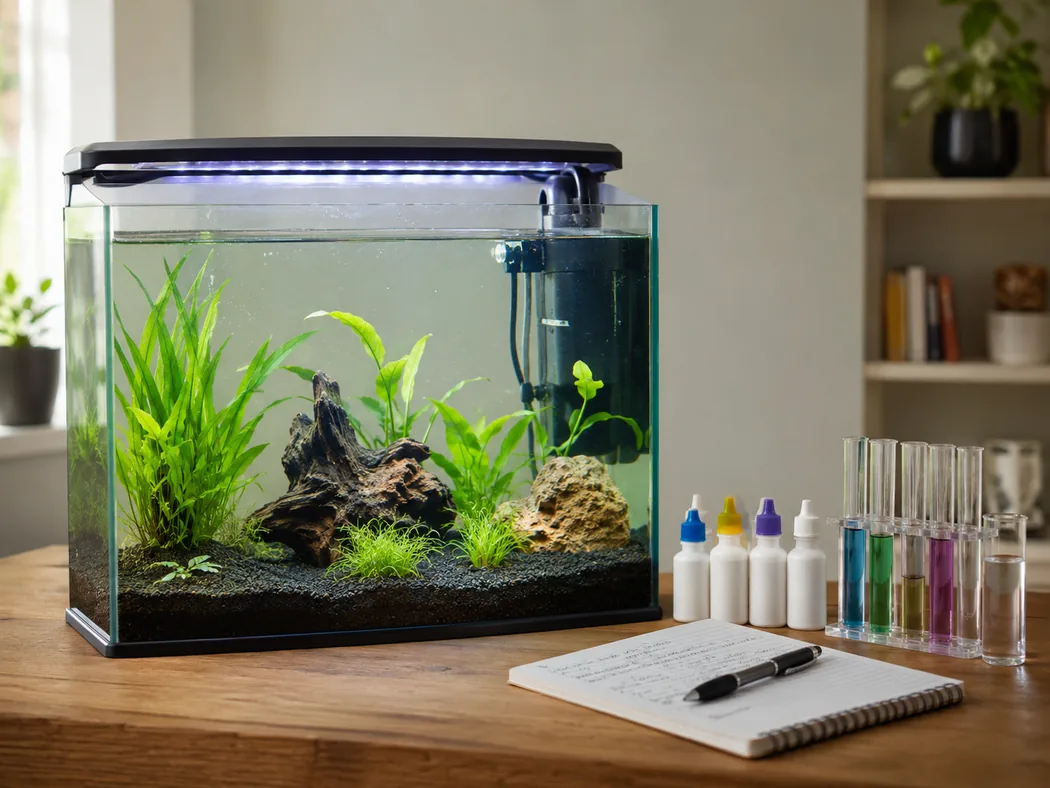
Most new fish do not die because the tank was ugly.
They die because the water looked clean while ammonia was quietly rising.
That is the part of aquarium cycling beginners often misunderstand. Cycling is not about letting the tank “run for a few days.” It is not about waiting until the water looks clear. It is not about turning on the filter and hoping nature figures everything out.
Cycling a fish tank means building the invisible bacteria colony that helps protect fish from their own waste.
If that sounds less exciting than buying fish, plants, and decorations, that is because it is. Cycling is boring until it saves your fish.
And if you are setting up your first aquarium, this is the boring part worth taking seriously.
Do not ask, “How many days has the tank been running?” Ask, “What are ammonia and nitrite reading today?”
What Cycling Really Means
Cycling is the process of establishing beneficial bacteria that convert fish waste into less harmful compounds.
In a new tank, fish waste, uneaten food, and decaying organic matter can create ammonia — mainly discussed in aquariums as ammonia/ammonium, or NH3/NH4+. Ammonia is dangerous to fish, especially in a new system where the biological filter is not mature yet.
Over time, one group of beneficial bacteria converts ammonia/ammonium (NH3/NH4+) into nitrite (NO2-). Nitrite is also dangerous. Another group of bacteria converts nitrite (NO2-) into nitrate (NO3-), which is usually less harmful and can be managed with water changes, plants, and sensible stocking.
That is the short version of the nitrogen cycle:
Fish waste / uneaten food → Ammonia/Ammonium (NH3/NH4+) → Nitrite (NO2-) → Nitrate (NO3-)
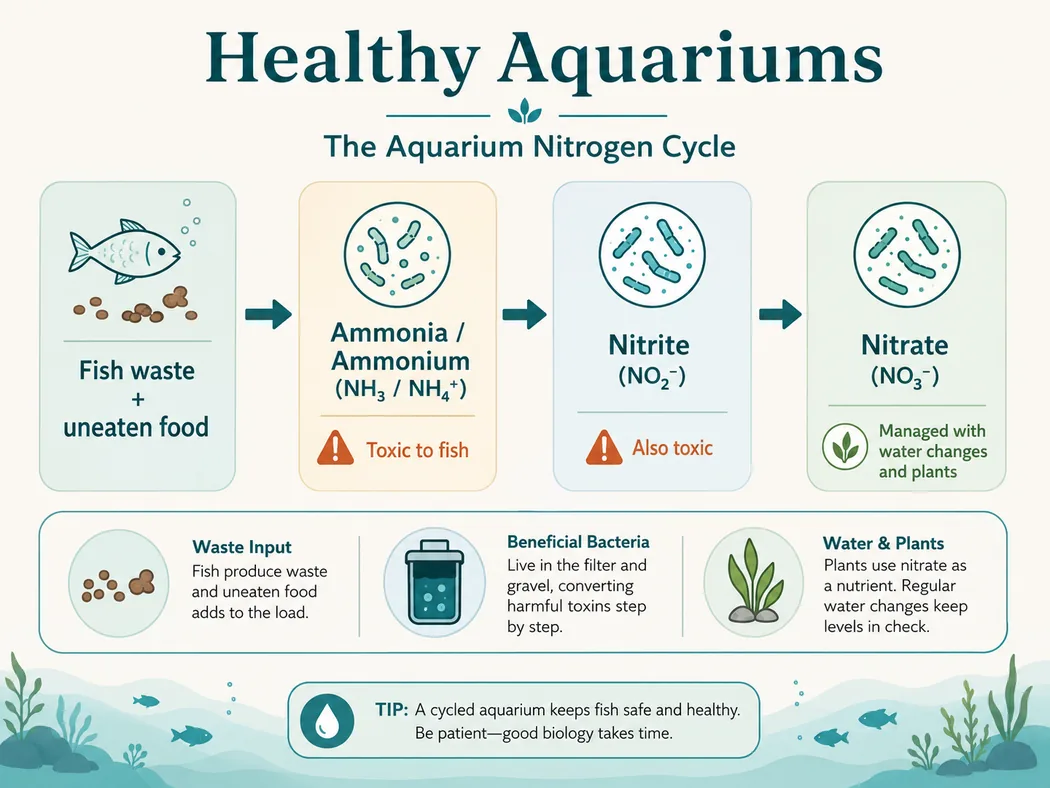
But here is the part that matters in real life: most of this work happens in and around the biological filter.
People often say they are “cycling the tank,” but what you are really trying to mature is the biological filtration system. Beneficial bacteria grow on surfaces throughout the aquarium, but filter media is one of the most important places because water constantly flows through it.
That is why cleaning or replacing all filter media at the wrong time can undo a lot of progress.
A cycled aquarium is not sterile. It is alive in a quiet, microscopic way.
The Three Numbers Beginners Need to Understand
You do not need to become a chemist to cycle a fish tank. But you do need to understand three test results: ammonia/ammonium (NH3/NH4+), nitrite (NO2-), and nitrate (NO3-).
| Test result | What it usually means | Beginner target |
|---|---|---|
| Ammonia/Ammonium (NH3/NH4+) | Waste is present and bacteria are not processing it fast enough yet | 0 ppm before adding fish |
| Nitrite (NO2-) | The cycle is developing, but the tank is still not safe for fish | 0 ppm before adding fish |
| Nitrate (NO3-) | The cycle is producing the less dangerous end product | Present but controlled with water changes |
If ammonia is showing, the tank is not ready.
If nitrite is showing, the tank is not ready.
If ammonia and nitrite are both 0 ppm, and nitrate is present, the tank is much closer to being ready.
Do not make the beginner mistake of thinking nitrate means something is wrong. In a cycling tank, nitrate appearing is often a sign that the biological filter is starting to work. You still manage nitrate, but it is not the same emergency as ammonia or nitrite.
What About pH, GH, and KH?
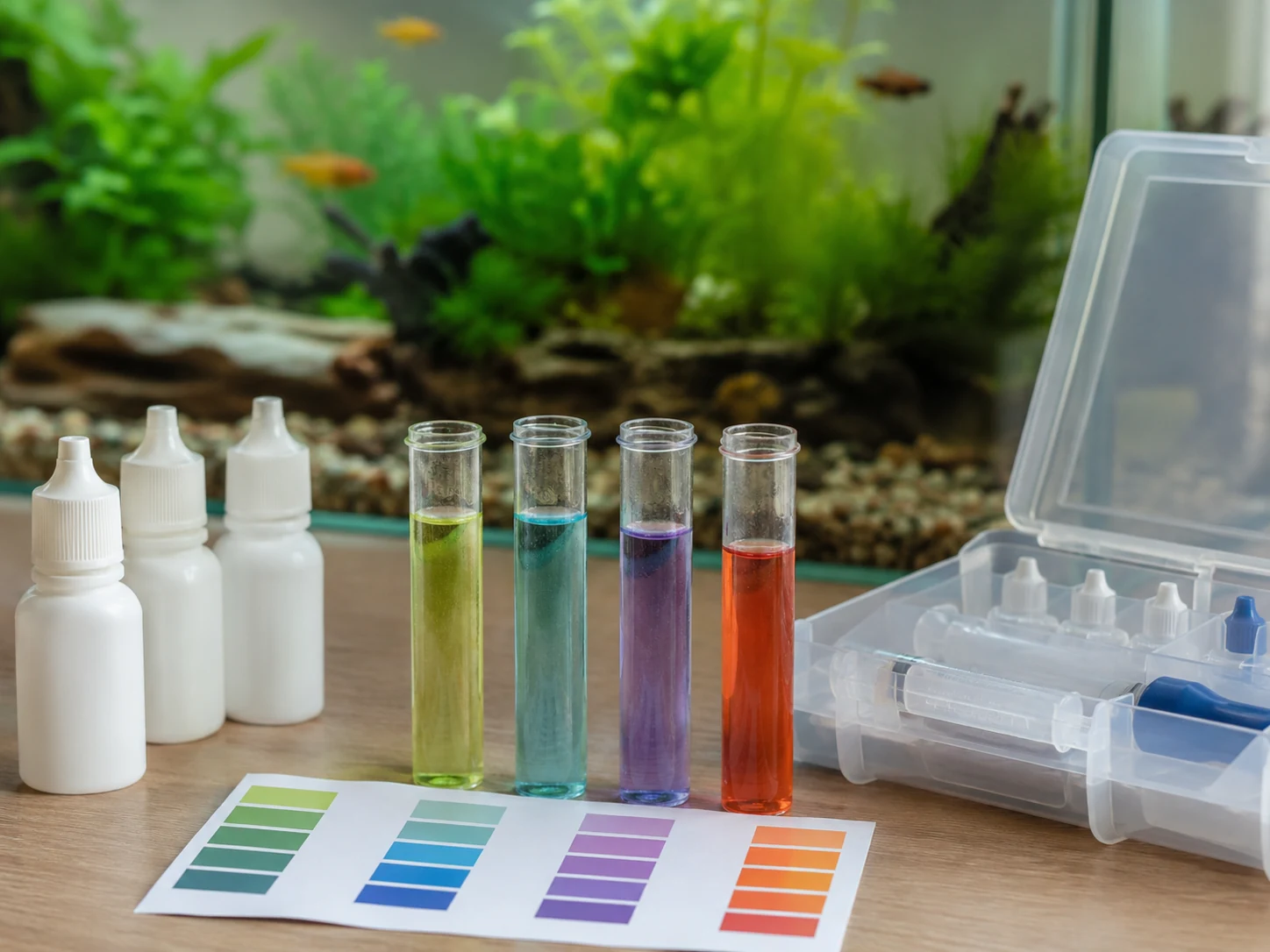
For cycling, pH matters because very low or unstable pH can slow the process. As a practical beginner warning, if your pH is drifting below about 6.5, pay closer attention to KH and stability. If it drops near or below 6.0, traditional nitrifying bacteria may work much more slowly, and some beginner tanks seem to “stall” because the biological filter is not developing the way the owner expects.
That does not mean every acidic aquarium is broken. Mature blackwater and planted systems can behave differently. But for a beginner cycling a standard freshwater tank, a very low or unstable pH is a real clue worth investigating.
| pH situation | What it may mean during cycling |
|---|---|
| Around 7.0–8.0 | Usually easier for a beginner cycle to progress |
| Around 6.5 | Watch more closely; cycling may slow in some tanks |
| Near or below 6.0 | Cycling may stall or behave unpredictably for beginners |
| pH keeps dropping | Check KH, substrate, water source, and buffering stability |
GH means general hardness, mostly related to minerals like calcium and magnesium. KH means carbonate hardness, which helps stabilize pH. Most beginners do not need to obsess over GH/KH on day one, but if your tap water is extremely soft, very hard, or you plan to keep shrimp or sensitive fish, those numbers become more useful.
For a first freshwater community tank, start with ammonia, nitrite, nitrate, pH, and temperature. Learn GH and KH as you move into more specific setups.
Fishless Cycling vs Fish-In Cycling
There are two broad ways people cycle aquariums: fishless cycling and fish-in cycling.
I strongly prefer fishless cycling for beginners.
Fishless cycling lets you grow the bacteria colony before fish are exposed to ammonia and nitrite. It is slower than the impulse to buy fish today, but it is kinder and easier to control.
Fish-in cycling means fish are already in the tank while the biological filter is still developing. Sometimes people end up doing this because they bought fish before learning about cycling. It can be managed, but it requires much more testing, water changes, and restraint. It is not the method I would recommend starting with on purpose.
| Method | Best for | Main risk |
|---|---|---|
| Fishless cycle | Most beginners setting up a new tank | Requires patience before adding fish |
| Fish-in cycle | Emergency situations where fish are already in an uncycled tank | Fish may be exposed to ammonia or nitrite |
| Seeding with mature media | People with access to a healthy established tank | Disease risk if media comes from a bad source |
| Bottled bacteria support | Possibly speeding up the process | Not a license to skip testing |
If you already bought fish and realized the tank is not cycled, do not panic. But do take it seriously. Test daily, feed lightly, change water when ammonia or nitrite appears, and do not add more fish.
If you have not bought fish yet, do the fishless cycle.
Your future fish will never know you waited. They will only feel the benefit.
How to Cycle a New Fish Tank
There are many slightly different cycling methods. The exact approach depends on whether you use bottled ammonia, fish food, bottled bacteria, or seeded media from an established aquarium.
But the core idea is the same:
You need an ammonia source.
You need oxygenated water moving through filter media.
You need time for bacteria to grow.
You need test results to tell you what is actually happening.
Set Up the Aquarium Completely
Before cycling, the tank should be physically set up.
That means the filter is running, the heater is installed if needed, the substrate is in place, the water is conditioned, and the temperature is stable.
Do not cycle a dry tank. Do not cycle a filter sitting in a box. The bacteria need wet surfaces, oxygen, and flow.
Add an Ammonia Source
In fishless cycling, ammonia is the “food” that starts the process.
Some people use pure ammonium chloride made for aquariums. Some use fish food and let it decay, though that is messier and harder to control. Some use a bottled bacteria product along with an ammonia source.
For beginners, bottled aquarium ammonia is usually cleaner and easier to measure than throwing in food and guessing.
You do not want to overdose. Many fishless cycling methods aim for a modest ammonia reading, often around 1–2 ppm in beginner tanks. Some methods use closer to 2–3 ppm, but pushing levels too high can make the process messier and may slow parts of the cycle.
The point is not to create the highest ammonia number possible. The point is to feed the bacteria without turning the tank into a chemical soup.
Test Every Few Days and Write the Numbers Down
Do not rely on memory. Write the numbers down.
| Day | Ammonia | Nitrite | Nitrate | Notes |
|---|---|---|---|---|
| Day 1 | 1–2 ppm | 0 ppm | 0 ppm | Ammonia added |
| Day 5 | Lower ammonia | 0 ppm | 0 ppm | Waiting |
| Day 10 | Ammonia dropping | Nitrite rising | Low nitrate | Cycle is developing |
| Later | 0 ppm | High nitrite | Rising nitrate | Nitrite stage |
| Ready stage | 0 ppm | 0 ppm | Nitrate present | Water change before fish |
Your tank may not follow this exact timeline. That is fine.
What matters is the pattern: ammonia appears, then nitrite appears, then nitrate appears, then ammonia and nitrite both reach 0 ppm after the tank processes the ammonia source.
Do Not Keep Resetting the Filter
A cycling aquarium can look a little messy. The filter media may develop brown film or gunk. That is not always bad.
In fact, constantly rinsing or replacing filter media can slow the cycle because you are removing the very surfaces where bacteria are growing.
If the filter flow is seriously blocked, gently swish sponge or media in dechlorinated water or old tank water. Do not wash all media under untreated tap water and do not replace everything during cycling.
A clean-looking filter is not the goal.
A biologically active filter is the goal.

Watch for the Nitrite Stage
Many beginners get excited when ammonia finally drops.
Then nitrite spikes.
This is normal. It means the first stage of bacteria is working, but the second stage has not fully caught up yet.
The nitrite stage can feel frustrating because it may last longer than expected. This is where people start buying random products, changing too much water, or tearing apart the filter.
Do not panic. Keep testing. Keep the filter running. Keep oxygen and flow strong. Avoid massive changes unless something is clearly wrong.
Cycling is less like flipping a switch and more like waiting for a small workforce to grow.
How to Know Your Tank Is Cycled
A tank is not cycled just because it has been running for one week.
It is not cycled just because the water is clear.
It is not cycled just because you added bottled bacteria.
A beginner-friendly way to judge readiness is this:
After adding a normal fishless-cycle ammonia dose, the tank can process ammonia/ammonium (NH3/NH4+) and nitrite (NO2-) back to 0 ppm, and nitrate (NO3-) is present.
Before fish go in, ammonia should read 0 ppm and nitrite should read 0 ppm.
Nitrate should be controlled before adding fish. If nitrate is high at the end of cycling, do a partial water change with conditioned water before stocking.
Clear water does not protect fish from invisible toxins. Waiting a few more days is cheaper than replacing fish.
Why Cycling Sometimes Stalls
Cycling can stall. That does not always mean you failed.
It usually means one of the conditions bacteria need is missing or unstable.
| Problem | What it can do | What to check |
|---|---|---|
| No ammonia source | Bacteria have nothing to feed on | Confirm ammonia is being added or produced |
| Chlorine/chloramine in water | Can harm bacteria | Use water conditioner for tap water |
| Filter not running properly | Reduces oxygen and flow through media | Check flow, intake, and media placement |
| Very low pH or KH | Can slow bacterial activity | Test pH; learn KH if pH keeps crashing |
| Over-cleaning media | Removes developing bacteria | Avoid replacing or scrubbing all media |
| Too much ammonia | Can make cycling messy or slow | Avoid overdosing; follow a measured method |
| Low oxygen | Bacteria need oxygen | Increase surface agitation or aeration |
This is why I do not like vague advice such as “just wait.” Sometimes waiting is correct. Sometimes the tank is missing something.
Testing helps you know the difference.
Should You Use Bottled Bacteria?
Bottled bacteria can help, but it is not magic.
Products such as Seachem Stability, FritzZyme, or API Quick Start are designed to introduce or support nitrifying bacteria in the aquarium. Some fishkeepers see faster results with them, especially when the product is fresh, stored properly, and used in a tank with dechlorinated water, good oxygen, and running filtration.
But the bottle does not decide when the tank is ready.
The test kit does.
If you use bottled bacteria, treat it as support, not permission to skip cycling. Add it according to the label, keep the filter running, use water conditioner for tap water, avoid replacing filter media, and continue testing ammonia/ammonium (NH3/NH4+), nitrite (NO2-), and nitrate (NO3-).
A good product can help the process. It cannot protect fish from bad stocking, overfeeding, chlorine exposure, or a filter that is not working.
What If Fish Are Already in the Tank?
This happens all the time.
Someone buys a tank, buys fish, gets home, fills the aquarium, and only later learns about cycling. If that is you, the goal changes. You are no longer doing a clean fishless cycle. You are trying to protect fish while the biological filter catches up.
Do not panic, but do not ignore it either.
Feed very lightly. Test ammonia/ammonium (NH3/NH4+) and nitrite (NO2-) often. Do partial water changes with conditioned water when either one appears. Keep the filter running all the time. Increase surface movement or aeration if fish are breathing fast or hanging near the surface.
Do not add more fish.
Do not replace all filter media.
Do not deep-clean the tank.
If fish are gasping, clamped, lying on the bottom, breathing rapidly, or acting very abnormal, treat it as urgent. Test the water immediately. If ammonia/ammonium (NH3/NH4+) or nitrite (NO2-) is present, do a properly conditioned partial water change.
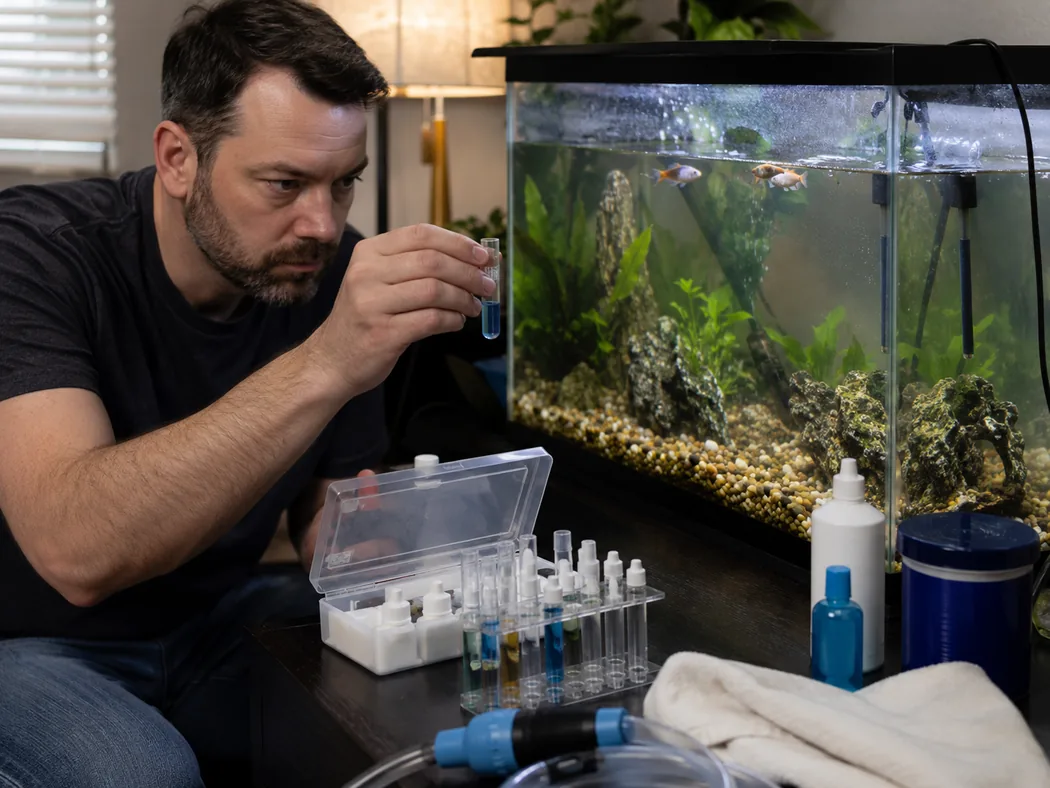
If fish are already in an uncycled tank, useful tools include a liquid ammonia/nitrite/nitrate test kit, conditioner that handles chlorine and chloramine, a thermometer, prepared dechlorinated water, and gentle backup aeration. Use them to stabilize the system while the biofilter catches up; do not rely on panic cleaning or large daily changes unless test results demand it.
Internal link suggestion: Fish Gasping at the Surface
What to Do After the Cycle Finishes
Cycling is not the finish line. It is the starting line.
A newly cycled tank is still young. It can process waste better than day one, but it is not the same as a mature aquarium that has been stable for months.
After cycling:
Do a partial water change if nitrate is high.
Add fish slowly.
Feed lightly for the first week.
Test ammonia and nitrite after adding fish.
Do not clean the filter aggressively.
Do not fully stock the tank immediately.
Think of your bacteria colony like a small team. It can grow, but it needs time to adjust when the fish load increases.
This is why a tank can be “cycled” and still get into trouble if you add too many fish at once.
Common Cycling Mistakes
Waiting a Fixed Number of Days
This is the classic beginner trap.
Someone online says, “Run the tank for a week.” So the beginner runs the filter for seven days, sees clear water, and buys fish.
But the bacteria do not care about your calendar. A tank seeded with mature filter media may become ready faster. A brand-new tank with low pH, weak flow, or no real ammonia source may take much longer.
Use the calendar to stay patient. Use the test kit to make decisions.
Thinking Clear Water Means Safe Water
Clear water can still contain ammonia/ammonium (NH3/NH4+) or nitrite (NO2-).
That is why new tank problems feel so confusing. The aquarium looks fine. The fish store said the setup was simple. The fish looked healthy yesterday. Then suddenly they are breathing fast or sitting near the bottom.
The water may look clean, but the chemistry is telling another story.
Replacing Filter Media During Cycling
Many filter cartridges are marketed like disposable items. That creates a bad habit for beginners.
During cycling, filter media is not just “dirty.” It is becoming biologically useful. The brown film and gunk inside the filter may look ugly, but some of it is part of the living biofilter you are trying to build.
If flow is blocked, rinse media gently in old tank water. Do not throw everything away because it looks dirty.
Adding Too Much Ammonia
More ammonia does not automatically mean a faster cycle.
Overdosing can make the cycle harder to read, create unpleasant water conditions, and slow progress in some setups. A steady, measured ammonia source is better than trying to force the tank to mature overnight.
Cycling rewards consistency, not aggression.
Adding Fish Because the Cycle Is Almost Done
Almost done is not done.
If nitrite (NO2-) is still present, the tank is not ready for fish. This is the stage where many people get impatient because ammonia has dropped and they think the worst part is over.
The nitrite stage can still harm fish. Wait until both ammonia/ammonium (NH3/NH4+) and nitrite (NO2-) are reading 0 ppm.
Over-Cleaning the Tank
A cycling aquarium does not need to be sterile.
If you scrub everything, replace filter media, wash decorations, vacuum aggressively, and do large unnecessary resets, you may slow the bacteria colony you are trying to grow.
Clean enough to keep water moving and equipment working. Do not clean so much that you erase the biological progress.
A Simple Cycling Plan That Actually Makes Sense
For most beginner freshwater tanks, a practical fishless cycle looks like this:
| Stage | What you do | What you watch |
|---|---|---|
| Setup | Fill tank, condition water, run filter and heater | Stable temperature and filter flow |
| Start | Add a measured ammonia source | Ammonia reading appears |
| Early cycle | Test every few days | Ammonia begins to drop |
| Middle cycle | Keep filter running and avoid over-cleaning | Nitrite rises, nitrate begins appearing |
| Late cycle | Wait for ammonia and nitrite to reach 0 ppm | Nitrate is present |
| Before fish | Water change if nitrate is high | Ammonia 0 ppm, nitrite 0 ppm, stable temperature |
| First fish | Add fish slowly and feed lightly | Retest ammonia and nitrite |
This is not the fastest method. It is the method that makes the most sense for beginners who want fewer dead fish and fewer mystery problems.
FAQ
What does it mean to cycle a fish tank?
Cycling means growing enough beneficial bacteria to convert fish waste from ammonia into nitrite and then into nitrate. A cycled tank is safer because toxic waste does not build as quickly.
How do I know my tank is cycled?
The practical sign is that the tank can process an ammonia source and show 0 ppm ammonia, 0 ppm nitrite, and some nitrate. Time alone does not prove a cycle.
Can I cycle a tank without fish?
Yes. Fishless cycling is usually kinder and more controlled because no fish are exposed to ammonia or nitrite during the process.
Can I cycle a tank with fish already inside?
Yes, but it requires careful testing, feeding lightly, and water changes whenever ammonia or nitrite appears. The goal is to protect the fish while the filter matures.
Does bottled bacteria instantly cycle a tank?
Not reliably. It may help, but you still need to test water. Bottled bacteria is support, not a guarantee that fish can be added safely the same day.
Should I replace filter cartridges during cycling?
No. Replacing filter media can remove the bacteria you are trying to grow. Rinse media gently in old tank water only when flow is reduced.
Why is nitrite dangerous?
Nitrite interferes with oxygen transport and can stress or kill fish. A tank is not safely cycled while nitrite is still present.
How long does cycling take?
It varies. Some tanks take a few weeks, others longer. Temperature, pH, ammonia source, seeded media, and maintenance all affect the timeline.
Related Guides
Continue with these guides:
- How to Set Up a Fish Tank
- Freshwater Aquarium Checklist
- Best Aquarium Test Kits
- Best Filter for a 10-Gallon Tank
- Why Is My Fish Tank Cloudy?
- Fish Gasping at the Surface
- Fish Tank Size Guide
- Cloudy Fish Tank Water
- Algae Problems
- Noisy Aquarium Filter
- Smelly Fish Tank
- Fish Not Eating
- How Often Should You Change Aquarium Water?
Final Advice
Cycling is not glamorous. It does not give you the instant reward of seeing fish swim through a finished tank.
But it is one of the kindest things you can do before adding fish.
Do not guess. Test.
Do not rush because the water looks clean. Watch ammonia and nitrite.
Do not treat the filter like disposable plastic. Treat it like the home of the bacteria colony that keeps your aquarium alive.
A cycled tank is not perfect. But it is ready in a way your eyes cannot see.
That invisible readiness is what keeps fish alive.
References
This guide was written for beginner freshwater aquariums and cross-checked against aquarium welfare, water-quality, and product-use references.