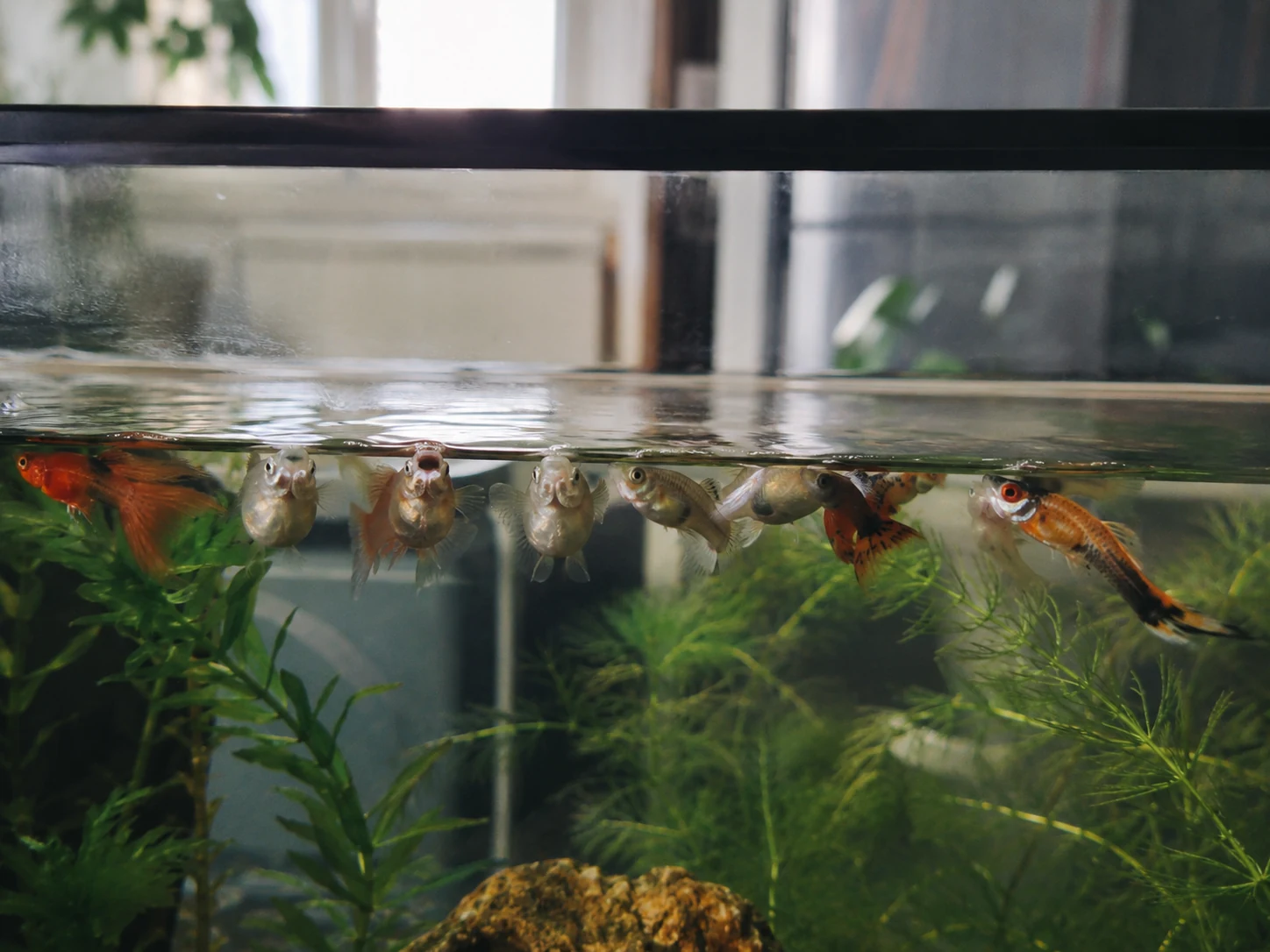
Fish gasping at the surface is not a “wait and see” symptom.
Sometimes it is low oxygen.
Sometimes it is ammonia or nitrite.
Sometimes it happens after a filter stops, a medication is overdosed, a tank overheats, a bacterial bloom consumes oxygen, or a new aquarium was stocked before the nitrogen cycle was ready.
The mistake is assuming the fish are “just breathing air.”
Most aquarium fish should not need to crowd the surface and gulp repeatedly. A betta may visit the surface because it has a labyrinth organ, but even bettas should not panic-breathe at the top all day. Guppies may explore the surface. Goldfish may beg for food. Tetras may swim in upper water.
That is different from gasping.
Gasping means urgency.
The first job is not to diagnose the exact cause perfectly. The first job is to keep the fish alive while you test the water and restore oxygen.
Do the emergency checks first.
Then fix the root cause.
Emergency Checklist: What to Do in the First 10 Minutes

If multiple fish are gasping, act now.
| Step | What to do | Why |
|---|---|---|
| 1 | Increase surface movement | Helps oxygen enter the water |
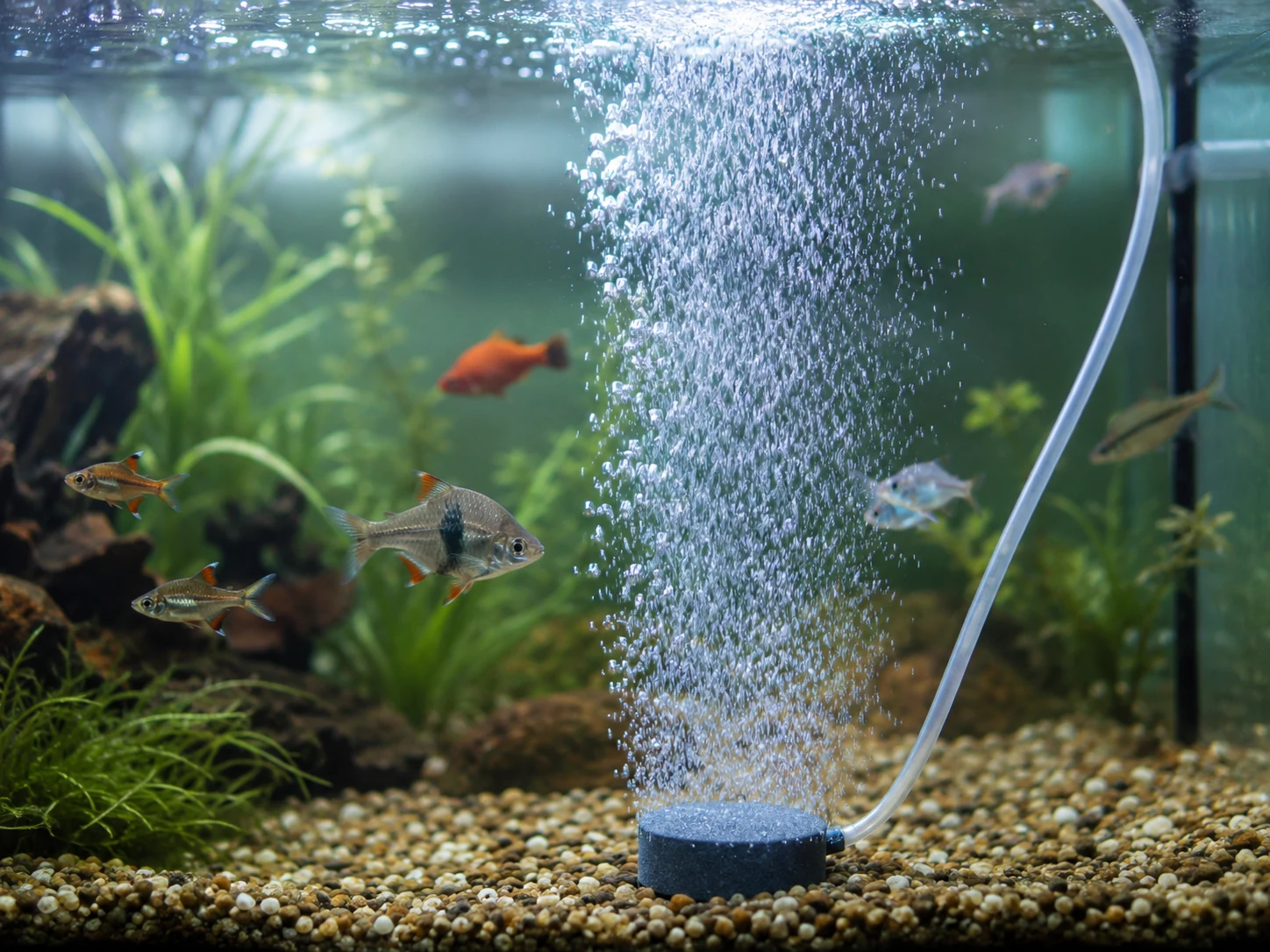
| 2 | Add an air stone if available | Fast oxygen support |
| 3 | Check filter flow | Stopped flow can drop oxygen and filtration |
| 4 | Check temperature | Warm water holds less oxygen |
| 5 | Test ammonia and nitrite | Both can make fish gasp |
| 6 | Remove dead fish/snails/rotting food | Reduces waste and oxygen demand |
| 7 | Stop feeding temporarily | Prevents more waste |
| 8 | Prepare dechlorinated water | Ready for safe partial water change |
| 9 | Avoid adding medication blindly | Gills may already be stressed |
| 10 | Observe whether fish improve | Confirms whether oxygen support helps |
If fish improve quickly after strong aeration, low oxygen was likely part of the problem.
If they keep gasping, assume water toxins may be involved until testing proves otherwise.
Low Oxygen vs Bad Water: The Difference Matters
Low oxygen and bad water can look similar.
Fish breathe fast. They hover near the surface. They gather near filter outflow. They may become weak, pale, or restless.
The difference is that low oxygen is about oxygen availability. Ammonia and nitrite are about gill irritation and blood oxygen transport problems. A tank can have plenty of surface movement and still have fish gasping if ammonia or nitrite is present.
| Sign | More likely low oxygen | More likely ammonia/nitrite |
|---|---|---|
| All fish at surface | Yes | Yes |
| Fish gather near filter output | Yes | Possible |
| Gasping after filter stopped | Yes | Possible if biofilter was affected |
| Gasping in warm water | Yes | Possible |
| Gasping in clear new tank | Possible | Very possible |
| Ammonia above 0 ppm | Not the main label | Yes |
| Nitrite above 0 ppm | Not the main label | Yes |
| Red/inflamed gills | Possible | More suspicious |
| Fish improve with aeration only | More likely | Not guaranteed |
| Fish improve after water change | Possible | More likely if toxins were present |
Do not guess by appearance only.
Test the water.
Cause 1: Poor Surface Agitation
Aquarium oxygen exchange happens mostly at the surface.
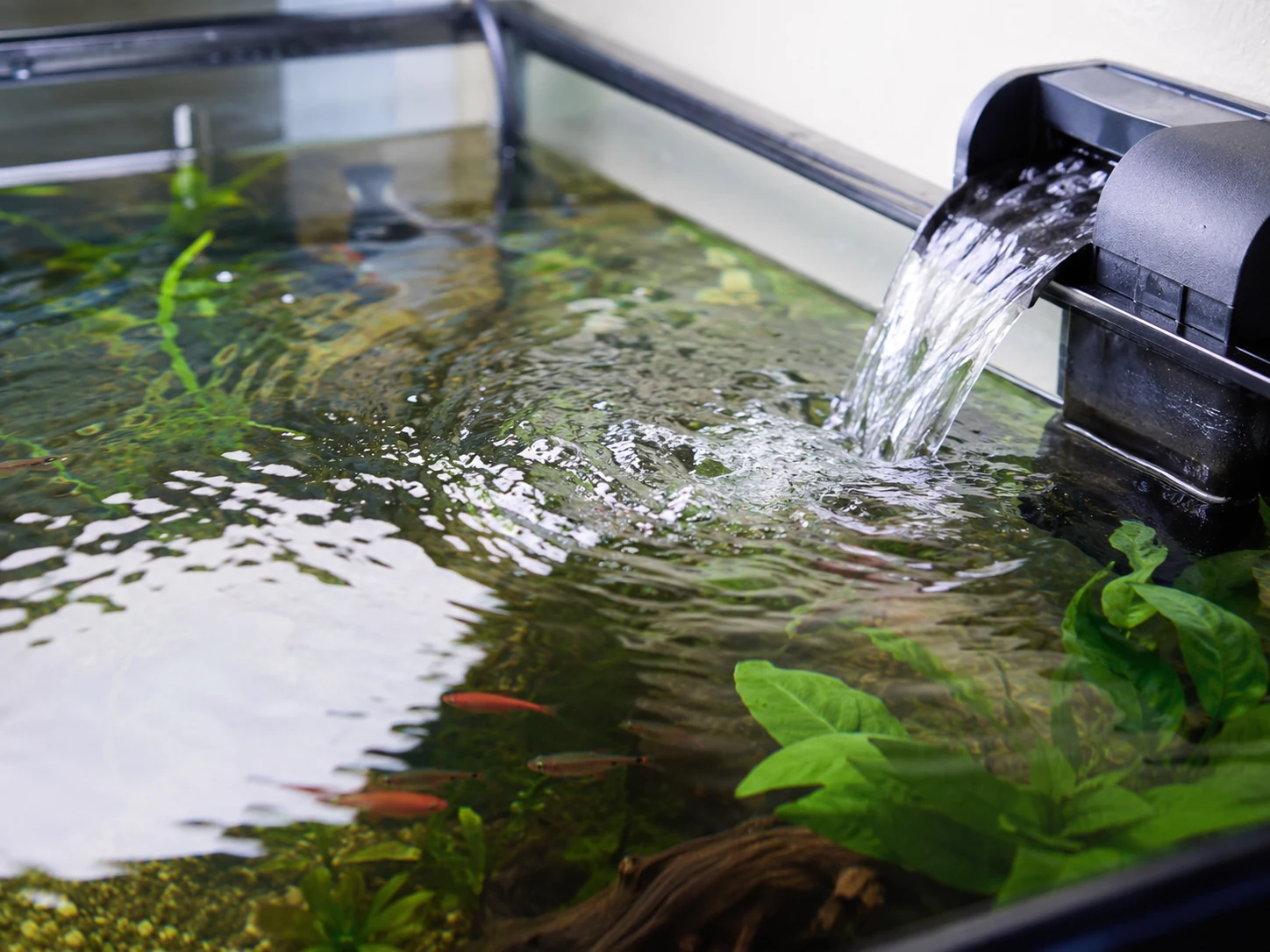
An air stone does not “inject oxygen” in the way beginners often imagine. The bubbles help because they move water and disturb the surface. A filter outlet, sponge filter, spray bar, waterfall, or wavemaker can also improve gas exchange.
If the surface is still and oily, oxygen exchange is poor.
| Problem | Fix |
|---|---|
| Still surface | Aim filter output toward surface |
| Weak filter flow | Clean clogged intake/media gently |
| No surface ripple | Add air stone or adjust outflow |
| Lid too tight with poor ventilation | Ensure normal gas exchange |
| Surface film | Remove film and improve agitation |
| Plants/floating plants covering all surface | Thin them out |
You do not need violent current.
You need surface movement.
Fish should not be blasted around.
Cause 2: Filter Stopped or Flow Dropped
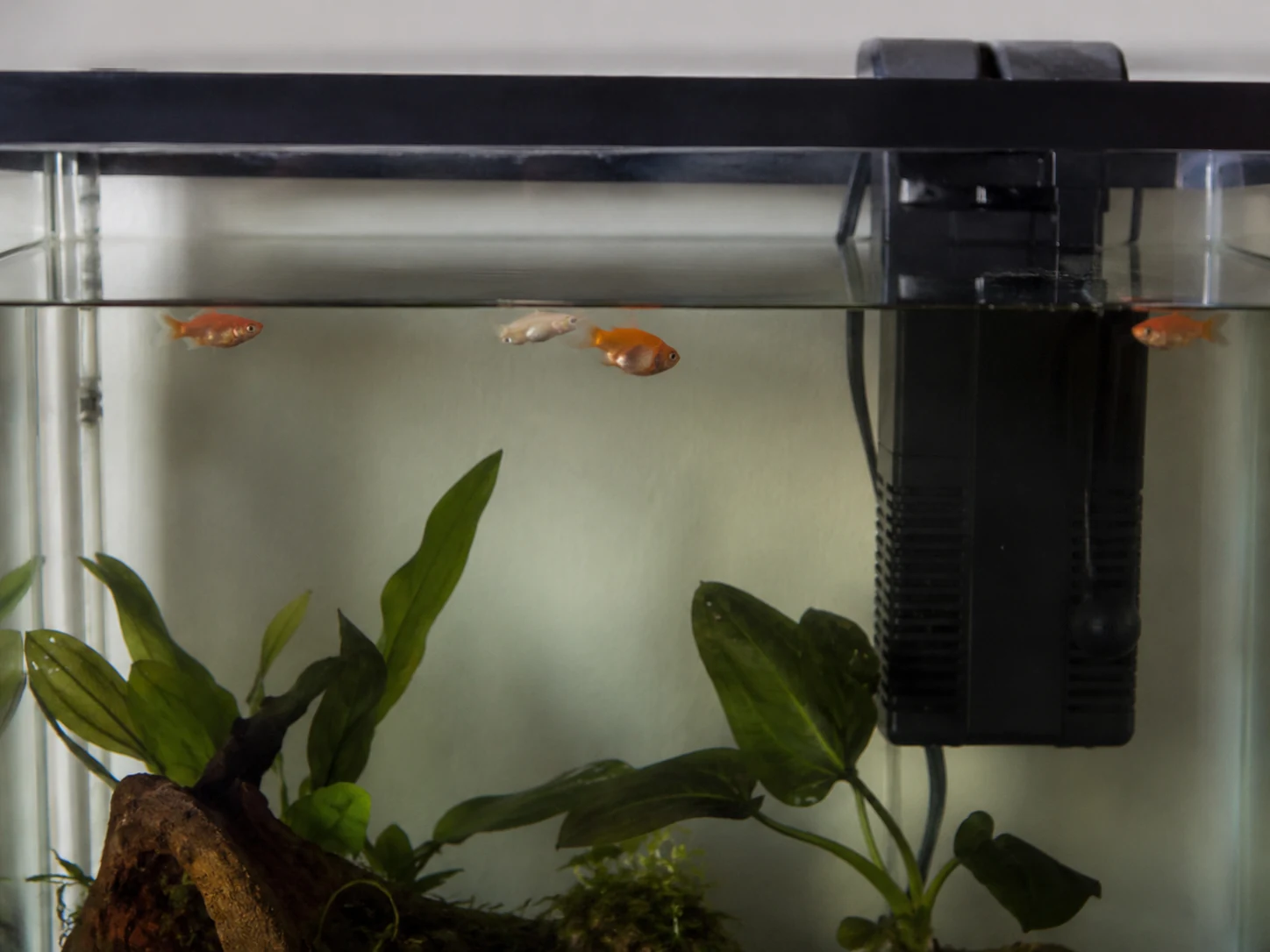
A stopped filter can create two problems at once.
First, oxygen and circulation drop.
Second, biological filtration may be interrupted. If the filter is off long enough, oxygen inside the filter media can fall, beneficial bacteria can suffer, and waste processing can become unstable.
Common signs:
| Clue | What it means |
|---|---|
| Filter not running | Immediate oxygen/circulation problem |
| HOB filter not primed | Water not moving |
| Sponge filter not bubbling | Air pump/tubing issue |
| Canister flow weak | Clogged media/intake/impeller |
| Filter was unplugged overnight | Possible oxygen and biofilter disruption |
| Fish gather near surface | Shared water issue |
What to do:
- Restart the filter.
- Confirm water is actually moving.
- Add an air stone if fish are gasping.
- Test ammonia and nitrite.
- Rinse clogged mechanical media in old tank water if flow is blocked.
- Do not replace all filter media at once.
If a filter has been off for a long time, be cautious when restarting it. In severe cases, dirty stagnant water inside the filter can be unpleasant or unsafe. When in doubt, clean the filter media gently in old tank water and restart with testing.
Cause 3: Ammonia Irritating the Gills
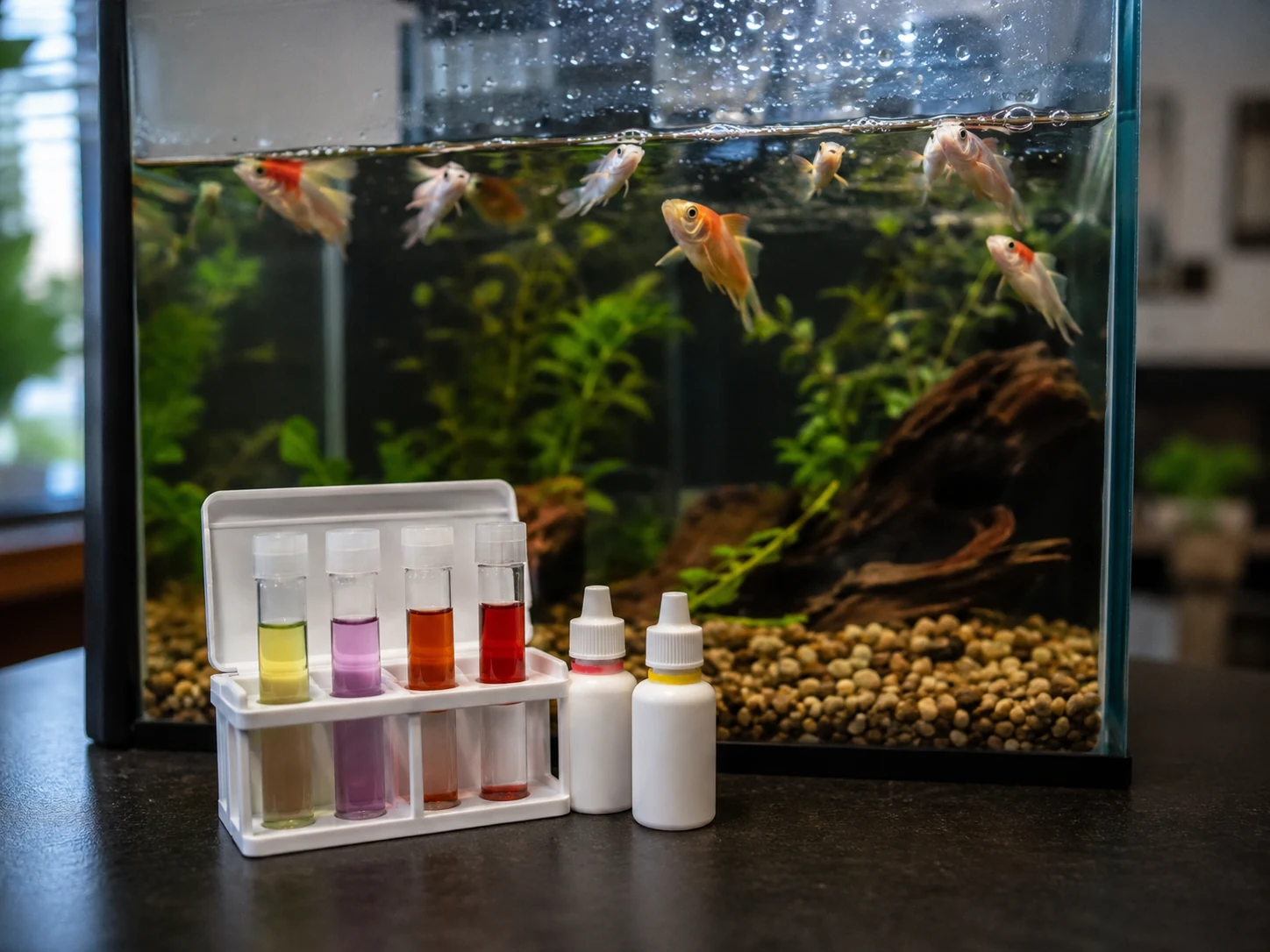
Ammonia is one of the most common reasons fish gasp in new or unstable tanks.
It damages and irritates gill tissue. Fish may breathe fast, gasp, clamp fins, hover, flash, or become weak. The water can look perfectly clear.
That is the trap.
Clear water can still be toxic.
| Ammonia risk factor | Why |
|---|---|
| New uncycled tank | Not enough bacteria yet |
| Overstocking | Waste rises faster |
| Overfeeding | Extra food rots |
| Dead fish/snail | Sudden waste spike |
| Filter media replaced | Biofilter removed |
| Big cleaning | Bacteria disrupted |
| High pH and warm water | More toxic un-ionized ammonia fraction |
If ammonia is present in a stocked tank:
- Stop feeding temporarily.
- Do a partial water change with dechlorinated, temperature-matched water.
- Increase aeration.
- Use water conditioner as directed if it binds ammonia temporarily.
- Test again.
- Find the source of the ammonia.
Do not add more fish.
Do not replace the filter media.
Do not assume the cycle is fine because the tank is old.
Old tanks can crash too.
Cause 4: Nitrite and “Invisible Suffocation”
Nitrite can make fish gasp even when dissolved oxygen seems adequate.
Nitrite interferes with oxygen transport in the blood. This is why fish may appear to be suffocating even in a tank with surface movement.
Common clues:
| Clue | Nitrite suspicion |
|---|---|
| New tank a few weeks old | High |
| Ammonia recently dropped | Nitrite may now rise |
| Fish gasp with clear water | Possible |
| Fish hang near filter output | Possible |
| Brownish gills in some cases | Possible |
| Test shows nitrite above 0 ppm | Treat as unsafe |
If nitrite is present:
- Do a partial water change.
- Increase aeration.
- Reduce feeding.
- Continue testing.
- Protect the biological filter.
- Do not fully reset the tank unless there is contamination.
Some aquarists use chloride support for nitrite exposure, but beginners should not improvise salt dosing without understanding species tolerance, plants, and tank context. A safe water change and cycle management should come first.
Cause 5: High Temperature

Warm water holds less dissolved oxygen than cooler water.
Fish also breathe faster in warm water because metabolism increases. This combination can push a borderline tank into a surface-gasping emergency.
Common triggers:
| Trigger | Example |
|---|---|
| Heat wave | Room temperature rises |
| Heater stuck on | Tank overheats |
| Light heating small tank | Nano tank warms quickly |
| Poor ventilation | Covered tank traps heat |
| Medication plus heat | Oxygen demand rises |
| Overstocked warm tank | Fish compete for oxygen |
What to do:
- Check actual water temperature with a thermometer.
- Increase aeration.
- Turn off lights temporarily if they add heat.
- Float a sealed cool water bottle if urgent, but cool slowly.
- Do not dump ice directly into the tank.
- Fix heater malfunction if present.
Avoid sudden temperature shock.
Fast swings can harm fish.
Cause 6: Overstocking and Overfeeding
Too many fish and too much food create a high oxygen-demand system.
Fish consume oxygen. Bacteria breaking down waste consume oxygen. Rotting food consumes oxygen as it decomposes. A tank can become especially dangerous at night because plants and algae also use oxygen when lights are off.
Overstocking and overfeeding often show up together.
| Sign | What it suggests |
|---|---|
| Fish gasp in morning | Overnight oxygen drop |
| Water smells bad | Organic waste |
| Filter clogs quickly | Too much waste |
| Nitrate rises fast | High bioload |
| Substrate dirty | Overfeeding/waste |
| Fish crowd surface after meals | Organic spike/oxygen demand |
Fix:
- Feed less.
- Remove uneaten food.
- Clean substrate lightly.
- Improve filtration and aeration.
- Rehome or reduce stocking if the tank is overloaded.
- Keep up with water changes.
A bigger filter does not make an overstocked tank harmless.
It only helps manage waste.
Cause 7: Bacterial Bloom or Cloudy Water
Milky cloudy water can be more than ugly.
A bacterial bloom can consume oxygen and often signals excess organic waste or an immature cycle. If fish are gasping in cloudy water, treat it as urgent.
| Cloudy water clue | Meaning |
|---|---|
| New tank, milky water | Bacterial bloom/cycle instability |
| Cloudy after overfeeding | Organic bloom |
| Cloudy after filter cleaning | Biofilter disturbance |
| Fish gasping | Oxygen/water quality concern |
| Ammonia/nitrite present | Unsafe |
| Bad smell | Decay or contamination |
What to do:
- Increase aeration.
- Test ammonia and nitrite.
- Remove waste and uneaten food.
- Avoid feeding for a short period.
- Do a partial water change if tests or fish behavior justify it.
- Keep filter running.
Do not keep dosing clarifier while fish are gasping.
Clear-looking water is not the same as safe water.
Cause 8: Green Water or Heavy Algae Bloom
Green water is suspended algae.
During the day, algae can produce oxygen. At night, algae and plants consume oxygen. In a tank already low on gas exchange or high in waste, a heavy algae bloom can contribute to oxygen swings.
Common pattern:
| Pattern | Direction |
|---|---|
| Water is green and opaque | Suspended algae bloom |
| Tank gets sun | Light-driven bloom |
| Fish gasp early morning | Possible overnight oxygen drop |
| Heavy algae plus warm water | Higher risk |
| Overfeeding also present | Worse |
| Filter flow weak | Worse |
Fix:
- Increase aeration.
- Reduce light.
- Block direct sunlight.
- Feed less.
- Remove organic waste.
- Consider UV sterilizer for persistent green water.
- Fix the cause so it does not return.
Do not treat green water only as a cosmetic problem if fish are gasping.
Cause 9: Medication or Chemical Overdose
Many medications and chemical treatments reduce oxygen availability, irritate gills, or stress fish when overdosed.
This can happen after:
| Trigger | Risk |
|---|---|
| Algae killer | Dying algae reduces oxygen |
| Disease medication | Gill stress/oxygen demand |
| Clarifier overdose | Irritation or poor gas exchange |
| Too much conditioner | Usually safe at label use; overdosing can complicate water |
| Essential oil remedies | Surface film/gill stress risks |
| Mixing medications | Unpredictable reactions |
| Treating in display tank | Biofilter and oxygen risk |
If fish gasp after a treatment:
- Increase aeration immediately.
- Read the product label.
- Do a partial water change if overdose is likely.
- Use activated carbon if the medication label allows removal that way.
- Do not add a second treatment.
- Test ammonia and nitrite.
Medication should not make the whole tank worse.
If it does, stop and stabilize water first.
Cause 10: Chlorine, Chloramine, or Water Change Shock
Fish gasping after a water change deserves immediate attention.
Possible causes:
| Cause | Clue |
|---|---|
| No dechlorinator | Gasping soon after refill |
| Wrong conditioner dose | Stress after change |
| Large temperature mismatch | Sudden shock |
| pH/mineral swing | Sensitive fish react |
| Water added too fast | Stress |
| Contaminated bucket/hose | Sudden widespread reaction |
| Tap water issue | Multiple tanks affected if used |
What to do:
- Confirm water conditioner was used correctly.
- Add conditioner for the full tank volume if chlorine/chloramine exposure is possible and product directions support it.
- Increase aeration.
- Check temperature.
- Test ammonia and nitrite.
- Use clean aquarium-only buckets and hoses.
Never use soap-cleaned buckets for aquarium water.
Residue can be enough to cause real trouble.
Fish Gasping at Night or Early Morning
Gasping at night or early morning often points toward oxygen balance.
At night, plants and algae do not photosynthesize. They respire, consuming oxygen. Fish and bacteria also use oxygen. If the tank has weak surface movement, heavy plant/algae mass, high temperature, or too much waste, oxygen can dip before lights come on.
| Night/morning gasping trigger | Fix |
|---|---|
| No surface agitation | Add aeration or adjust filter |
| Heavy algae bloom | Control algae and increase oxygen |
| Dense plant mass | Ensure night aeration |
| Warm water | Stabilize temperature |
| Overstocking | Reduce bioload |
| Dirty substrate | Remove waste |
| Filter flow weak | Restore flow |
Planted tanks can still need aeration.
Plants are not oxygen machines 24 hours a day.
Species Notes: Bettas, Goldfish, Guppies, and Community Fish
Different fish behave differently at the surface.
| Fish type | Surface behavior note |
|---|---|
| Betta | May breathe air at surface, but constant frantic gasping is not normal |
| Goldfish | High oxygen demand; surface gasping is serious |
| Guppies/livebearers | Often swim upper levels, but rapid gulping is suspicious |
| Tetras/rasboras | Surface crowding often suggests shared water problem |
| Corydoras | Occasional dash to surface can be normal; repeated gasping is not |
| Labyrinth fish | Can breathe air, but still suffer from ammonia, nitrite, heat, and low oxygen |
| Shrimp/snails | Climbing or gathering near surface can signal oxygen/water issues |
Know the normal behavior for the species.
Then take sudden changes seriously.
What Not to Do
Avoid these common panic moves.
| Mistake | Why it can make things worse |
|---|---|
| Add medication first | Most gasping is water-related |
| Replace all filter media | Can crash the cycle |
| Do 100% water change without matching conditions | Shock risk |
| Pour in salt blindly | Species/plants/context matter |
| Turn off filter at night | Reduces oxygen and filtration |
| Add more fish | More oxygen demand and waste |
| Overdose conditioner or clarifier | Can complicate gill stress |
| Ignore testing because water is clear | Clear water can still be toxic |
| Assume air pump alone fixes ammonia | It does not remove toxins |
The safest response is boring:
oxygen, test, partial water change if needed, remove waste, protect the filter, then diagnose.
Recovery: What Improvement Looks Like
After the right correction, fish should gradually move away from the surface, breathe more normally, and resume usual swimming behavior.
| Improvement | Good sign |
|---|---|
| Fish leave surface | Oxygen/water stress reduced |
| Breathing slows | Gills less stressed |
| Schooling resumes | Behavior normalizing |
| Appetite returns slowly | Recovery |
| Fins unclamp | Stress reducing |
| Ammonia/nitrite test 0 ppm | Water safer |
Do not feed heavily the moment fish look better.
A stressed tank needs a lighter load while it stabilizes.
Prevention: How to Stop Surface Gasping From Coming Back
| Habit | Why it helps |
|---|---|
| Keep filter running 24/7 | Maintains oxygen and biofilter |
| Use surface agitation | Supports gas exchange |
| Avoid overstocking | Reduces oxygen demand |
| Feed lightly | Reduces waste and bacterial oxygen use |
| Test new tanks often | Catches cycle problems |
| Protect filter media | Preserves beneficial bacteria |
| Use a thermometer | Prevents hidden heat issues |
| Remove dead matter quickly | Reduces decay |
| Avoid direct sun/algae blooms | Prevents oxygen swings |
| Add aeration during heat, medication, or emergencies | Extra safety margin |
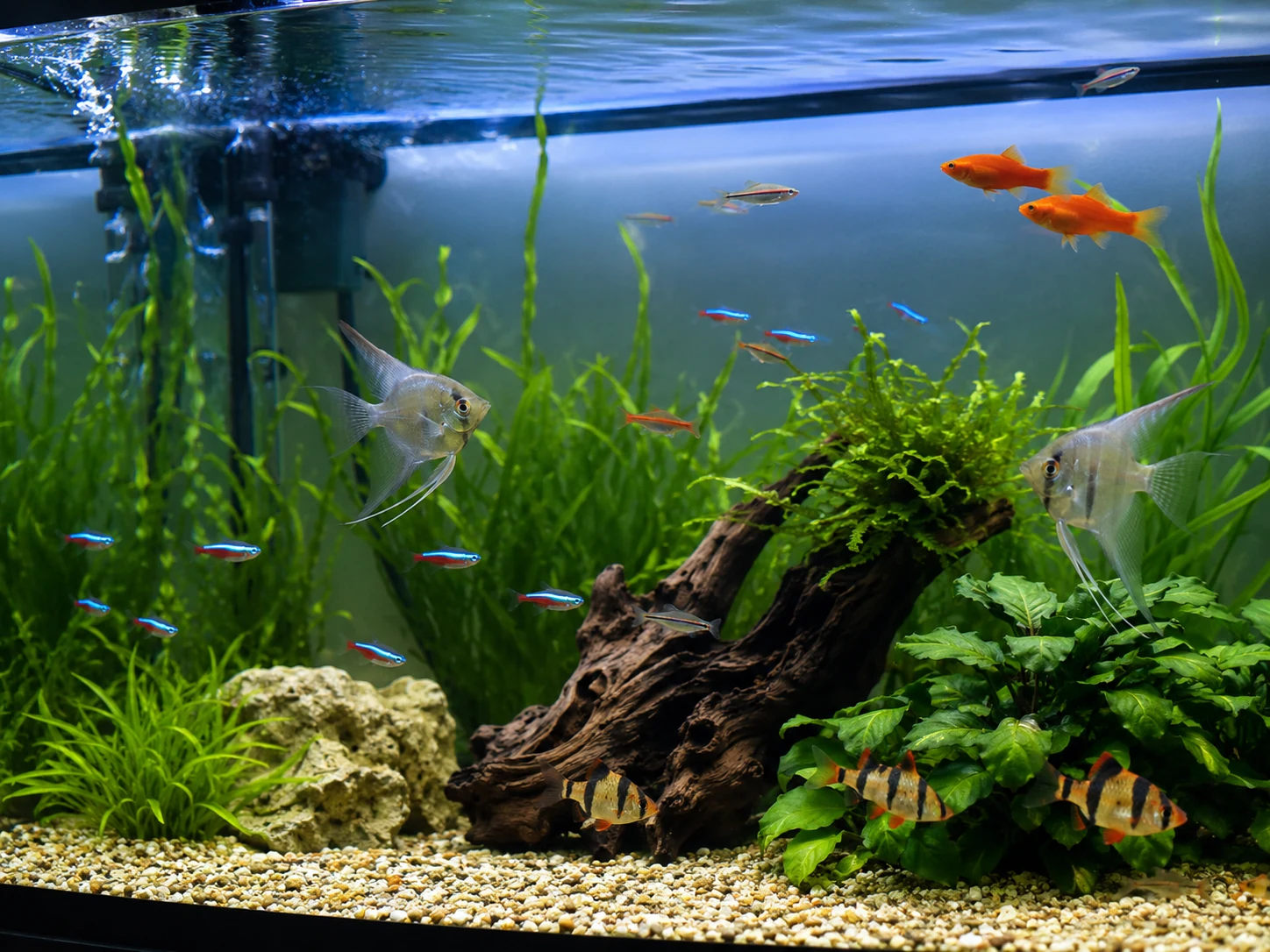
Healthy fish do not gasp because the tank is “perfectly clear.”
They breathe normally because the water is safe and oxygen is available.
FAQ
Why are my fish gasping at the surface?
Fish usually gasp at the surface because they cannot get enough usable oxygen or because ammonia, nitrite, chlorine, heat, medication, or another water problem is irritating their gills.
Should I add an air stone if fish are gasping?
Yes, adding aeration is a good emergency support step. It does not replace testing or water changes if ammonia or nitrite is present, but it can help fish immediately.
Can ammonia make fish gasp even if the water is clear?
Yes. Ammonia can irritate and damage gills even in clear water. Never judge ammonia safety by appearance. Test the water.
Can nitrite make fish look like they are suffocating?
Yes. Nitrite interferes with oxygen transport, so fish may gasp even when the tank has visible surface movement. Nitrite should be 0 ppm in a stocked aquarium.
Why are my fish gasping after a water change?
Possible causes include chlorine or chloramine exposure, temperature shock, pH or mineral shift, contamination from buckets or hoses, or disturbed waste. Check conditioner, temperature, and water tests immediately.
Why are fish gasping after medication?
Some medications reduce oxygen, irritate gills, or stress fish if overdosed. Increase aeration, read the label, test water, and consider a partial water change if overdose or reaction is likely.
Do plants provide enough oxygen for fish?
Not always. Plants produce oxygen during photosynthesis, but they also consume oxygen at night. Planted tanks still need good gas exchange and filtration.
Why are fish gasping in the morning?
Morning gasping often suggests overnight oxygen drop, especially in warm, overstocked, heavily planted, algae-heavy, or low-flow tanks.
Can a dirty filter cause fish to gasp?
Yes. A clogged or stopped filter can reduce flow, oxygen exchange, and biological filtration. Clean clogged mechanical media gently, but do not replace all biological media.
Is surface breathing normal for bettas?
Bettas can breathe air from the surface, but constant frantic gasping is not normal. Bettas still need warm, clean, oxygenated water with 0 ppm ammonia and 0 ppm nitrite.
Should I do a water change immediately?
Do a partial water change if ammonia or nitrite is present, fish are severely stressed, contamination is suspected, or the tank smells bad. Use dechlorinated, temperature-matched water.
Can algae cause fish to gasp?
Heavy algae or green water can contribute to oxygen swings, especially overnight. The bigger issue is often the same imbalance behind the algae: too much light, waste, nutrients, or poor gas exchange.
Related Guides
- Cloudy Fish Tank Water
- Algae Problems in Fish Tanks
- How to Cycle a Fish Tank Without Guessing When It’s Safe for Fish
- How to Set Up a Fish Tank Without Making the Beginner Mistakes That Kill Fish
- Freshwater Aquarium Checklist
- Why Is My Betta Gasping at the Surface?
- Betta Fish Care Guide
- Best Aquarium Filters
- Best Aquarium Test Kits
- Noisy Aquarium Filter
- Smelly Fish Tank
- Fish Not Eating
- How Often Should You Change Aquarium Water?
Author Box
Editorial Note
This guide is educational and intended for home freshwater aquariums. Fish gasping at the surface can become urgent quickly. Always prioritize oxygen, ammonia, nitrite, temperature, chlorine/chloramine safety, and fish behavior over cosmetic water clarity.
Healthy Aquariums does not recommend using medications, algae killers, salt, or repeated full tank resets as the first response to gasping fish. Stabilize the water first, then diagnose the cause.
References
- New Mexico State University Extension. “Important Water Quality Parameters in Aquaponics Systems.” https://pubs.nmsu.edu/_circulars/CR680/
- Oklahoma State University Extension. “Nitrification and Maintenance in Media Bed Aquaponics.” https://extension.okstate.edu/fact-sheets/nitrification-and-maintenance-in-media-bed-aquaponics
- University of Florida IFAS Extension. “Ammonia in Aquatic Systems.” https://edis.ifas.ufl.edu/publication/FA031
- University of Florida IFAS Extension. “Dissolved Oxygen for Fish Production.” https://edis.ifas.ufl.edu/publication/FA002
- Aqueon. “Freshwater Aquarium Water Quality: The Nitrogen Cycle & More.” https://www.aqueon.com/articles/freshwater-aquarium-water-quality
- Merck Veterinary Manual. “Overview of Nitrite Poisoning.” https://www.merckvetmanual.com/toxicology/nitrite-poisoning/overview-of-nitrite-poisoning
- Manufacturer instructions for any aquarium water conditioner, filter, air pump, medication, test kit, heater, UV sterilizer, or algae treatment used by the reader.