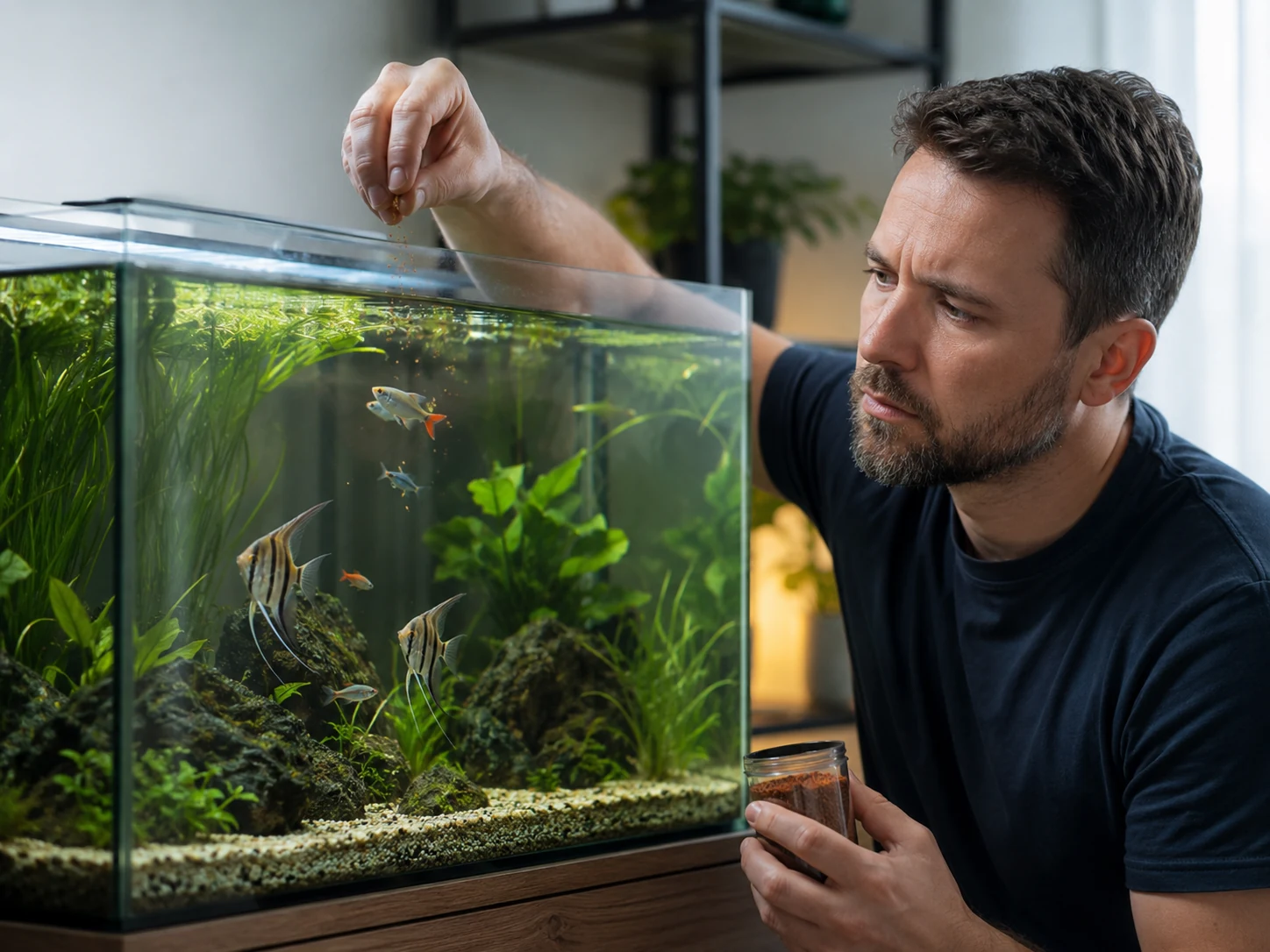
A fish skipping one meal is not always an emergency.
A fish refusing food for days can be.
The hard part is knowing which situation you are dealing with.
Fish stop eating for many reasons: they are new, stressed, cold, overfed, bullied, constipated, sick, recovering from transport, adjusting to new food, reacting to ammonia or nitrite, or living in a tank that is not stable yet.
The beginner mistake is to treat appetite loss as one disease.
It is not.
Not eating is a symptom.
The first question is not “What medication should I use?”
The first question is:
What changed before the fish stopped eating?
Then check the water, temperature, behavior, breathing, stool, body shape, tankmates, and food.
A fish that refuses food but swims normally in safe water is different from a fish that refuses food while gasping, clamping fins, bloating, pineconing, floating sideways, or hiding at the bottom.
Context matters.
Emergency Check: When Not Eating Is Serious
Loss of appetite becomes urgent when it appears with other danger signs.
| Warning sign | Why it matters |
|---|---|
| Gasping at surface | Low oxygen, ammonia, nitrite, chlorine, heat |
| Ammonia above 0 ppm | Gill stress and toxin exposure |
| Nitrite above 0 ppm | Oxygen transport problem |
| Pineconing scales | Possible dropsy/internal failure |
| Severe bloating | Constipation, fluid buildup, organ issue |
| Lying on bottom | Serious stress or illness |
| Floating sideways/upside down | Swim bladder or severe weakness |
| Red sores/ulcers | Infection or injury |
| White stringy feces | Internal parasites or gut irritation |
| Rapid weight loss | Parasites, chronic illness, bullying |
| Multiple fish stop eating | Shared water or environmental problem |
| Fish not eating after chemical use | Overdose or gill stress |
Emergency first steps:
- Test ammonia, nitrite, and pH.
- Check temperature.
- Check filter flow and aeration.
- Look for gasping, clamped fins, bloating, pineconing, sores, flashing, red gills, swollen gills, or abnormal swimming.
- Stop feeding for the moment.
- Remove any uneaten food already in the tank.
- Prepare dechlorinated, temperature-matched water.
- Do a controlled partial water change if tests or fish behavior require it.
- Do not add medication until you have a likely cause.
A fish can survive a short fast.
It may not survive bad water.
Cause 1: New Fish Stress
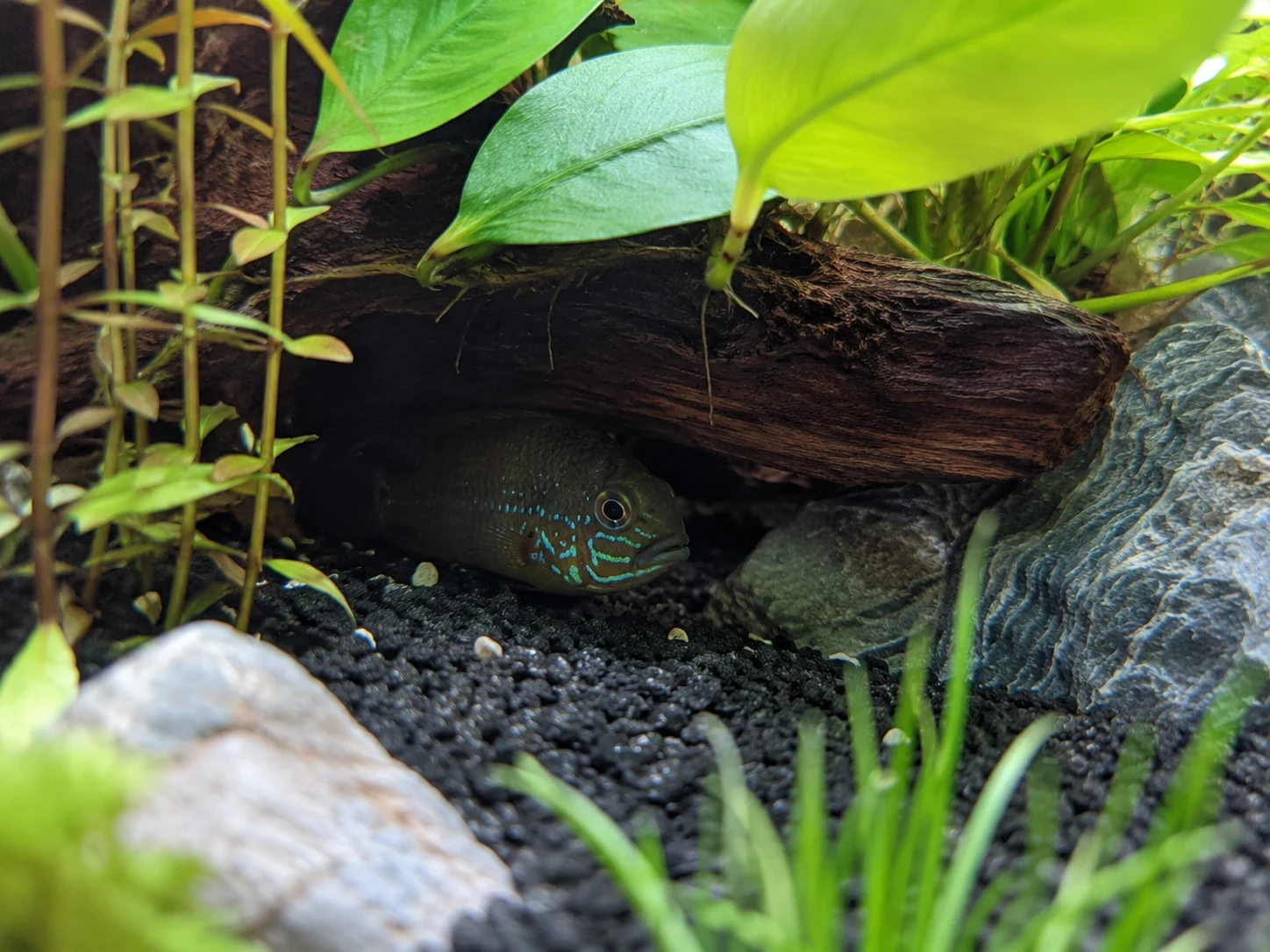
New fish often refuse food for the first day or two.
They have been netted, bagged, transported, exposed to new water, new light, new tankmates, and new hiding places. Some fish eat the same day. Others need time.
Normal new-fish behavior can include:
| Normal during adjustment | More concerning |
|---|---|
| Hiding for a day | Gasping at surface |
| Ignoring food briefly | Lying on side |
| Exploring slowly | Ammonia/nitrite present |
| Eating after lights dim | Rapid breathing |
| Staying near cover | Bullying or fin damage |
| Shy feeding | White stringy feces |
What to do:
- Keep lights dim.
- Offer a small amount of food only.
- Remove uneaten food.
- Avoid tapping the glass.
- Make sure hiding places exist.
- Test water.
- Do not chase the fish with food.
New fish do not need a buffet.
They need a safe tank.
Cause 2: Bad Water Quality
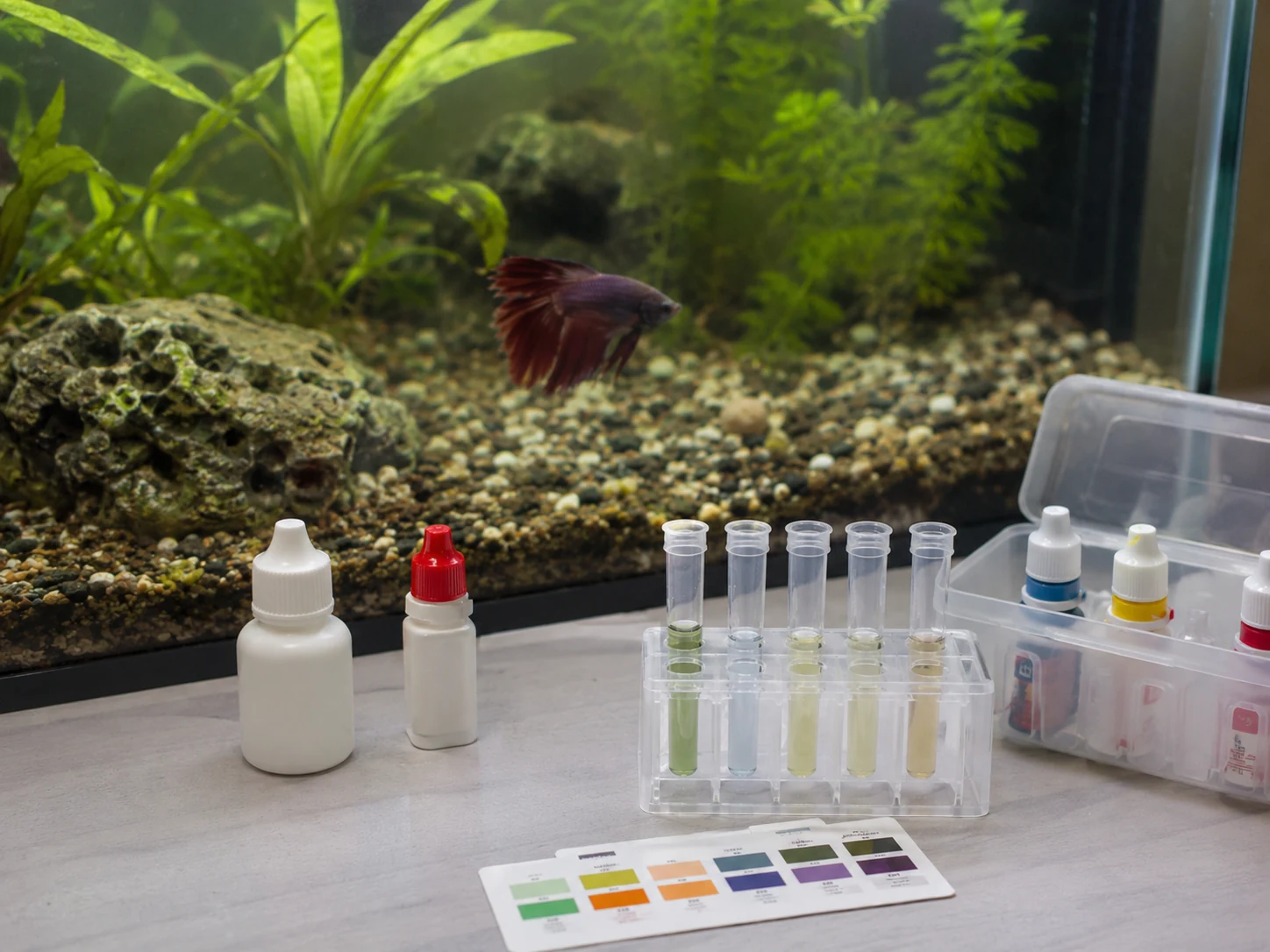
Poor water quality is one of the most common reasons aquarium fish stop eating.
Ammonia and nitrite can irritate gills, stress the body, and make fish feel unsafe. Nitrate, organic waste, pH swings, chlorine, temperature shock, and low oxygen can also reduce appetite.
The water may look clear.
That does not prove it is safe.
| Water issue | Appetite effect |
|---|---|
| Ammonia | Gill stress, lethargy, refusal |
| Nitrite | Oxygen transport stress |
| High nitrate/organics | Chronic stress |
| Chlorine/chloramine | Gill irritation |
| pH swing | Shock |
| Temperature mismatch | Stress |
| Low oxygen | Gasping, reduced feeding |
| Dirty substrate | Organic overload |
Check:
- ammonia
- nitrite
- nitrate
- pH
- temperature
- filter flow
- aeration
- recent water changes
- recent filter cleaning
If ammonia or nitrite is present, fix water before worrying about appetite stimulants.
Food adds waste.
Do not keep feeding a tank that is already unsafe.
Water quality before medication
When fish stop eating suddenly, treat water testing as the first diagnostic step, not an afterthought. Ammonia, nitrite, sudden nitrate accumulation, pH movement, temperature mismatch, chlorine/chloramine exposure, and oxygen stress can all suppress appetite before obvious disease signs appear.
A common beginner mistake is to medicate first and test later. Medication can add stress, reduce oxygen, or damage biofilter stability in a tank that was already unstable. Unless there is a clear emergency disease pattern, test the water, stabilize aeration and temperature, and avoid combining a large water change, substrate disturbance, and filter-media cleaning on the same day.
Cause 3: Wrong Temperature
Temperature affects metabolism.
Cold fish digest slowly and may become inactive or uninterested in food. Warm water can speed metabolism but also lower oxygen availability and stress fish if the species does not tolerate it.
| Temperature issue | Possible behavior |
|---|---|
| Too cold for tropical fish | Lethargy, poor appetite |
| Too warm | Fast breathing, stress, low oxygen |
| Sudden drop | Hiding, refusal |
| Sudden rise | Gasping, agitation |
| Unstable heater | On/off appetite problems |
| No thermometer | Hidden problem |
Do not guess by room temperature.
Use a thermometer.
Set temperature for the species, not for a generic “tropical” label.
Raise temperature slowly.
If a tropical tank is too cold, do not jump several degrees in one hour just to “wake up” appetite. A safer adjustment is usually no more than 1–2°C per day unless a veterinarian or species-specific emergency protocol says otherwise. As water warms, it holds less dissolved oxygen, and fish metabolism rises. That means the fish may need more oxygen at the exact moment the water can hold less.
Increase aeration when raising temperature.
Also test ammonia before warming a troubled tank. Higher temperature and higher pH can make ammonia more dangerous by shifting more total ammonia toward toxic NH3. A weak fish that is not eating does not need warmer poisoned water.
Warm slowly, aerate well, and test first.
Cause 4: Overfeeding and Constipation
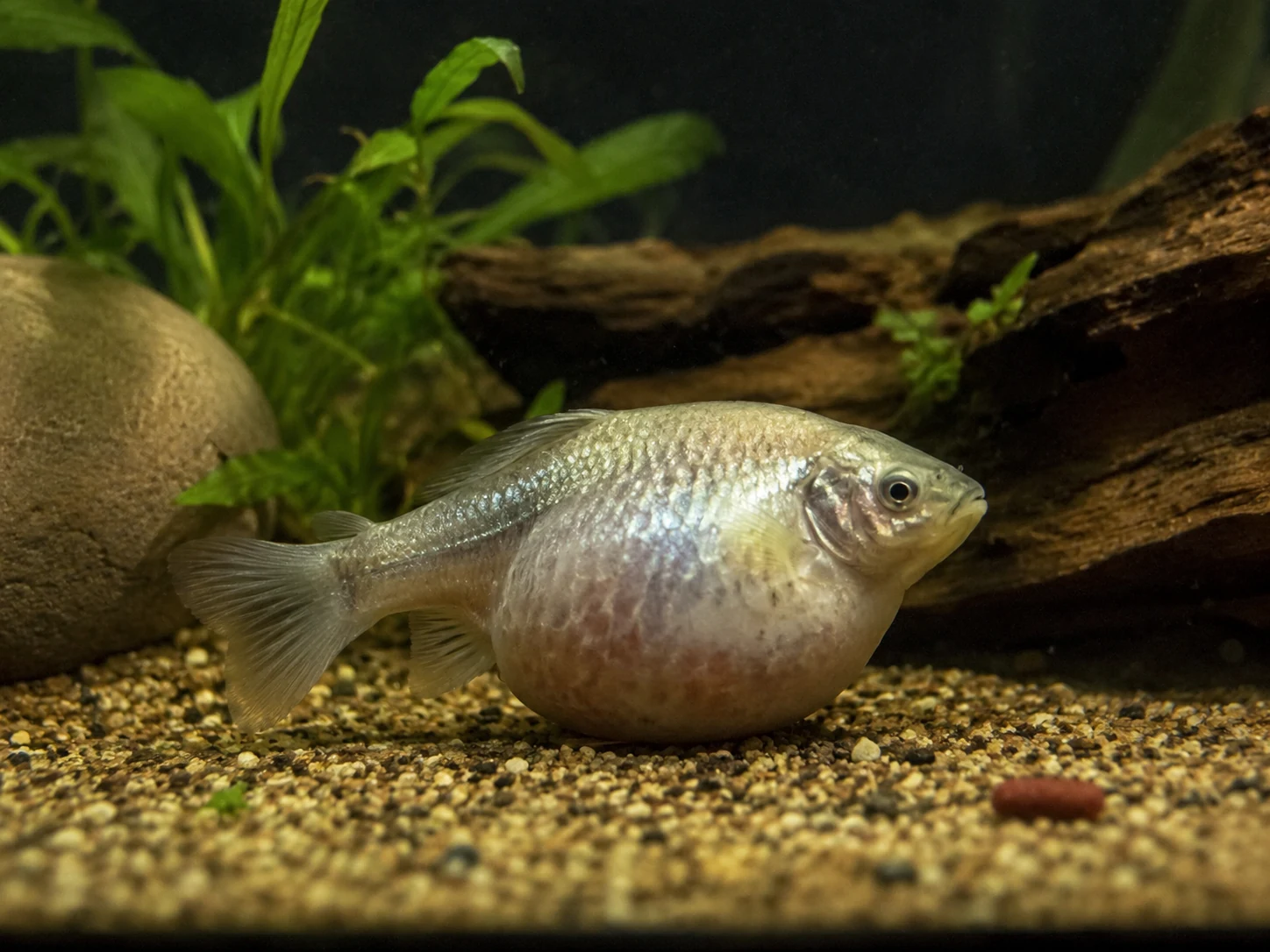
A fish may stop eating because it has been eating too much.
Overfeeding can cause bloating, constipation, dirty water, and poor appetite. Some fish keep begging even when they are overfed, so appetite alone is not a reliable feeding guide.
| Sign | Meaning |
|---|---|
| Round belly after meals | Too much food or rich diet |
| Stringy normal-colored feces | Possible constipation |
| No feces seen | Possible digestive slowdown |
| Food on substrate | Overfeeding |
| Cloudy/smelly water | Organic overload |
| Fish eats then refuses next day | Too much food |
| Floating after eating | Diet or digestion issue |
Safer response:
- Stop feeding for 24–48 hours if the fish is bloated but otherwise stable.
- Test water.
- Resume with smaller portions.
- Use species-appropriate food.
- Avoid hard pellets that expand too much.
- Pre-soak pellets briefly for small fish if needed.
- Remove uneaten food.
Do not fast a severely thin fish without understanding why it is thin.
Bloating and wasting are different problems.
Cause 5: Food Is Wrong, Too Large, or Unfamiliar
Sometimes the fish is not sick.
The food is the problem.
But spitting food out is not always picky eating.
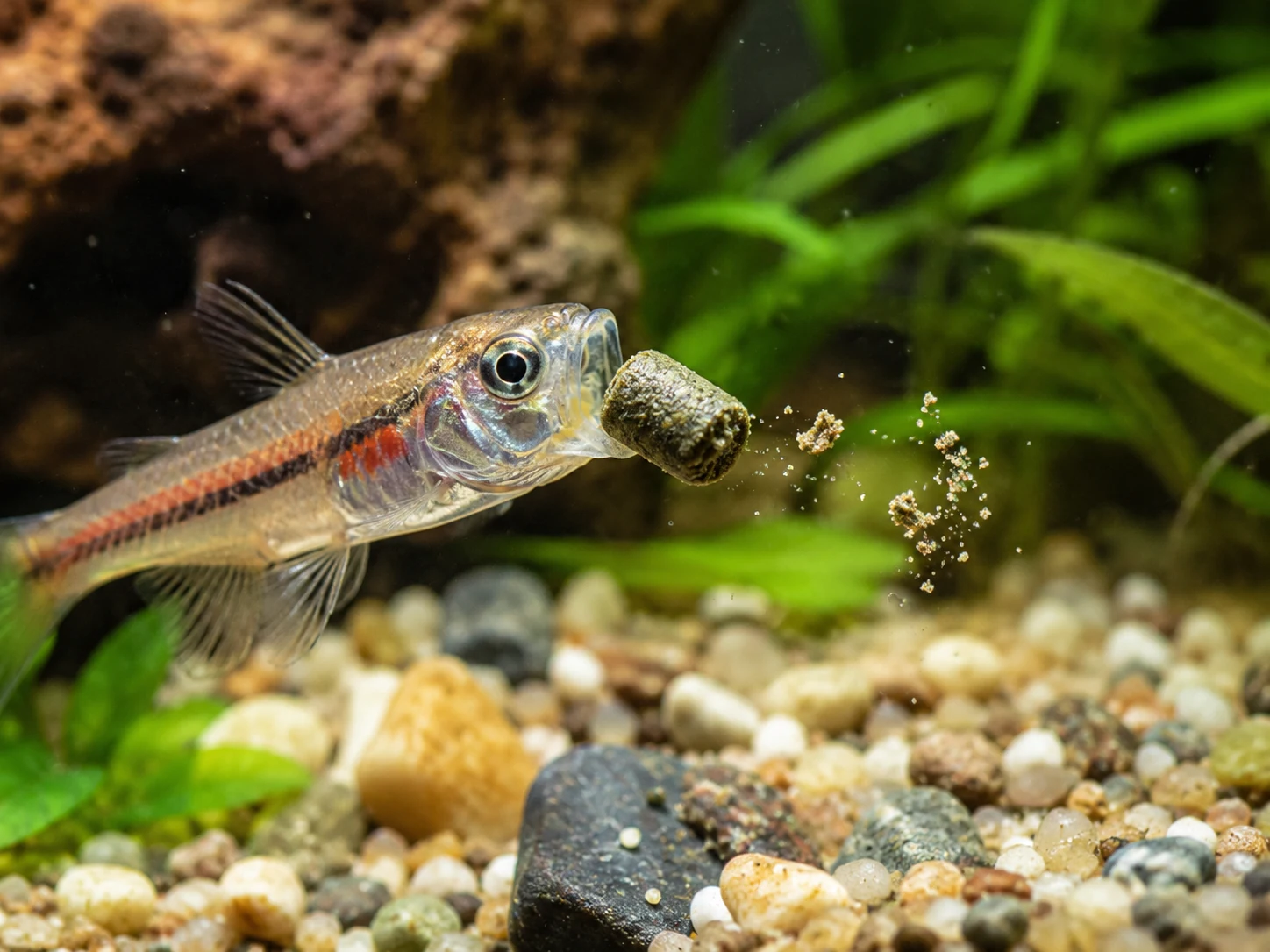
A fish may reject food that is too large, too hard, stale, floating when it prefers sinking, sinking when it feeds at the surface, too plant-heavy, too protein-heavy, or completely unfamiliar. When food is too large, a fish may grab it, chew briefly, spit it out, and try again several times.
There is a second, more serious pattern: the fish rushes to food eagerly, grabs it, then spits it out repeatedly as if swallowing hurts. That can point to irritated gills, gill flukes, mouth/throat injury, internal parasites, or ammonia burn affecting delicate mouth and gill tissue.
If a fish repeatedly grabs and spits food, check for red or swollen gills, rapid breathing, flashing against rocks, clamped fins, excess mucus, white stringy feces, or ammonia above 0 ppm.
Do not keep throwing more foods into the tank to “test” appetite.
That can turn a medical or water-quality problem into an ammonia problem.
| Behavior | Possible food issue |
|---|---|
| Grabs and spits food out | Too large, hard, stale, or wrong texture |
| Ignores floating food | Bottom/midwater feeder |
| Ignores sinking food | Surface feeder |
| Eats frozen but not pellets | Preference/training issue |
| Only small fish eat | Food size mismatch |
| One fish never gets food | Competition |
| Food untouched by all fish | Stale or unsuitable |
Fix:
- Try smaller pieces.
- Offer food at the correct water level.
- Use species-appropriate diet.
- Remove uneaten food.
- Transition slowly from old food to new food.
- Do not rely on one food forever.
A fish that spits food out is giving useful feedback.
Watch what happens.
Cause 6: Bullying, Competition, or Fear

A fish may not eat because it cannot eat.
Fast tankmates may steal food. Aggressive fish may guard feeding areas. Shy fish may hide until food is gone. Bottom fish may never get sinking food because midwater fish attack it first.
| Clue | What it suggests |
|---|---|
| Fish hides during feeding | Fear or bullying |
| Torn fins | Aggression |
| One fish gets skinny | Food competition |
| Dominant fish guards area | Territorial pressure |
| Shy fish eats after lights out | Fear |
| Food gone before bottom fish feed | Competition |
| Fish comes out when alone | Tankmate issue |
Fix:
- Feed in more than one area.
- Use sinking food for bottom feeders.
- Add cover and visual barriers.
- Separate aggressive fish if needed.
- Reassess stocking compatibility.
- Use a feeding ring or target feeding when appropriate.
Do not assume a fish is “picky” if it is being bullied away from food.
Cause 7: Disease or Parasites
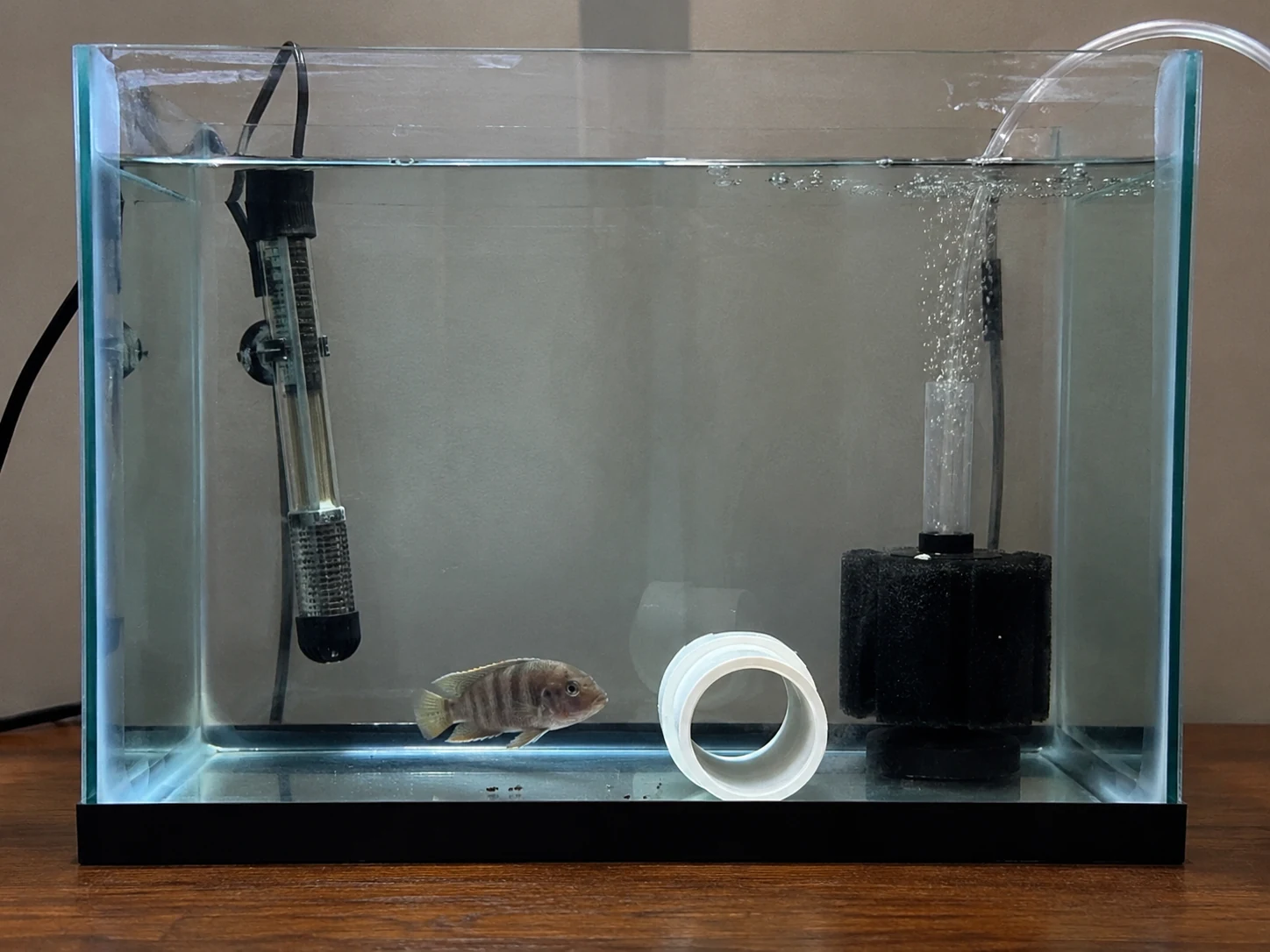
Illness often reduces appetite.
But different diseases need different responses. Appetite loss alone does not tell you which medication to use.
Look for patterns.
| Symptom with not eating | Possible direction |
|---|---|
| White stringy feces | Internal parasites or gut irritation |
| Thin body despite food | Parasites, chronic stress, competition |
| Bloated belly | Constipation, dropsy, internal issue |
| Pineconing | Dropsy/emergency |
| Frayed fins | Fin rot, injury, poor water |
| Cloudy/lump eye | Eye injury or infection |
| Spots like salt | Ich |
| Velvet dusting | Velvet |
| Red sores | Bacterial infection or injury |
| Clamped fins | Stress or disease |
| Flashing/scratching | Irritation, parasites, water quality |
If one fish is sick, consider a hospital tank.
Do not dose the whole display tank blindly, especially with antibiotics. Some medications can stress fish, harm invertebrates, or affect the biofilter.
Diagnosis first.
Medication second.
Cause 8: Mouth Injury or Physical Problem
A fish may want to eat but cannot.
Mouth injuries can come from fighting, rough netting, sharp decor, gravel pecking, stuck food, or deformity.
Clues:
| Clue | Possible issue |
|---|---|
| Approaches food but cannot grab it | Mouth injury |
| Food falls out repeatedly | Jaw/mouth problem |
| Swelling around mouth | Injury or infection |
| One side of mouth damaged | Trauma |
| Avoids hard food | Pain |
| Breathes normally but cannot eat | Mechanical issue |
Offer softer, smaller food and observe.
If swelling, redness, fungus-like growth, or spreading infection appears, the fish may need isolation and targeted treatment.
Cause 9: Spawning, Breeding, or Hormonal Behavior
Some fish eat less during spawning behavior.
Mouthbrooding fish may hold eggs or fry and refuse food. Male bettas may focus on bubble nest behavior. Cichlids may guard eggs. Livebearers may eat less before giving birth.
| Behavior | Direction |
|---|---|
| Mouth stays full | Mouthbrooding |
| Guarding eggs | Breeding behavior |
| Chasing tankmates | Territorial spawning |
| Female heavily gravid | Near birth stress |
| Betta nest building | Reproductive behavior |
| Still alert and active | Less concerning |
Breeding-related fasting should still be monitored.
Water quality still matters.
Cause 10: Old Age or Chronic Weakness
Older fish may eat less, move slower, and become less competitive.
That does not mean nothing can be done. It means the goal changes from growth to comfort and stable access to food.
Support:
| Need | Adjustment |
|---|---|
| Slower feeding | Feed where the fish can reach |
| Competition | Separate during feeding if needed |
| Hard food | Softer smaller food |
| Low energy | Gentle flow |
| Stress | More cover |
| Water stability | Avoid big swings |
Do not assume every older fish is dying because it skipped one meal.
But do not ignore steady decline.
Fish Spits Out Food: What It Means
Spitting food out is common.
It can be normal exploration, but repeated spitting usually means something is wrong with food size, texture, palatability, or mouth comfort.
| Spit-out pattern | Likely reason |
|---|---|
| Spits large pellet | Too big |
| Spits hard pellet | Too hard |
| Spits old food | Stale |
| Spits only one brand | Preference |
| Spits all food | Illness, mouth injury, gill irritation, or parasites |
| Spits then tries again | Size/texture |
| Spits after water issue | Stress, ammonia burn, or gill irritation |
Try a smaller portion, softer food, or a different format.
But if the fish spits out all foods and shows other symptoms, investigate disease or injury.
How Long Can Fish Go Without Eating?
Healthy adult fish can often go a few days without food.
That does not mean you should ignore appetite loss. It means you have time to check the tank calmly.
| Fish situation | Fasting tolerance |
|---|---|
| Healthy adult fish | Often okay for a short fast |
| New stressed fish | May skip 1–2 days |
| Fry/young fish | Less tolerant |
| Thin fish | More concerning |
| Sick fish | Depends on cause |
| Herbivorous grazers | Need regular access |
| High-metabolism species | Less tolerant |
| Coldwater fish in cool water | Metabolism slower |
Do not keep offering more food every hour.
Uneaten food makes the tank worse.
A Safe 48-Hour Plan
Use this when a fish is not eating but is not in obvious severe distress.
First hour
- Observe breathing, swimming, body shape, and hiding.
- Test ammonia and nitrite.
- Check temperature.
- Check filter flow and surface agitation.
- Look for bullying.
- Remove uneaten food.
First day
- Offer a tiny amount of appropriate food once.
- Leave test food in the tank for no more than 5 minutes.
- If the fish does not touch it, remove it immediately with a net, turkey baster, or siphon.
- Never leave test food in the tank overnight.
- Keep lights moderate or dim for stressed fish.
- Avoid unnecessary handling.
- Do a partial water change if tests require it.
- Do not add medication without a likely cause.
Second day
- Test again if the tank is new or unstable.
- Try smaller or softer food.
- Watch stool and body condition.
- Check whether the fish is being outcompeted.
- Consider isolation only if disease, injury, or bullying is likely.
If the fish worsens, stop treating this as a picky eating problem.
It is a health or water problem.
Safe Appetite Support Toolkit
Use appetite support only after basic safety checks.
If ammonia or nitrite is present, if the fish is gasping, or if the tank temperature is wrong, fix those first. Appetite stimulants are not water conditioners and they are not antibiotics.
| Tool | When it helps | Important limit |
|---|---|---|
| Garlic extract / garlic-based appetite stimulant | Stressed fish that still approaches food but hesitates | Does not treat ammonia, parasites, or infection |
| Vitamin supplement such as Vita-Chem-style products | Recovery support, weak appetite, varied diet support | Not a substitute for diagnosis |
| High-quality frozen food | Short-term enticement for picky or stressed fish | Can foul water if overused |
| Smaller pellet size | Fish grabs and spits out large food | Still remove leftovers within 5 minutes |
| Feeding ring or target feeding tool | Shy fish or food competition | Does not solve aggression by itself |
| Turkey baster or small siphon | Removing uneaten test food quickly | Must be used gently |
| Water test kit | Confirms hidden ammonia/nitrite/pH problems | Should be used before appetite tricks |
Garlic extract can be useful as a scent cue. Many fish respond to strong food smell when they are stressed or transitioning foods. Vitamin soaks can also help support a recovering fish.
But use them carefully.
Soak a very small amount of food, offer it once, and remove anything uneaten within 5 minutes. Do not keep dosing garlic or vitamins into the water as a shortcut. The goal is to make appropriate food more attractive, not to add more organic load to a struggling tank.
What Not to Do
| Mistake | Why it is risky |
|---|---|
| Keep adding food | Fouls water and can create ammonia when the fish is already stressed |
| Add medication first | Wrong treatment can stress fish |
| Replace all filter media | Can crash cycle |
| Chase fish with food | Adds stress |
| Change every food at once | Harder to diagnose and leaves more uneaten waste |
| Ignore ammonia/nitrite | Clear water can still be toxic |
| Move fish repeatedly | Stress |
| Force-feed | Dangerous for hobbyists |
| Assume “picky” too soon | May miss disease/water issue |
| Wait a week with warning signs | Can lose treatment window |
Less panic.
More observation.
Prevention: Keep Fish Eating Normally
| Habit | Why it helps |
|---|---|
| Cycle tank before stocking | Prevents ammonia/nitrite stress |
| Feed species-appropriate food | Better acceptance |
| Use correct food size | Easier eating |
| Avoid overfeeding | Prevents water and digestion problems |
| Keep temperature stable | Supports metabolism |
| Provide hiding places | Reduces stress |
| Stock compatible fish | Reduces bullying |
| Test water regularly | Finds invisible problems |
| Maintain filter media correctly | Protects biofilter |
| Quarantine new fish when possible | Reduces disease introduction |
| Remove uneaten food | Prevents water fouling |
A fish that eats well is not just hungry.
It feels safe enough to eat.
FAQ
Why is my fish not eating?
A fish may stop eating because of stress, poor water quality, wrong temperature, overfeeding, constipation, bullying, disease, parasites, mouth injury, unsuitable food, or a recent tank change.
Is it normal for a new fish not to eat?
Yes, many new fish refuse food for the first day or two after transport. Keep the tank calm, dim the lights, offer only a tiny amount, and test the water.
Should I medicate a fish that is not eating?
Not immediately. Appetite loss is a symptom, not a diagnosis. Test water, check temperature, observe behavior, and look for disease signs before choosing medication.
Can ammonia make fish stop eating?
Yes. Ammonia can irritate gills and stress fish even when the water looks clear. Test ammonia and nitrite before assuming the fish is picky.
Why is my fish spitting out food?
The food may be too large, too hard, stale, unfamiliar, or unsuitable. But repeated grab-and-spit behavior can also mean swallowing hurts because of gill flukes, mouth or throat injury, parasites, ammonia burn, or gill irritation. Check for red or swollen gills, rapid breathing, flashing, clamped fins, white stringy feces, and ammonia above 0 ppm.
How long can fish go without eating?
Healthy adult fish can often handle a short fast of a few days, but fry, thin fish, sick fish, and high-metabolism species are less tolerant. Find the cause rather than repeatedly adding food.
Why is my fish not eating after a water change?
Possible causes include temperature shock, chlorine/chloramine exposure, pH/mineral swing, ammonia/nitrite disturbance, or stress from maintenance. Check temperature, ammonia, nitrite, and pH before trying more food.
Can overfeeding make fish stop eating?
Yes. Overfeeding can cause bloating, constipation, dirty water, and poor appetite. If the fish is bloated but otherwise stable, a short fast and smaller future portions may help.
Why is only one fish not eating?
One fish may be stressed, bullied, sick, injured, or unable to compete for food. Observe tankmate behavior and the fish’s body condition closely.
What should I feed a picky fish?
Use species-appropriate food in the right size and water level. Try smaller portions, softer food, frozen food, or a gradual transition. If water tests are safe and the fish is otherwise stable, a small amount of food soaked in garlic extract or a vitamin supplement can help, but remove anything uneaten within 5 minutes.
When should I worry about a fish not eating?
Worry if the fish also gasps, clamps fins, loses weight, bloats, pinecones, lies on the bottom, floats abnormally, has sores, has white stringy feces, or if multiple fish stop eating.
Should I remove uneaten food?
Yes. Uneaten food breaks down and can cause ammonia, cloudy water, smell, and filter problems. Remove leftovers promptly.
Related Guides
- Fish Gasping at the Surface
- Smelly Fish Tank
- Cloudy Fish Tank Water
- How to Cycle a Fish Tank Without Guessing When It’s Safe for Fish
- Freshwater Aquarium Checklist
- Betta Fish Not Eating
- Betta Fish Bloated
- Betta Dropsy
- Best Aquarium Test Kits
- How Often Should You Change Aquarium Water?
Author Box
Editorial Note
This guide is educational and intended for home freshwater aquariums. A fish not eating can be mild, temporary, or serious depending on water quality, temperature, behavior, and other symptoms. Always prioritize ammonia, nitrite, oxygen, temperature, and visible illness signs before trying appetite tricks.
Healthy Aquariums does not recommend adding medication, repeatedly changing foods, or overfeeding as the first response to appetite loss.
References
- Aqueon. “Freshwater Aquarium Water Quality: The Nitrogen Cycle & More.” https://www.aqueon.com/articles/freshwater-aquarium-water-quality
- New Mexico State University Extension. “Important Water Quality Parameters in Aquaponics Systems.” https://pubs.nmsu.edu/_circulars/CR680/
- Oklahoma State University Extension. “Nitrification and Maintenance in Media Bed Aquaponics.” https://extension.okstate.edu/fact-sheets/nitrification-and-maintenance-in-media-bed-aquaponics
- University of Florida IFAS Extension. “Ammonia in Aquatic Systems.” https://edis.ifas.ufl.edu/publication/FA031
- University of Florida IFAS Extension. “Dissolved Oxygen for Fish Production.” https://edis.ifas.ufl.edu/publication/FA002
- Merck Veterinary Manual. “Introduction to Fish Health Management.” https://www.merckvetmanual.com/exotic-and-laboratory-animals/aquarium-fish/introduction-to-fish-health-management
- Manufacturer instructions for any aquarium food, medication, water conditioner, heater, filter, test kit, or hospital tank equipment used by the reader.