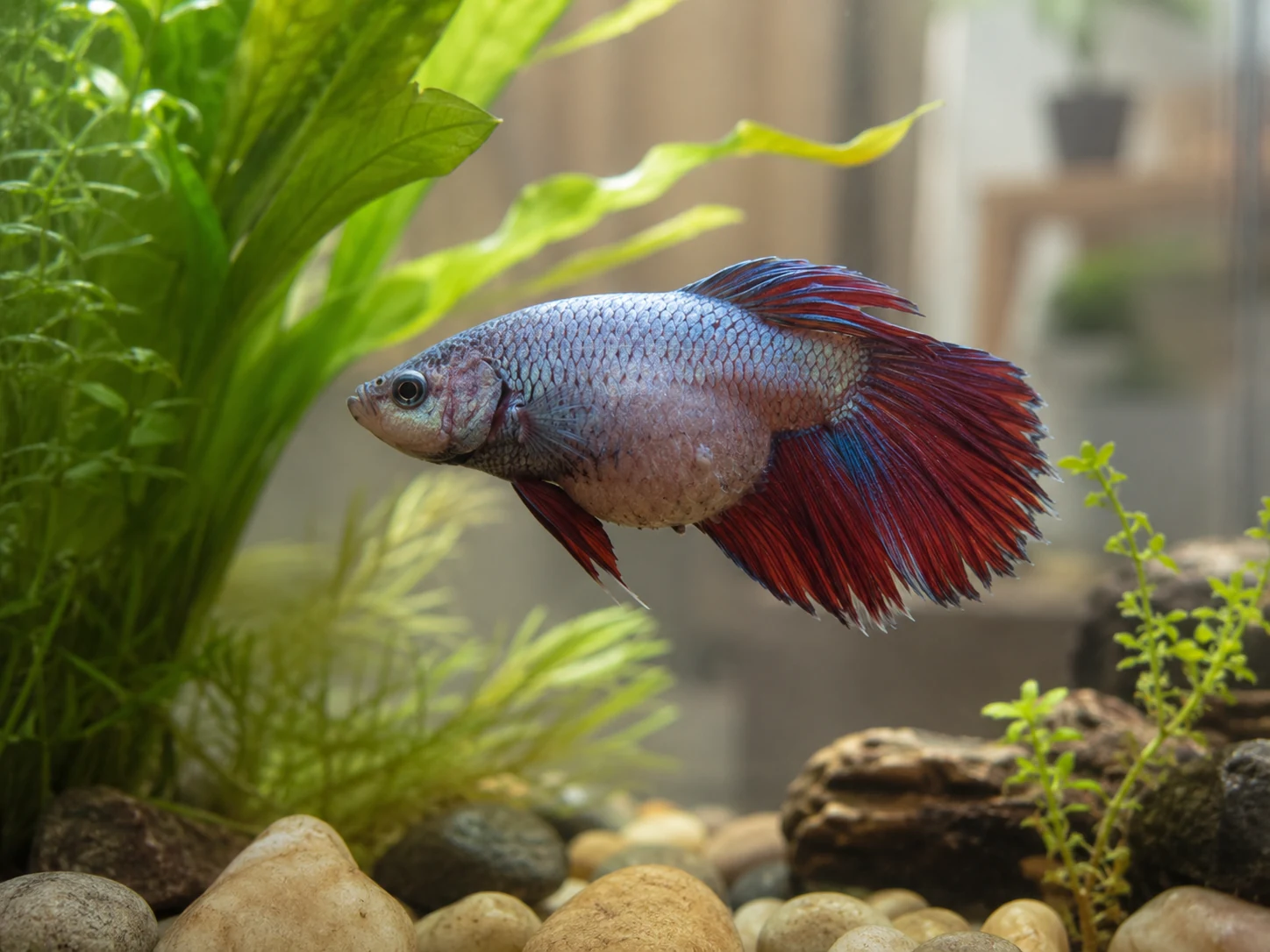
Dropsy is a serious symptom pattern, not one simple disease. The early window is before pineconing: lethargy, weak appetite, mild swelling, and scales still flat. Pineconing means late-stage fluid pressure and should be treated as an emergency. Use a dim heated hospital tank, test water immediately, avoid aquarium salt, and escalate carefully when systemic infection is likely.
Dropsy is one of the hardest betta problems to write about honestly.
Because people usually search for it when they are already scared.
Their betta is swollen. The scales may be sticking out. The fish may be breathing hard, lying at the bottom, refusing food, or showing popeye. The owner wants a clear fix.
But dropsy is not a simple disease with one simple cure.
Dropsy is a symptom pattern.
It usually means abnormal fluid has built up inside the fish’s body. That fluid pressure can make the belly swell, the eyes protrude, and the scales lift outward like a pinecone. The underlying cause may involve systemic bacterial infection, organ failure, kidney dysfunction, severe stress, poor water quality, parasites, or another internal condition that is hard to diagnose at home.
So this guide will not pretend dropsy is easy.
It will help you do the useful things quickly:
- confirm whether it is really dropsy,
- separate it from ordinary bloating,
- identify the emergency signs,
- protect the fish from worse water,
- use a hospital tank correctly,
- understand what Epsom salt can and cannot do,
- know when antibiotics make sense,
- and be honest about prognosis.
That honesty matters.
A bloated betta is not always doomed.
A pineconing betta is a different case.
Quick Answer: What Is Dropsy in a Betta?
Dropsy in a betta is not a single disease. It is a serious symptom pattern where abnormal fluid builds up inside the body, often causing swelling, raised scales, popeye, lethargy, and appetite loss.
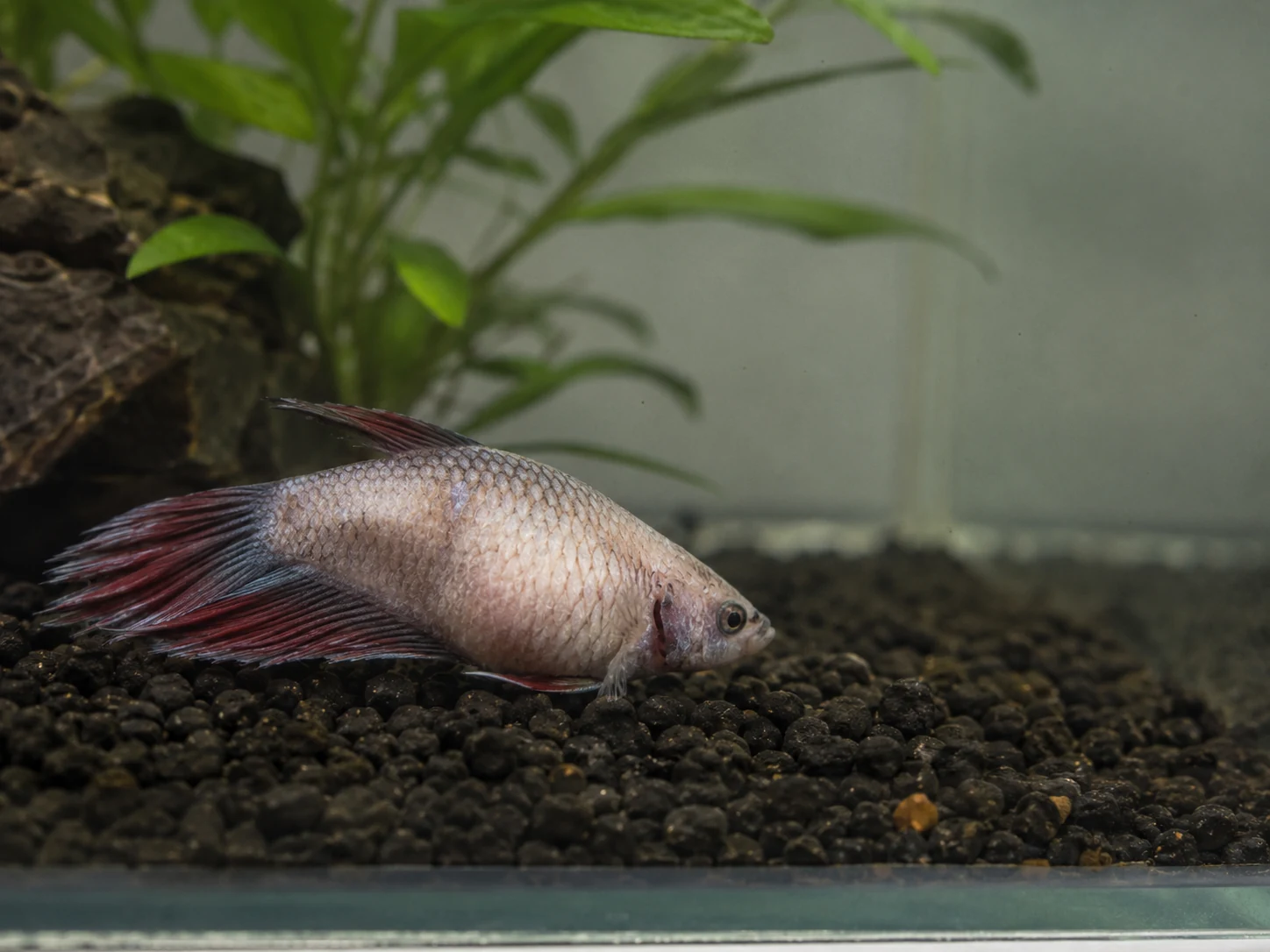
The classic late warning sign is pineconing: when the scales stick outward from the body, especially when viewed from above. Pineconing is not an early sign. It usually means the fish is already in a serious fluid-pressure stage.
Use this quick split:
| What you see | More likely direction | Urgency |
|---|---|---|
| Belly round after a large meal, scales flat | Overfeeding or fullness | Low to moderate |
| Bloated belly, no poop, scales flat | Constipation/digestive slowdown | Moderate |
| Swollen belly plus buoyancy trouble, scales flat | Swim bladder involvement or internal pressure | Moderate to high |
| Swollen belly plus raised scales | Dropsy-like fluid buildup | Emergency |
| Swollen belly plus popeye | Systemic/internal issue possible | High |
| Pineconing plus lethargy or no appetite | Severe systemic illness pattern | Very high |
| Pineconing plus rapid decline | Poor prognosis | Emergency |
If the scales are raised, do not treat it like simple constipation.
You are no longer just dealing with “a big belly.”
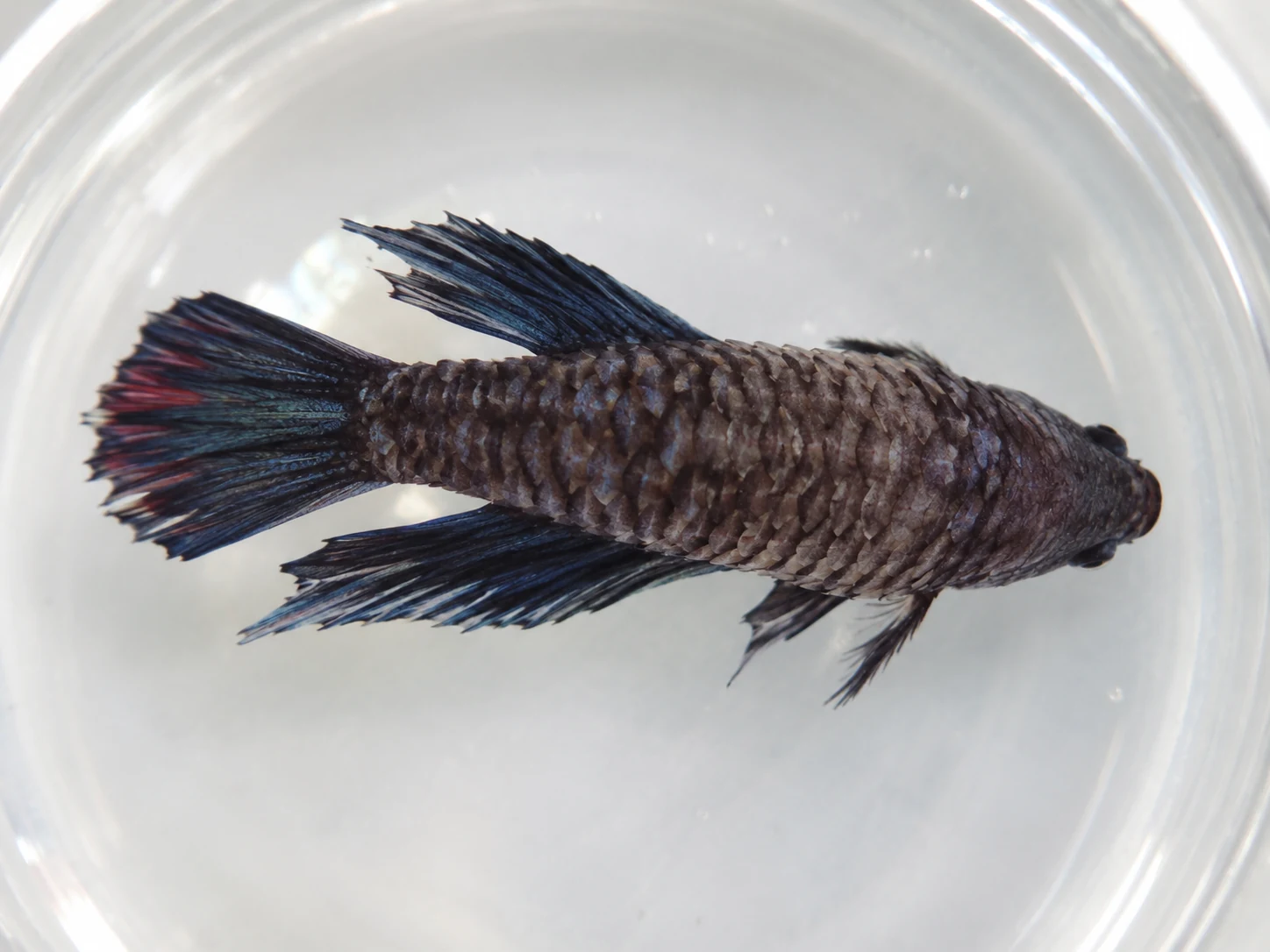
Pre-Pineconing vs Pineconing: Do Not Confuse the Timeline
This is the mistake that causes people to wait too long.
Pineconing is not an early sign.
When a betta’s scales lift outward like a pinecone, internal fluid pressure has already become severe enough to push the scale bases outward. At that point, the fish may be dealing with kidney/organ dysfunction, systemic infection, or serious osmotic failure. The prognosis is much worse than in the pre-pineconing stage.
The earlier window is usually quieter.
| Stage | What you may see | Meaning |
|---|---|---|
| Pre-pineconing | Lethargy, hiding, bottom-sitting, weak appetite, mild swelling, scales still flat | Possible early internal stress; this is the window to act |
| Suspicious transition | Swelling increases, appetite drops, slight scale lift from above, popeye may appear | Escalate quickly |
| True pineconing | Scales clearly stand out from the body from above | Late-stage fluid pressure; emergency |
| Advanced dropsy | Pineconing plus no appetite, heavy breathing, lying down, popeye, loss of balance | Poor prognosis |
This article uses “early signs” to mean the stage before the scales lift.
If your betta is already pineconing, do not treat the case like early bloating.
Move faster.
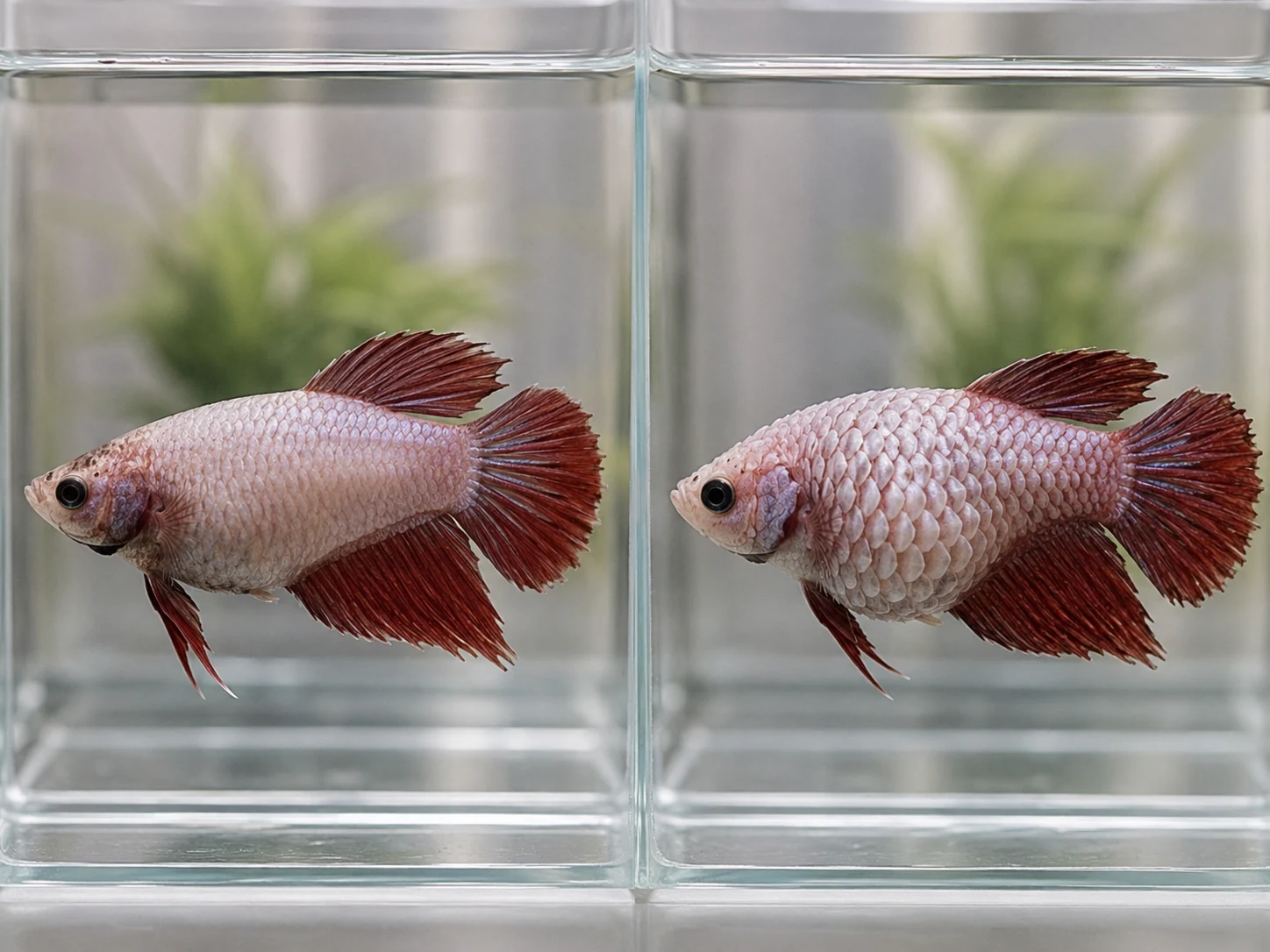
Dropsy vs Bloating: The Difference That Matters
This is the most important diagnostic section.
A betta can look swollen for several reasons. Overfeeding, constipation, egg carrying, tumors, internal parasites, swim bladder pressure, and dropsy can all make the body look wrong.
Dropsy becomes more likely when swelling is paired with raised scales or broader systemic signs.
| Feature | Simple bloating/constipation | Dropsy-like pattern |
|---|---|---|
| Scales | Flat | Raised/pineconing |
| Belly | Rounded or full | Swollen, tight, sometimes body-wide |
| Appetite | Often normal or slightly reduced | Often poor or absent |
| Energy | May remain alert | Often lethargic |
| Eyes | Usually normal | Popeye may appear |
| Breathing | Usually normal | May be heavy or stressed |
| Feces | May be absent/stringy | Often no appetite/no normal waste |
| Progression | May improve with fasting/warmth | Often worsens without escalation |
| Prognosis | Often good | Guarded to poor |
The top view is the difference-maker.
From the side, a bloated betta and a dropsy betta can both look swollen.
From above, pineconing is harder to miss.
How to Check for Pineconing
Do not press the fish.
Do not chase it around the tank.
Use light, patience, and angle.
Look from above while the fish is calm. A clear container, shallow hospital tank, or top-down phone photo can help. You are looking for scales lifting outward from the body, especially around the swollen area.
| Scale appearance | Meaning |
|---|---|
| Smooth and flat | Dropsy less likely, though not impossible |
| Slightly lifted near belly only | Watch closely; could be early pressure |
| Scales lifted across body | Strong dropsy warning |
| Fish looks like a pinecone from above | Emergency |
| Raised scales plus popeye | Systemic fluid-pressure concern |
| Raised scales plus lethargy | Severe illness pattern |
Pineconing is not a small detail.
It means internal pressure is pushing outward.
That is why waiting can be dangerous.
Early Signs Before Pineconing
Dropsy often gets noticed late.
The true early warning signs happen before the scales lift. They are easy to miss because they look like vague stress at first.
| Early sign | Why it matters |
|---|---|
| Belly swelling without obvious overfeeding | May be internal pressure |
| Fish stops eating | Systemic stress or illness |
| Hides more than usual | Decline |
| Clamped fins | Stress or illness |
| Heavy breathing | Water or systemic issue |
| Pale or darkened color | Stress response |
| One or both eyes start protruding | Fluid/infection concern |
| Slight scale lifting from above | Transition stage; no longer simple early warning |
| No improvement after fasting | Not simple overfeeding |
None of these alone proves dropsy.
Together, they build the pattern.
Do not wait for the fish to look like a textbook photo before acting.
Why Dropsy Happens
Dropsy is usually the visible result of something deeper.
The fish’s body is failing to manage fluid properly. That may involve kidneys, internal organs, blood vessels, immune response, or tissue damage. The exact cause is often hard to prove at home.
Common contributors include:
| Contributor | Why it matters |
|---|---|
| Poor water quality | Adds chronic stress and tissue irritation |
| Ammonia/nitrite exposure | Can injure fish and weaken recovery |
| Chronic high organic waste | Supports bacterial load |
| Temperature swings | Stress immune function |
| Poor nutrition | Weakens general condition |
| Internal bacterial infection | Can become systemic |
| Parasites | Can damage internal tissues |
| Long-term stress | Reduces resilience |
| Old age or organ decline | Recovery odds may be lower |
| Injury or secondary infection | Opens the door to deeper illness |
Veterinary references describe many fish diseases as multifactorial. Stress, poor water quality, temperature problems, hypoxia, and high organic load often make disease outbreaks worse rather than acting alone.
That is why the tank still matters even when the illness looks internal.
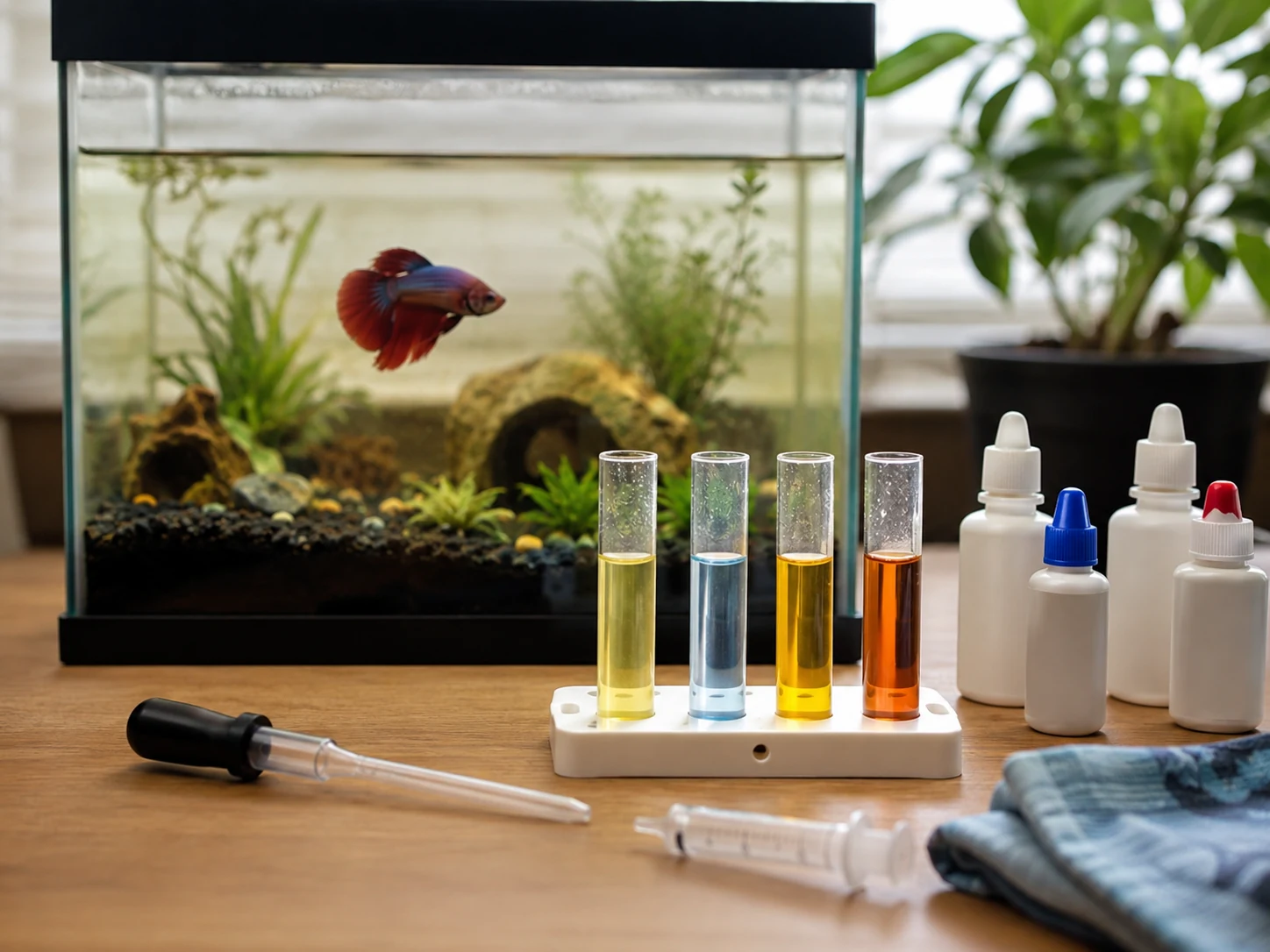
Check the Water Immediately
Do this before you reach for medication.
A betta with dropsy-like signs cannot afford bad water.
Test:
| Parameter | Target in a dropsy emergency |
|---|---|
| Ammonia/ammonium (NH3/NH4+) | 0 ppm |
| Nitrite (NO2-) | 0 ppm |
| Nitrate (NO3-) | As low as practical; ideally under 20–40 ppm |
| Temperature | Stable 76–80°F / 24–27°C |
| pH | Stable; do not chase numbers violently |
| Oxygen/surface movement | Gentle but adequate |
Low dissolved oxygen and high ammonia are among the water-quality hazards most likely to directly kill fish, and nitrite is also a serious stressor. A dropsy betta may already be breathing harder than normal. Do not make that worse.
If ammonia or nitrite is above zero:
- Do a partial water change with dechlorinated, temperature-matched water.
- Keep the filter running.
- Do not replace all filter media.
- Remove uneaten food and waste.
- Retest.
- Prepare a hospital tank if treatment is needed.
Do not do a frantic full tank reset unless there is contamination and you understand why.
A cycle crash can finish a weak fish.
Emergency First Response Plan
If you suspect dropsy, act in this order.
Step 1: Confirm the Pattern
Look from above.
Check for raised scales, belly swelling, popeye, breathing stress, appetite loss, and behavior change.
Step 2: Test Water
Ammonia and nitrite should be 0 ppm.
If they are not, correct the water immediately.
Step 3: Stop Feeding Briefly
Do not add more waste while you are figuring out the pattern.
If the fish is still eating and not pineconing, you may be dealing with bloating. If pineconing is present, fasting alone is not treatment.
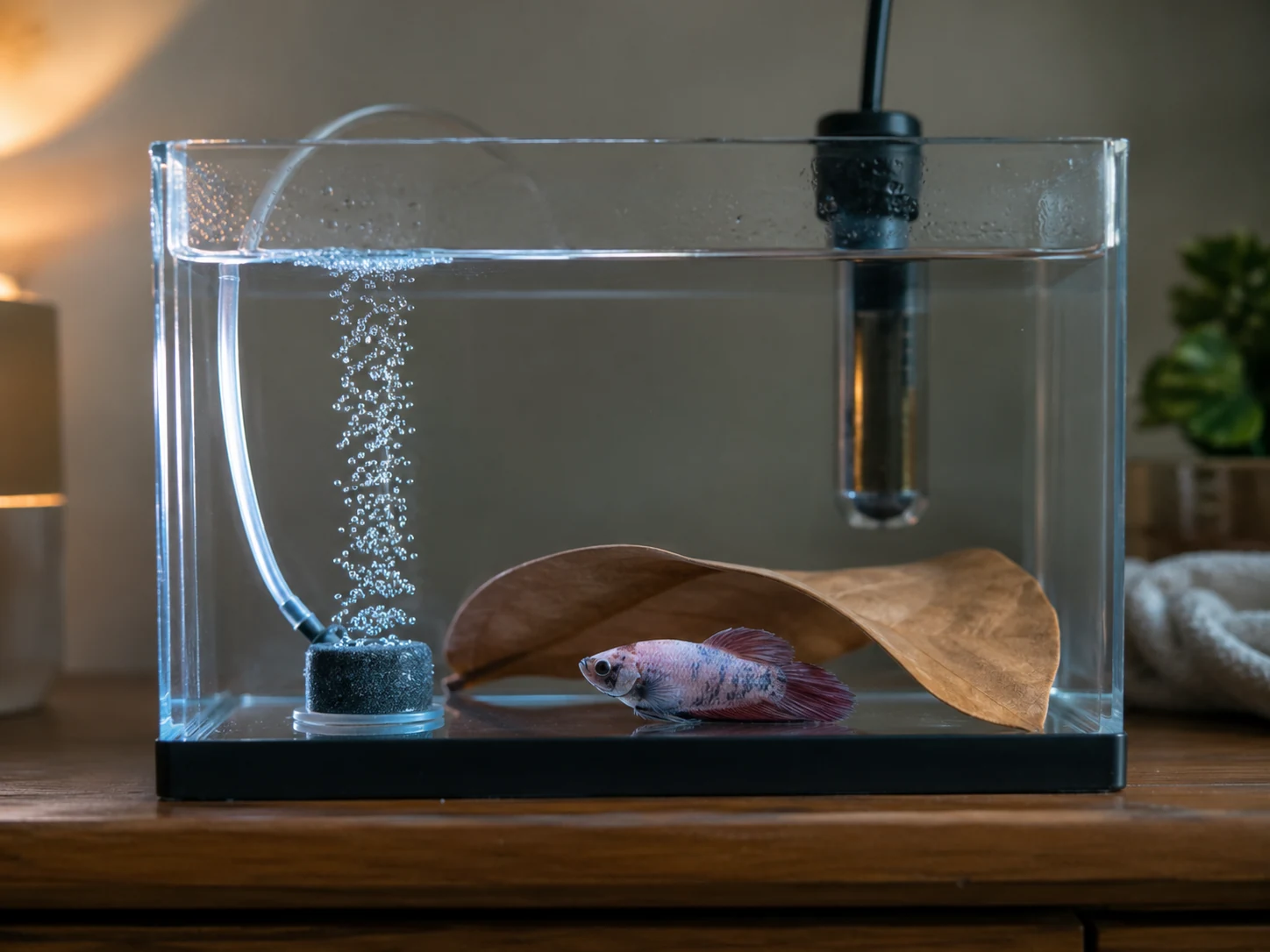
You do not need a complicated treatment station. You need a small, dim, heated setup that lets you test water, reduce stress, support oxygen, and treat only when the pattern supports it.
- 2–3 gallon hospital tank or clear food-safe tub
- Adjustable mini heater
- Small sponge filter or gentle air stone
- Airline valve for soft flow
- Liquid water test kit
- Dechlorinator
- Pure unscented Epsom salt
- Smooth hide or soft resting leaf
- Dark towel to cover three sides
- Small siphon or turkey baster
Step 4: Prepare a Hospital Tank
Dropsy cases are usually easier to manage in a separate hospital tank.
The hospital tank should be:
| Requirement | Why it matters |
|---|---|
| Heated | Keeps metabolism stable |
| Dechlorinated | Protects gills and tissue |
| Gentle aeration | Supports oxygen |
| Bare bottom | Makes waste easy to remove |
| Dark or dim | Reduces stress |
| Covered | Bettas jump |
| Easy to observe | Lets you check scales and breathing |
| Easy to clean | Small water changes become manageable |
Step 5: Keep It Dark and Calm
A sick betta should not be under bright light.
Use a dark towel around three sides. Keep the tank in a quiet place. Observe briefly, then let the fish rest.
Step 6: Decide on Supportive Care and Medication
For suspected dropsy, clean water alone may not be enough.
Supportive care may include Epsom salt for fluid pressure and a fish-labeled broad-spectrum antibacterial treatment in the hospital tank when systemic bacterial infection is likely.
Do not mix random medications.
Do not dose broad antibiotics into the display tank as your default move.
Hospital Tank Setup for Dropsy
A good hospital tank is simple.
A bad hospital tank is worse than the main tank.
| Item | Practical standard |
|---|---|
| Size | 2–3 gallons for short-term treatment if managed carefully |
| Heater | Adjustable, stable 76–80°F / 24–27°C |
| Aeration | Gentle air stone or sponge filter |
| Flow | Soft enough for a weak betta |
| Bottom | Bare bottom |
| Hide/rest | Smooth hide or soft leaf |
| Lighting | Off or very dim |
| Cover | Secure lid or breathable cover |
| Water | Dechlorinated and temperature-matched |
| Testing | Ammonia/nitrite checked daily |
A tiny cold jar is not a hospital tank.
It is a stress chamber.
The point of isolation is better care, not smaller water.
Epsom Salt for Dropsy: What It Can and Cannot Do
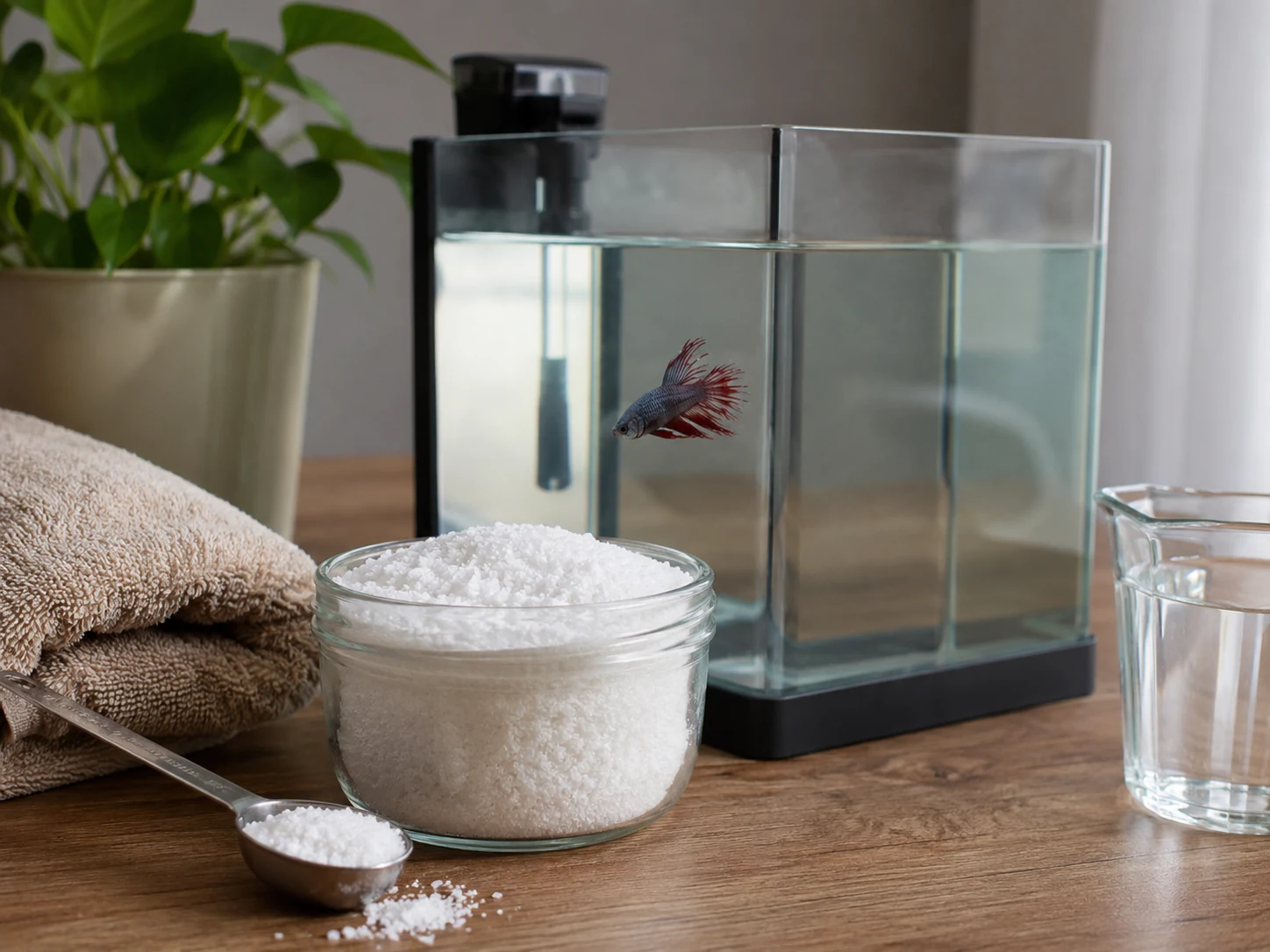
Epsom salt is magnesium sulfate (MgSO4).
In dropsy-like cases, aquarists use it as supportive care because it may help reduce fluid pressure through osmotic effect. This can make sense when the fish is swollen and fluid buildup is part of the problem.
But do not oversell it.
Epsom salt is not an antibiotic. It does not repair failed organs. It does not kill every internal infection. It does not reverse late-stage pineconing by magic.
| Salt/product | Chemical | Use case |
|---|---|---|
| Epsom salt | Magnesium sulfate / MgSO4 | Fluid-pressure support in selected dropsy/bloating cases |
| Aquarium salt | Sodium chloride / NaCl | External skin/fin supportive care in selected cases |
| Table salt | NaCl plus possible additives | Avoid |
| Marine salt mix | Saltwater mineral blend | Not for routine dropsy support |
Red Warning: Do Not Use Aquarium Salt for Dropsy
This is not a fin rot case.
Do not use aquarium salt (sodium chloride / NaCl) as the default treatment for dropsy or pineconing. A dropsy betta is already failing to regulate fluid properly. Adding the wrong salt can increase stress on an already compromised fish and does not address internal fluid pressure.
Use the simple rule:
| Condition pattern | Salt logic |
|---|---|
| Fin rot / external fin damage | Aquarium salt may be considered in a controlled setup |
| Constipation / internal pressure | Epsom salt may be considered |
| Popeye with fluid swelling | Epsom salt may be considered |
| Dropsy / pineconing | Epsom salt support only; avoid aquarium salt as default |
| Planted display tank | Do not salt casually |
For dropsy, do not substitute aquarium salt for Epsom salt.
Different problem.
Different salt.
A beginner-safe wording is:
“Epsom salt may be used in a controlled hospital tank as supportive care for fluid pressure, while the underlying cause is addressed.”
That is accurate.
That is also not false hope.
Antibiotics: When They Make Sense
If dropsy is caused by systemic bacterial infection, supportive care alone may not be enough.
This is where many hobbyists consider fish-labeled broad-spectrum antibacterial medication, often in the hospital tank.
For dropsy-like systemic infection, the target is often a gram-negative internal bacterial pattern, not a vague “any antibiotic” problem. Merck/MSD notes that many bacterial pathogens of aquarium fish are aerobic, gram-negative rods. That is why weak, mismatched, or gram-positive-focused choices may waste the short treatment window.
Commonly discussed fish-labeled options for serious gram-negative/systemic cases include:
| Active direction | Example product category | Why it is discussed |
|---|---|---|
| Kanamycin | Kanamycin-based products such as Seachem KanaPlex | Broad gram-negative coverage; commonly used by hobbyists for internal/systemic cases |
| Minocycline | Maracyn Two-type minocycline products | Often discussed for internal gram-negative bacterial infections |
| Nitrofurans | Fish-labeled nitrofuran products where legally available | Broad external/internal bacterial support in some treatment protocols |
| Combination plans | Only when label/pro guidance supports it | Random mixing increases risk |
This does not mean “buy everything and mix it.”
It means do not treat dropsy with a random bottle chosen only because it says “bacteria” on the front.
If the fish is already pineconing, refusing food, or swelling fast, the treatment window is short.
The important rules:
| Rule | Why it matters |
|---|---|
| Use a hospital tank | Protects the display tank and allows accurate dosing |
| Follow the label | Dose and duration matter |
| Do not mix randomly | Drug stacking can stress or kill fish |
| Remove carbon if directed | Carbon can remove medication |
| Keep aeration strong but gentle | Sick fish need oxygen support |
| Test ammonia daily | Small treatment tanks foul fast |
| Do not use human antibiotics | Wrong dosing and legal/ethical risk |
| Do not expect miracles in late-stage cases | Prognosis may be poor |
Do not pour broad antibiotics into the display tank as a casual default.
You can damage biological filtration, plants, invertebrates, or tank stability. If ammonia and nitrite rise during treatment, you have created a second emergency.
What Not to Do With Dropsy
Dropsy pushes people into panic care.
Panic care often hurts.
Avoid these:
| Mistake | Why it hurts |
|---|---|
| Treating pineconing like constipation | Wastes time |
| Feeding peas as a cure | Bettas are carnivores; this delays real action |
| Using aquarium salt instead of Epsom salt | Wrong supportive tool for internal fluid pressure |
| Dosing antibiotics in the display tank by default | Can damage the biofilter |
| Doing a full tank reset | Can crash the cycle |
| Moving fish to a cold jar | Adds stress |
| Leaving bright lights on | Stresses a weak fish |
| Mixing medications | Adds side effects |
| Waiting while scales lift more | Dropsy can progress quickly |
| Promising yourself it is “just bloating” | Delays escalation |
A hard truth:
When the scales are raised, the case is already serious.
Can a Betta Recover From Dropsy?
Sometimes.
But the prognosis is guarded.
Recovery is more likely when:
| Better sign | Why it helps |
|---|---|
| Very early swelling | Less internal damage may have occurred |
| Mild scale lifting only | Earlier stage |
| Fish still responds and swims | More strength |
| Still eating a little | Better energy |
| Water is corrected quickly | Less ongoing stress |
| Hospital tank is stable | Better control |
| Treatment starts early | Less lost time |
Recovery is less likely when:
| Poor sign | Why prognosis worsens |
|---|---|
| Severe pineconing | Advanced fluid pressure |
| Both eyes protruding | Systemic involvement |
| Fish cannot stay upright | Severe weakness |
| Refuses all food | Decline |
| Heavy breathing | Stress/organ involvement |
| Body sores or ulcers | Deeper infection |
| Rapid worsening over 24–72 hours | Aggressive process |
| Old fish or chronic poor condition | Lower resilience |
Do not confuse honesty with giving up.
You can still provide clean water, warmth, calm, and appropriate treatment.
But it is kinder to understand the odds.
When Euthanasia May Be the Kindest Option
This is the section nobody wants.
But a responsible dropsy article needs it.
If a betta has severe pineconing, cannot swim, cannot eat, breathes heavily, lies helplessly, and continues to worsen despite clean warm water and appropriate care, recovery may be unlikely.
At that point, the question becomes quality of life.
The best option is veterinary euthanasia when an aquatic veterinarian or experienced fish veterinarian is available. A vet can use anesthetic methods that are more controlled than home guessing.
If a keeper researches clove oil euthanasia at home, the safety detail that matters is this:
Never pour concentrated clove oil directly onto a live fish.
Clove oil does not mix naturally into water. If it is dumped straight into the container, droplets can contact the gills and body unevenly, causing panic and distress before sedation. Any clove-oil method must first involve making a fully emulsified mixture away from the fish, using a veterinary or fish-health protocol from a reliable source.
Do not improvise.
Do not guess a dose from a forum comment.
Do not freeze a live fish.
Do not flush a fish.
Do not leave a suffering fish to slowly decline because the decision is emotionally hard.
The fish deserves care all the way through the ending, too.
Preventing Dropsy-Like Crashes
You cannot prevent every internal illness.
You can reduce the odds.
Keep the Tank Stable
A heated, filtered 5–10 gallon betta tank is far safer than a small unheated bowl.
Stability matters.
Test When Behavior Changes
Do not wait until the fish looks swollen.
If a betta stops eating, hides, breathes hard, clamps fins, or acts “off,” test water.
Avoid Overfeeding
Overfeeding adds waste.
Waste worsens water.
Poor water worsens disease pressure.
Keep Temperature Stable
Bettas are tropical fish. RSPCA guidance recommends heated water around 24–26°C for Siamese fighting fish. Many home betta care routines target about 76–80°F / 24–27°C.
Room temperature is not stable enough in many homes.
Quarantine New Fish and Plants When Possible
New additions can bring pathogens or stress.
Quarantine is not always possible for beginners, but it is a good long-term habit.
Do Not Crash the Filter
Rinse filter media in old tank water, not tap water. Do not replace all biological media at once.
Beneficial bacteria are part of fish health.
Related Guides
Continue with these guides:
- Why Is My Betta Fish Bloated?
- Betta Fish Popeye: Causes, Treatment, and When It Becomes Serious
- Betta Fin Rot: How to Spot It Early and Treat It Properly
- Why Is My Betta Not Eating?
- Why Is My Betta Laying at the Bottom?
- Why Is My Betta Gasping at the Surface?
- Betta Fish Care Guide
- Betta Tank Setup for Beginners
- How to Cycle a Fish Tank Without Guessing When It’s Safe for Fish
- Fish Not Eating
Final Advice
Dropsy is where honesty matters most.
If the scales are still flat, the fish may still be in the earlier window where fast water testing, calm isolation, and careful escalation can matter. If the fish is already pineconing, the case is no longer early. Move faster, keep the hospital tank dim, avoid aquarium salt, and do not waste time with vague treatments that do not match the pattern.
Sometimes the kindest care is treatment. Sometimes the kindest care is recognizing that recovery is unlikely. Either way, the fish deserves calm, clean, informed decisions.
FAQ
Is pineconing an early sign of dropsy?
No. Pineconing is a late and serious sign. Early warning signs happen before the scales lift: lethargy, hiding, weak appetite, mild swelling, bottom-sitting, and behavior change while the scales are still flat.
What is the pre-pineconing stage?
The pre-pineconing stage is the narrow window before raised scales appear. The betta may look slightly swollen, weak, inactive, or uninterested in food, but the scales still lie flat. This is when action has the best chance of helping.
Why should I avoid aquarium salt for dropsy?
Dropsy is an internal fluid-pressure problem, not an external fin wound. Aquarium salt is sodium chloride (NaCl) and is not the right default tool for pineconing or internal swelling. Epsom salt, magnesium sulfate (MgSO4), is the supportive salt aquarists discuss for fluid pressure.
Which antibiotics are usually discussed for betta dropsy?
When systemic bacterial infection is likely, hobbyists often discuss fish-labeled gram-negative/internal options such as kanamycin-based products, including KanaPlex, or minocycline-based products, including Maracyn Two. Use a hospital tank, follow the label, and avoid random medication stacking.
Can I pour clove oil directly into the fish container?
No. Concentrated clove oil should never be poured directly onto a live fish. It does not naturally mix with water and can contact the gills unevenly. Veterinary euthanasia is best when available; any home clove-oil method must use a properly emulsified mixture from a reliable fish-health protocol.
Is dropsy a disease or a symptom?
Dropsy is best understood as a symptom pattern, not one single disease. It usually means abnormal fluid buildup inside the fish’s body. The underlying cause may be infection, organ failure, kidney dysfunction, parasites, severe stress, or another internal problem.
What does dropsy look like in a betta?
The classic sign is swelling plus raised scales, especially when viewed from above. The fish may look like a pinecone. Other signs may include popeye, lethargy, poor appetite, heavy breathing, bloating, and difficulty swimming.
How do I tell dropsy from constipation?
Look from above. Constipation usually causes belly swelling with scales still flat. Dropsy causes swelling with scales lifting outward. Constipation may improve with fasting and stable warmth; dropsy usually requires emergency-level care.
Can a betta have dropsy without pineconing?
Early fluid buildup may appear before obvious pineconing, but classic dropsy is strongly associated with raised scales. If the fish is swollen, lethargic, not eating, or showing popeye, monitor from above and act early.
Is dropsy contagious?
Dropsy itself is not a single contagious disease. The underlying cause may or may not affect other fish. Poor water quality, bacterial pressure, parasites, or shared stressors can put other fish at risk, so test the tank and observe all livestock.
Can dropsy be cured?
Sometimes early cases improve, but prognosis is guarded. Once severe pineconing, organ failure signs, heavy breathing, and refusal to eat appear, recovery becomes much less likely.
Should I use Epsom salt for betta dropsy?
Epsom salt may be used as supportive care for fluid pressure in a controlled hospital tank. It is not an antibiotic and not a guaranteed cure. It should not replace water testing, stable heat, oxygen support, or appropriate treatment when infection is likely.
Should I use aquarium salt for dropsy?
Do not substitute aquarium salt for Epsom salt in a dropsy fluid-pressure case. Aquarium salt is sodium chloride and is used differently. Dropsy/internal swelling support is where aquarists usually discuss Epsom salt, magnesium sulfate.
Should I use antibiotics for dropsy?
Antibiotics may make sense when systemic bacterial infection is suspected, especially early. Use fish-labeled medication in a hospital tank, follow the label, and avoid random mixing. Late-stage dropsy may not respond even with medication.
Can I treat dropsy in the main tank?
Avoid treating the display tank with broad antibiotics by default. A hospital tank is safer for dosing and protects the display tank’s biological filter, plants, shrimp, snails, and stability.
Why is my betta pineconing?
Pineconing happens when internal swelling pushes the scales outward. It is a major warning sign of fluid buildup and systemic illness. Treat it as urgent.
Can overfeeding cause dropsy?
Overfeeding does not directly equal dropsy, but it can worsen water quality and stress. A fish may look bloated after overeating, but raised scales point to a more serious dropsy-like pattern.
How fast does dropsy kill a betta?
It depends on the cause and stage. Some fish decline over days, while others worsen quickly in 24–72 hours once pineconing and systemic signs are obvious. Early action gives the best chance, but severe cases often have poor outcomes.
Should I keep the hospital tank dark?
Yes. A dropsy betta is already stressed. Keep the hospital tank dim or dark, cover three sides, provide a smooth hide or soft leaf, and observe briefly rather than keeping bright lights on.
When should I consider euthanasia?
Consider veterinary guidance when possible. If the fish is severely pineconed, cannot swim, cannot eat, breathes heavily, lies helplessly, and continues declining despite appropriate care, humane euthanasia may be kinder than prolonged suffering.
This guide is educational and does not replace diagnosis from an aquatic veterinarian. Dropsy is a serious symptom pattern that can come from infection, organ dysfunction, kidney problems, parasites, severe stress, or other internal disease. When pineconing, popeye, severe lethargy, loss of appetite, or rapid decline appears, professional veterinary guidance is the safest option when available.
Healthy Aquariums does not recommend treating dropsy as ordinary constipation, using random medication combinations, or dosing broad antibiotics into the display tank as a default. Start with water testing and stabilization, then escalate in a controlled hospital tank when the pattern supports it.
References
This guide was written for beginner betta keepers and should be reviewed against fish welfare, husbandry, veterinary, and medication-label sources when updated.
- Merck Veterinary Manual. “Disorders and Diseases of Fish.” Reviewed/Revised February 2020, modified April 2026. https://www.merckvetmanual.com/all-other-pets/fish/disorders-and-diseases-of-fish
- Merck Veterinary Manual. “Bacterial Diseases of Fish.” Reviewed/Revised May 2022, modified September 2024. https://www.merckvetmanual.com/exotic-and-laboratory-animals/aquarium-fish/bacterial-diseases-of-fish
- Merck Veterinary Manual. “Environmental Diseases of Aquatic Animals in Aquatic Systems.”. https://www.merckvetmanual.com/exotic-and-laboratory-animals/aquatic-systems/environmental-diseases-of-aquatic-animals-in-aquatic-systems
- MSD Veterinary Manual. “Common Environmental Hazards for Fish.”. https://www.msdvetmanual.com/multimedia/table/common-environmental-hazards-for-fish
- RSPCA Knowledgebase. “How should I care for my Siamese fighting fish?” Updated May 1, 2024. https://kb.rspca.org.au/categories/companion-animals/fish/how-should-i-care-for-my-siamese-fighting-fish
- Tree of Life Exotic Pet Medical Center. “Dropsy.”. https://treeoflifeexotics.vet/education-resource-center/for-clients/fish/dropsy
- PetMD. “Dropsy in Fish: Symptoms, Causes, and Treatment.” Published December 22, 2024. https://www.petmd.com/fish/conditions/urinary/dropsy-fish
- Chewy Editorial. “Dealing With Dropsy.” Published April 30, 2025. https://www.chewy.com/education/fish/health-and-wellness/dealing-with-dropsy
- FishBase. “Betta splendens.”. https://www.fishbase.se/summary/betta-splendens.html
- University of Florida IFAS. “Use of Antibiotics in Ornamental Fish Aquaculture.”. https://ask.ifas.ufl.edu/publication/FA084
- FDA Center for Veterinary Medicine. “CVM GFI #150: Concerns Related to the use of Clove Oil as an Anesthetic for Fish.”. https://www.fda.gov/regulatory-information/search-fda-guidance-documents/cvm-gfi-150-concerns-related-use-clove-oil-anesthetic-fish
- University of Florida IFAS. “Use of Antibiotics in Ornamental Fish Aquaculture.”. https://ask.ifas.ufl.edu/publication/FA084
- Manufacturer instructions for any specific aquarium medication, water conditioner, Epsom salt product, test kit, heater, or hospital tank product used by the reader.