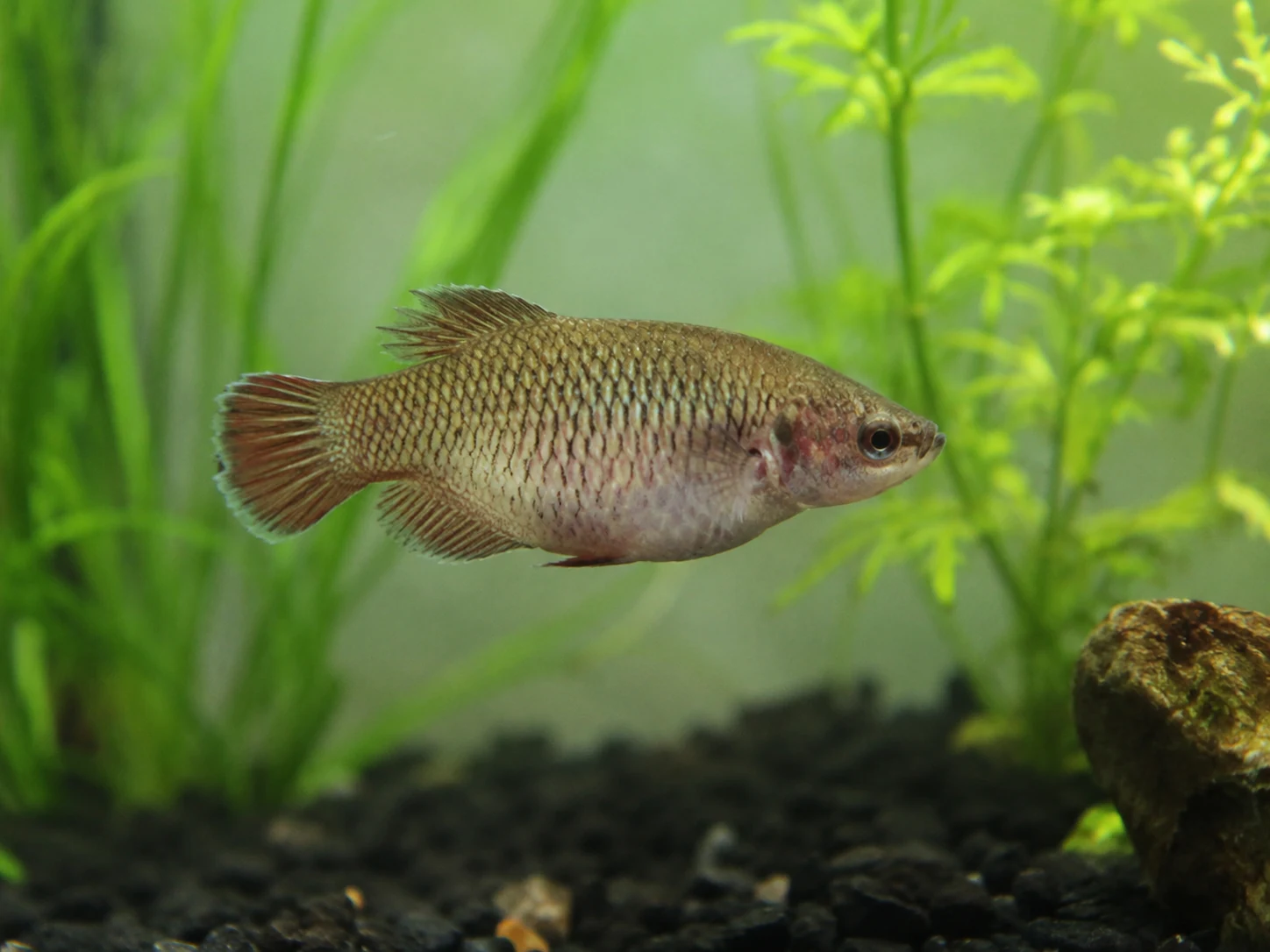
A bloated betta may be dealing with overeating, constipation, low temperature, egg carrying, swim bladder involvement, parasites, or a more serious dropsy-like fluid buildup. The safest first move is to look from above, test ammonia and nitrite, review feeding, and treat the pattern — not just the swelling.
A bloated betta is not one problem.
It is a sign.
Sometimes it is simple: the fish ate too much, swallowed air with dry food, or is constipated after a few heavy meals. Sometimes it is more serious: fluid buildup, internal infection, organ trouble, egg binding in a female betta, or a water-quality problem that has been stressing the fish for days.
The hard part is that several of these can look similar at first.
A round belly does not automatically mean dropsy. It also does not automatically mean constipation. If you guess too quickly, you can waste the first 24–48 hours doing the wrong thing while the fish gets weaker.
So start with observation.
Look at the belly. Look from above. Check the scales. Watch how the fish swims. Test the water. Think about the last few meals. Then act based on the pattern, not panic.
That is the goal of this guide: help you sort a bloated betta into the most likely causes, spot the red flags, and choose the safest next step.
The first question is not “What medicine should I use?”
The first question is “What kind of bloating is this?”
Quick Answer: What Causes a Bloated Betta?
A betta may look bloated because of overeating, constipation, dry or poorly soaked food, low temperature slowing digestion, poor water quality, internal infection, dropsy, egg binding in females, tumors, parasites, or swim bladder trouble secondary to pressure inside the body.
For a beginner, the most useful split is this:
| What you see | Most likely direction | Urgency |
|---|---|---|
| Belly rounded after a large meal, fish still active | Overfeeding or temporary fullness | Low to moderate |
| Bloated belly, little or no poop, still alert | Constipation or digestive slowdown | Moderate |
| Bloated plus floating, sinking, or rolling | Swim bladder involvement, often secondary | Moderate to high |
| Bloated plus raised scales when viewed from above | Dropsy/serious internal fluid buildup | High |
| Bloated plus clamped fins, lethargy, poor appetite, bad water readings | Stress, infection, or water-quality injury | High |
| Bloated belly, white/stringy feces, still aggressively hungry, history of live foods | Possible internal worms/flukes/tapeworm-type parasite issue | High |
| Female betta with round belly, white egg spot, otherwise normal | Possibly egg carrying/egg bound | Moderate |
| One-sided swelling or a lump that grows slowly | Tumor, cyst, organ enlargement, or injury | Veterinary-level concern |
If your betta has raised scales, severe lethargy, rapid breathing, loss of balance, or ammonia/nitrite present, treat it as urgent.
Do not wait for the belly to “go down on its own” if the fish is clearly declining.
First: Confirm It Is Actually Bloating
Bettas are naturally fuller in the body than many small schooling fish. Some also look rounder after eating. A healthy betta may have a gentle belly curve and still be perfectly normal.
True bloating usually looks different.
The abdomen looks swollen beyond the fish’s normal shape. The belly may bulge behind the head and before the vent. From the side, the betta may look thick or tight. From above, the body may look wider than usual.
Use three angles:
- Side view — Is the belly hanging down or protruding sharply?
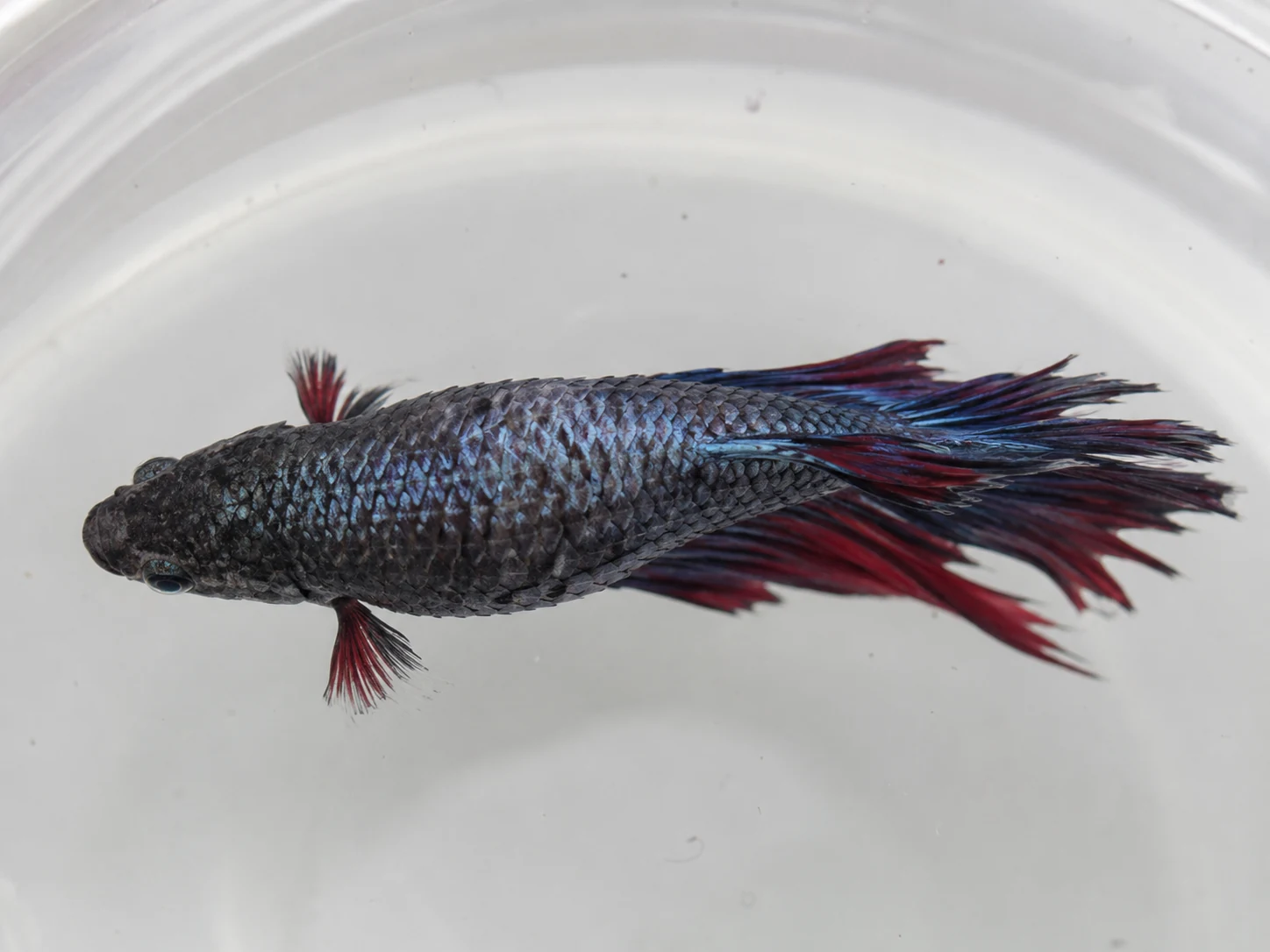
- Top view — Are the scales lifting away from the body like a pinecone?
- Behavior view — Is the fish swimming, breathing, resting, and eating normally?
The top view matters most for ruling in a serious emergency. Raised scales are easy to miss from the side.
If you only look through the front glass, you can miss the most important clue.
Red Flags: When Bloating Is an Emergency
Some bloating can be watched carefully for a day while you correct feeding and water conditions. Some should not be watched casually.
Move faster if you see any of these:
| Red flag | Why it matters |
|---|---|
| Raised scales from above | Classic warning sign of fluid buildup/dropsy-like presentation |
| Bloated body plus popeye | Often points toward internal/systemic stress or infection |
| Heavy breathing or gasping | Fish may be stressed, oxygen-limited, or chemically irritated |
| Ammonia or nitrite above 0 ppm | Water itself may be injuring the fish |
| Fish cannot stay upright | Buoyancy is seriously affected |
| Refuses food and hides constantly | More than simple after-meal fullness |
| Bloated and pale/darkened | Stress response or illness progression |
| Stringy white feces with weight loss | Possible internal irritation or parasite issue |
| One-sided swelling | Less likely simple constipation |
A bloated betta with pineconing is not the same case as a betta that ate too many pellets.
Treat those differently.
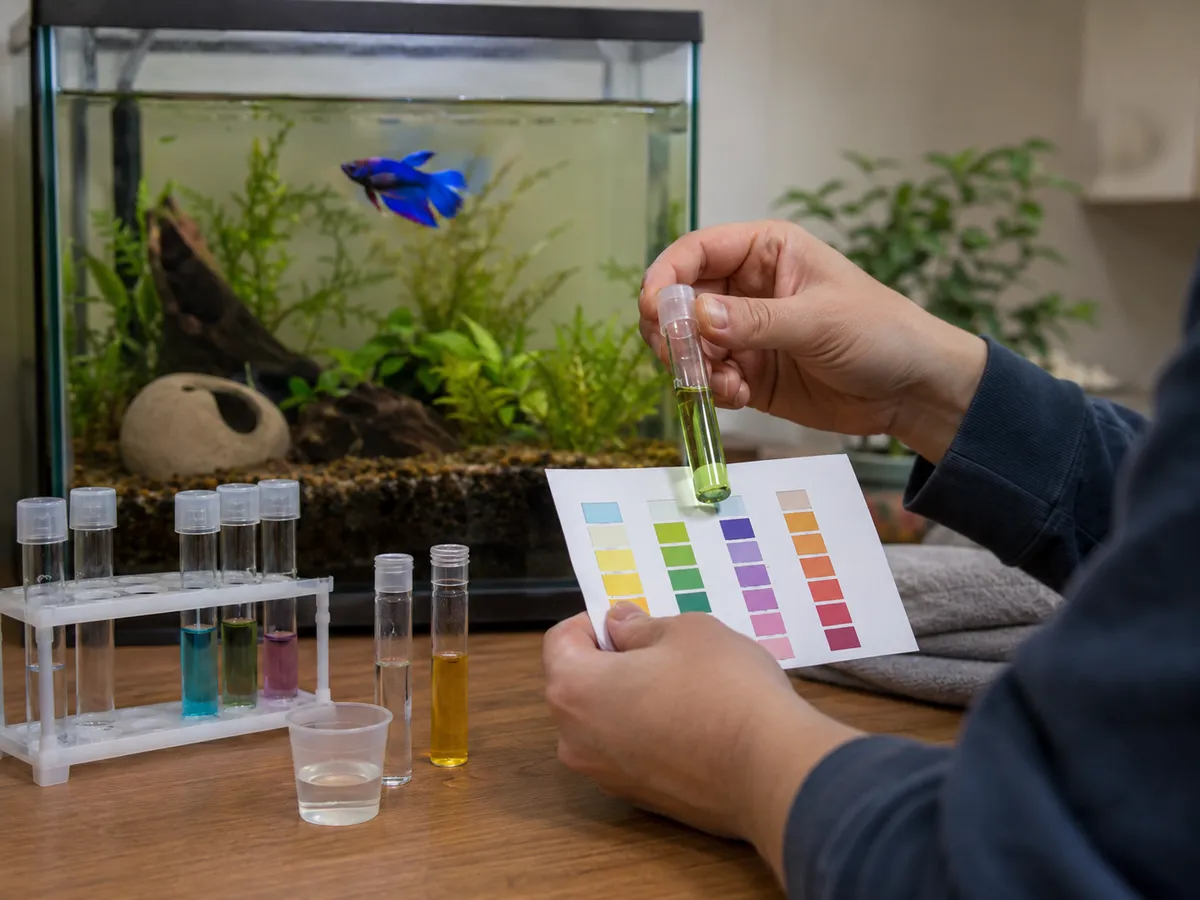
Check the Water Before You Treat the Fish
This is the step beginners skip because it feels unrelated.
It is not unrelated.
Poor water quality can stress a betta, weaken immune response, slow recovery, and make mild problems worse. It can also make you misread the situation. A fish in ammonia or nitrite may clamp fins, breathe hard, stop eating, and look swollen or unwell. If you treat only the belly while leaving the water unsafe, the fish is still sitting in the cause.
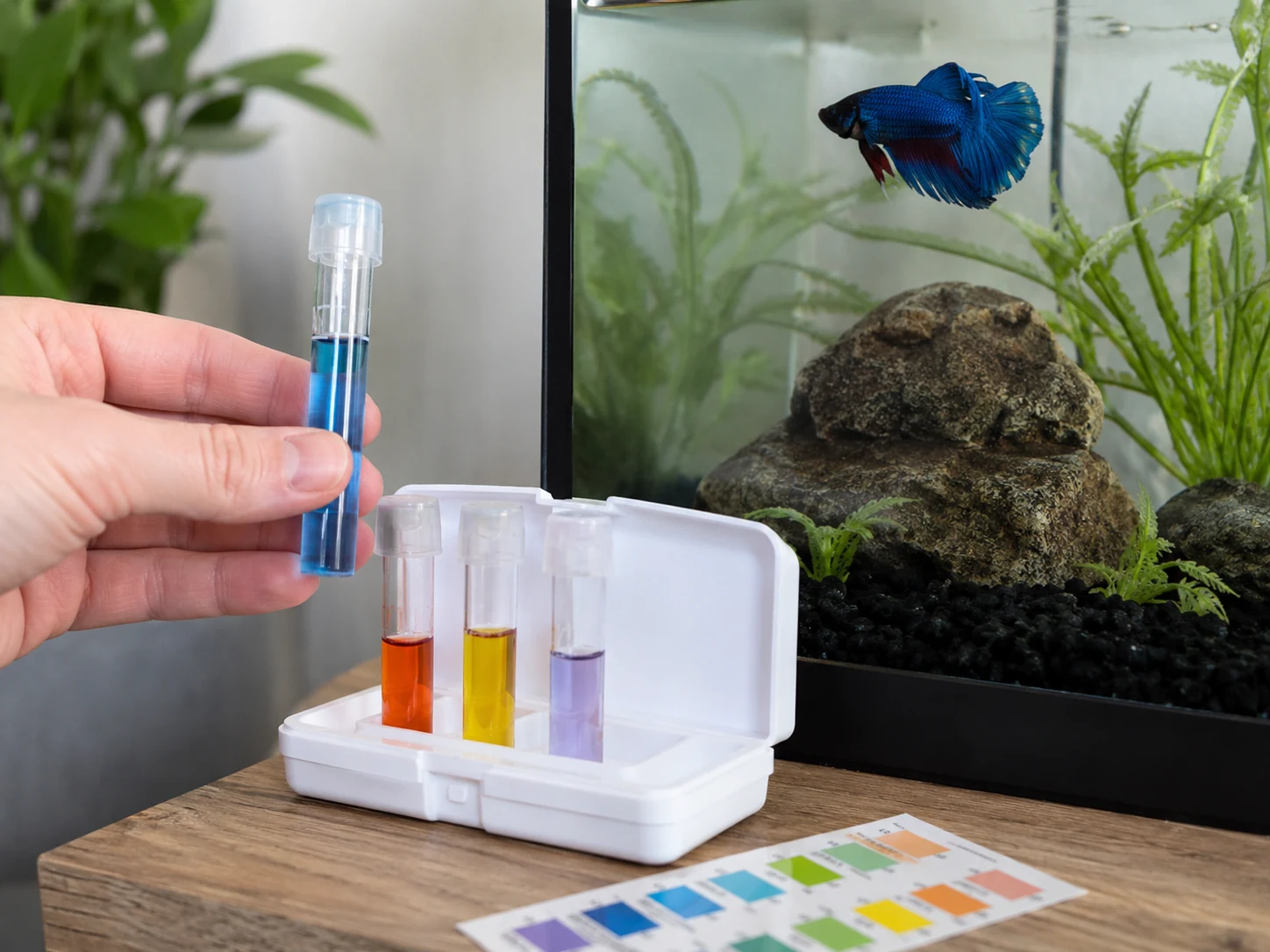
Test these first:
| Parameter | Practical target for a betta problem case |
|---|---|
| Ammonia/ammonium (NH3/NH4+) | 0 ppm |
| Nitrite (NO2-) | 0 ppm |
| Nitrate (NO3-) | Ideally under 20–40 ppm |
| Temperature | 76–80°F / 24–27°C, stable |
| pH | Stable is more important than chasing a perfect number |
If ammonia or nitrite is present, do a partial water change with dechlorinated, temperature-matched water. In a small betta tank, 25–50% is often more useful than adding random medication first. Use judgment. If the tank is tiny, uncycled, or dirty, the fish may need cleaner water more urgently than anything else.
Do not clean the entire filter under tap water. Do not replace all filter media at once. Do not reset the tank unless the tank is contaminated and you know why you are doing it.
A stressed biological filter can turn one sick fish into a worse sick fish.
Cause 1: Overfeeding
Overfeeding is one of the common, boring causes of a swollen betta belly.
That does not make it harmless.
Bettas are eager eaters. Many will act hungry even when they have already eaten enough. Their stomach is small, and rich foods can add up quickly. A few extra pellets every day can become a pattern. Freeze-dried treats can make the belly look worse if they are fed dry or too often.
Signs that point toward overfeeding:
| Sign | What it suggests |
|---|---|
| Belly swells soon after feeding | Meal-related fullness |
| Fish still active and responsive | Less likely advanced systemic illness |
| No raised scales | Dropsy less likely, though still monitor |
| Recent heavy feeding or treats | Clear trigger |
| Normal breathing and color | More consistent with a mild digestive issue |
What to do:
- Skip food for 24 hours.
- Test the water.
- Remove uneaten food.
- Resume with smaller meals.
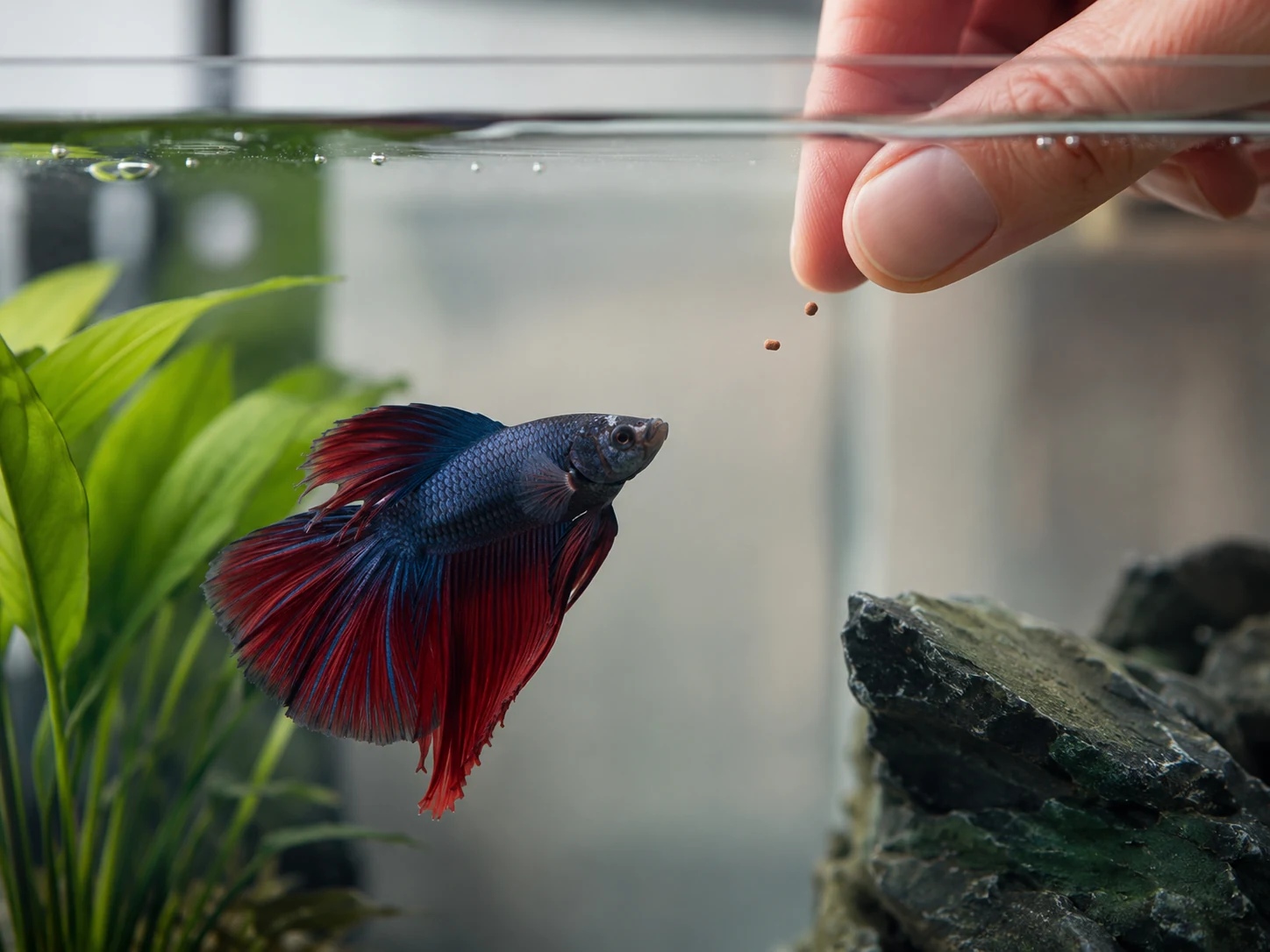
- Feed one pellet at a time so you can see what the fish actually eats.
A practical feeding baseline for many adult bettas is a small amount once or twice daily, adjusted to body condition and food type. For many pellets, that may mean roughly 2–4 small pellets per meal, not a large pinch.
Food size matters. Pellet density matters. Fish size matters.
The label on the jar is not always your fish’s best feeding plan.
Cause 2: Constipation or Digestive Slowdown
Constipation is often blamed for every bloated betta.
That is too simple.
But constipation does happen, especially when a betta is overfed, kept too cool, fed mostly dry foods, or given too many rich treats. The belly may look swollen, and the fish may have little or no feces. Some bettas become less active. Some float awkwardly because pressure in the abdomen affects buoyancy.
Possible constipation signs:
| Sign | Why it points this way |
|---|---|
| Bloated belly without raised scales | Digestive issue remains possible |
| Reduced or absent poop | Waste may not be moving normally |
| Recent dry pellets or freeze-dried foods | Common feeding trigger |
| Temperature below ideal range | Digestion may slow |
| Fish still aware and not severely distressed | Less urgent than pineconing, but still needs action |
What to do first:
- Fast for 24–48 hours.
- Keep the water warm and stable, around 76–80°F / 24–27°C.
- Check ammonia and nitrite.
- Reduce stress and avoid chasing the fish.
- Resume feeding lightly with high-quality food once the belly improves.
When an Epsom Salt Treatment Makes Sense
If the betta is still bloated after a sensible 24–48 hour fast, has no raised scales, and the pattern still points toward constipation or abdominal pressure, an Epsom salt treatment may be more appropriate than feeding a pea.
Epsom salt is magnesium sulfate, not regular aquarium salt. That distinction matters. Magnesium sulfate is commonly used by aquarists as a mild osmotic laxative and muscle relaxant. It can help draw excess fluid from tissue and may help a constipated fish pass waste. Regular aquarium salt is sodium chloride. It is not the same tool, and it should not be treated as interchangeable for internal swelling.
Use a dedicated hospital or treatment container when possible. Keep the temperature stable. Keep the water dechlorinated. Watch the fish closely.
| Epsom salt treatment point | Practical guidance |
|---|---|
| Product | Pure, unscented Epsom salt / magnesium sulfate only |
| Mild treatment dose | 1 teaspoon per 5 gallons |
| Stronger hobbyist dose | Up to 2 teaspoons per 5 gallons for short monitored treatment |
| Treatment water | Heated, dechlorinated, calm hospital tank or container |
| Duration | 24–48 hours for a mild in-water treatment, with close observation |
| Do not substitute | Aquarium salt / sodium chloride |
Start mild. More salt is not automatically more effective. A tiny betta in a small container has very little margin for sloppy dosing.
Do not jump straight into a medicine cabinet because the fish looks round.
If it is a simple digestive case, clean warm water, a short fast, and a careful Epsom salt treatment may do more than a harsh medication.
Should You Feed a Pea to a Bloated Betta?
This advice is everywhere.
It is also often repeated without context.
Peas are commonly suggested for constipated aquarium fish, especially goldfish and other omnivorous species. Bettas are insectivorous/carnivorous-leaning fish. They are not built like goldfish. A pea is not a magic betta laxative, and it should not be the first automatic move for every bloated betta.
For bettas, I would start with the basics first: short fasting, stable warm water, better portion control, and checking water quality.
If a fish is severely bloated, pineconing, unable to swim, or deteriorating, a pea is not an emergency treatment. It may delay more appropriate action.
The safer principle is simple: do not treat internet folklore as diagnosis.
The Safer Alternative: Epsom Salt Baths
Instead of forcing a carnivorous-leaning betta to digest a fibrous green pea, many experienced aquarists use Epsom salt when the case still looks like constipation or internal pressure rather than infection.
Epsom salt means magnesium sulfate. It can act as a gentle muscle relaxant and osmotic laxative. In plain English, it may help relax the digestive tract and shift trapped fluid in a way that makes it easier for the fish to pass waste.
For a bloated betta, use pure, unscented Epsom salt only. Do not use bath salts with fragrance, oils, dyes, or additives. Do not use regular aquarium salt as a substitute. Aquarium salt is sodium chloride, and it can be the wrong direction for internal fluid problems.
A practical treatment range is 1–2 teaspoons of Epsom salt per 5 gallons in a dedicated treatment or hospital tank for 24–48 hours, while keeping the water stable at 76–80°F / 24–27°C. Watch breathing, balance, and stress. If the fish worsens, stop treating the symptom and reassess the diagnosis.
This is still not a magic cure.
It is a safer digestive-support tool than peas when the pattern fits constipation. It is not a substitute for antibiotics in a pineconing dropsy-like case, and it is not a fix for parasites, tumors, or poisoned water.
Cause 3: Low Temperature
Cold water does not just make a betta “less active.”
It changes how the fish functions.
Bettas are tropical fish. In cooler water, digestion can slow, appetite may change, immune response can suffer, and the fish may become more prone to stress-related problems. A betta kept in an unheated bowl or small tank in an air-conditioned room may look okay for a while, then start showing signs that seem sudden.
They were not sudden.
The tank was unstable before the fish looked sick.
Check with a separate thermometer, not just the heater dial. Heater dials can be wrong. Room temperature can swing. Small tanks swing faster than larger ones.
A practical target for most betta tanks is about 76–80°F / 24–27°C.
Avoid rapid correction. If the water is cold, warm it gradually and safely. Sudden temperature jumps can add stress.
Cause 4: Swim Bladder Trouble
Swim bladder trouble is often described as a disease, but it is better to think of it as a buoyancy problem with several possible causes.
A bloated betta may float, sink, tilt, roll, or struggle to stay upright. That does not automatically mean the swim bladder is the original disease. The swim bladder can be affected by constipation, internal swelling, injury, infection, poor water quality, or anatomical issues.
Signs of swim bladder involvement:
| Sign | What you may see |
|---|---|
| Floating at the top | Fish cannot descend normally |
| Sinking to the bottom | Fish struggles to stay suspended |
| Tilting or rolling | Loss of buoyancy control |
| Bloated belly | Internal pressure may be affecting balance |
| Normal scales | More hopeful than pineconing, but not guaranteed |
What to do:
- Lower the water level temporarily only in a hospital tank if the fish struggles to reach the surface.
- Do not drop the water level in the main display tank if it will expose plants, strand hardscape, disable a hang-on-back filter, or run equipment dry.
- Keep filtration gentle.
- Keep the water clean and warm.
- Fast briefly if overfeeding or constipation is likely.
- Avoid strong current.
- Make sure the fish can rest near the surface on a broad leaf or betta hammock.
If the fish cannot reach the surface to breathe, this becomes urgent. Bettas breathe with their gills and can also gulp air at the surface using their labyrinth organ. A weak betta that cannot reach the surface is in a bad position.
But do not create a second emergency by lowering the display tank blindly. In a planted 5–10 gallon tank, dropping the water level can expose Anubias leaves, dry out wood-mounted plants, make a hang-on-back filter lose prime, or damage equipment.
If you need shallow water, move the fish to a clean heated hospital tank and set that water depth to roughly 4–6 inches / 10–15 cm. Add a broad leaf, betta hammock, or smooth resting place close to the surface.
Make the treatment environment easier before you make the treatment more complicated.
Cause 5: Dropsy or Internal Fluid Buildup
Dropsy is one of the words that scares betta keepers most.
It should.
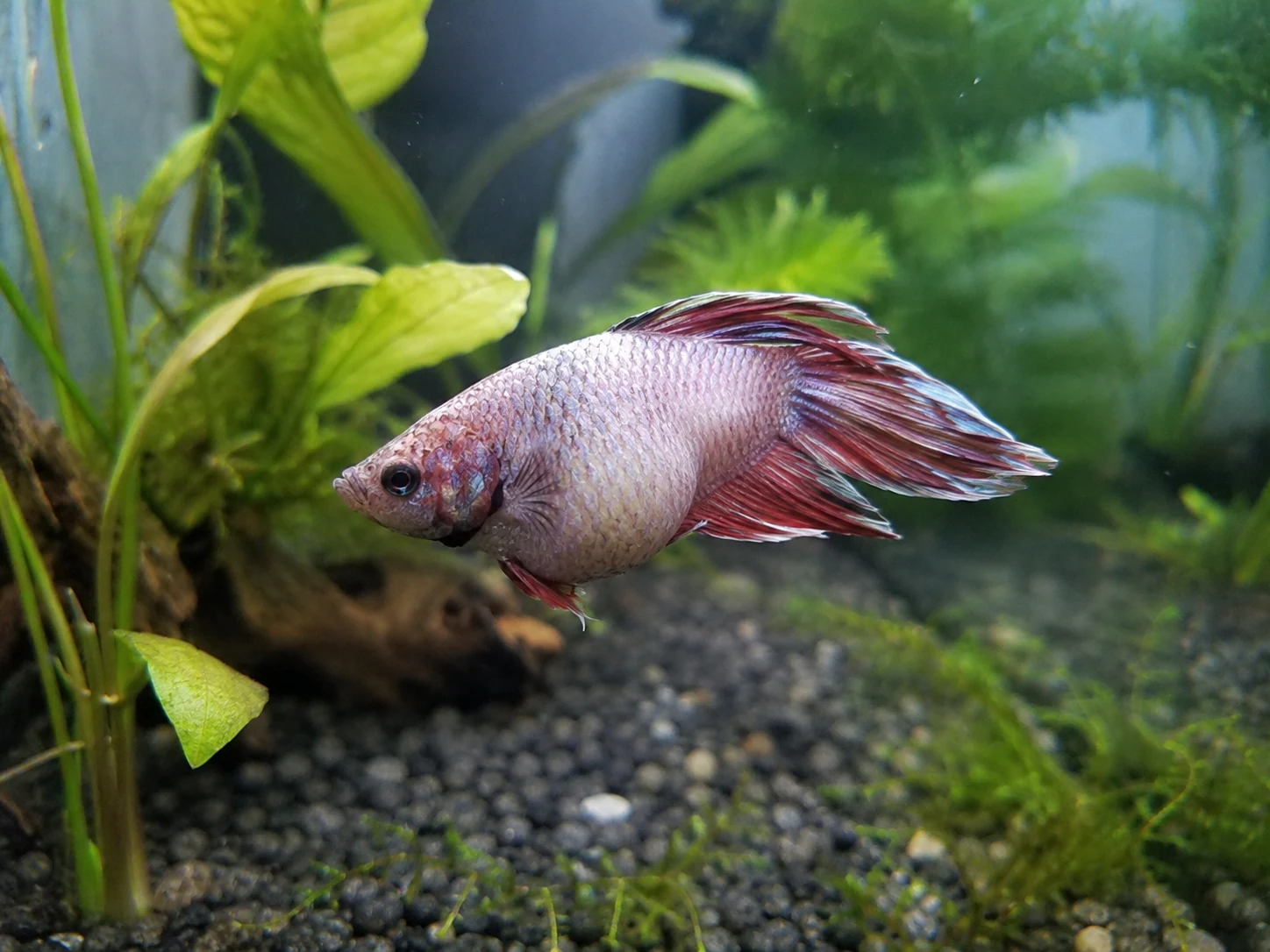
But it also needs to be understood correctly. Dropsy is not one neat disease with one neat cure. It is a presentation where fluid builds up inside the fish, often linked with serious internal problems such as infection, organ dysfunction, or severe systemic stress. The famous sign is pineconing: scales lifting outward when the fish is viewed from above.
This is why top-view inspection matters.
Possible dropsy warning signs:
| Sign | Concern level |
|---|---|
| Raised scales/pineconing | Very high |
| Bloated body, not just belly | Very high |
| Lethargy and loss of appetite | High |
| Popeye or swelling around eyes | High |
| Rapid decline | High |
| Poor water quality history | Raises concern |
A betta with suspected dropsy should usually be isolated in a clean, heated hospital setup if you can do that safely. This makes it easier to monitor waste, feeding, breathing, and medication decisions without damaging the main tank’s biological filter.
Dropsy-like pineconing is often the visible end of a deeper internal problem. In many cases, fluid buildup happens because infection or organ failure has damaged the fish’s ability to regulate fluids. Bacterial involvement is common, and gram-negative bacteria such as Aeromonas are often discussed in fish health literature.
This is why fasting alone is not a dropsy treatment.
If you catch pineconing very early, the realistic home-care path is a heated hospital tank, excellent water, low stress, and a targeted antibacterial plan rather than random tonics. Many aquarists reach for broad-spectrum antibiotics used for ornamental fish, such as kanamycin-based products or minocycline-based products, because internal infections need more than clean water once organs are failing. Follow the product label. Remove carbon if the medication requires it. Keep aeration strong. Do not mix antibiotics casually.
Epsom salt may help reduce fluid pressure as supportive care, but it does not kill the underlying infection. Think of it as symptom support, not the main treatment for true pineconing.
Be honest with yourself here: dropsy cases are often difficult to reverse, especially once pineconing is obvious. Some fish recover, but many do not. The best thing you can do is act early, keep the water excellent, reduce stress, and avoid random overlapping treatments.
More treatment is not always better.
Confused treatment is often worse.
Cause 6: Egg Carrying or Egg Binding in Female Bettas
Female bettas can look round when carrying eggs. This may be normal if the fish is otherwise active, eating, breathing normally, and not pineconing.
Clues that point toward egg-related swelling:
| Sign | What it suggests |
|---|---|
| Female betta | Required for egg-related causes |
| Round belly without raised scales | Egg carrying possible |
| Visible white egg spot near vent | Supports the possibility |
| Normal swimming and appetite | Less urgent |
| No ammonia or nitrite | Water stress less likely |
Egg binding is more concerning if the swelling becomes severe, the fish becomes lethargic, stops eating, struggles to swim, or stays swollen for a long time.
Do not squeeze the fish. Do not try to manually express eggs. That can injure or kill a small fish.
Focus on stable water, low stress, proper temperature, and observation. If the fish worsens, treat it as a serious health case rather than a simple “she is full of eggs” situation.
Cause 7: Internal Parasites or Infection
Internal parasites and infections can cause belly changes, but they are not the first explanation for every round betta.
Look for a pattern.
Possible warning signs include weight loss despite eating, stringy white feces, poor appetite, hollow-looking body behind a swollen belly, lethargy, color loss, clamped fins, or repeated bloating that does not respond to feeding correction and clean water.
There is one pattern worth taking seriously: a betta with a swollen belly, pale or stringy feces, a history of live foods such as tubifex, blackworms, mosquito larvae, or poorly quarantined foods, and an appetite that stays strangely strong. That is different from a simple constipated fish that often slows down, refuses food, or looks uncomfortable after feeding.
Internal worms, flukes, and tapeworm-type parasites can irritate or physically burden the gut. The belly may look like constipation, egg carrying, or ordinary fullness at first. The fish may still rush for food while the body behind the belly slowly looks thinner.
| Pattern | More likely direction |
|---|---|
| Bloated after a heavy pellet meal, little poop, appetite reduced | Constipation/digestive slowdown |
| Bloated, pineconing, lethargic, not eating | Dropsy-like internal fluid buildup |
| Bloated, stringy/pale feces, still very hungry, history of risky live foods | Internal parasite concern |
| One-sided hard swelling | Tumor, cyst, organ enlargement, or injury |
A single swollen belly after a big meal is not enough to diagnose parasites.
But if the parasite pattern is strong, a hospital tank and a medication that contains praziquantel may be more logical than more fasting. Praziquantel is commonly used against flukes and tapeworm-type parasites, and several ornamental fish products combine praziquantel with metronidazole for internal parasite coverage. Examples include API General Cure and Fritz ParaCleanse.
Use the label dose. Remove activated carbon if the product requires it. Keep aeration strong. Do not medicate the main display tank unless you understand the risk to plants, snails, shrimp, and biological filtration.
That matters because parasite treatments and antibiotics should not be used casually. They can stress fish, affect biological filtration, and create a false sense that you are solving the problem when the real cause is water, feeding, or temperature.
Use medication when the pattern supports it, not because the internet list said bloating equals parasites.
Cause 8: Tumor, Cyst, or Organ Enlargement
Not every swelling is fixable at home.
A slow-growing lump, one-sided bulge, hard-looking swelling, or repeated localized swelling may point toward a tumor, cyst, internal organ enlargement, injury, or another structural problem.
These cases are frustrating because the water can be perfect and the feeding can be sensible, yet the fish still changes shape.
What you can do at home is limited:
- Keep water clean and stable.
- Keep the fish eating if it can eat comfortably.
- Reduce current if swimming becomes hard.
- Monitor whether the swelling grows.
- Avoid aggressive treatments without a clear reason.
For a valuable fish or a case you want diagnosed properly, an aquatic veterinarian is the right path. In reality, many home aquarists do not have easy access to one. That does not mean guessing harder becomes science.
It means supportive care and honest monitoring become even more important.
What to Do Today: A Safe First Response Plan
If your betta is bloated and you are not sure why, use this order.
Step 1: Look From Above
Use a flashlight if needed.
Look for raised scales. If the scales stick out like a pinecone, treat the case as serious. Do not assume it is constipation.
Step 2: Test the Water
Test ammonia, nitrite, nitrate, and temperature.
If ammonia or nitrite is above 0 ppm, correct water quality immediately with dechlorinated, temperature-matched partial water changes. The fish cannot recover well in unsafe water.
Step 3: Review the Last 72 Hours of Feeding
Ask yourself:
- Did the fish eat more than usual?
- Did you feed freeze-dried food?
- Did someone else feed the fish too?
- Did food sit uneaten in the tank?
- Has the fish pooped normally?
A feeding clue does not prove constipation, but it helps you choose the safest starting point.
Step 4: Stop Feeding Briefly if Constipation Is Plausible
For a betta that is bloated but still alert, not pineconing, and recently overfed, a 24-hour fast is reasonable. Some cases may need 48 hours.
Do not fast a severely weak fish for many days without a clear plan.
Step 5: Stabilize the Tank
Keep the tank warm, oxygenated, filtered, and calm.
That means:
| Tank condition | What to aim for |
|---|---|
| Temperature | 76–80°F / 24–27°C |
| Current | Gentle enough that the betta can rest |
| Surface access | Easy, especially if buoyancy is affected |
| Water changes | Small to moderate, matched temperature |
| Lighting | Normal or slightly reduced if stressed |
| Feeding | Pause briefly, then restart lightly |
Step 6: Isolate Only If It Helps
A hospital tank can help when the fish needs close monitoring, easier water changes, medication, or lower water depth.
But a bad hospital tank is worse than a stable main tank.
Do not move the fish into an unheated, unfiltered, tiny container just because you feel like you should “do something.” If you set up a hospital tank, make it clean, warm, dechlorinated, and calm.
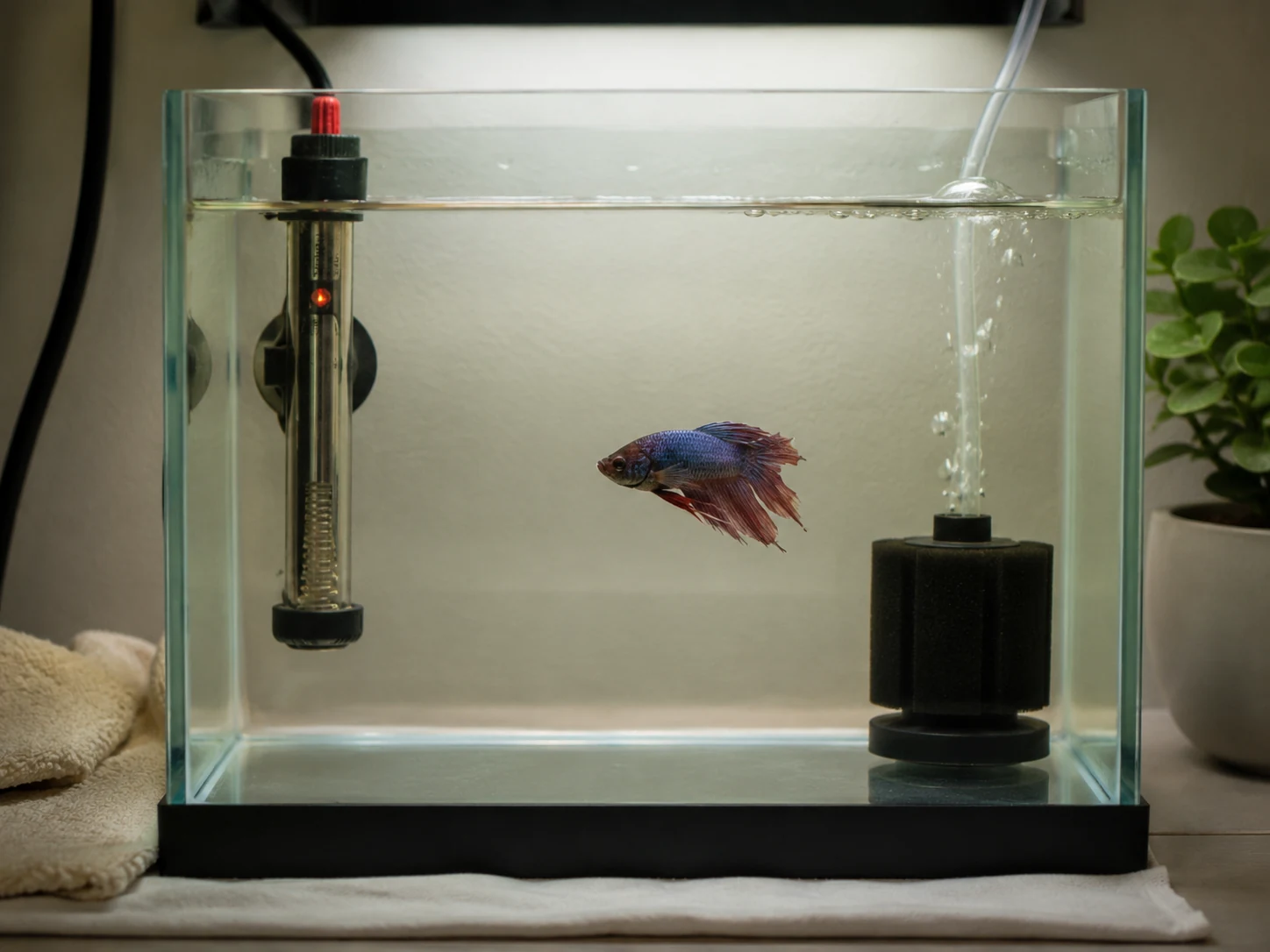
You do not need a complicated second aquarium. You need a small heated, dechlorinated, easy-to-clean treatment setup you can trust when a betta is in trouble.
- 2–3 gallon bare treatment tank or food-safe plastic tub
- Adjustable 15–25W mini heater
- Small air pump, airline, and airstone
- Airline control valve for gentler flow
- Separate thermometer
- Dechlorinator
- Small siphon or turkey baster for spot cleaning
Emergency Hospital Tank Toolkit
This is the kind of simple setup worth having before your fish is in trouble. It is not fancy. That is the point.
| Item | Practical size/spec | Why it helps |
|---|---|---|
| Small bare hospital tank or food-safe plastic tub | 2–3 gallons | Easy to heat, observe, clean, and dose accurately |
| Adjustable mini heater | 15–25W for most small hospital setups | Keeps treatment water at 76–80°F / 24–27°C |
| Air pump with airline and air stone | Very small output | Maintains oxygen during medication or salt treatment |
| Airline control valve | Fine-flow valve | Lets you soften the bubbles for a weak betta |
| Thermometer | Separate from the heater dial | Confirms the real water temperature |
| Dechlorinator | Reliable water conditioner | Makes emergency water changes safer |
| Small siphon or turkey baster | Simple waste removal | Lets you remove feces and uneaten food without tearing down the setup |
If you need a hospital or emergency setup, keep it simple: a small clean container or tank, dechlorinated water, stable heat when needed, gentle aeration, and basic test supplies. The goal is controlled observation and safe water, not a complicated second display tank.
What Not to Do
A bloated betta makes people overreact.
Avoid these mistakes:
| Mistake | Why it can backfire |
|---|---|
| Adding several medications at once | You may stress the fish and lose track of what helped or harmed |
| Treating every bloated betta as dropsy | Constipation and overfeeding need different handling |
| Treating every bloated betta as constipation | Pineconing and systemic illness can be missed |
| Skipping water testing | You may leave the cause in the tank |
| Deep-cleaning the filter | Can damage the bacteria colony and cause ammonia/nitrite spikes |
| Feeding peas automatically | Not a precise betta diagnosis or cure |
| Using aquarium salt instead of Epsom salt for internal swelling | Different compound, different use, and may be the wrong direction for fluid buildup |
| Lowering the display tank water level blindly | Can disable filters, expose plants, or damage equipment |
| Continuing normal feeding | Can worsen digestive bloating |
| Raising temperature rapidly | Sudden changes add stress |
The best first move is usually not dramatic.
It is clean water, correct temperature, careful observation, and a decision based on signs.
When to Use Medication
Medication may be appropriate when the pattern points toward infection, parasites, or a serious systemic condition. But medication should follow a reason.
Consider medication or veterinary advice when:
- The fish has pineconing.
- The fish is bloated and rapidly declining.
- There is bloating plus popeye, ulcers, severe lethargy, or red/inflamed areas.
- There is repeated stringy white feces, wasting, and appetite changes.
- Water quality is corrected but the fish continues to worsen.
Do not medicate the display tank unless you understand what the medication does to plants, invertebrates, filter bacteria, and other fish.
For many home setups, a hospital tank is safer for treatment.
Also be careful with antibiotics. Fish antibiotics are not casual “just in case” products. Wrong use can fail to help, stress the fish, and contribute to poor treatment habits. In food fish, drug use is regulated. In pet ornamental fish, responsible use still matters.
If you have access to an aquatic veterinarian, that is the best route for severe swelling, suspected internal infection, or a fish that is valuable to you.
How to Feed After the Belly Improves
Once the swelling improves and the fish is acting normal, do not celebrate by feeding a big meal.
Restart small.
A simple restart plan:
| Day | Feeding approach |
|---|---|
| Day 1 after improvement | Very small meal, 1–2 small pellets or equivalent |
| Day 2 | Small normal meal if belly stays normal |
| Day 3+ | Return to controlled feeding, not free feeding |
Use high-quality betta food as the staple. Rotate carefully if you use frozen foods. Use freeze-dried foods sparingly and soak them first if you feed them. Remove uneaten food.
Watch the belly after meals. Some fish are more sensitive to certain foods.
The goal is not to feed as much as the fish will accept.
The goal is to feed the amount the fish can handle.
Prevention: How to Reduce Betta Bloating Problems
You cannot prevent every illness. You can reduce the common triggers.
Keep the Tank Bigger Than a Vase
A 5-gallon tank is a practical minimum for most bettas. Larger can be even easier if the flow is gentle and the layout suits the fish. Tiny tanks change fast. Waste builds faster. Temperature swings faster. One overfeeding mistake matters more.
Small water volume makes small problems less small.
Keep the Water Warm and Stable
Use an adjustable heater and a separate thermometer. Bettas do best with stability. A warm tank that swings wildly is not ideal. A cold tank that looks clean is still stressful.
Feed Smaller Than You Think
Many bettas are overfed because they are interactive fish. They come to the glass. They beg. They train the owner quickly.
Do not let begging set the meal size.
Avoid Treat Overload
Bloodworms, brine shrimp, daphnia, and other foods can be useful. They can also become too much if fed heavily. Freeze-dried foods especially should not become the main diet.
Test Water When Behavior Changes
A betta that stops eating, hides, floats, sinks, clamps fins, gasps, or bloats deserves a water test.
Guessing is cheaper today.
Testing is cheaper over the life of the fish.
Related Guides
Continue with these guides:
- Betta Tank Setup for Beginners
- Betta Fish Care Guide
- Why Is My Betta Not Eating?
- Why Is My Betta Laying at the Bottom?
- Why Is My Betta Gasping at the Surface?
- How to Cycle a Fish Tank Without Guessing When It’s Safe for Fish
- Freshwater Aquarium Checklist: What You Actually Need Before Adding Fish
- Betta Fin Rot
- Betta Fish Popeye
- Betta Dropsy
- Fish Not Eating
Final Advice
A swollen betta belly is a symptom, not a diagnosis.
That is why the best outcomes usually come from slowing down, reading the pattern, and fixing the most likely cause first. Test the water. Recheck feeding. Look from above. Do not jump straight to medication when the fish may really need cleaner water, warmth, lighter feeding, or a quieter recovery setup.
When the fish is pineconing, weak, breathing hard, or declining fast, do not treat the case like simple constipation. That is where time matters most.
FAQ
Why is my betta fish bloated but still acting normal?
If your betta is bloated but still active, eating, breathing normally, and not showing raised scales, the cause may be overfeeding, temporary fullness, or mild constipation. Check the water anyway. If ammonia and nitrite are 0 ppm and the bloating followed a large meal, skip food for 24 hours and watch closely. If the belly worsens, the fish stops eating, or scales lift, treat it as more serious.
How do I know if my betta is bloated from constipation or dropsy?
Look from above. Constipation usually causes belly swelling without raised scales, and the fish may still be alert. Dropsy-like cases often involve body swelling, raised scales, lethargy, poor appetite, and sometimes popeye. Raised scales are a major warning sign. Do not assume a pineconing betta is just constipated.
Should I fast a bloated betta?
A short fast of 24–48 hours can help when overfeeding or constipation is likely and the fish is still reasonably alert. During the fast, keep the water clean, warm, and stable. Do not use long fasting as a substitute for dealing with pineconing, ammonia, nitrite, severe lethargy, or loss of balance.
Can overfeeding kill a betta?
Overfeeding can contribute to poor water quality, constipation, bloating, obesity, and stress. One extra meal usually does not kill a healthy fish, but repeated overfeeding in a small tank can create a chain of problems. Uneaten food also breaks down and can worsen ammonia and water quality.
Is a bloated betta always sick?
No. A betta may look slightly round after eating or, in the case of a female, when carrying eggs. But obvious swelling should not be ignored. Check behavior, water parameters, feeding history, and scale position. Mild fullness and illness can look similar early on.
What does dropsy look like in a betta?
Dropsy-like swelling often looks like a bloated body rather than only a full stomach. The key warning sign is pineconing, where the scales stick out when viewed from above. The fish may also be lethargic, stop eating, breathe heavily, develop popeye, or lose balance.
Can low temperature make a betta bloated?
Low or unstable temperature can slow digestion and add stress, which may contribute to bloating or make recovery harder. Bettas generally do best around 76–80°F / 24–27°C. Use a thermometer to confirm the real water temperature.
Should I move my bloated betta to a hospital tank?
Move the fish only if the hospital tank will be safer than the main tank. A good hospital setup should be heated, dechlorinated, clean, calm, and easy to monitor. A cold jar or unfiltered container can make things worse. Hospital tanks are most useful for serious cases, medication, lower water level, or close observation.
Can a bloated betta recover?
Yes, if the cause is mild overfeeding, constipation, temperature stress, or an early correctable water-quality issue. Recovery is less certain when there is pineconing, severe internal swelling, organ involvement, or rapid decline. Early action and clean stable water improve the odds, but not every case is reversible.
What should I feed a betta after bloating improves?
Restart with a very small meal. Use a high-quality betta food and feed one piece at a time. Avoid a large “recovery meal.” Watch the belly after feeding. If the bloating returns after a specific food, reduce or remove that food from the routine.
Are peas safe for bloated bettas?
Peas are often suggested online, but they are not a precise treatment for every bloated betta. Bettas are not goldfish. For a betta, start with fasting, warm stable water, better portion control, and water testing. Do not use peas to delay action if the fish has raised scales, severe lethargy, or buoyancy failure.
Can I use Epsom salt for a bloated betta?
Epsom salt can be useful when the pattern fits constipation, internal pressure, or mild fluid-related swelling without pineconing. Use pure, unscented magnesium sulfate in a dedicated treatment setup, not scented bath salts. A practical range is 1–2 teaspoons per 5 gallons for a mild 24–48 hour treatment while keeping the water warm and monitored. Do not substitute regular aquarium salt.
Should I lower the water level for swim bladder trouble?
Only lower the water level in a hospital tank or simple treatment container. Do not lower the display tank blindly, especially if it uses a hang-on-back filter, tall plants, attached rhizome plants, or equipment that must stay submerged. For a weak betta, a shallow heated hospital tank around 4–6 inches / 10–15 cm deep is usually safer than damaging the main aquarium.
Can parasites make a betta look bloated but still hungry?
Yes. Internal parasite cases can sometimes look like constipation because the belly swells, but the fish may still rush for food. Be more suspicious if there is stringy or pale feces, weight loss behind the belly, repeated bloating, and a history of risky live foods. In that pattern, a praziquantel-containing medication in a hospital tank may be more logical than repeated fasting.
When should I consider euthanasia for a bloated betta?
This is a difficult decision. Consider veterinary advice when possible. In home care, euthanasia may be considered when the fish is clearly suffering, cannot swim or breathe normally, has severe pineconing, refuses food for an extended period, and continues to decline despite clean warm water and appropriate care. Do not make the decision because the fish looks imperfect. Make it because quality of life has become poor and recovery is unlikely.
This guide is educational and does not replace diagnosis from an aquatic veterinarian. Fish bloating can have several causes that look similar at home. When a betta shows raised scales, severe lethargy, loss of balance, popeye, rapid decline, or repeated swelling that does not respond to basic husbandry correction, professional veterinary guidance is the best option when available.
Healthy Aquariums does not recommend using random combinations of medications without a clear reason. Clean, warm, stable water is not a cure for every disease, but it is the foundation that makes recovery possible.
References
This guide was written for beginner betta keepers and should be cross-checked against fish welfare, husbandry, and source documentation when updating the site.
- Merck Veterinary Manual. “Management of Aquarium Fish.” Accessed June 8, 2026. https://www.merckvetmanual.com/exotic-and-laboratory-animals/aquarium-fish/management-of-aquarium-fish
- Merck Veterinary Manual. “Disorders and Diseases of Fish.” Reviewed/Revised February 2020, modified April 2026. https://www.merckvetmanual.com/all-other-pets/fish/disorders-and-diseases-of-fish
- MSD Veterinary Manual. “Parasitic Diseases of Fish.”. https://www.msdvetmanual.com/exotic-and-laboratory-animals/aquarium-fish/parasitic-diseases-of-fish
- MSD Veterinary Manual. “Common Environmental Hazards for Fish.”. https://www.msdvetmanual.com/multimedia/table/common-environmental-hazards-for-fish
- PetMD. “Dropsy in Fish: Symptoms, Causes, and Treatment.” Published December 22, 2024. https://www.petmd.com/fish/conditions/urinary/dropsy-fish
- PetMD. “Swim Bladder Disease in Fish: Symptoms & Treatment.” Published September 5, 2023. https://www.petmd.com/fish/conditions/respiratory/swim-bladder-disorders-fish
- Aquatic Veterinary Consulting. “What is Dropsy?” Published December 22, 2022. https://www.aquaticvetconsulting.com/post/what-is-dropsy
- Chewy Editorial. “Aquarium Fish Constipation.” Published April 30, 2025. https://www.chewy.com/education/fish/general/aquarium-fish-constipation
- DailyMed. “API GENERAL CURE — metronidazole praziquantel powder.” Updated April 21, 2026. https://dailymed.nlm.nih.gov/dailymed/drugInfo.cfm?setid=9ecc2f22-4b71-4e94-be4b-2fccd58e5653
- Fritz Aquatics. “ParaCleanse Product Info Sheet.”. https://fritzaquatics.com/assets/files/uploads/Paracleanse_Product_Info_Sheet.pdf
- Chai, J. Y. “Praziquantel Treatment in Trematode and Cestode Infections.” Infection & Chemotherapy. 2013. https://pmc.ncbi.nlm.nih.gov/articles/PMC3780935/
- The Fish Vet. “Is there a cure for dropsy in fish?” Published October 22, 2013. https://thefishvet.com/2013/10/22/is-there-a-cure-for-dropsy-in-fish-thefishvets-secrets-revealed/