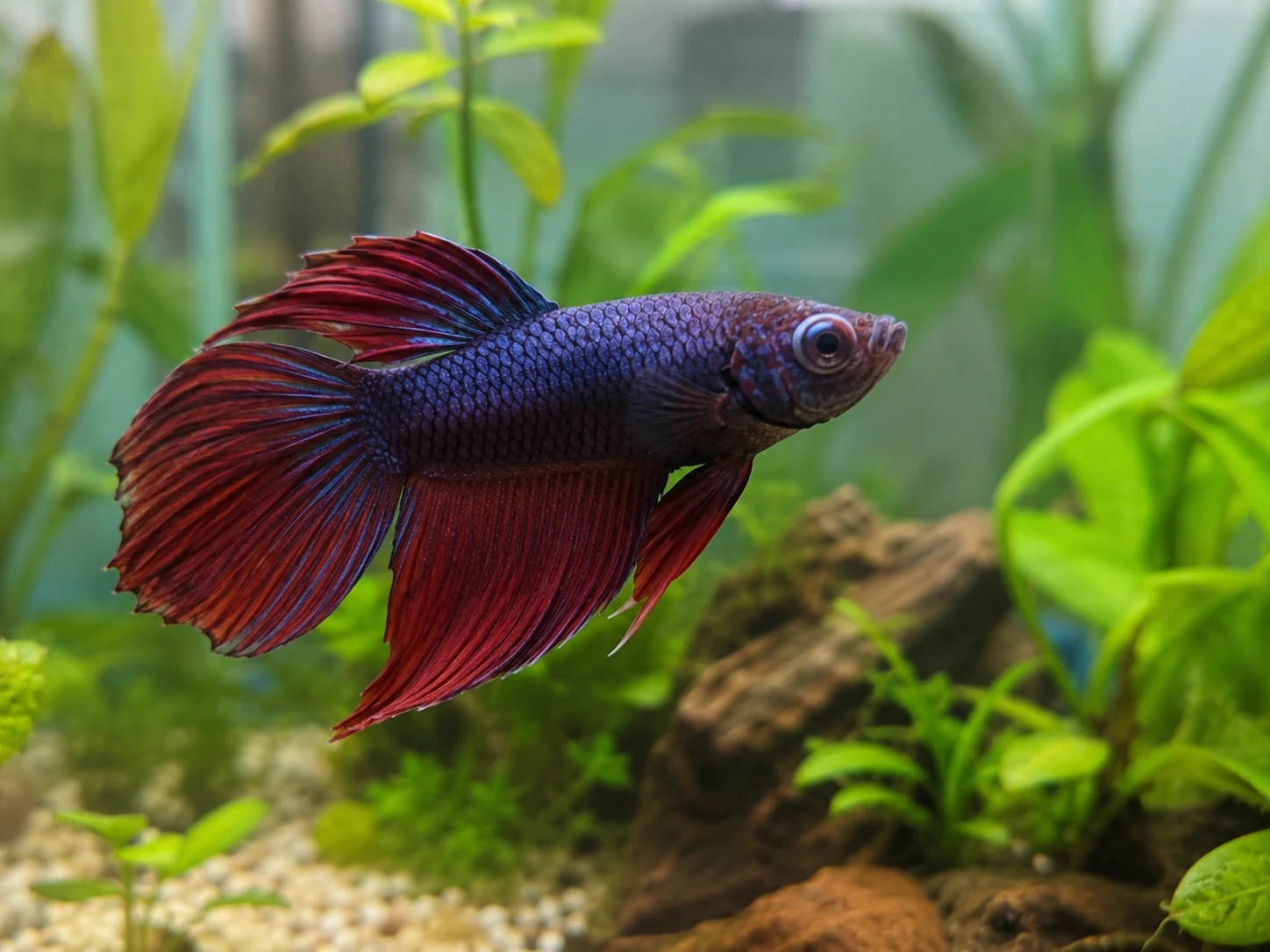
Popeye means the eye protrudes outward. One swollen eye often points toward injury. Both swollen eyes should be treated as an emergency pattern because systemic infection, internal fluid pressure, gas supersaturation, or serious water-quality failure may be involved. Test water, reduce injury risks, use a dim heated hospital tank when needed, and do not confuse cloudy eye with true popeye.
A betta with a swollen eye is hard to look at calmly.
The eye may bulge outward. It may also look cloudy, white, red, or stretched — but cloudiness by itself is not automatically popeye. Sometimes one eye is affected. Sometimes both are. Sometimes the fish still eats. Sometimes the fish hides, clamps its fins, and looks like the whole body is failing.
That difference matters.
“Popeye” is not one disease.
It is a symptom.
The technical word is exophthalmia, which simply means the eye is protruding. The cause can be minor trauma, poor water quality, gas bubble disease, bacterial infection, internal fluid pressure, or a systemic illness that is showing up in the eye.
So do not start by asking, “Which medicine cures popeye?”
Start with a better question:
Is this one injured eye, or is the whole fish under stress?
That is the split that changes everything.
Quick Answer: What Causes Popeye in Bettas?
A betta can develop popeye from physical injury, poor water quality, bacterial infection, internal fluid buildup, gas bubble disease, severe stress, or a larger systemic problem such as dropsy-like illness.
The first clue is whether one eye or both eyes are affected.
| What you see | More likely direction | Urgency |
|---|---|---|
| One swollen eye after bumping, scraping, or fighting | Injury/trauma | Moderate |
| Both eyes swollen | Systemic infection/internal fluid pressure, serious water issue, gas issue, or dropsy-like illness | Emergency pattern |
| Swollen eye plus raised scales | Dropsy-like internal fluid buildup | Very high |
| Swollen eye plus cloudy film only | Eye irritation, injury, infection, or water issue | Moderate to high |
| Swollen eye plus red/bloody tissue | Trauma or infection | High |
| Popeye plus ammonia or nitrite above 0 ppm | Water-quality emergency | High |
| Eye swelling after large water change with bubbles on glass | Possible gas supersaturation/gas bubble issue | High |
| Fish still eating, one eye affected, no raised scales | Often better prognosis | Moderate |
If your betta has popeye, test the water today.
Do not guess from appearance alone.
First: Is It One Eye or Both Eyes?
This is the most useful first split.
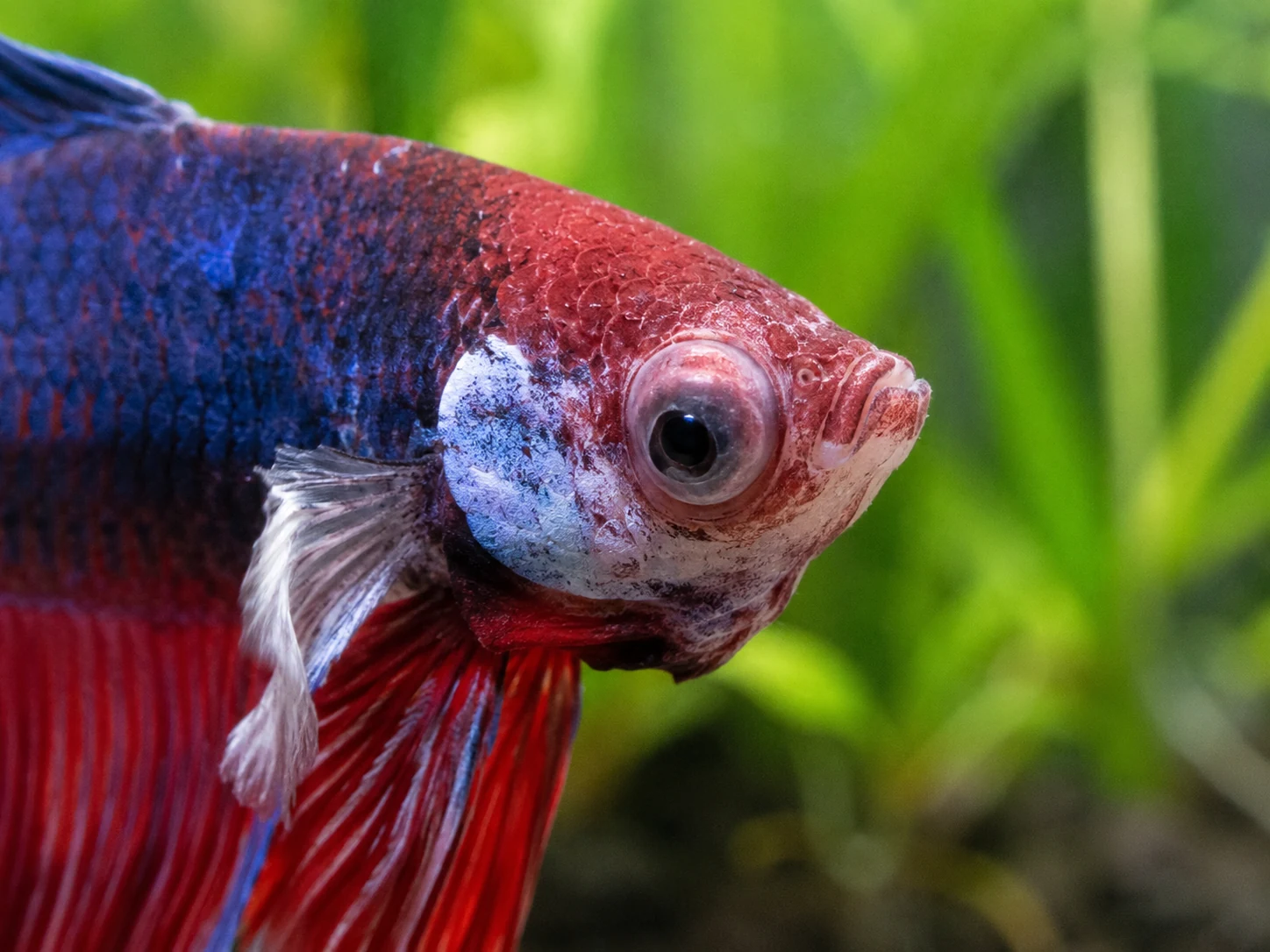
A single swollen eye often points toward local trauma. The fish may have scraped the eye on rough decor, hit the glass, fought a tank mate, wedged into a tight hide, or damaged the eye during netting.
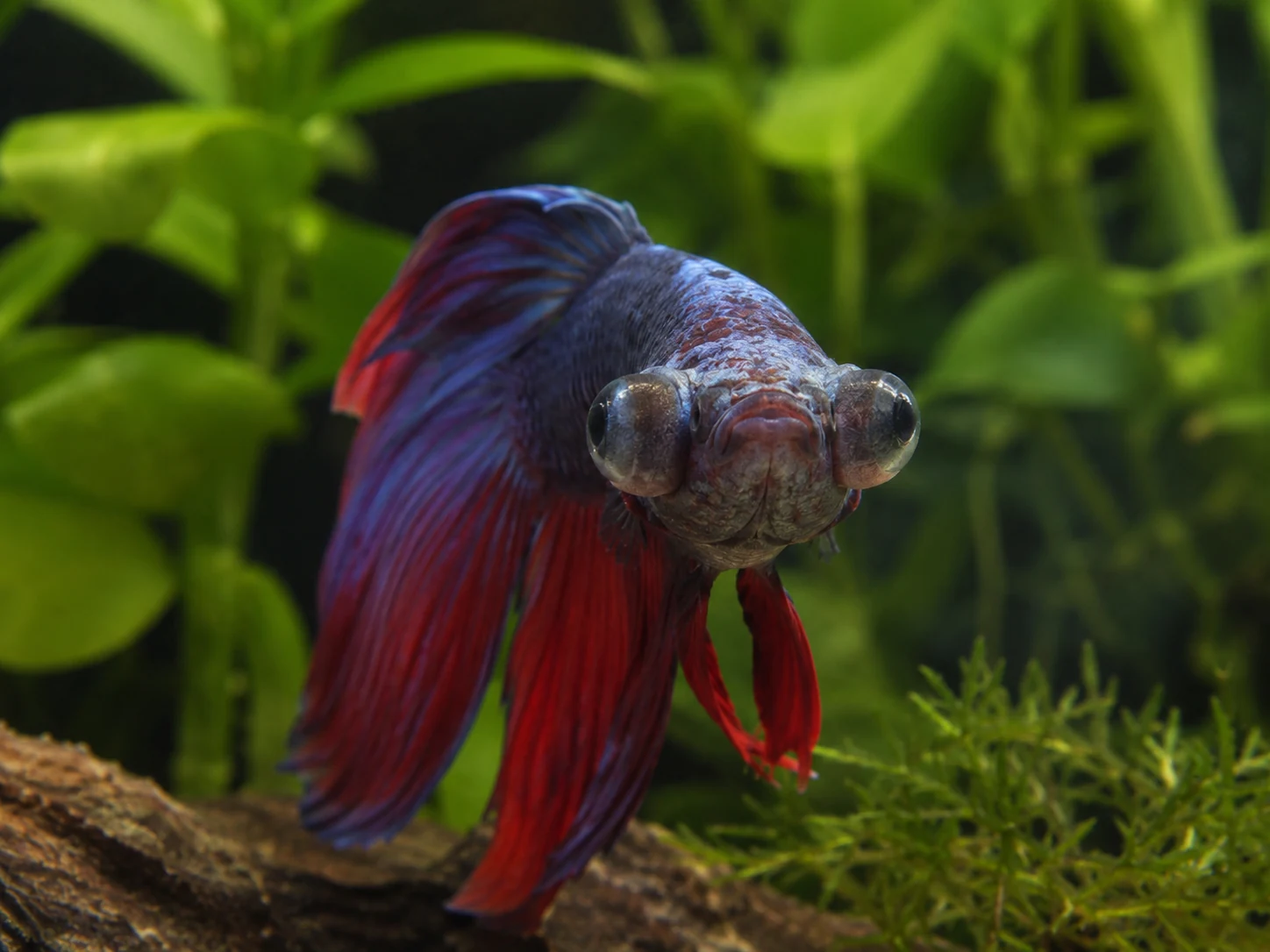
Both eyes swollen is more concerning.
Bilateral popeye should be treated as an emergency pattern, not a “wait and see” symptom. It often suggests something affecting the fish more broadly: poor water quality, systemic bacterial infection, gas bubble disease, internal pressure, kidney/organ stress, or a dropsy-like illness.
| Pattern | What it often suggests |
|---|---|
| One eye swollen | Injury, scrape, bump, localized infection |
| Both eyes swollen | Water quality, systemic infection, gas issue, internal fluid pressure |
| One eye cloudy but not bulging | Corneal irritation, scrape, early infection |
| Eye bulging plus belly swelling | Internal fluid problem or dropsy-like process |
| Eye bulging plus pineconing | Emergency |
| Eye bulging plus other fish sick | Shared water/toxin/oxygen issue |
A one-eye case can still become infected.
A two-eye case can still start from stress.
But the split gives you a starting point.
Red Flags: When Betta Popeye Is an Emergency
Some eye swelling can improve with clean water, reduced stress, and time. Some should be treated as urgent.
Move faster if you see:
| Red flag | Why it matters |
|---|---|
| Both eyes bulging | More likely systemic problem |
| Raised scales from above | Dropsy-like fluid buildup |
| Swollen belly | Internal pressure or organ stress |
| Heavy breathing | Water quality, gill stress, or systemic illness |
| Refusing food | Fish is declining |
| Eye looks bloody or ulcerated | Trauma or infection risk |
| Eye is protruding dramatically | Risk of permanent damage |
| Fish cannot swim normally | Systemic stress or buoyancy issue |
| Ammonia or nitrite above 0 ppm | Water itself may be injuring the fish |
| Bubbles visible in fins/eyes or on glass after water change | Possible gas supersaturation issue |
If popeye appears with pineconing, treat it as a serious internal illness pattern.
That is not the same as a scraped eye.
Bilateral Popeye Emergency: When Both Eyes Are Swollen
One swollen eye often starts local.
Two swollen eyes usually does not.
When both eyes are protruding, assume the problem may be systemic until proven otherwise. That means the fish may be dealing with internal infection, fluid pressure, kidney/organ stress, a severe water-quality event, or gas supersaturation. This is why bilateral popeye belongs closer to dropsy-level concern than to a simple scraped-eye case.
Do not spend several days only observing if both eyes are swelling.
A safer emergency response is:
- Test ammonia and nitrite immediately.
- Move the fish to a heated hospital tank if the display tank is not clearly safe.
- Keep the treatment tank dark or very dim.
- Use gentle aeration.
- Consider Epsom salt support for fluid pressure in the hospital tank.
- Escalate to an appropriate fish-labeled broad-spectrum antibacterial treatment if infection/systemic illness is likely.
- Follow the medication label and avoid casual drug mixing.
| Pattern | What it suggests | Response speed |
|---|---|---|
| One eye swollen, fish active, water safe | Local injury more likely | Same day assessment |
| Both eyes swollen | Systemic/internal issue possible | Immediate action |
| Both eyes plus bloating | Dropsy-like pressure concern | Emergency |
| Both eyes plus pineconing | Organ/systemic failure pattern | Emergency |
| Both eyes plus ammonia/nitrite | Water-quality emergency | Immediate water correction |
| Both eyes after gas-heavy water change | Possible gas supersaturation | Immediate aeration/source correction |
This does not mean every bilateral case is hopeless.
It means you should not treat it like a minor scratch.
Check the Water Before You Treat the Eye
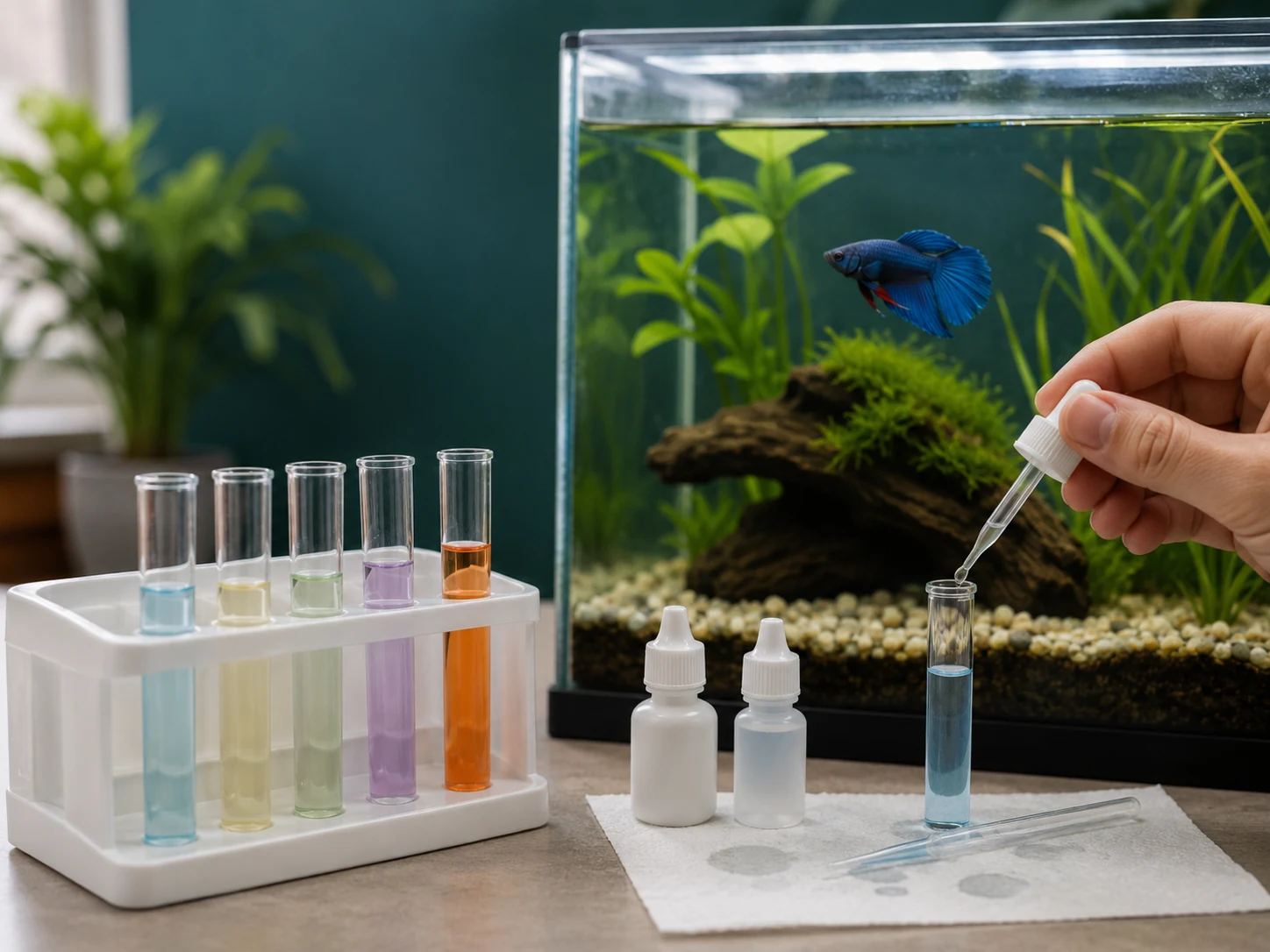
Eye swelling may look like an eye problem, but the tank may be the real problem.
Poor water quality can irritate tissue, weaken immune response, and turn a minor injury into an infection. A betta in ammonia or nitrite may also show clamped fins, heavy breathing, appetite loss, lethargy, and general decline.
Test these first:
| Parameter | Practical target in a popeye case |
|---|---|
| Ammonia/ammonium (NH3/NH4+) | 0 ppm |
| Nitrite (NO2-) | 0 ppm |
| Nitrate (NO3-) | Ideally under 20–40 ppm |
| Temperature | Stable 76–80°F / 24–27°C |
| pH | Stable, not swinging |
| Dissolved oxygen / surface exchange | Enough surface movement and air access |
If ammonia or nitrite is above zero, do not delay water correction.
Use dechlorinated, temperature-matched water. Do a partial water change. Remove waste and uneaten food. Keep the filter running. Do not replace all filter media. Do not turn the tank into a sterile new setup.
A sick fish needs safer water.
Not a biological filter crash.
Cause 1: Eye Injury or Trauma
A one-eye popeye case often starts with injury.
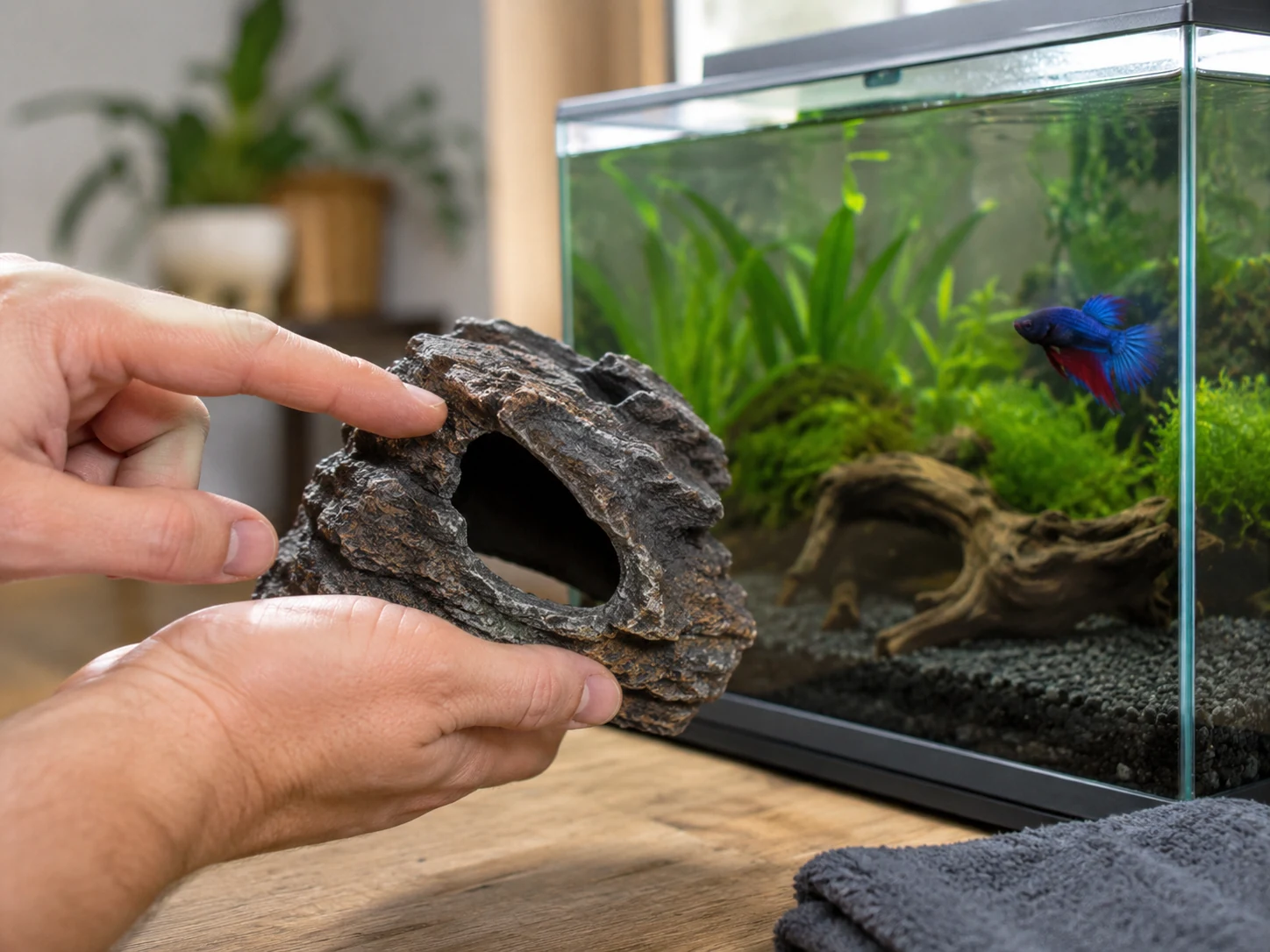
Bettas are curious. They squeeze through plants, rest on leaves, flare at reflections, dart when startled, and sometimes wedge themselves into decor that looks safe to a human but is not safe for a fish.
Common trauma sources:
| Cause | How it damages the eye |
|---|---|
| Sharp decor | Scrapes or punctures delicate eye tissue |
| Tight cave opening | Fish wedges and rubs the eye |
| Plastic plants | Scratch eye or face |
| Netting | Eye or face gets bumped |
| Fighting or nipping | Direct bite or collision |
| Startle response | Fish darts into glass or hardscape |
| Strong flow | Exhaustion and collisions |
Signs that point toward trauma:
- One eye is affected.
- The other eye looks normal.
- The fish was recently moved, netted, chased, or startled.
- There is sharp decor or a tight hide.
- The fish still eats and swims normally.
- Water tests are safe.
What to do:
- Test the water.
- Remove sharp or tight decor.
- Keep the tank warm and stable.
- Reduce bright reflections and stress.
- Photograph the eye daily.
- Watch for cloudiness, redness, worsening swelling, or appetite loss.
A mild eye injury may improve.
But an injured eye is vulnerable.
Clean water is the first medicine here.
Cause 2: Poor Water Quality
Poor water quality is one of the most important causes to rule out.
It does not always cause popeye by itself, but it can make eye swelling worse and make healing harder.
Water problems that matter:
| Water issue | Why it matters |
|---|---|
| Ammonia/ammonium | Irritates fish and damages comfort |
| Nitrite | Can stress oxygen transport and overall health |
| High organic waste | Feeds bacterial pressure |
| Dirty substrate | Keeps waste breaking down |
| Uncycled tank | Causes unstable ammonia/nitrite |
| Overcleaned filter | Removes beneficial bacteria |
| Temperature swings | Weakens stress response |
| Low oxygen | Adds systemic stress |
A beginner mistake is seeing clear water and assuming safe water.
Clear water can still contain ammonia or nitrite.
Test it.
Cause 3: Bacterial Infection
Popeye can involve bacterial infection, especially when the eye is injured, the water is poor, or the fish is already stressed.
Aquarium bacterial disease is often opportunistic. The bacteria were not necessarily waiting in one evil bottle. They may already exist in the environment and become a problem when the fish is weakened.
Signs that make infection more likely:
| Sign | Concern |
|---|---|
| Eye swelling gets worse each day | Active process |
| Eye becomes cloudy, white, red, or bloody | Tissue irritation/infection |
| Fish clamps fins | Stress or illness |
| Appetite drops | Fish is declining |
| Body sores appear | More than local eye problem |
| Both eyes affected | Systemic issue possible |
| Popeye plus fin rot | Broad stress/infection pattern |
| Popeye plus bloating | Internal fluid/systemic concern |
For suspected infection, a hospital tank may be needed.
Do not pour broad antibiotics into the display tank as the default response. A display tank has filter bacteria, plants, possible invertebrates, and biological stability you do not want to damage unnecessarily.
Cause 4: Internal Fluid Pressure or Dropsy-Like Illness
Popeye can show up with internal fluid problems.
This is why swollen eyes plus swollen body is more serious than a single injured eye.
A dropsy-like pattern often includes:
| Sign | Meaning |
|---|---|
| Both eyes swollen | Systemic pressure possible |
| Belly swollen | Internal fluid or organ stress |
| Raised scales from above | Major red flag |
| Lethargy | Fish is declining |
| Poor appetite | Systemic illness likely |
| Heavy breathing | Stress or organ involvement |
| Pineconing | Emergency-level sign |
If the scales lift outward like a pinecone, do not treat it like a scratched eye.
Popeye plus pineconing is a serious pattern.
Clean water is still necessary, but clean water alone may not reverse organ-level failure.
Cause 5: Gas Bubble Disease or Supersaturated Water
This is less common in small home aquariums than injury or poor water, but it matters because it can look dramatic.
Gas bubble disease can cause gas bubbles in fish tissues, including fins, gills, and eyes. Merck/MSD veterinary references list exophthalmos, or popeye, as a possible sign of gas supersaturation.
A home aquarium clue is timing.
Be suspicious if popeye appears after:
| Trigger | Why it matters |
|---|---|
| Large water change | Sudden water chemistry or gas change |
| Water sprayed under pressure | Can add excess dissolved gas |
| Very cold tap water warmed quickly | Gas can come out of solution |
| Fine bubbles coating glass | Possible supersaturation clue |
| Multiple fish affected | Shared water issue more likely |
| Bubbles visible in fins or around eyes | Stronger warning sign |
Do not diagnose gas bubble disease from one clue.
But if popeye appears soon after a large water change and you see tiny bubbles coating surfaces or fish tissue, take it seriously.
Improve aeration, stop adding supersaturated water, and avoid sudden large changes.
Cloudy Eye vs Popeye: Do Not Treat Them as the Same Problem
This distinction prevents overmedicating.
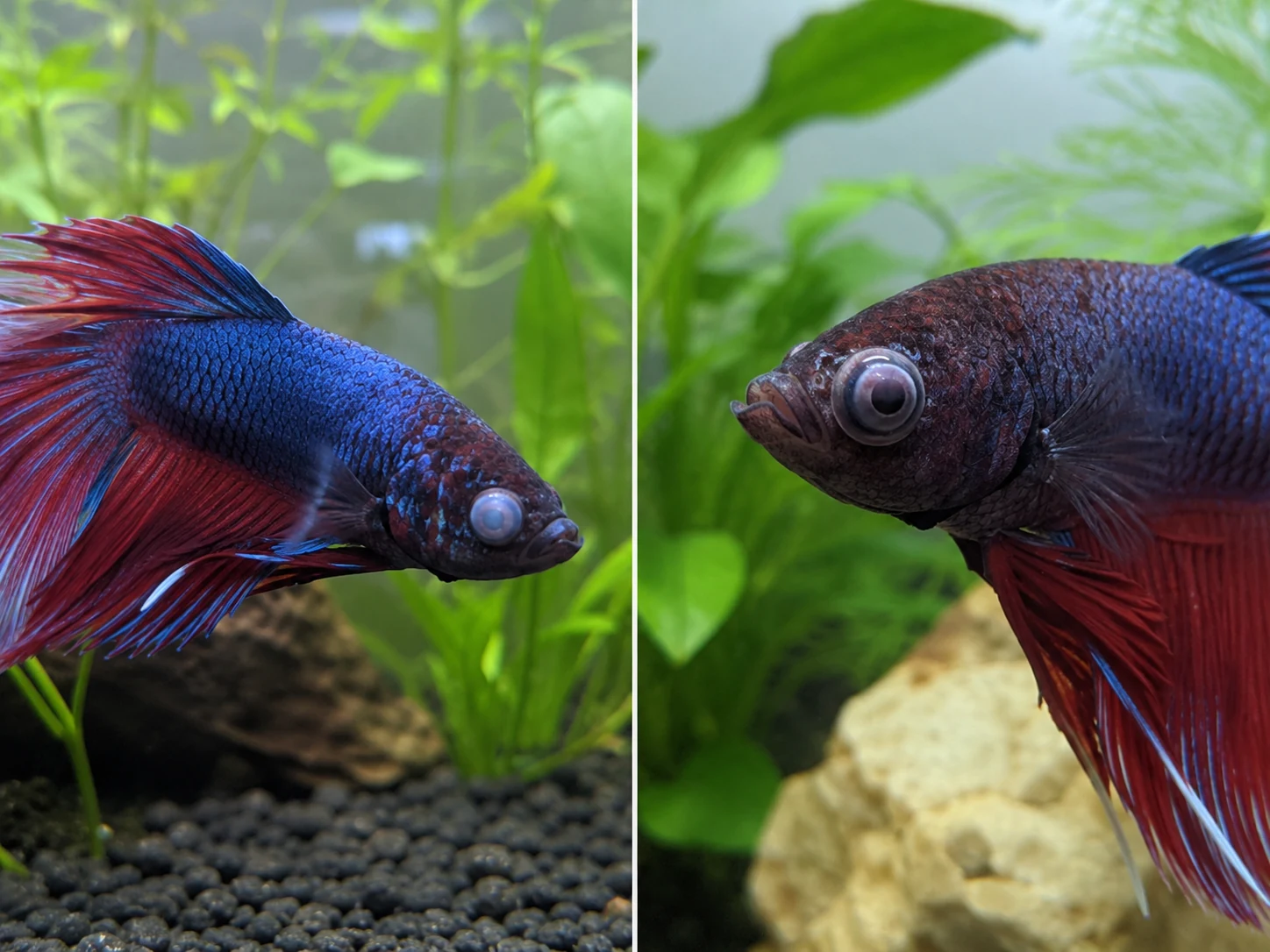
Cloudy eye means the surface of the eye looks foggy, milky, white, or hazy. The eye may look like it has a film over it. But the eyeball itself is not pushed outward.
Popeye means the eye protrudes from the socket. It is a pressure problem behind or around the eye. The eye may stay clear, or it may become cloudy if there is injury or secondary infection.
| Eye issue | What it looks like | Common direction |
|---|---|---|
| Cloudy eye | Foggy/milky surface, not bulging | Water quality, irritation, abrasion, nutrition, old injury |
| True popeye | Eye visibly protrudes outward | Fluid pressure, trauma, infection, gas issue, systemic illness |
| Cloudy popeye | Eye protrudes and also looks cloudy | Popeye with surface damage or secondary infection |
| One-eye injury | One eye cloudy/swollen/red | Trauma or local infection |
| Both-eye popeye | Both eyes protrude | Systemic/internal concern until proven otherwise |
A mild cloudy eye with no bulging, normal behavior, and poor water history often starts with water correction and observation.
A bulging eye is different.
Do not give strong antibiotics just because a non-bulging eye looks a little cloudy. But do not dismiss cloudiness when the eye is also protruding, red, bloody, or worsening.
The practical rule:
Cloudy but not protruding = investigate water and irritation first.
Protruding = popeye pattern.
Both protruding = emergency pattern.
Cause 7: Fighting, Tank Mates, or Fin-Nipping Fish
Bettas are often kept alone for a reason.
Tank mates can cause eye injury directly or indirectly. A nippy fish may chase the betta into decor. A stressed betta may dart and hit hardscape. Another betta or aggressive fish can bite the eye or face.
Common risk setups:
| Setup | Risk |
|---|---|
| Two male bettas together | Fighting and severe injury |
| Betta with fin nippers | Chasing, nipping, stress |
| Small community tank | No escape space |
| Bright reflections | Flaring, charging, face injuries |
| Territorial fish | Face-to-face conflict |
| Shrimp/snail-only tank | Usually lower risk, but decor still matters |
If popeye appears after a community conflict, separate first.
Do not medicate while the injury keeps happening.
Cause 8: Rough Decor, Tight Hides, and Plastic Plants
A lot of betta injuries start with decor.
If an opening looks just big enough for a betta, it may be dangerous. Bettas try to wedge into resting places. If the fish cannot turn easily, the eye, gill cover, or fins may scrape.
Check:
| Decor type | Risk |
|---|---|
| Plastic plants | Sharp edges |
| Ceramic caves | Rough holes |
| Resin ornaments | Hidden seams or points |
| Jagged rocks | Scrapes eyes and fins |
| Tight tunnels | Fish wedges and panics |
| Fake driftwood | Sharp ridges |
| Broken decor | Exposed rough edges |
Use the nylon test.
If the decor snags a nylon stocking, it can snag fins or scrape an eye.
For eye injury prevention, smooth is not optional.
What to Do Today: Safe First Response Plan
If your betta has popeye, do not do ten things at once.
Use a sequence.
Step 1: Photograph the Eye
Take a clear photo from the side and, if possible, from slightly above.
You need a baseline.
Tomorrow, compare the swelling.
Step 2: Check One Eye vs Both Eyes
One eye points more toward injury.
Both eyes pushes the case toward water quality, infection, gas issue, or systemic illness.
Step 3: Test the Water
Test ammonia, nitrite, nitrate, pH, and temperature.
If ammonia or nitrite is above 0 ppm, correct the water first.
Step 4: Remove Injury Sources
Remove sharp decor, tight hides, plastic plants, and aggressive tank mates.
Do not leave the same hazard in the tank while hoping the eye heals.
Step 5: Stabilize the Environment
Keep temperature stable around 76–80°F / 24–27°C. Keep flow gentle. Maintain easy surface access. Dim lights if the fish is stressed.
Step 6: Decide Whether to Isolate
A hospital tank can help if you need close observation, medication, or separation from a dangerous tank.
A bad hospital tank can hurt.
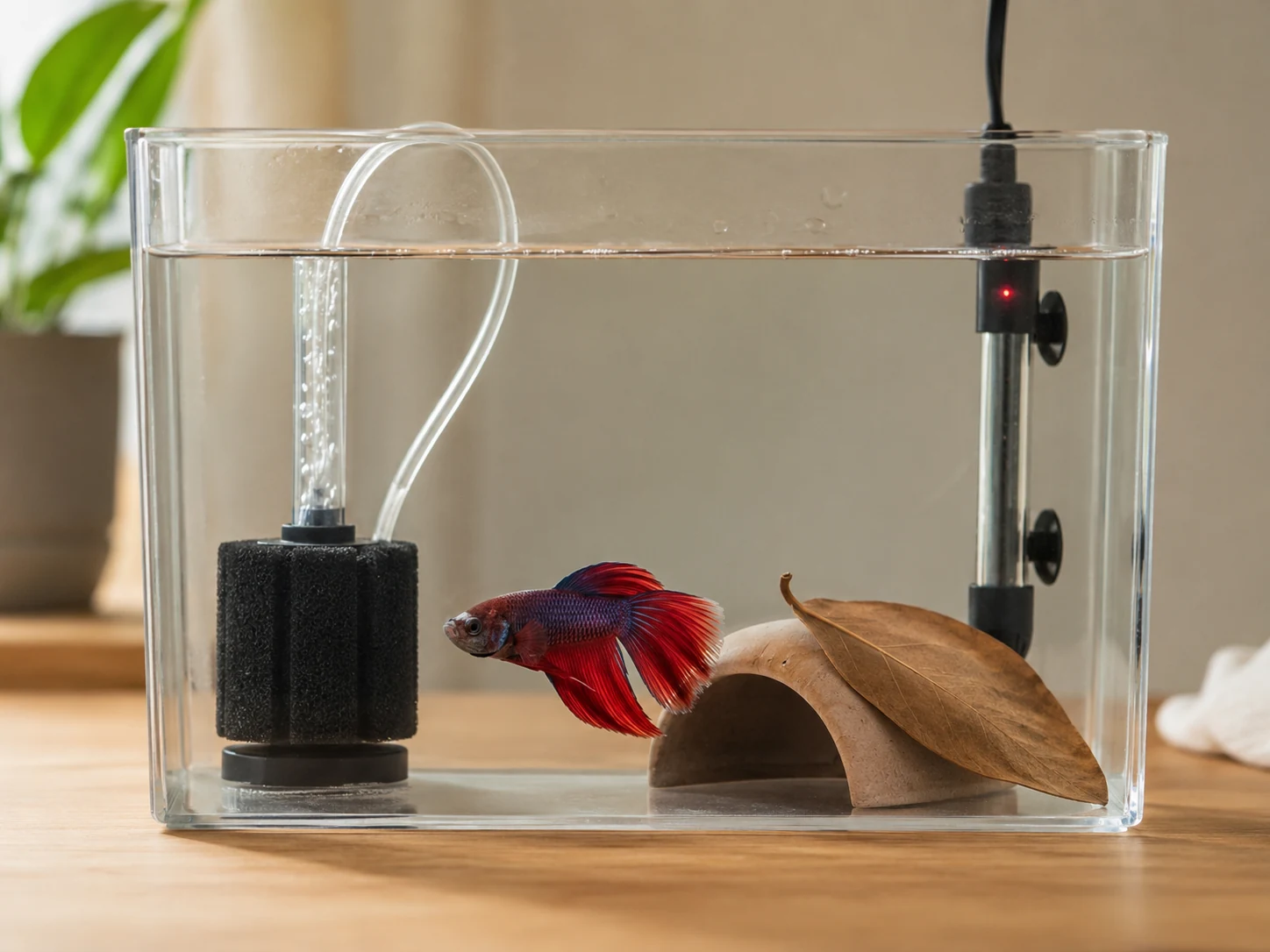
A useful hospital tank should be:
| Requirement | Why it matters |
|---|---|
| Heated | Cold slows recovery |
| Dechlorinated | Protects gills and tissue |
| Gentle aeration | Keeps oxygen available |
| Bare bottom | Makes waste easy to remove |
| Covered | Bettas jump |
| Easy to inspect | Eye changes are visible |
| Clean but not sterile-chaotic | Stability matters |
| Dark or very dim | Reduces stress and light pressure on an irritated eye |
Keep the Hospital Tank Dark
A betta with a protruding or irritated eye should not be placed under bright light for “easy observation.”
The stretched eye surface may be sensitive. Bright light and open exposure can make the fish panic, dart, or slam into the container wall. That is exactly what you do not want when the eye is already swollen.
Use a low-stress setup:
| Hospital tank setting | Safer choice |
|---|---|
| Lighting | Off or very dim |
| Cover | Dark towel around three sides |
| Hiding place | Smooth hide or soft leaf |
| Flow | Gentle, not blasting |
| Observation | Brief checks with room light |
| Tank placement | Quiet area away from vibration |
Do not keep lifting covers and shining bright light into the fish’s face every hour.
Check the fish.
Then let it rest.
You do not need a complicated hospital aquarium. You need a small, heated, dim, easy-to-monitor setup that keeps the fish calm while you test water, reduce stress, and treat only when the pattern supports it.
- 2–3 gallon hospital tank or clear food-safe tub
- Adjustable mini heater
- Small sponge filter or gentle air stone
- Airline valve for soft flow
- Liquid water test kit
- Dechlorinator
- Smooth hide or soft resting leaf
- Dark towel to cover three sides
- Small siphon or turkey baster
Emergency Popeye Toolkit
This page may link to practical supplies where they genuinely support safe quarantine, stable heat, clean water, and careful observation. Product choices should stay secondary to water testing and correct diagnosis.
Keep it helpful, not fear-based.
| Item | Why it helps |
|---|---|
| 2–3 gallon hospital tank or clear tub | Easier observation and dosing |
| Adjustable mini heater | Keeps tropical temperature stable |
| Small sponge filter or air stone | Gentle oxygen support |
| Airline valve | Reduces flow for weak bettas |
| Liquid test kit | Confirms ammonia and nitrite |
| Dechlorinator | Makes emergency changes safe |
| Smooth hide or soft leaf | Reduces stress without eye injury |
| Small siphon or turkey baster | Removes waste without full teardown |
The point is not to sell panic.
The point is to avoid improvising with a cold jar when the fish is already stressed.
When Medication Makes Sense
Medication is not the first step for every swollen eye.
It becomes more logical when:
| Situation | Medication may be justified |
|---|---|
| Eye swelling worsens daily | Active process |
| Eye is cloudy, red, bloody, or ulcerated | Infection risk |
| Both eyes are swollen | Systemic/internal infection or fluid pressure possible; treat as urgent |
| Fish stops eating | Decline |
| Popeye appears with fin rot or sores | Broader bacterial pattern |
| Water is corrected but eye still worsens | More than water correction needed |
| Hospital tank is ready | Safer dosing and monitoring |
Use a hospital tank whenever possible for antibiotics. In bilateral popeye with decline, bloating, or pineconing, consider this an emergency escalation pattern rather than a slow observation case.
Do not casually dose broad-spectrum antibiotics into the display tank. Some medications can harm the biological filter, plants, invertebrates, or the stability of the system. If the filter cycle crashes, ammonia and nitrite can rise while the fish is already weak.
Follow the label.
Do not mix medications randomly.
Do not use human antibiotics.
If you can reach an aquatic veterinarian, do that.
Epsom Salt vs Aquarium Salt: Popeye Is Not a Fin Wound
This is the salt mistake to avoid.
For popeye, the issue is often fluid pressure behind or around the eye. The goal is not to “salt the wound.” The goal is to reduce pressure, protect the eye, and treat the underlying cause.
Epsom salt is magnesium sulfate (MgSO4). In fishkeeping, it is commonly used as supportive care for fluid-related swelling, internal pressure, or constipation-type situations.
Aquarium salt is sodium chloride (NaCl). It is usually discussed for selected external skin/fin support. It is not the right default tool for a swollen protruding eye.
| Product | Chemical | Better use case | Popeye role |
|---|---|---|---|
| Epsom salt | Magnesium sulfate / MgSO4 | Fluid-pressure support in selected cases | Can be considered in hospital tank |
| Aquarium salt | Sodium chloride / NaCl | External skin/fin supportive care | Avoid as default for swollen protruding eyes |
| Table salt | NaCl plus possible additives | Human food | Avoid |
| Marine salt mix | Mineral blend | Saltwater/brackish systems | Not for routine popeye treatment |
Do not use aquarium salt as the main response for a protruding eye. It is not treating the pressure behind the eye and may be the wrong osmotic direction for a fluid-swelling problem.
For popeye, Epsom salt support makes more sense only in a controlled hospital tank, especially when swelling/fluid pressure is part of the pattern.
A cautious beginner-friendly approach:
| Situation | Salt direction |
|---|---|
| One scraped eye, no swelling progression | Focus on water quality and injury removal first |
| True popeye with fluid swelling | Consider Epsom salt support in hospital tank |
| Bilateral popeye | Hospital tank, Epsom support, and emergency escalation |
| Fin rot without popeye | Aquarium salt may be considered separately in controlled external-care cases |
| Display tank with plants/snails/shrimp | Do not salt casually |
Epsom salt is not an antibiotic.
It will not fix unsafe water, gas bubble disease, a ruptured eye, or a systemic bacterial infection by itself. It is supportive care. The underlying cause still matters.
What Not to Do
Popeye makes people panic.
Panic creates bad fishkeeping.
Avoid these mistakes:
| Mistake | Why it can hurt |
|---|---|
| Ignoring ammonia/nitrite | Leaves the fish in harmful water |
| Treating both-eye popeye like a small scrape | Misses systemic illness |
| Dosing antibiotics in the display tank by default | Can damage biological stability |
| Moving fish to a cold jar | Adds stress and slows recovery |
| Using sharp decor again | Reinjures the eye |
| Doing a full tank reset | Can crash the cycle |
| Mixing medications | Adds side effects and confusion |
| Waiting while both eyes worsen | Loses time |
| Using scented salts | Dangerous additives |
| Using aquarium salt as the default for popeye | Wrong tool for protruding-eye fluid pressure |
| Keeping hospital tank lights bright | Can increase stress and darting risk when the eye is irritated |
| Assuming cloudy eye is harmless | It may progress |
The best response is measured.
Measured does not mean slow.
It means you act on the right evidence.
Recovery: What Improvement Looks Like
Popeye recovery is not always instant.
A mild injury may start looking calmer within a few days after the cause is removed and the water is stable. Swelling may take longer to reduce. Cloudiness may fade slowly. In severe cases, the eye may remain damaged even if the fish survives.
Watch for:
| Improvement sign | Meaning |
|---|---|
| Swelling stops increasing | The process may be stabilizing |
| Fish eats again | Energy is improving |
| Eye becomes less cloudy | Surface irritation may be healing |
| Redness fades | Inflammation may be reducing |
| Fish swims normally | Overall stress lower |
| Water tests remain safe | Recovery environment is stable |
Bad signs:
| Worsening sign | Concern |
|---|---|
| Eye protrudes more each day | Active process |
| Second eye becomes swollen | Systemic issue |
| Fish stops eating | Decline |
| Belly swells | Internal problem |
| Scales raise | Dropsy-like emergency |
| Eye ruptures or bleeds | Severe injury/infection |
| Fish loses balance | More than an eye problem |
Do not judge by one hour.
Judge the trend.
Can a Betta Lose an Eye and Survive?
Yes, some bettas can survive with one damaged or missing eye if the underlying problem is controlled and the fish can still feed.
That does not mean eye loss is minor.
A one-eyed betta may need:
| Adjustment | Why it helps |
|---|---|
| Calm tank layout | Easier navigation |
| Predictable feeding spot | Helps the fish find food |
| Gentle flow | Reduces collisions |
| Smooth decor | Prevents new injuries |
| No aggressive tank mates | Prevents bullying |
| Good water quality | Protects damaged tissue |
If an eye is severely damaged, infected, or ruptured, veterinary help is the best option when available.
At home, focus on clean water, low stress, and preventing secondary infection.
Preventing Popeye in Bettas
You cannot prevent every injury.
You can reduce risk.
Keep Water Stable
A heated, filtered 5–10 gallon tank gives you more stability than a tiny container.
Small tanks can swing quickly.
Use Smooth Decor
Choose silk or live plants, smooth hides, rounded hardscape, and open resting places. Avoid sharp plastic, jagged rock, and tight holes.
Avoid Aggressive Tank Mates
A betta with damaged eyes or fins does not need a stressful community tank.
Handle Gently
Avoid unnecessary netting. If you must move the fish, use a soft net or container method and move slowly.
Make Water Changes Calm
Use dechlorinated, temperature-matched water. Avoid blasting tap water under high pressure into the tank. Let new water settle if it is loaded with fine bubbles.
Feed Lightly During Illness
Overfeeding adds waste.
Waste worsens water.
Water stress worsens healing.
It is that simple.
Related Guides
Continue with these guides:
- Betta Tank Setup for Beginners
- Betta Fish Care Guide
- Why Is My Betta Fish Bloated?
- Betta Fin Rot: How to Spot It Early and Treat It Properly
- Why Is My Betta Not Eating?
- Why Is My Betta Laying at the Bottom?
- Why Is My Betta Gasping at the Surface?
- How to Cycle a Fish Tank Without Guessing When It’s Safe for Fish
- Best Aquarium Test Kits for Beginners
- Betta Dropsy
Final Advice
A swollen betta eye is not one diagnosis.
One eye may be an injury. Both eyes should make you move faster. A cloudy eye is not automatically popeye, and popeye is not automatically cured by one bottle or one salt. The safest path is to test the water, read the pattern, keep the fish calm, and use a hospital tank when treatment or close observation is needed.
Do not wait passively when both eyes are swelling, the belly is swelling, or scales begin to lift. That is the moment where slow guessing becomes dangerous.
FAQ
Is cloudy eye the same as popeye?
No. Cloudy eye means the eye surface looks foggy, white, or hazy without the eyeball protruding. Popeye means the eye bulges outward from pressure behind or around the eye. A fish can have cloudy popeye, but cloudy eye alone should not be treated as severe popeye.
Is bilateral popeye an emergency?
Yes. Both eyes swelling at the same time is an emergency pattern because it may involve systemic infection, internal fluid pressure, organ stress, gas supersaturation, or serious water-quality failure. Test water immediately, prepare a dark heated hospital tank, and escalate if the fish is declining.
Should I use aquarium salt for popeye?
No, not as the default. Aquarium salt is sodium chloride and is better associated with selected external skin/fin support, not swollen protruding eyes. For popeye with fluid pressure, Epsom salt is the more logical supportive salt in a hospital tank.
Why should a popeye hospital tank be dark?
A protruding or irritated eye can make the fish light-sensitive and stressed. Bright light can trigger panic, darting, and collisions. Keep the hospital tank dark or very dim, cover three sides with a towel, and observe briefly instead of leaving bright lights on.
What is popeye in a betta fish?
Popeye is a symptom where one or both eyes protrude outward. The technical term is exophthalmia. It can come from injury, infection, poor water quality, gas bubble disease, internal pressure, or a systemic illness.
Is popeye contagious?
Popeye itself is not a single contagious disease. The cause matters. If poor water quality or a bacterial outbreak is involved, other fish may also be at risk. If one eye was injured on decor, the issue may not be contagious.
Can betta popeye heal on its own?
A mild one-eye injury may improve with clean warm water and removal of the injury source. But popeye should not be ignored. If swelling worsens, both eyes are affected, the fish stops eating, or raised scales appear, escalate.
Is one-eye popeye less serious than both-eye popeye?
Usually, yes. One swollen eye often points toward injury. Both eyes swollen is more concerning because it may suggest water quality, infection, gas bubble disease, or systemic illness. Still, a one-eye injury can become infected.
What should I check first when my betta has popeye?
Test ammonia, nitrite, nitrate, temperature, and pH stability. Then check whether one eye or both eyes are affected, remove sharp decor, and photograph the eye daily.
Can bad water cause popeye?
Poor water quality can contribute to popeye and make healing harder. Ammonia and nitrite should be 0 ppm. Dirty water can irritate tissue, increase stress, and support opportunistic infection.
Should I use antibiotics for betta popeye?
Not for every case. Antibiotics become more logical when the eye worsens, both eyes are affected, the eye is red/cloudy/bloody, the fish declines, or water correction does not stop progression. Use a hospital tank whenever possible and follow the label.
Can I treat popeye in the main tank?
Avoid treating the display tank with broad antibiotics by default. A hospital tank is safer for dosing and protects the display tank’s biological filter, plants, and invertebrates. Correct the main tank water separately.
Does Epsom salt help betta popeye?
Epsom salt may help with fluid-pressure support in selected popeye cases, especially when swelling is part of the pattern. It is not a cure for every swollen eye and it is not an antibiotic. Use it only in a controlled hospital setup and still address unsafe water, trauma, gas bubble disease, or suspected infection.
Is aquarium salt the same as Epsom salt?
No. Aquarium salt is sodium chloride (NaCl). Epsom salt is magnesium sulfate (MgSO4). For protruding-eye popeye with fluid pressure, do not swap in aquarium salt. These salts are used for different problems.
Can popeye be caused by a water change?
Sometimes popeye-like symptoms can appear after water changes if there is gas supersaturation, temperature shock, chlorine/chloramine exposure, pH swing, or stress. Fine bubbles coating the glass or fish after a large water change are a clue to investigate.
What if my betta has popeye and bloating?
Popeye plus bloating is more serious than one isolated swollen eye. Check for raised scales from above. Popeye, swollen belly, and pineconing can point toward a dropsy-like systemic illness pattern.
Can a betta live with one eye?
Yes. Some bettas live well with one damaged or missing eye if the tank is calm, food is offered predictably, and water quality is excellent. Preventing infection and new injury is the priority.
How long does popeye take to heal?
Mild cases may stabilize within days, but visible swelling can take longer to reduce. More serious cases may take weeks or leave permanent damage. The trend matters more than one-day changes.
When should I consider euthanasia for popeye?
Consider veterinary guidance when possible. In home care, euthanasia may be considered if the fish is clearly suffering, cannot swim or eat, has severe systemic signs, worsening pineconing, eye rupture, or continues to decline despite appropriate care. Do not make the decision based on appearance alone.
This guide is educational and does not replace diagnosis from an aquatic veterinarian. Popeye can come from injury, water-quality stress, infection, gas bubble disease, or systemic illness. If the eye is badly damaged, both eyes are affected, the fish develops raised scales, or the fish declines quickly, professional veterinary guidance is the safest option when available.
Healthy Aquariums does not recommend random medication stacking, display-tank antibiotic dosing by default, or treating every swollen eye as the same disease. Start with water testing, one-eye vs both-eye pattern recognition, and careful observation.
References
This guide was written for beginner betta keepers and should be reviewed against fish welfare, husbandry, and medication-label sources when updated.
- Merck Veterinary Manual. “Disorders and Diseases of Fish.” Reviewed/Revised February 2020, modified April 2026. https://www.merckvetmanual.com/all-other-pets/fish/disorders-and-diseases-of-fish
- Merck Veterinary Manual. “Bacterial Diseases of Fish.” Reviewed/Revised May 2022, modified September 2024. https://www.merckvetmanual.com/exotic-and-laboratory-animals/aquarium-fish/bacterial-diseases-of-fish
- Merck Veterinary Manual. “Environmental Diseases of Aquatic Animals in Aquatic Systems.”. https://www.merckvetmanual.com/exotic-and-laboratory-animals/aquatic-systems/environmental-diseases-of-aquatic-animals-in-aquatic-systems
- MSD Veterinary Manual. “Common Environmental Hazards for Fish.”. https://www.msdvetmanual.com/multimedia/table/common-environmental-hazards-for-fish
- RSPCA Knowledgebase. “How should I care for my Siamese fighting fish?” Updated May 1, 2024. https://kb.rspca.org.au/categories/companion-animals/fish/how-should-i-care-for-my-siamese-fighting-fish
- FishBase. “Betta splendens.”. https://www.fishbase.se/summary/betta-splendens.html
- Lichak, M. R. et al. “Care and Use of Siamese Fighting Fish (Betta splendens) for Research.” Zebrafish. 2022. https://pmc.ncbi.nlm.nih.gov/articles/PMC9334006/
- University of Florida IFAS. “Use of Antibiotics in Ornamental Fish Aquaculture.”. https://ask.ifas.ufl.edu/publication/FA084
- PetMD. “Popeye Disease in Fish: Symptoms, Causes, and Treatment.”. https://www.petmd.com/fish/conditions/eyes/popeye-disease-fish
- VIN / Proceedings. “Intraocular Pressure, Exophthalmia, and the Effect of an Osmotic Agent in Fish.”. https://www.vin.com/apputil/content/defaultadv1.aspx?catId=32306&id=3864818&pId=11257
- Chewy Editorial. “Popeye Disease in Fish: Causes, Treatment and Prevention.” Published April 30, 2025. https://www.chewy.com/education/fish/general/popeye-disease-in-fish
- Manufacturer instructions for any specific aquarium medication, water conditioner, test kit, heater, or hospital tank product used by the reader.