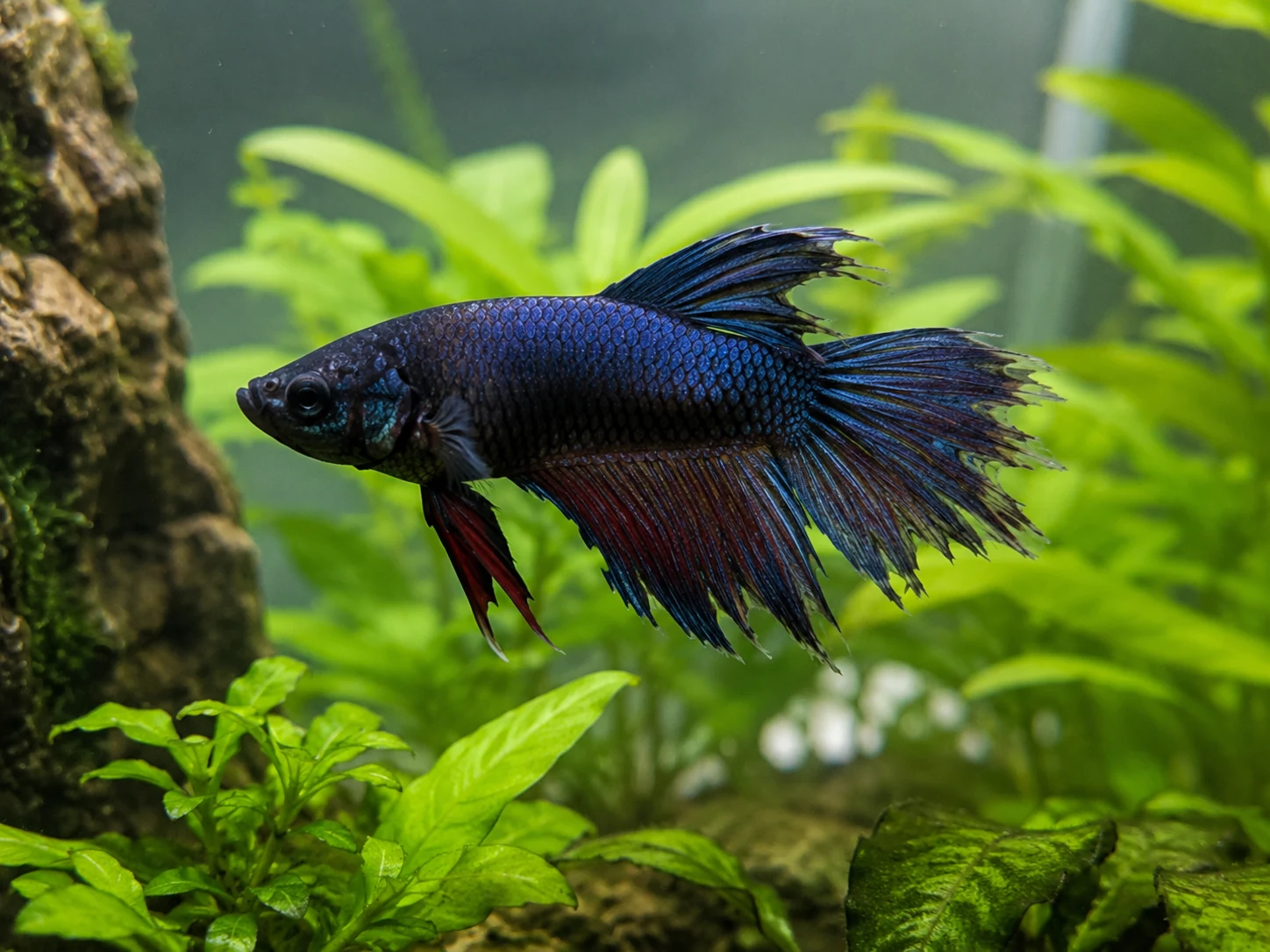
Betta fin rot is progressive fin tissue deterioration, usually after stress, injury, poor water, or opportunistic bacterial infection. First, separate slow fin rot from torn fins, tail biting, fin regrowth, and fast fin melt. Test water, remove the cause, photograph daily, and use hospital-tank treatment when the fin keeps receding or the case is severe.
Fin rot is one of those betta problems that looks simple until you try to diagnose it.
A ragged tail does not always mean infection.
A missing chunk does not always mean rot.
A dark edge does not always mean the fin is dying.
And a beautiful long-finned betta can look worse than he feels because every small tear is obvious.
That is why the first job is not to grab medication.
The first job is to separate active fin rot from mechanical damage, fin nipping, tail biting, stress clamping, normal regrowth, and old scars.
Fin rot usually means the fin tissue is actively deteriorating. The edge may look ragged, melted, fuzzy, red, black, white, or bloody. The damage may move inward day by day. The fish may still act normal early on, which is why beginners miss it until the tail is much shorter.
The good news: early fin rot is often fixable.
The bad news: late fin rot can reach the body, open the door to deeper infection, and become much harder to reverse.
So do not panic.
But do not ignore it either.
The useful question is not “Which medicine cures fin rot?”
The useful question is “Is the fin still getting worse after the tank conditions are corrected?”
Quick Answer: What Is Betta Fin Rot?
Betta fin rot is progressive damage to the fin tissue, often linked to opportunistic bacterial infection after stress, poor water quality, injury, fin nipping, unstable temperature, or weakened immunity.
It usually starts at the fin edges.
Early cases may show slight fraying, whitening, dark edging, pinholes, or uneven melting at the tips. Moderate cases show bigger ragged sections, red irritation, tissue loss, and a tail that keeps shortening. Severe cases may reach the base of the fin or body.
Use this quick split:
| What you see | More likely direction | Urgency |
|---|---|---|
| One clean tear after decor, fish active | Mechanical tear | Low to moderate |
| Multiple bite-shaped chunks missing, especially overnight | Tail biting or tank mate nipping | Moderate |
| Fin edge looks fuzzy, bloody, black, red, or white and keeps receding | Active fin rot | Moderate to high |
| Fin clamped but not disappearing | Stress, cold, poor water, or illness | Moderate |
| Clear/whitish transparent edge growing evenly | New fin regrowth | Low |
| Damage reaches fin base or body | Severe infection risk | High |
| Fins clamp together, melt rapidly, or rot toward the base within 24–48 hours | Fin melt / possible columnaris-type emergency | Very high |
For a beginner, the safest first response is:
- Test ammonia and nitrite.
- Check temperature.
- Remove sharp decor or fin-nipping tank mates.
- Improve water quality with partial water changes.
- Photograph the fins daily.
- Treat only if the damage keeps progressing or signs become severe.
Clean water is not a magic cure for every case.
But dirty water can make almost every case worse.
Why Long-Finned Bettas Get This Problem So Often
Betta fins are not armor.
They are delicate tissue.
Long-finned males are especially vulnerable because their fins drag, fold, catch on decor, and create more surface area for damage. A short-finned plakat betta can brush against something and be fine. A halfmoon or rosetail may tear a tail edge on the same object.
The fin does not have to be infected at first.
Sometimes the sequence is:
- The fin tears.
- The water quality is not great.
- Bacteria take advantage of damaged tissue.
- The edge deteriorates.
- The fish becomes stressed.
- The immune system falls behind.
- The fin keeps receding.
That is why “fin rot” is often not one isolated disease event. It is a chain.
Break the chain early.
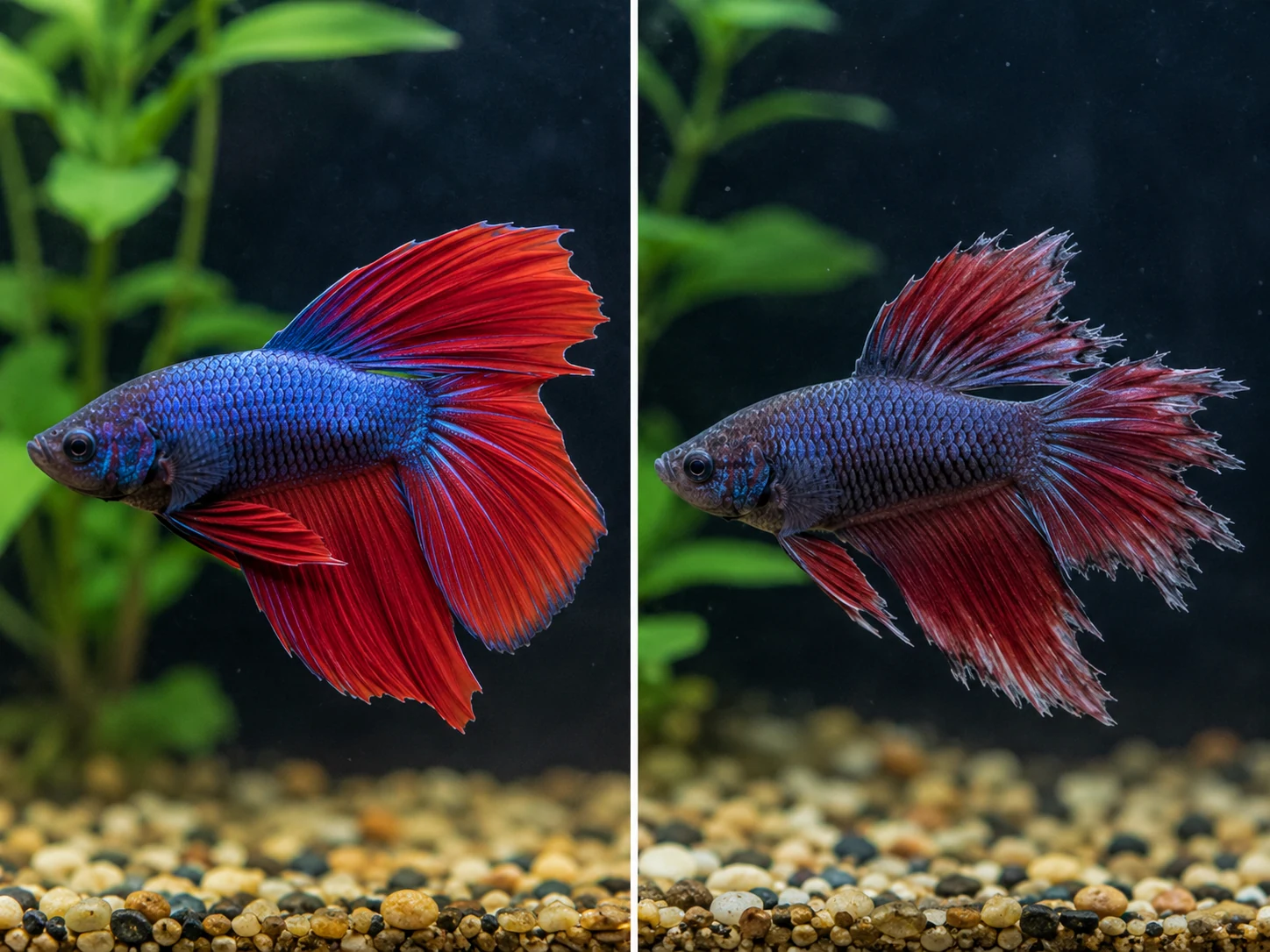
Fin Rot vs Torn Fin vs Tail Biting
This is the diagnostic step that saves people from treating the wrong problem.
Fin rot usually progresses. Torn fins often do not. Tail biting can appear suddenly and look dramatic overnight.
| Sign | Fin rot | Mechanical tear | Tail biting |
|---|---|---|---|
| Pattern | Ragged, melted, frayed edge | Clean split or rip | Crescent bites or chunks |
| Speed | Gradual or steadily worsening | Sudden after snag | Often sudden overnight |
| Location | Often fin edges first | Where fin caught | Usually tail/caudal fin |
| Edge color | White, red, black, brown, fuzzy, inflamed | Same color as fin or slightly pale | Same color at first, may inflame later |
| Fish behavior | May be normal early, then stressed | Often normal | May be active but bored/stressed |
| Water link | Very common | Secondary risk | Stress link common |
| Main first fix | Water quality + monitoring | Remove sharp cause | Reduce stress, boredom, reflection, flow |
A clean split that stops getting worse is not the same as fin rot.
A tail that loses chunks every night may be tail biting.
A tail that slowly melts back with irritated edges is more suspicious for rot.
Take photos.
Memory lies.
A daily photo under the same lighting tells you whether the fin is actually shrinking.
Early Signs of Betta Fin Rot
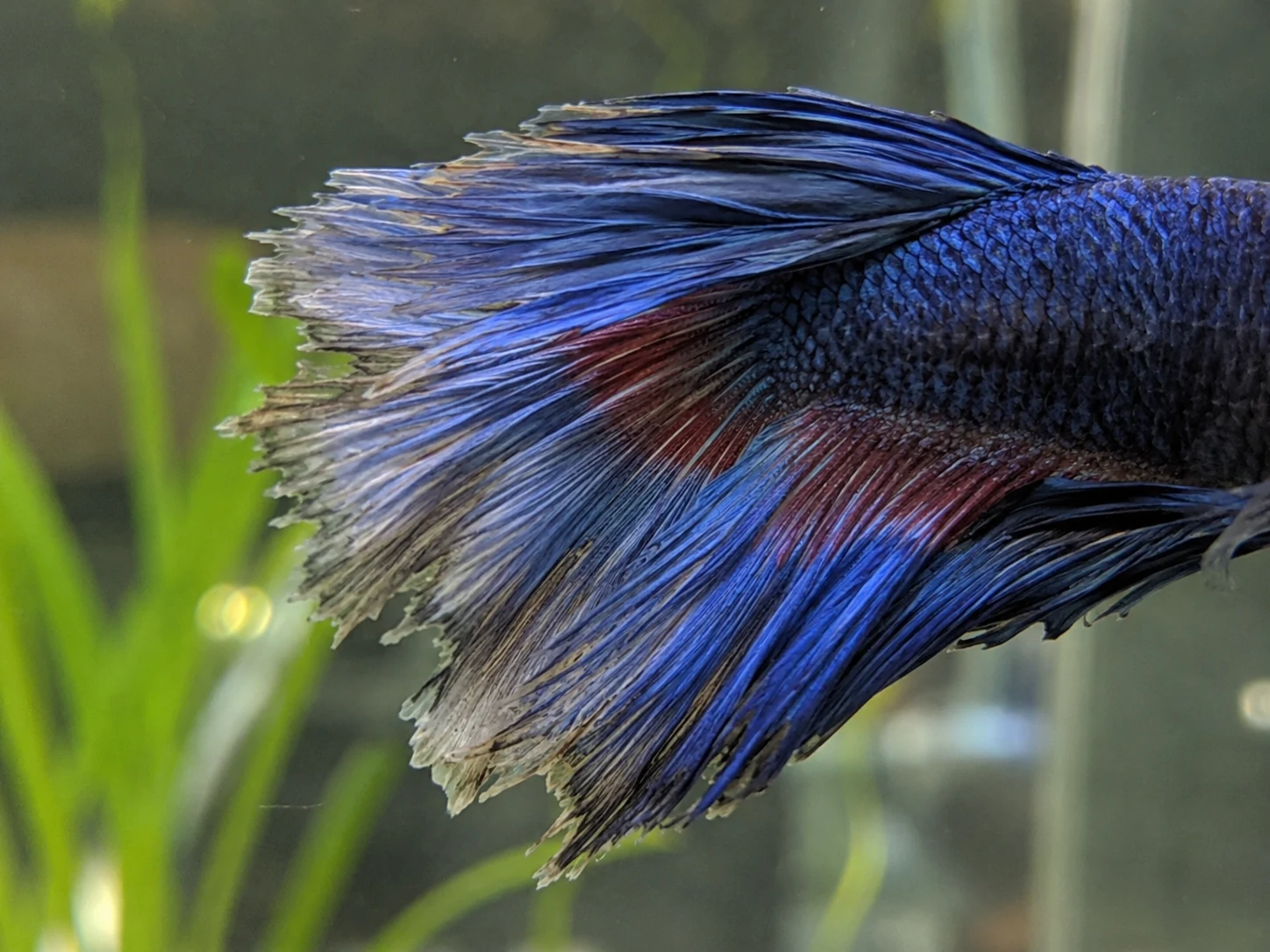
Early fin rot can be subtle. That is why it is often missed.
Look for changes at the fin edge:
| Early sign | What it may mean |
|---|---|
| Slight fraying at the tips | Early tissue irritation or mild damage |
| Thin transparent edge that looks uneven | Possible early deterioration, but compare with regrowth |
| White or cloudy edge | Irritated tissue or early infection pattern |
| Dark edge on a light fin | Could be color, stress, or rot — watch progression |
| Tiny holes | Damage, nipping, or early breakdown |
| Tail looks “melted” instead of torn | More suspicious for rot |
| Fins clamped with edge damage | Stress plus possible infection |
| Damage slowly moving inward | Active rot more likely |
Early fin rot often still has a normal-looking fish attached to it.
The betta may eat.
The betta may flare.
The betta may swim.
Do not use activity alone to dismiss a fin problem. Bettas can hide discomfort until the fin loss is obvious.
Moderate and Severe Fin Rot
Moderate fin rot is harder to dismiss.
The fin edge looks ragged. The tail may look shorter than last week. Red streaking, bloody tips, blackened edges, cloudy tissue, or fuzzy patches may appear. The fish may clamp fins, hide, rest more, or eat less.
Severe fin rot is different.
Severe cases may approach the body, expose raw-looking tissue, or come with lethargy, heavy breathing, swelling, body sores, or secondary infection signs.
| Stage | What it looks like | What to do |
|---|---|---|
| Mild | Slight fraying, edge discoloration, fish active | Correct water, remove causes, monitor daily |
| Moderate | Clear tissue loss, red/dark/white edges, worsening over days | Hospital tank or focused treatment may be needed |
| Severe | Fin loss near body, ulcers, heavy stress, body involvement | Treat as urgent; consider aquatic vet guidance |
| Recovery | Clear/white new growth, stable edge, active fish | Continue clean water and avoid overfeeding |
A fin can regrow.
A body infection is a different problem.
Do not let fin rot reach the body before you act.
Fin Melt Emergency: When This Is Not Ordinary Fin Rot
Some fin problems do not behave like slow fin rot.
This is the dangerous one.
If the fins are not simply fraying from the edge, but instead clamp together, collapse, stick, melt back, or rot toward the base within 24–48 hours, treat it as an emergency. Many hobbyists call this fin melt. It may be associated with aggressive bacterial disease, including columnaris-type infections caused by Flavobacterium columnare, or another fast-moving bacterial process.
This is not the same rhythm as ordinary fin rot.
| Pattern | Ordinary fin rot | Fin melt emergency |
|---|---|---|
| Speed | Often days to weeks | Can worsen in 24–48 hours |
| Fin shape | Ragged edge slowly recedes | Fins clamp, collapse, or seem to dissolve |
| Texture | Frayed, uneven, inflamed edge | Sticky, melted, “wet tissue” look |
| Direction | Edge inward | Can rush toward the fin base |
| Fish behavior | May stay normal early | Often declines fast |
| Risk | Moderate if caught early | High; body infection risk rises quickly |
Do not handle a fin melt pattern like a mild torn fin.
Do not spend several days only “watching clean water” if the fin is visibly disappearing by the day.
A safer emergency response is:
- Move the betta to a heated hospital tank.
- Keep strong aeration but gentle flow.
- Test and correct the main tank separately.
- Start an appropriate antibacterial treatment according to the medication label.
- Avoid oil-based remedies.
- Do not dose broad antibiotics into the display tank.
Columnaris is a veterinary-level disease pattern, not a casual home diagnosis. But the speed matters. If the fins are melting fast, act like time matters.
Check the Water Before Choosing Treatment
This is the part people want to skip.
Do not skip it.
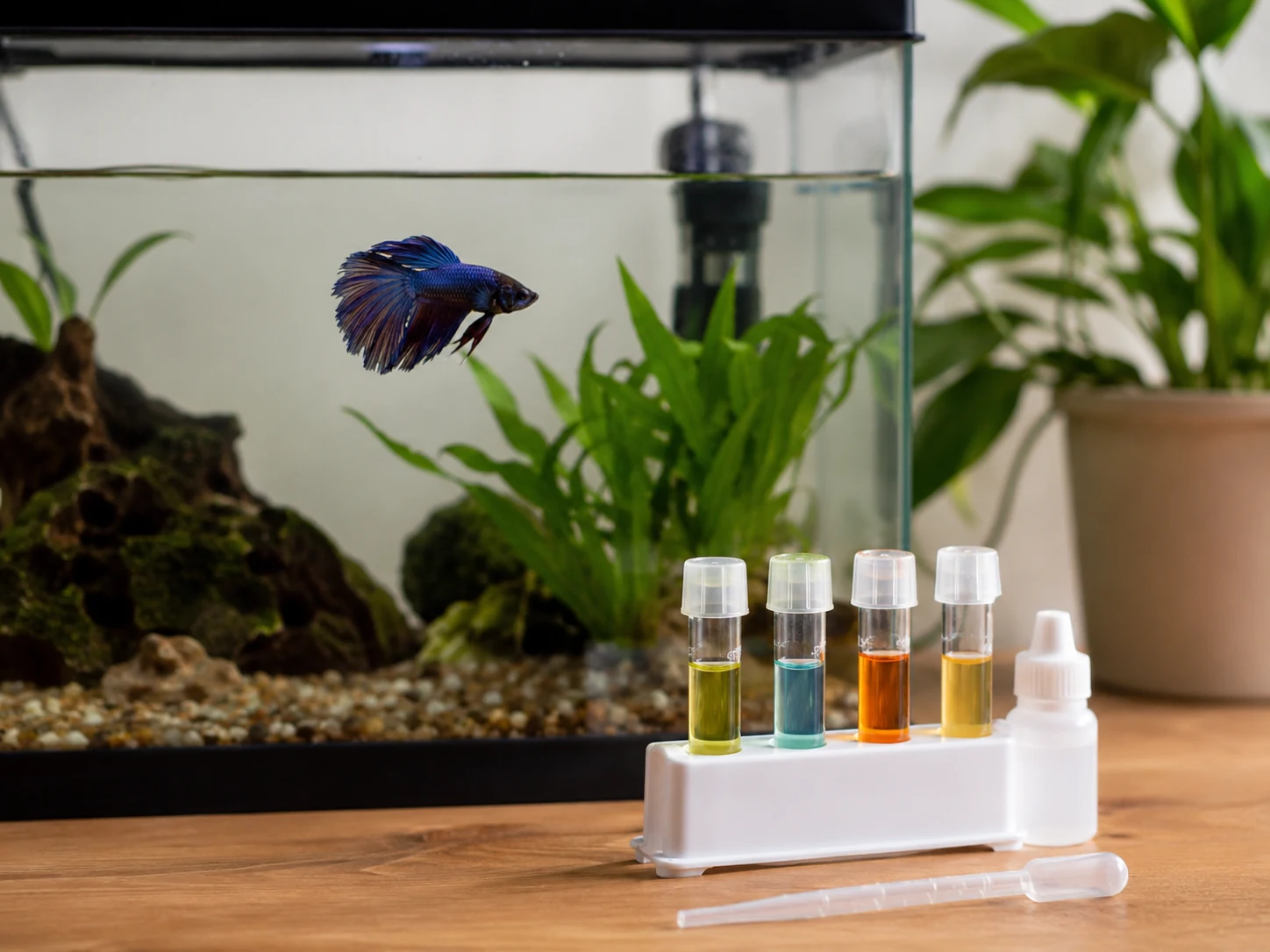
Most fin problems become worse in poor water. Ammonia, nitrite, high organic waste, low oxygen, unstable temperature, and dirty substrate can all push a small fin injury into a bigger problem.
Test these:
| Parameter | Practical target during fin recovery |
|---|---|
| Ammonia/ammonium (NH3/NH4+) | 0 ppm |
| Nitrite (NO2-) | 0 ppm |
| Nitrate (NO3-) | Ideally under 20–40 ppm |
| Temperature | Stable 76–80°F / 24–27°C |
| pH | Stable, not swinging |
| Flow | Gentle enough for rest |
| Surface access | Easy |
If ammonia or nitrite is above zero, the first treatment is safer water.
Do a partial water change with dechlorinated, temperature-matched water. Remove uneaten food. Vacuum obvious waste. Keep the filter running. Do not replace all filter media. Do not scrub everything sterile.
A sick betta does not need a biological filter crash.
It needs stability.
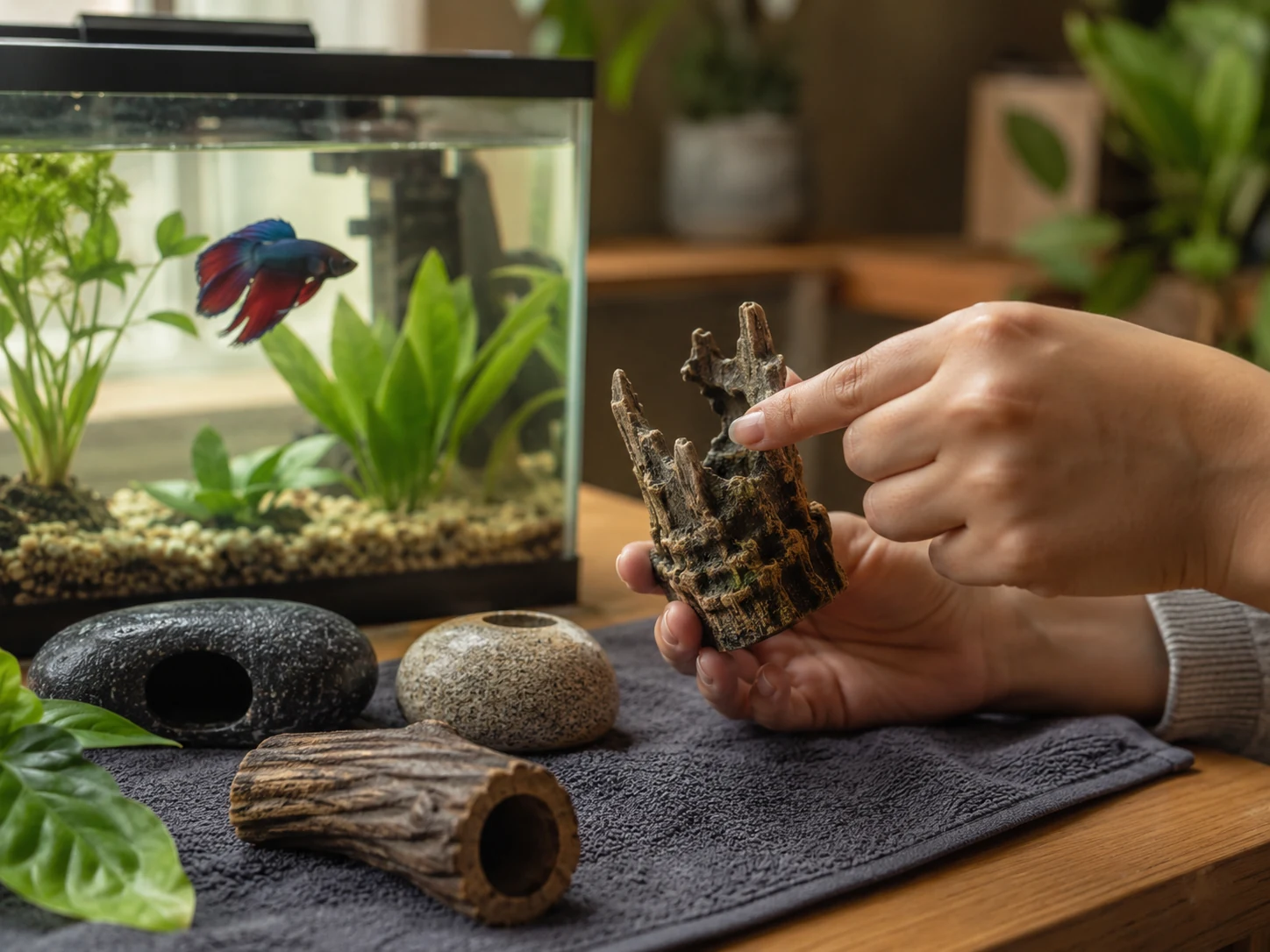
The Most Common Causes of Betta Fin Rot
Fin rot usually needs a reason.
Sometimes the reason is obvious. Sometimes it is a combination of small problems.
| Cause | Why it matters |
|---|---|
| Poor water quality | Damages tissue and weakens recovery |
| Uncycled tank | Ammonia/nitrite spikes irritate fish |
| Overfeeding | Adds waste and organic load |
| Low temperature | Slows immune function and healing |
| Sharp decor | Creates the original tear |
| Plastic plants | Can slice long fins |
| Strong flow | Exhausts long-finned bettas |
| Fin-nipping tank mates | Reopens wounds |
| Tail biting | Creates recurring damage |
| Stress from reflection | Can lead to pacing, flaring, biting, exhaustion |
| Recent shipping or store stress | Weakens resistance |
| Too-small tank | Makes water instability more likely |
Beginners often ask which one caused it.
The honest answer is often: more than one.
A small tear plus poor water is enough.
A little tail biting plus high waste is enough.
A beautiful tank with sharp plastic decor is enough.
Fix the environment before chasing the perfect diagnosis.
The “Clean Water Cure” — Helpful, but Not a Magic Spell
You will see people say: “Just keep the water clean.”
That advice is partly right.
It is also incomplete.
Clean, warm, stable water gives a betta the best chance to heal. Mild fin damage may stop progressing after water quality improves. New transparent fin tissue may begin to grow. The fish may act brighter within days.
But clean water alone may not be enough if:
| Situation | Why clean water alone may fail |
|---|---|
| Fin loss keeps progressing | Active infection may still be advancing |
| Damage reaches the fin base | Higher risk of deeper involvement |
| Redness or bloody tissue worsens | Inflammation/infection may be stronger |
| Fish becomes lethargic | Systemic stress may be developing |
| Water is good but fin continues melting | Cause may not be water alone |
| Tank mate or tail biting continues | New injury keeps restarting the problem |
Use clean water as the foundation.
Not as an excuse to do nothing while the fin disappears.
Step-by-Step: What to Do in the First 48 Hours
When you first notice fin rot, use a calm sequence.
Step 1: Take a Baseline Photo
Use the same side of the tank, same lighting, and same angle.
Take one clear photo today.
Then take another tomorrow.
You are watching for progression.
Step 2: Test the Water
Check ammonia, nitrite, nitrate, and temperature.
If ammonia or nitrite is present, correct that first with partial water changes and source control.
Step 3: Remove the Cause of Damage
Run your hand over decor.
If it catches a nylon stocking, it can catch a betta fin.
Remove sharp plastic plants, rough ornaments, jagged rocks, and aggressive tank mates. If you suspect tail biting, reduce stress triggers: strong flow, bright reflection, boredom, too much open space, and long periods of flaring.
Step 4: Improve Water Without Crashing the Tank
Do not deep-clean everything at once.
A practical approach:
| Situation | Safer first move |
|---|---|
| Ammonia/nitrite above 0 ppm | Partial water change, conditioner, retest |
| Dirty substrate | Light vacuuming in sections |
| Clogged filter | Rinse media in old tank water |
| Uneaten food | Remove immediately |
| Tiny uncycled tank | Frequent small water changes while cycling |
| Stable tank with mild fin damage | Maintain routine but tighten cleanliness |
Step 5: Stop Overfeeding
Extra food means extra waste.
Feed lightly while the fish is healing. A betta recovering from fin damage does not need a feast. It needs stable water and enough protein to repair tissue.
Step 6: Decide Whether a Hospital Tank Helps
A hospital tank is useful if you need medication, easier observation, bare-bottom cleaning, or separation from tank mates.
It is not useful if it is cold, dirty, unfiltered, or stressful.
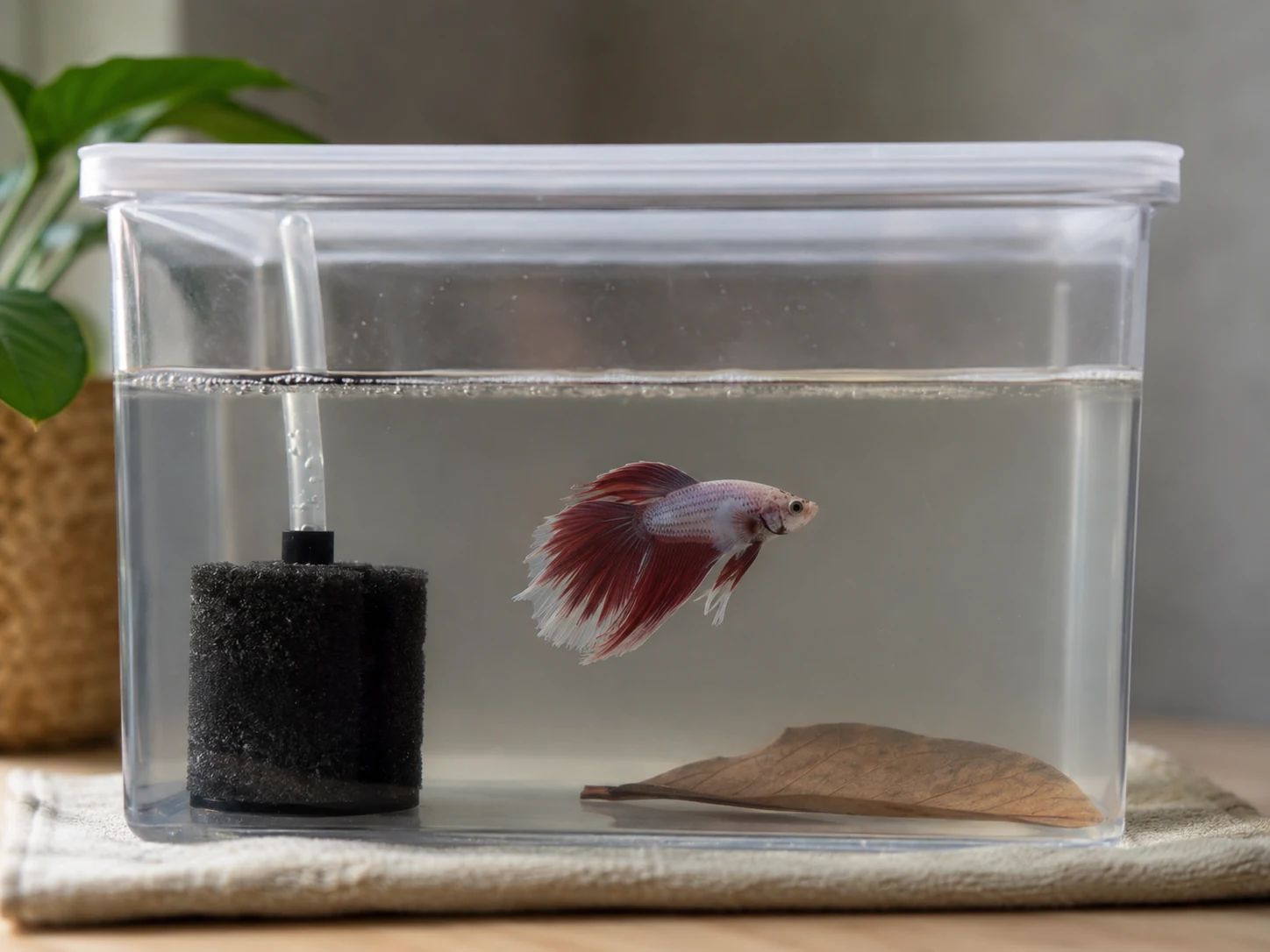
A safe hospital setup should be:
| Item | Practical standard |
|---|---|
| Size | 2–3 gallons minimum for short-term care if managed carefully |
| Heat | Adjustable heater, stable 76–80°F / 24–27°C |
| Aeration | Gentle sponge filter or soft air stone |
| Bottom | Bare bottom for easy cleaning |
| Cover | Secure lid with air gap |
| Water | Dechlorinated and temperature-matched |
| Hiding/resting | Soft silk/live plant or smooth hide |
Do not move a fish into a cup and call it treatment.
That is not treatment.
That is stress with a label.
You do not need a complicated treatment station. You need a small stable setup that lets you observe, dose, clean, and protect the fish without crashing the display tank.
- 2–3 gallon hospital tank or clear food-safe tub
- Adjustable mini heater
- Small sponge filter or gentle air stone
- Airline control valve
- Liquid water test kit
- Dechlorinator
- Smooth hide or soft leaf
- Small siphon or turkey baster
Emergency Fin Recovery Toolkit
This is a natural place for a compact affiliate card later.
Keep it helpful and honest.
A beginner does not need a full hospital aquarium cabinet. They need a few reliable items that make action easier when the fish is already damaged.
| Item | Why it helps |
|---|---|
| 2–3 gallon hospital tank or clear tub | Easier observation and dosing |
| Adjustable mini heater | Prevents cold stress during treatment |
| Small sponge filter or air stone | Keeps oxygen available without blasting the fish |
| Airline control valve | Softens flow for long fins |
| Liquid test kit | Confirms whether water is helping or hurting |
| Dechlorinator | Makes emergency water changes safe |
| Smooth hide or silk/live leaf | Reduces stress without tearing fins |
| Small siphon or turkey baster | Removes waste without full teardown |
The message should not be fear-based.
The message is simple: when a fin problem gets worse, a small stable treatment setup helps you act cleanly instead of improvising.
When Medication Makes Sense
Medication is not the first move for every frayed fin.
It becomes more logical when the fin keeps deteriorating after water is corrected, the edge looks inflamed or infected, the damage is moderate to severe, or the fish is declining.
Before medication, ask:
| Question | Why it matters |
|---|---|
| Is ammonia 0 ppm? | Medication will not fix toxic water |
| Is nitrite 0 ppm? | Breathing and stress may worsen otherwise |
| Is the tank heated? | Healing is harder in cold water |
| Is the damage still progressing? | Stable damage may only need recovery care |
| Is there redness, fuzz, or body involvement? | Stronger treatment may be justified |
| Can I dose accurately? | Guessing dose in a tiny container is risky |
| Is there carbon in the filter? | Carbon can remove some medications |
For suspected bacterial fin rot that is actively progressing, many hobbyists use broad-spectrum antibacterial medications in a hospital tank. Products and availability vary by country. Common aquarium medication categories may include kanamycin-based, nitrofuran-based, minocycline-based, or other fish-labeled antibacterial treatments, depending on what is legally available and appropriate.
Here is the rule to make clear:
Hospital tank only for antibiotics.
Do not pour broad-spectrum antibiotics into the display tank as a casual first move. Many antibacterial medications can affect the biological filter or create a situation where ammonia and nitrite rise while the fish is already weak. A planted display tank may also contain snails, shrimp, plants, and filter bacteria that you do not want to expose unnecessarily.
A safer treatment setup is:
| Antibiotic treatment rule | Why it matters |
|---|---|
| Use a heated hospital tank | Lets you dose accurately and watch the fish closely |
| Keep gentle aeration running | Some medications reduce oxygen comfort |
| Remove carbon if the label says so | Carbon can remove medication from the water |
| Test ammonia daily in the hospital tank | Small treatment tanks can foul quickly |
| Do not mix antibiotics casually | Stacking drugs increases stress and risk |
| Keep the display tank filtered and stable | Protects the main biological cycle |
| Follow the product label | Dose, duration, and water changes matter |
Do not use human antibiotics.
Do not medicate the display tank unless a veterinarian or very experienced fish professional has a clear reason for that specific case.
Follow the label.
If you can access an aquatic veterinarian, that is better than guessing.
Aquarium Salt vs Epsom Salt: Do Not Mix These Up
This matters.
For external fin and skin support, people usually mean aquarium salt, which is sodium chloride (NaCl). It is not the same thing as Epsom salt.
Epsom salt is magnesium sulfate (MgSO4). It is mainly used by aquarists for constipation, internal pressure, or fluid-related swelling support in specific situations. It is not the right tool for disinfecting an external fin wound.
| Product | Chemical | Common aquarium use | Use for fin rot? |
|---|---|---|---|
| Aquarium salt | Sodium chloride / NaCl | External supportive care, osmotic stress support, slime coat support in some cases | Sometimes, in controlled treatment setup |
| Epsom salt | Magnesium sulfate / MgSO4 | Constipation/internal pressure support | No, not for external fin infection |
| Table salt | Usually NaCl plus additives | Human food | Avoid unless you know exact additives and risks |
| Marine salt mix | Blend for saltwater tanks | Marine/brackish systems | Not the same as aquarium salt dosing |
Aquarium salt is not a guaranteed cure for bacterial fin rot. It can be useful as supportive care in some mild external cases, especially in a separate treatment container where dose and duration are controlled.
Do not throw salt into a planted display tank as a reflex. Salt can stress plants, snails, shrimp, and some tank mates.
If salt is used, keep the rule simple:
Aquarium salt for external fin/skin support. Epsom salt for selected internal/bloating support. Do not swap them.
For bettas, the bigger priorities are still:
- clean water,
- stable heat,
- removing the injury source,
- accurate diagnosis,
- targeted medication when needed.
Salt is not a substitute for those.
Avoid Melafix, Pimafix, and Oil-Based “Fix” Remedies for Bettas
Many beginners reach for “fix” bottles because they look gentle.
For bettas, that is not the direction I would choose.
Bettafix, Melafix, Pimafix, and similar oil-based remedies are not the same thing as targeted antibacterial treatment. They can create surface-film concerns, may irritate sensitive fish, and may be especially questionable for labyrinth fish that regularly breathe air from the surface.
This is one of those places where “mild” can become misleading.
The risk is not only that the product may fail. The risk is that it delays real action while an active bacterial edge keeps moving toward the body.
Use this rule:
| Situation | Better direction |
|---|---|
| Clean torn fin, fish stable | Remove sharp cause, clean water, monitor |
| Mild fraying, no progression | Water correction and daily photos |
| Active fin rot, worsening edges | Hospital tank and appropriate treatment path |
| Fast fin melt, clumped fins, rapid decline | Emergency hospital treatment, not oil-based remedies |
| Betta with surface-breathing stress | Avoid anything that may create oily surface film |
Do not use oil-based remedies as the main plan for active, progressive fin rot.
If the fin is melting, red, infected-looking, and moving toward the body, do not spend a week hoping a mild remedy will do the job.
Use observation, water correction, and an appropriate treatment path.
Indian Almond Leaves: Helpful Support, Not a Cure
Indian almond leaves, also called catappa leaves, are often used with bettas. They release tannins and can create a darker, softer-looking “blackwater” environment that many betta keepers like.
They may be useful as gentle support.
They are not a cure for active fin rot.
And dirty leaves can make a small tank worse.
Do not pick up a random fallen leaf from the street, rinse it once, and drop it into a 5-gallon betta tank. That leaf may carry dust, mold spores, pesticide residue, bird droppings, or other contaminants. As it breaks down, it can also add organic load. In a small tank, too much decaying leaf material can reduce water quality and oxygen comfort — exactly what a fin-damaged betta does not need.
A safer catappa routine:
| Step | Why it matters |
|---|---|
| Use aquarium-safe dried leaves from a trusted source | Reduces pesticide/contamination risk |
| Rinse the leaf well | Removes loose dust |
| Boil or steep for 5–10 minutes | Helps sanitize and pre-release very strong tannins |
| Add a small piece first | Avoids sudden dark water and organic overload |
| Remove if it molds or breaks down heavily | Prevents waste buildup |
| Keep testing water | Tannins do not replace ammonia/nitrite control |
In mild fin damage, a clean prepared catappa leaf may be part of a calming support setup.
In fast fin melt, severe redness, body involvement, or rapid decline, it is not enough.
Do not let a leaf replace treatment when the fish is losing tissue.
How to Tell Fin Regrowth From Rot
Fin regrowth is one of the most encouraging signs.
It can also confuse beginners.
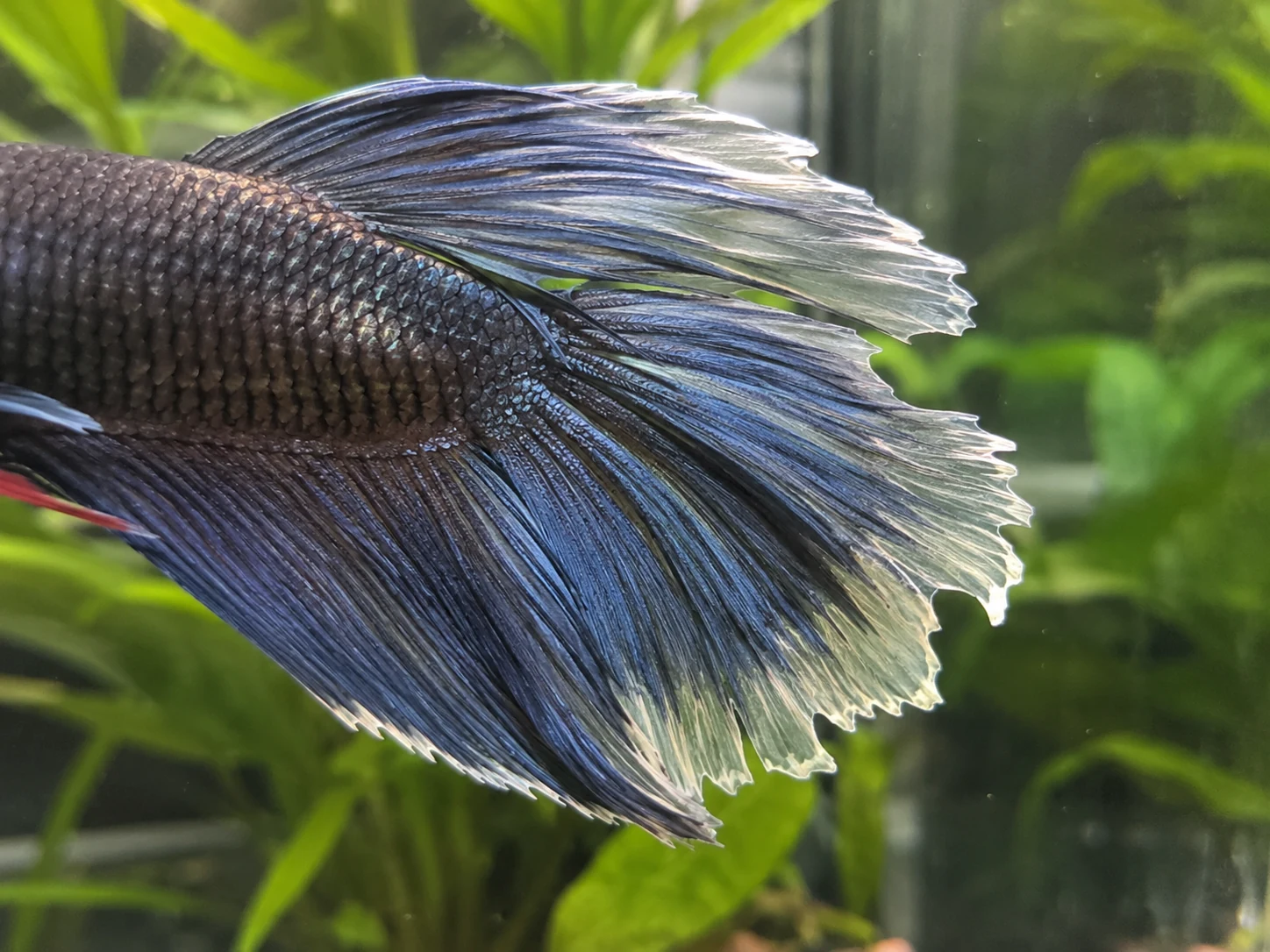
New fin growth often appears clear, translucent, pale, whitish, or glassy at the edge. It may not match the fish’s final color at first. Over time, pigment can return.
| Sign | Regrowth | Active rot |
|---|---|---|
| Edge movement | Expanding outward | Receding inward |
| Texture | Smooth, thin, transparent | Ragged, fuzzy, melted |
| Color | Clear/whitish but clean | Red, bloody, black, brown, fuzzy, cloudy |
| Fish behavior | Improving or stable | Often worsening |
| Daily photos | More fin area over time | Less fin area over time |
| Water readings | Safe and stable | Often unsafe or unstable, though not always |
Do not panic over clear edges if the fin is growing.
Clear can be healing.
Rot usually takes tissue away.
How Long Does Betta Fin Rot Take to Heal?
Healing is slow.
A mild case may stop worsening within a few days once water and stress are corrected. Visible regrowth may take one to three weeks to become obvious. Full cosmetic recovery may take longer, especially in long-finned bettas.
| Case | Possible timeline |
|---|---|
| Clean tear, no infection | Days to stabilize, weeks to regrow |
| Mild fin rot caught early | Improvement often visible within 1–2 weeks |
| Moderate fin rot | Several weeks, sometimes longer |
| Severe fin loss | Months, incomplete regrowth possible |
| Fin rot reaching body | Guarded; urgent care needed |
Do not judge recovery by one day.
Judge the direction.
Is the fin still disappearing?
Or has the edge stopped moving backward?
That is the key.
Preventing Betta Fin Rot From Coming Back
A betta can recover from fin rot and then get it again if the root cause remains.
Prevention is not complicated, but it does require consistency.
Keep the Tank Stable
A 5–10 gallon heated, filtered tank is much easier to keep stable than a tiny bowl. More water gives you more margin for mistakes.
Small containers turn small feeding mistakes into water-quality problems quickly.
Use Gentle Filtration
Long-finned bettas do not need strong current.
They need biological filtration and calm swimming space. A sponge filter, baffled hang-on-back filter, or gentle adjustable filter can work if the fish is not being pushed around.
Choose Fin-Safe Decor
Use live plants, silk plants, smooth hides, and rounded hardscape.
Avoid hard plastic leaves, rough caves, jagged stones, sharp resin decorations, and anything that catches fabric.
Feed Lightly
Overfeeding adds waste.
Waste feeds water problems.
Water problems feed fin problems.
That chain is boring.
It is also real.
Watch Tank Mates
Fin-nipping fish can keep a betta in a permanent wound cycle. Even “peaceful” fish may nip long fins in the wrong tank.
If the betta’s fins keep getting damaged in a community tank, separate first and debate later.
Photograph Once a Week
For long-finned bettas, one weekly photo is useful.
You may catch slow decline before it becomes severe.
Common Mistakes That Make Fin Rot Worse
A lot of fin rot cases become worse because the keeper overcorrects.
Avoid these:
| Mistake | Why it hurts |
|---|---|
| Replacing all filter media | Can crash beneficial bacteria |
| Cleaning the whole tank at once | Can destabilize the system |
| Using multiple medications together | Increases stress and side effects |
| Pouring antibiotics into the display tank | Can damage the biological filter and trigger ammonia/nitrite problems |
| Ignoring ammonia/nitrite | Leaves the fish in harmful water |
| Treating a torn fin like severe infection | Adds unnecessary stress |
| Treating severe rot with only “gentle” remedies | Wastes time |
| Keeping the same sharp decor | Reopens damage |
| Leaving fin nippers with the betta | Repeats the injury |
| Overfeeding during recovery | Worsens waste load |
| Moving fish to a cold jar | Makes recovery harder |
The best fin rot treatment plan is usually calm.
Not passive.
Calm.
When Fin Rot Is Not the Main Problem
Sometimes the fins are only one symptom.
Be more cautious if fin damage appears with:
| Additional sign | Possible concern |
|---|---|
| Cottony white patches | Fungal-like growth or bacterial/fungal secondary issue |
| Saddleback lesion | Possible columnaris-type concern |
| Body ulcers | Deeper infection or injury |
| Swollen belly | Internal issue, dropsy-like process, constipation, or organ stress |
| Pineconing | Emergency-level internal fluid buildup |
| Heavy breathing | Water quality, gill irritation, or systemic illness |
| White spots like salt grains | Ich-like external parasite concern |
| Gold dusting | Velvet-like concern |
| Rapid death of other fish | Water/toxin or contagious outbreak concern |
Do not force every symptom into “fin rot.”
A betta can have fin rot plus another problem.
That is why observation matters.
Related Guides
Continue with these guides:
- Betta Tank Setup for Beginners
- Betta Fish Care Guide
- Why Is My Betta Fish Bloated?
- Why Is My Betta Not Eating?
- Why Is My Betta Laying at the Bottom?
- Why Is My Betta Gasping at the Surface?
- How to Cycle a Fish Tank Without Guessing When It’s Safe for Fish
- Best Aquarium Test Kits for Beginners
- Betta Fish Popeye
- Betta Dropsy
Final Advice
Fin rot is easier to stop early than to rescue late.
Look at the pattern. If the edge is stable and clean, you may be dealing with a tear or recovery. If the edge is receding, inflamed, fuzzy, or melting, act faster. If the fins collapse and melt within 24–48 hours, treat it as an emergency pattern, not ordinary slow fin rot.
Stable water is the foundation. A hospital tank is the safer place for antibiotics. And a betta with damaged fins needs calm, clean decisions — not random bottle stacking.
FAQ
What is fin melt in a betta?
Fin melt is a fast-moving pattern where the fins clamp, stick together, collapse, or seem to dissolve toward the base within 24–48 hours. Treat that as an emergency pattern, not ordinary slow fin rot. Move the fish to a heated hospital tank and use an appropriate antibacterial treatment path rather than waiting several days.
Should I use aquarium salt or Epsom salt for fin rot?
Do not mix them up. Aquarium salt is sodium chloride (NaCl) and may be used as controlled supportive care for external fin/skin issues. Epsom salt is magnesium sulfate (MgSO4) and is mainly used for selected internal/bloating situations. Epsom salt is not the right tool for external fin infection.
Can I use antibiotics in the main tank?
Avoid it as a default. Use a hospital tank for antibiotics whenever possible. Broad antibacterial medications can affect the biological filter and may lead to ammonia or nitrite problems in the display tank. A sick betta does not need a cycle crash on top of fin rot.
Are Indian almond leaves enough to treat fin rot?
No. Clean prepared Indian almond leaves may be gentle support in mild cases, but they are not a cure for active bacterial fin rot. Use aquarium-safe leaves, rinse them, boil or steep them for 5–10 minutes, and remove decaying material. Do not use dirty street leaves.
Can betta fin rot heal on its own?
Very mild fin edge damage may stop worsening after water quality, temperature, and stress are corrected. But active fin rot should not be ignored. If the fin keeps receding, becomes red or fuzzy, or approaches the body, supportive care alone may not be enough.
How do I know if my betta has fin rot or a torn fin?
A torn fin often looks like a clean split or sudden rip and may stop changing once the sharp cause is removed. Fin rot usually looks ragged, melted, discolored, inflamed, fuzzy, or progressively shorter over several days. Daily photos help more than memory.
What is the first thing I should do for betta fin rot?
Test ammonia, nitrite, nitrate, and temperature. Then remove sharp decor or fin-nipping tank mates, do appropriate partial water changes, and photograph the fin daily. Do not start by mixing medications blindly.
Does fin rot hurt bettas?
Fish do not show pain the way mammals do, but fin rot is tissue damage and stress. A betta with active fin deterioration should be treated seriously, especially if the fish clamps fins, hides, loses appetite, or the damage moves toward the body.
Can dirty water cause fin rot?
Poor water quality is one of the most common contributors. It can irritate fish, weaken recovery, increase bacterial pressure, and turn small fin damage into progressive deterioration. Ammonia and nitrite should be 0 ppm.
Should I use aquarium salt for betta fin rot?
Do not add salt to a planted display tank as a reflex. Salt may have limited supportive use in some separate treatment setups, but it is not a guaranteed cure for bacterial fin rot and can stress plants, shrimp, snails, and some fish. Clean water and correct diagnosis matter more.
Should I use Bettafix, Melafix, or Pimafix for fin rot?
I would avoid them for bettas, especially for active progressive fin rot. Oil-based remedies may create surface-film concerns and may be questionable for labyrinth fish that breathe at the surface. If the fin is worsening, red, fuzzy, melting, or near the body, use a hospital tank and a more targeted treatment path.
What medication treats betta fin rot?
Medication depends on severity, availability, and local regulations. For progressive bacterial fin rot, hobbyists often use broad-spectrum antibacterial treatments in a hospital tank. Follow the label, avoid mixing medications casually, and seek aquatic veterinary guidance when possible.
Can fin rot spread to other fish?
The underlying bacteria and poor conditions can affect other fish, especially in a stressed or dirty tank. The bigger concern is usually the shared environment. Test the water and check all fish for damage or stress.
How fast does fin rot spread?
It can move slowly over days or worsen quickly if water quality is poor, the fish is stressed, or infection is more aggressive. If the fin edge is visibly shorter each day, treat the case as active and escalating.
Will my betta’s fins grow back?
Often, yes, if the damage stops before the fin base or body is severely affected. New growth may look clear, white, or translucent at first. Full regrowth can take weeks to months and may not look exactly like the original fin.
Why does fin rot keep coming back?
Recurring fin rot usually means the root cause was not fixed: unstable water, overfeeding, sharp decor, strong flow, fin-nipping tank mates, tail biting, or a tank that is too small to stay stable.
Can a betta die from fin rot?
Yes, severe untreated fin rot can progress, expose tissue, reach the body, and contribute to deeper infection or systemic decline. Early cases are much easier to manage than late cases.
Is black edging always fin rot?
No. Some bettas naturally have black fin edges or develop color changes. Black edging becomes more suspicious if it appears with fraying, melting, redness, tissue loss, or daily progression.
Should I move my betta to a hospital tank?
Move the fish if the hospital tank will be warmer, cleaner, calmer, easier to monitor, or necessary for medication. Do not move the fish into a cold, unfiltered jar. A bad hospital tank can make a mild case worse.
This guide is educational and does not replace diagnosis from an aquatic veterinarian. Fin rot can look similar to tearing, nipping, tail biting, fin clamping, color change, and normal fin regrowth. When fin loss is severe, reaches the body, appears with ulcers, heavy breathing, swelling, rapid decline, or multiple sick fish, professional veterinary guidance is the best option when available.
Healthy Aquariums does not recommend random medication stacking, full tank resets, or treating every frayed fin like a severe infection. Start with water testing and pattern recognition, then escalate when the evidence supports it.
References
This guide was written for beginner betta keepers and should be reviewed against fish welfare, husbandry, and medication-label sources when updated.
- Merck Veterinary Manual. “Bacterial Diseases of Fish.” Reviewed/Revised May 2022, modified September 2024. https://www.merckvetmanual.com/exotic-and-laboratory-animals/aquarium-fish/bacterial-diseases-of-fish
- Merck Veterinary Manual. “Disorders and Diseases of Fish.” Reviewed/Revised February 2020, modified April 2026. https://www.merckvetmanual.com/all-other-pets/fish/disorders-and-diseases-of-fish
- Merck Veterinary Manual. “Management of Aquarium Fish.”. https://www.merckvetmanual.com/exotic-and-laboratory-animals/aquarium-fish/management-of-aquarium-fish
- RSPCA Knowledgebase. “How should I care for my Siamese fighting fish?”. https://kb.rspca.org.au/categories/companion-animals/fish/how-should-i-care-for-my-siamese-fighting-fish
- Lichak, M. R. et al. “Care and Use of Siamese Fighting Fish (Betta splendens) for Research.” Zebrafish. 2022. https://pmc.ncbi.nlm.nih.gov/articles/PMC9334006/
- Chewy Editorial. “Fin Rot in Fish: Signs, Causes, Treatment, and Prevention.” Published April 16, 2026. https://www.chewy.com/education/fish/health-and-wellness/fin-rot-in-fish
- Chewy Editorial. “Betta Fish Fin Rot: Symptoms, Causes, and Treatment.” Published October 27, 2025. https://www.chewy.com/education/fish/betta-fish/betta-fish-fin-rot
- FishBase. “Betta splendens.”. https://www.fishbase.se/summary/Betta-splendens.html
- MSD Veterinary Manual. “Common Environmental Hazards for Fish.”. https://www.msdvetmanual.com/multimedia/table/common-environmental-hazards-for-fish
- Declercq, A. M. et al. “Columnaris disease in fish: a review with emphasis on bacterium-host interactions.” Veterinary Research. 2013. https://pmc.ncbi.nlm.nih.gov/articles/PMC3648355/
- University of Kentucky / SRAC. “Columnaris Disease — A Bacterial Infection Caused by Flavobacterium columnare.”. https://aquaculture.mgcafe.uky.edu/sites/aquaculture.ca.uky.edu/files/srac_479_columnaris_disease_-_a_bacterial_infection_caused_by_flavobacteriun_columnare.pdf
- University of Florida IFAS. “Use of Antibiotics in Ornamental Fish Aquaculture.”. https://ask.ifas.ufl.edu/publication/FA084
- MSD Veterinary Manual. “Bacterial Diseases of Fish.”. https://www.msdvetmanual.com/exotic-and-laboratory-animals/aquarium-fish/bacterial-diseases-of-fish
- Manufacturer instructions for any specific aquarium medication, water conditioner, test kit, heater, or hospital tank product used by the reader.