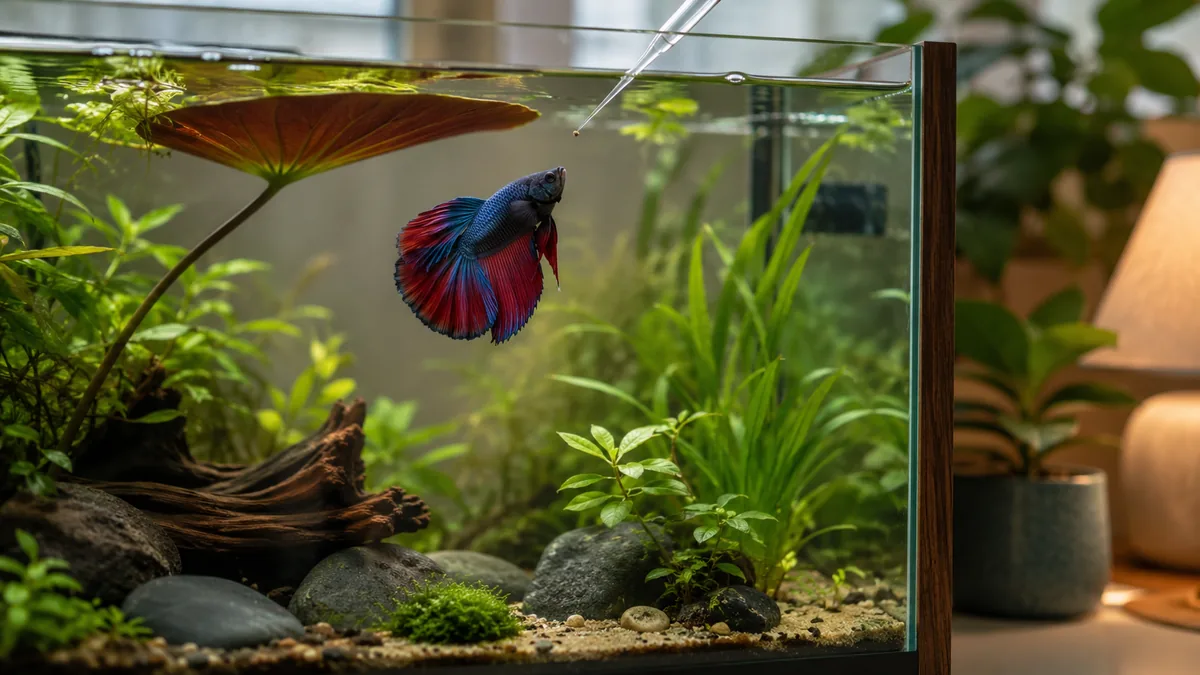
Start Here: A Betta Missing One Meal Is Not Always an Emergency
If your betta skips one meal but otherwise looks normal, do not panic.
A newly purchased betta may refuse food for a day or two after transport. A betta may ignore food after a water change, a tank move, a new decoration, or a sudden change in light or room activity. Some bettas also need time to recognize a new food.
The important question is not simply, “Did the fish eat?”
The better question is:
What else is happening?
Use this quick guide:
| Situation | How serious is it? | First response |
|---|---|---|
| Missed one meal, otherwise active | Usually low concern | Wait, observe, try again later |
| Spits out food but still acts normal | Often food-size or food-texture issue | Try smaller pellets or pre-soak briefly |
| New betta not eating on day one | Common | Keep lights calm and avoid overhandling |
| Not eating plus cold water | Important | Check heater and thermometer |
| Not eating plus gasping, clamped fins, or bottom sitting | More urgent | Test water immediately |
| Not eating for several days | Concerning | Check water, temperature, stress, and illness signs |
A hungry betta is not always healthy, and a betta that skips one meal is not always sick.
Patterns matter.
If the fish looks bright, alert, breathing normally, and exploring the tank, one missed meal is not the same as a true appetite collapse.
The First Five Things to Check Before Changing Food
Many beginners respond to feeding refusal by buying another food.
Sometimes that helps.
Often it misses the real cause.
Before changing food, check these five things:
| First check | Why it matters |
|---|---|
| Temperature | Cold bettas often lose appetite |
| Ammonia/ammonium (NH3/NH4+) | Irritates fish and can suppress normal behavior |
| Nitrite (NO2-) | Toxic and stressful even when water looks clear |
| Recent changes | New tank, new fish, water change, décor, filter, light, or move |
| Food size/freshness | Old, oversized, or hard food is often refused or spat out |
A betta not eating is a symptom, not a diagnosis.
The tank may look clean. The water may look clear. The fish may still have color. None of that proves the water is safe.
Clear water can still contain ammonia or nitrite.
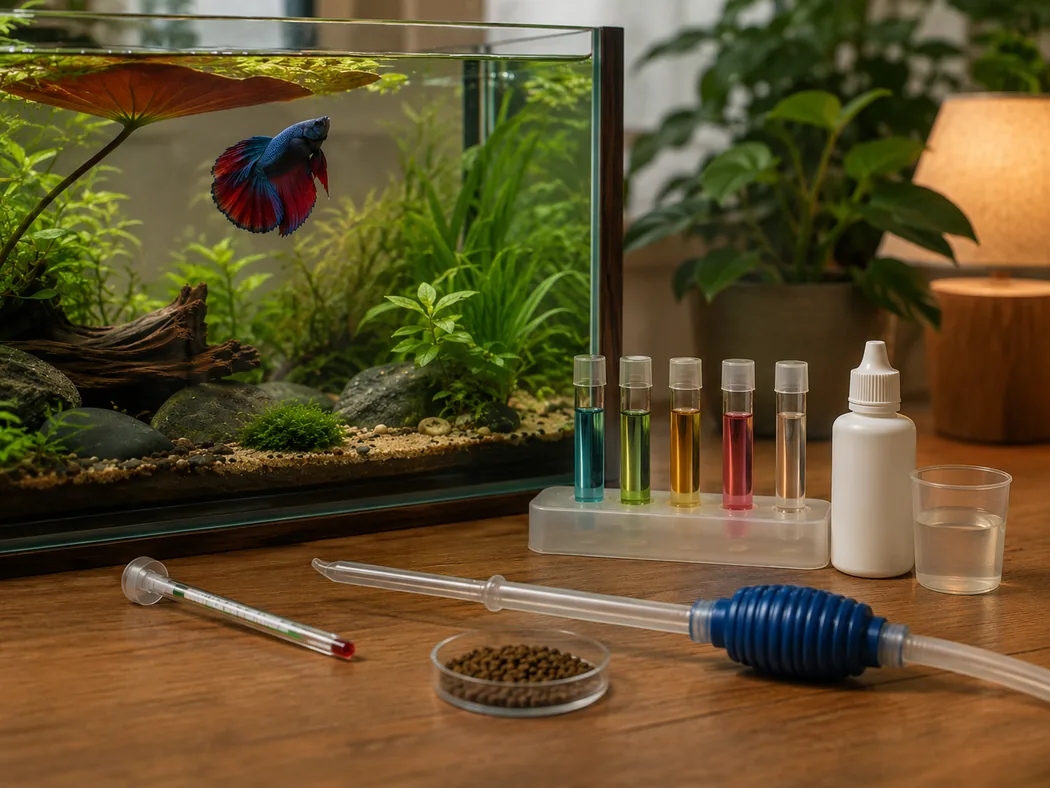
The best first tools are boring:
- A thermometer
- A liquid test kit
- A small feeding portion
- Patience
- Observation
Not every feeding problem is solved by a bottle.
Reason 1: The Water Is Too Cold
Cold water is one of the most common reasons a betta becomes sluggish and loses interest in food.
Bettas are tropical fish. For most beginner home aquariums, a practical care range is around 76–80°F or 24–27°C. RSPCA guidance for Siamese fighting fish recommends heated water around 24–26°C, and FishBase lists Betta splendens as a tropical species with a broader 24–30°C range.
If the tank is too cold, digestion slows. The fish may sit near the bottom, rest near the heater, move less, or ignore food.
A betta in cold water is not being “lazy.”
It may be trying to conserve energy.
Check this before feeding again:
| Temperature situation | What it can mean |
|---|---|
| Below 74°F / 23°C | Often too cool for good long-term betta care |
| Swings several degrees day to night | Stressful even if the average seems acceptable |
| Heater light always on | Heater may be undersized or room is too cold |
| Fish stays near heater | Tank may have cold zones or weak circulation |
| No thermometer | You are guessing |
Do not raise temperature suddenly.
If the water is cold, correct it gradually with a reliable aquarium heater and confirm with a separate thermometer. Do not pour hot water into the tank. Do not chase the number aggressively.
Warm, stable water usually brings appetite back faster than changing food five times.

Reason 2: Ammonia or Nitrite Is Irritating the Fish
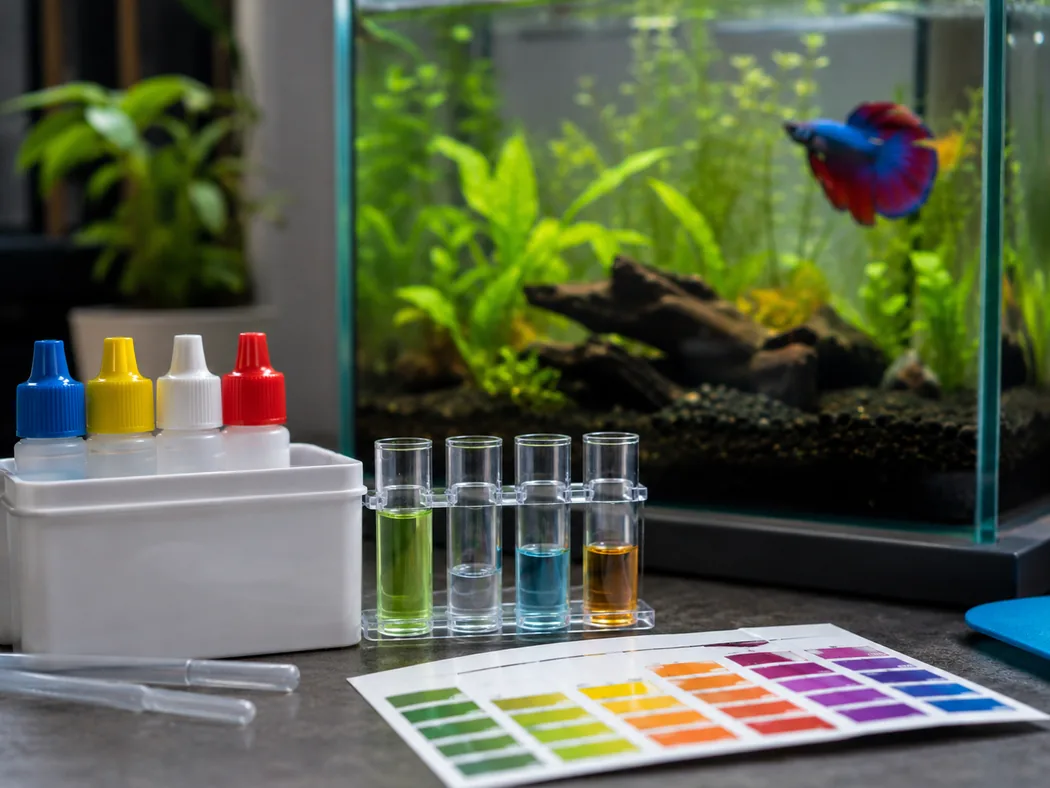
When a betta stops eating, water quality should be one of the first checks.
Fish waste, leftover food, and decaying plant matter can produce ammonia/ammonium (NH3/NH4+). In a cycled aquarium, beneficial bacteria convert that into nitrite (NO2-) and then nitrate (NO3-). In a new, disrupted, overfed, or under-filtered tank, ammonia and nitrite can appear.
Both can stress fish.
The water may still look clear.
That is the trap.
Merck/MSD veterinary references list high ammonia and low dissolved oxygen among the water-quality problems most likely to directly kill fish. MSD’s environmental hazards table also associates ammonia toxicity with signs including lethargy and anorexia — meaning loss of appetite.
For a betta that is not eating, check:
| Parameter | Safer target |
|---|---|
| Ammonia/Ammonium (NH3/NH4+) | 0 ppm |
| Nitrite (NO2-) | 0 ppm |
| Nitrate (NO3-) | Controlled with water changes |
| pH | Stable; many beginner betta tanks do well around 6.5–7.5 |
| Temperature | Stable around 76–80°F or 24–27°C |
If ammonia or nitrite is above zero, treat the situation as a water-quality problem first, not a food problem.
The first fix is usually:
- Stop overfeeding.
- Remove uneaten food.
- Do a partial water change with conditioned, temperature-matched water.
- Keep the filter running.
- Do not replace all filter media.
- Test again.
Do not keep offering food repeatedly into bad water. Uneaten food becomes more waste.
If the tank is new, you may be dealing with fish-in cycling.
Related guide: How to Cycle a Fish Tank
Reason 3: The Food Is Too Big, Too Hard, or Stale
Sometimes the fish is willing to eat, but the food is wrong.
This is common with pellets. Some “betta pellets” are still too large for smaller fish, young fish, older fish, or short-bodied bettas. The betta may grab the pellet, chew, spit it out, grab it again, and spit it out again.
That does not always mean the fish dislikes the food.
It may simply be too big or too hard.
Check the food itself:
| Food issue | What you may see |
|---|---|
| Pellets too large | Betta spits them out repeatedly |
| Food too hard | Betta mouths food but does not swallow |
| Stale food | Betta ignores food it used to eat |
| Sinking too fast | Betta misses it or loses interest |
| Too much variety | Fish waits for treats and ignores staple food |
| Poor storage | Food loses smell and nutritional quality over time |
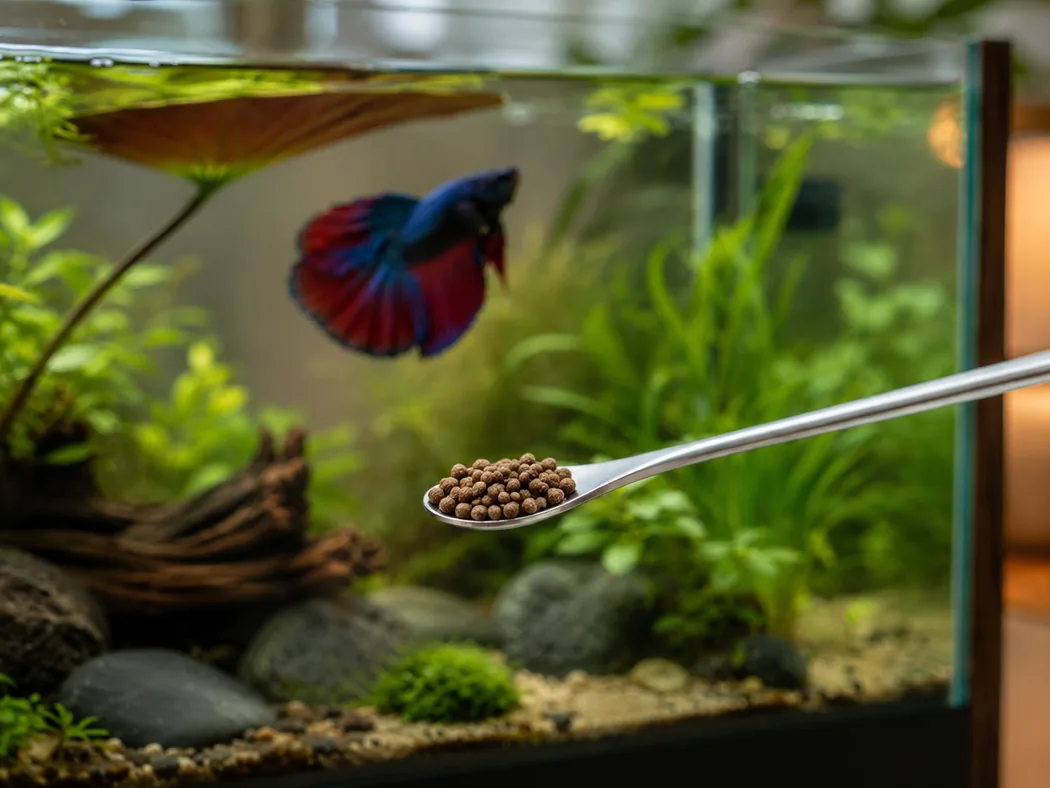
A simple fix is to try smaller pellets or pre-soak one or two pellets briefly before feeding.
Briefly means briefly.
Do not turn the food into mush that clouds the water.
Also check expiration and storage. Fish food should be kept sealed, dry, and away from heat and humidity. If the food smells stale, has absorbed moisture, or has been open for a long time, replace it.
A betta’s food should be small enough to eat easily and good enough to use consistently.
Reason 4: You Are Feeding Too Much
This sounds backwards, but overfeeding can make a betta stop eating.
A fish that is fed too much may become bloated, sluggish, constipated, or less responsive during feeding. Extra food also pollutes the water, which can create a second problem: the betta feels unwell because the tank is deteriorating.
Many bettas act hungry constantly.
That does not mean they need constant food.
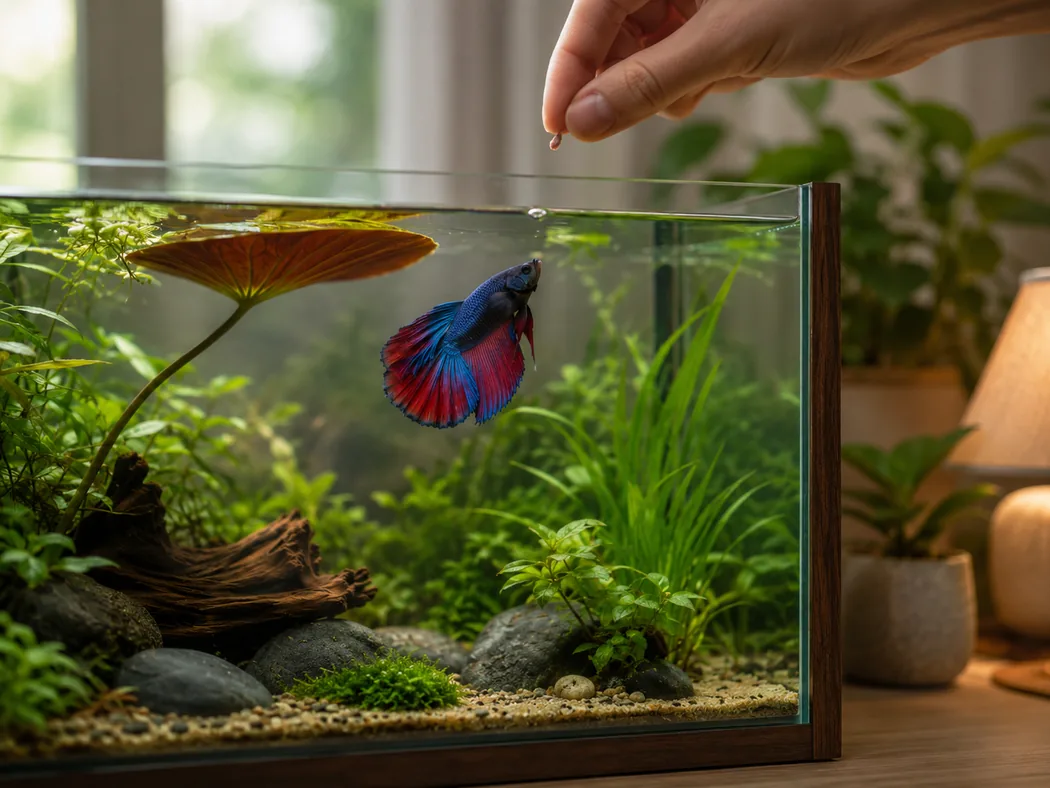
For most adult bettas, a practical beginner routine is:
| Feeding routine | Good starting point |
|---|---|
| Meals | 1–2 small meals per day |
| Pellets | Often 2–4 small pellets per meal, depending on pellet size |
| Treats | Occasional, not daily |
| Uneaten food | Remove it |
| Overfed fish | Feed lighter and check water |
The exact pellet count matters less than the portion.
Pellets vary. Betta size varies. Activity varies. A “three pellet rule” can still be too much if the pellets are large.
The better rule is:
Feed a small amount, watch the fish eat, and stop before food sinks or the belly looks swollen.
If your betta looks bloated or sluggish, do not keep trying to tempt it with more food. Give the digestive system time, keep the water clean, and check temperature. Cold water plus overfeeding is a common combination behind appetite and digestion problems.
Do not use feeding as entertainment.
That sentence matters.
Reason 5: The Betta Is Stressed After a Move or Tank Change
A new betta may not eat immediately.
That is normal.
Transport, bagging, bright store lights, netting, new water, new tank layout, and a new room can all stress the fish. Some bettas eat right away. Others need time.
The best first-day care is usually not constant attention.
It is calm.
For a new betta that is not eating:
| What to do | Why |
|---|---|
| Keep lights gentle | Reduces stress |
| Avoid tapping the glass | Prevents startle response |
| Do not rearrange the tank repeatedly | Lets the fish map the space |
| Offer one tiny meal | Prevents extra waste |
| Remove uneaten food | Keeps water clean |
| Wait and observe | Many bettas settle after 24–48 hours |
Do not panic-buy five foods on day one.
Let the fish settle.
If the tank is cycled, warm, covered, gently filtered, and calm, appetite often returns naturally.
Stress can also happen after big water changes, heavy cleaning, filter replacement, strong lighting, new décor, or moving the tank. When appetite drops, ask:
What changed in the last 24–72 hours?
That question often finds the answer faster than guessing.
Reason 6: Filter Flow or Tank Layout Is Wearing the Fish Down
A betta that has to fight the current all day may stop behaving normally.
It may hide behind plants, wedge itself near the filter, rest constantly, avoid feeding areas, or miss food because the pellets move too quickly. Long-finned bettas are especially vulnerable to exhausting flow.
The tank may be clean.
The fish may still be stressed.
A good betta tank has filtration, but the flow should be gentle.
Signs the flow may be too strong:
- The betta avoids open water.
- Fins are constantly pushed back.
- Food drifts away too fast.
- The fish hides behind the heater or décor.
- The fish struggles to rest near the surface.
- Bubble nests never last because the surface is too disturbed.
Fixes can include reducing the filter setting, adding a pre-filter sponge, baffling the outflow, using a sponge filter, adding plants to break current, or repositioning décor to create calm areas.
Do not remove filtration completely unless you have a better plan.
The goal is not “no filter.”
The goal is calm biological filtration.
Related guide: Betta Tank Setup
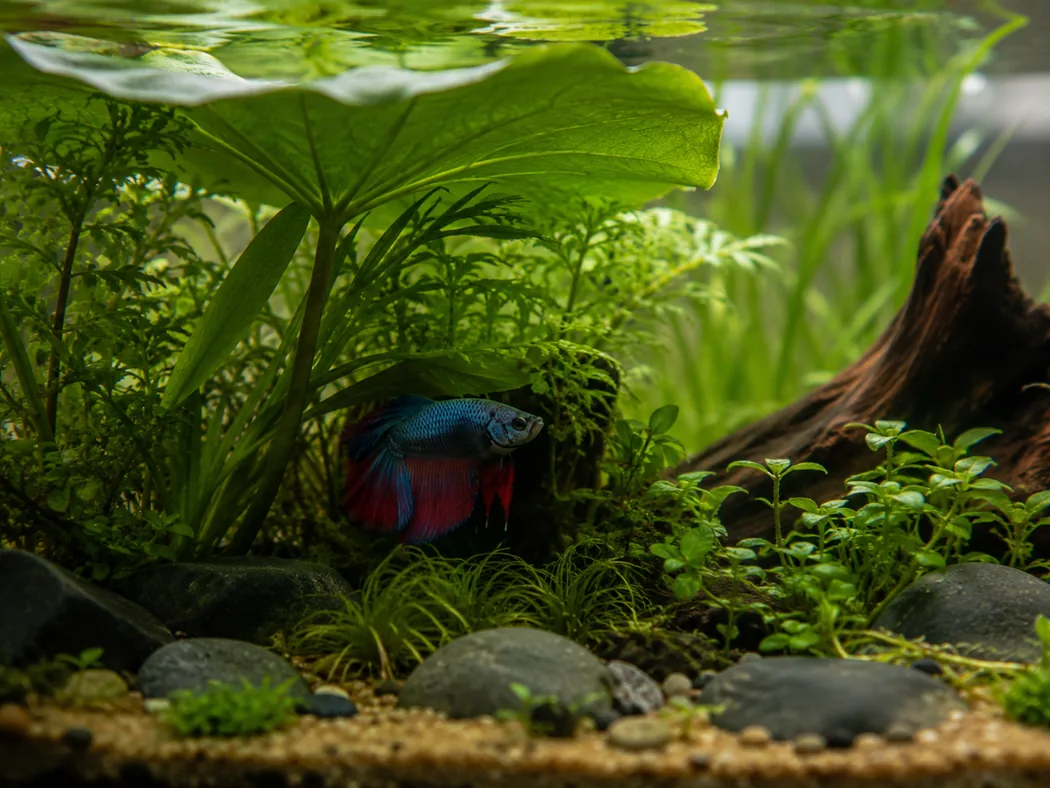
Reason 7: Tank Mates Are Stealing Food or Stressing the Betta
In a proper single-betta setup, feeding is simple. The betta sees food, eats, and you can monitor appetite.
In a community tank, things get more complicated.
Fast tank mates may steal food before the betta reaches it. Some fish may nip fins or chase the betta. Shrimp may grab sinking food. Snails may add waste. The betta may spend energy defending territory instead of feeding normally.
This is one reason a 5-gallon betta tank should not be treated like a community aquarium.
For feeding problems, ask:
| Tank mate issue | What it can cause |
|---|---|
| Fast fish stealing food | Betta misses meals |
| Fin-nipping fish | Stress and injury |
| Crowded tank | Higher waste and ammonia risk |
| Shrimp/snails and sinking food | Harder to track what the betta ate |
| Aggressive betta | Stress for all animals |
If your betta is not eating in a community setup, try feeding in a calm area, using a feeding ring, reducing competition, or reassessing whether the tank mates belong in that setup at all.
Do not add more animals to “make the tank more interesting” when the betta is already refusing food.
That is adding load to a stressed system.
Reason 8: Illness, Injury, or Fin Damage Is Affecting Appetite
Sometimes a betta stops eating because it is unwell.
The difficulty is that appetite loss alone does not tell you which problem is present. It only tells you the fish is not acting normally.
Look for other signs:
| Sign | Possible direction to investigate |
|---|---|
| Clamped fins | Stress, poor water, illness |
| Gasping at surface | Water quality, oxygen, gill irritation |
| White spots | Parasites such as ich |
| Fuzzy patches | Fungal or bacterial issues |
| Swollen belly | Overfeeding, constipation, internal issue |
| Pineconing scales | Serious internal fluid balance problem |
| Fin edges receding | Fin rot or poor healing conditions |
| Scratching/flashing | Irritation or parasites |
| Lethargy and darkening | Water quality or illness |
Do not throw random medication into the tank before checking water and temperature.
Medicine used in bad water often fails because the root problem is still there. Some treatments can also stress fish, affect biological filtration, or create new problems when used blindly.
First stabilize the basics:
- Warm, stable water
- 0 ppm ammonia/ammonium (NH3/NH4+)
- 0 ppm nitrite (NO2-)
- Gentle flow
- Clean tank
- No sharp décor
- No harassment from tank mates
Then evaluate illness signs more carefully.
If the fish has severe swelling, pineconing, loss of balance, rapid breathing, visible infection, or refuses food for several days with worsening behavior, that is no longer a simple feeding issue.
What to Do Today If Your Betta Refuses Food
Here is a practical same-day sequence.
Do not do all the dramatic things at once. Work through the basics.
1. Remove Uneaten Food
If food is sitting in the tank, remove it.
Uneaten food becomes waste. In a small tank, that matters quickly.
2. Check Temperature
Use a thermometer, not your hand.
If the water is cold or swinging, fix temperature gradually with a proper heater.
3. Test Water
Test at least ammonia/ammonium (NH3/NH4+) and nitrite (NO2-). If you can, also test nitrate (NO3-) and pH.
If ammonia or nitrite is above zero, respond as a water-quality issue.
4. Look at the Fish
Check breathing, fins, body shape, color, swimming balance, hiding, gasping, and whether the fish reacts to movement.
5. Offer a Tiny Portion Later
Wait a few hours and offer a very small amount of food. If the fish refuses, remove it.
Do not keep dropping food into the tank.
6. Review Recent Changes
New tank? New filter? New food? Big water change? Décor added? Light schedule changed? Room got colder? Tank mate added?
The cause is often in the recent history.
How to Offer Food Without Making the Problem Worse
When a betta refuses food, it is tempting to keep trying.
A pellet. Then another. Then flakes. Then bloodworms. Then more pellets.
That can make the tank worse.
Use a calmer approach:
| Feeding attempt | Better method |
|---|---|
| First try | Offer one or two small pellets |
| If spat out | Try smaller pellet or brief pre-soak |
| If ignored | Remove food and wait |
| If new betta | Try again later with lights low |
| If water problem exists | Fix water before feeding heavily |
| If bloated | Do not add rich treats immediately |
Treats can help confirm appetite, but they can also create bad habits.
If a betta only eats bloodworms and refuses staple pellets, the long-term problem is not solved. The goal is not just “make the fish eat anything today.” The goal is a routine the fish can live with.
If you do use a treat to test interest, use a tiny amount.
Do not dump food into the water hoping instinct will take over.
The filter has to deal with everything the fish does not eat.
When to Worry: Red Flags That Need Faster Action
A betta refusing food is more concerning when other symptoms appear.
Red flags include:
- Gasping at the surface
- Rapid gill movement
- Clamped fins
- Sitting at the bottom for long periods
- Loss of balance
- Swollen belly
- Pineconing scales
- White spots or fuzzy growth
- Torn fins getting worse
- Red streaks or sores
- Not eating for several days
- Sudden color darkening with lethargy
- Ammonia or nitrite above zero
If you see these signs, do not treat the situation as simple pickiness.
Move faster:
- Test water.
- Confirm temperature.
- Do an appropriate partial water change if tests show a problem.
- Reduce stress and flow.
- Remove uneaten food.
- Consider whether illness-specific treatment or veterinary advice is needed.
The most dangerous version is this:
The fish is not eating, the water has ammonia or nitrite, and the owner keeps adding food.
That is how a feeding problem becomes a water-quality emergency.
What Not to Do When a Betta Stops Eating
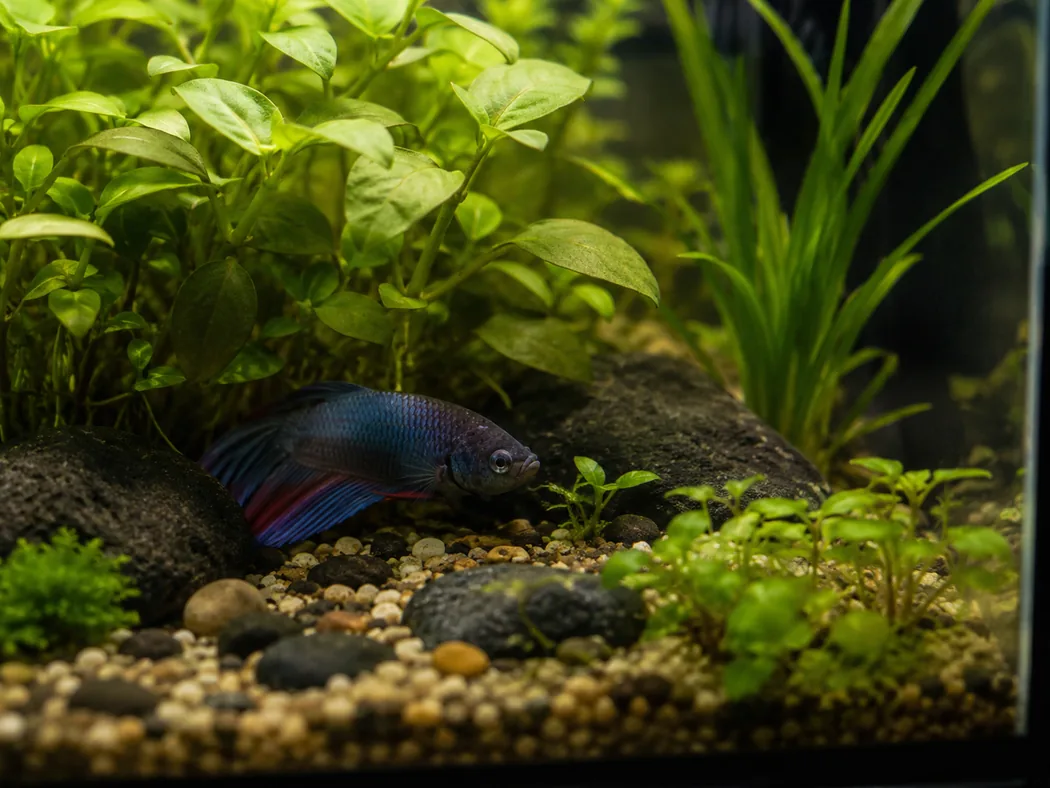
This section may save more fish than another food list.
Do not do these things:
Do Not Dump in More Food
More food does not solve appetite loss.
It creates waste.
Do Not Replace All Filter Media
If the tank has a biological filter, the filter media holds beneficial bacteria. Replacing it can make water quality worse.
Do Not Do a Full Tank Scrub Without Reason
A full reset can crash stability, especially in a small tank. Clean gently and preserve the biological filter unless there is a specific reason to restart.
Do Not Add Medication Blindly
Medicine is not a substitute for water testing.
If the issue is cold water, ammonia, nitrite, stress, or flow, medication may not solve the root cause.
Do Not Keep Changing Foods Every Few Hours
You will not learn what works if the tank becomes a buffet of leftovers.
Do Not Add Tank Mates
A fish that is not eating does not need more social pressure or more waste in the system.
Do Not Ignore the Heater
Temperature is one of the easiest checks and one of the most commonly missed causes.
A thermometer is cheaper than guessing.
Betta Not Eating Checklist
Use this checklist before deciding the fish is just “picky.”
| Question | Checked? |
|---|---|
| Has the betta missed only one meal, or several days? | |
| Is the temperature stable around 76–80°F or 24–27°C? | |
| Is ammonia/ammonium (NH3/NH4+) at 0 ppm? | |
| Is nitrite (NO2-) at 0 ppm? | |
| Is nitrate (NO3-) controlled? | |
| Was there a recent move, water change, or tank change? | |
| Is the filter flow gentle? | |
| Are tank mates stealing food or stressing the betta? | |
| Is the food fresh and small enough? | |
| Is the betta bloated from previous overfeeding? | |
| Are fins clamped, torn, or worsening? | |
| Is the fish gasping, tilted, swollen, or losing balance? | |
| Was uneaten food removed? | |
| Did you avoid adding random medicine before testing water? |
If you checked temperature, water quality, food size, stress, and recent changes, you are no longer guessing.
That is when the next step becomes clearer.
Related Guides
Continue with these guides:
- Betta Fish Care Guide
- Betta Tank Setup
- How to Cycle a Fish Tank
- Freshwater Aquarium Checklist
- Best Aquarium Test Kits
- Best Aquarium Heaters
- Why Is My Fish Gasping at the Surface?
- Cloudy Fish Tank Water
- Why Is My Betta Fish Bloated?
- Betta Fin Rot
- Betta Fish Popeye
- Betta Dropsy
Final Advice
A betta that stops eating is asking you to slow down and look at the tank.
Not just the food.
The water.
The temperature.
The filter.
The recent changes.
The fish’s behavior.
Sometimes the answer is simple: the food is too large, the fish is new, or it needs a quiet day.
Sometimes the answer is urgent: ammonia, nitrite, cold water, or illness.
The difference comes from checking before guessing.
A healthy betta usually eats with interest.
When it does not, listen to the signal.
FAQ
How long can a betta go without eating?
A healthy adult betta can often survive several days without food, but that does not mean you should ignore appetite loss. One missed meal is usually not an emergency. Several days without eating, especially with lethargy, gasping, clamped fins, or poor water tests, needs attention.
Why is my new betta not eating?
A new betta may refuse food because of transport stress, new water, new surroundings, bright light, or unfamiliar food. Keep the tank calm, remove uneaten food, and try a tiny meal later.
Why does my betta spit out pellets?
The pellets may be too large, too hard, stale, or unfamiliar. Try smaller pellets or briefly pre-soak one or two pellets. Do not leave rejected food in the tank.
Should I try bloodworms if my betta will not eat?
A tiny treat can help test interest, but bloodworms should not become the daily diet. If the fish only eats treats, you still need to solve the underlying feeding or care issue.
Can cold water make a betta stop eating?
Yes. Cold water can slow digestion and reduce appetite. Check the thermometer and aim for stable warm water around 76–80°F or 24–27°C for most beginner betta setups.
Can ammonia make a betta stop eating?
Yes. Ammonia/ammonium (NH3/NH4+) and nitrite (NO2-) can stress fish and suppress normal behavior. Both should be 0 ppm in a stable aquarium.
Should I do a water change if my betta is not eating?
If water tests show ammonia, nitrite, or high nitrate, an appropriate partial water change with conditioned, temperature-matched water is a good first response. Do not do a huge random clean-out unless there is a clear reason.
Is my betta just picky?
Sometimes, but “picky” should be the last explanation, not the first. Check temperature, water quality, food size, stress, flow, and recent changes before assuming personality.
Why is my betta not eating and sitting at the bottom?
Check temperature and water quality immediately. Cold water, ammonia, nitrite, strong flow, stress, illness, or exhaustion can all cause bottom sitting and appetite loss.
Should I medicate a betta that is not eating?
Not automatically. Test water and check temperature first. Medication may be appropriate if there are clear disease signs, but appetite loss alone is not enough to choose a treatment blindly.
Why is my betta not eating after a water change?
The change may have altered temperature, pH, flow, or stress level. Check temperature, make sure conditioner was used, confirm water tests, and give the fish time to settle.
Can tank mates stop a betta from eating?
Yes. Fast fish may steal food, and aggressive or active tank mates can stress a betta. In a 5-gallon setup, a betta should usually be kept alone.
This article is written for beginner Betta splendens keepers troubleshooting appetite loss in home freshwater aquariums. Appetite loss can come from water quality, temperature, stress, feeding, or illness. Use your own water test results and fish behavior when making care decisions. Severe symptoms may require help from an aquatic veterinarian or experienced local fish professional.
References
This guide was written for beginner betta keepers and should be cross-checked against fish welfare, aquarium husbandry, and species-reference sources when publishing.
- RSPCA Knowledgebase — Siamese fighting fish care
- FishBase — Betta splendens species data
- Merck Veterinary Manual — Environmental Diseases of Aquatic Animals in Aquatic Systems
- MSD Veterinary Manual — Common Environmental Hazards for Fish
- RSPCA Knowledgebase — Aquarium water quality and biological filtration basics
- Manufacturer instructions for any specific heater, filter, conditioner, test kit, food, or medication mentioned in future buying guides.