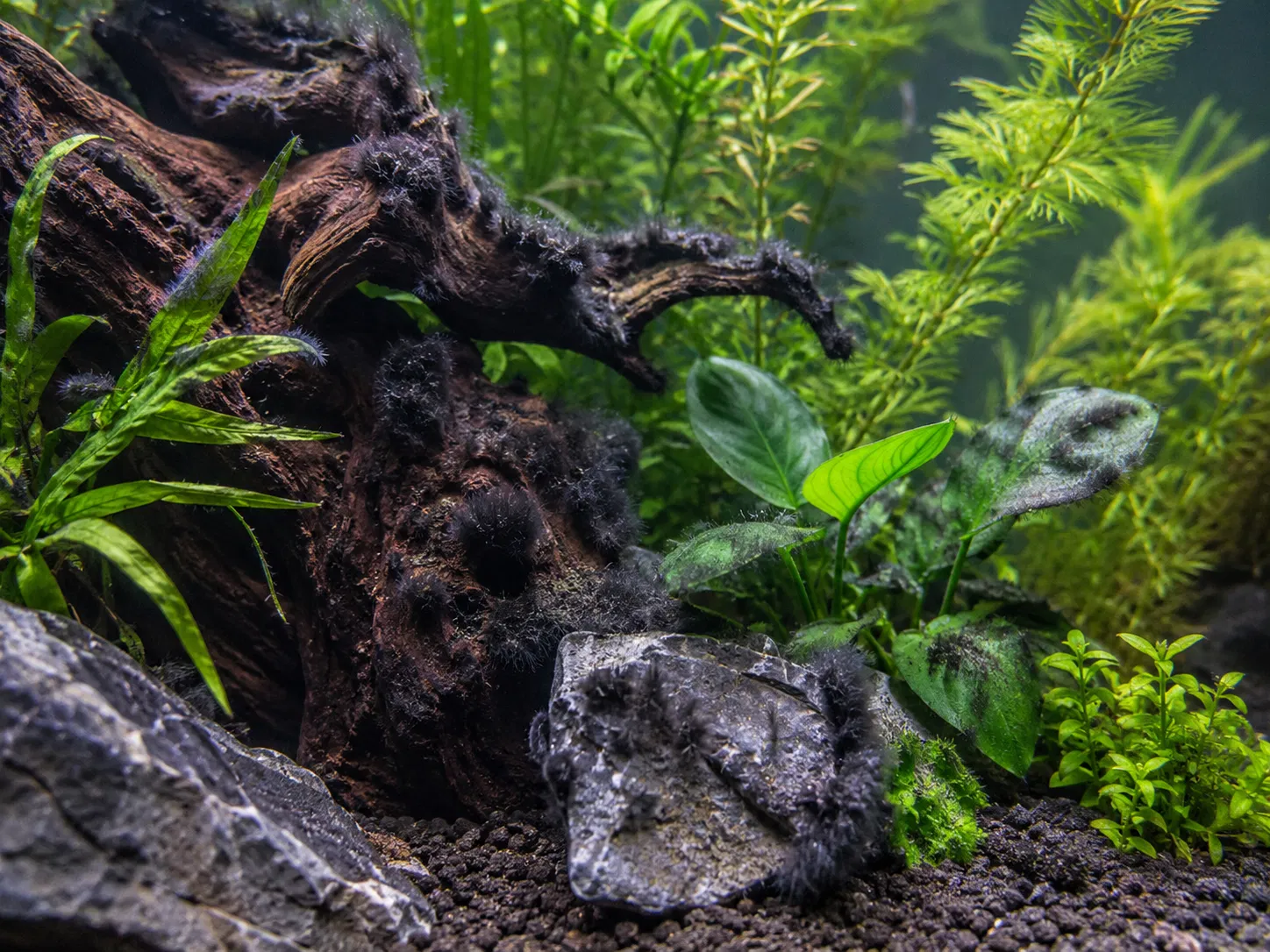
Black beard algae feels personal. It does not just dust the glass. It grips leaf edges, wood, filter outlets, rock seams, and slow-growing plants like it owns them. Beginners often try to scrub it off once, feel proud for a day, and then watch the same dark tufts return from the exact same places.
Black beard algae, often shortened to BBA, is usually a sign that the tank has a stability problem around light, flow, organics, plant stress, or carbon availability. It is not proof that you are a bad fishkeeper. It is proof that the aquarium is giving a tough algae exactly the surfaces and conditions it likes.
What BBA looks like
BBA usually grows as dark gray, black, or deep green tufts. It can look like tiny beard hairs, stiff fuzz, or short bristles attached to hardscape and leaf edges. It often appears on Anubias, Java fern, filter outputs, driftwood, and older leaves that are no longer growing strongly.
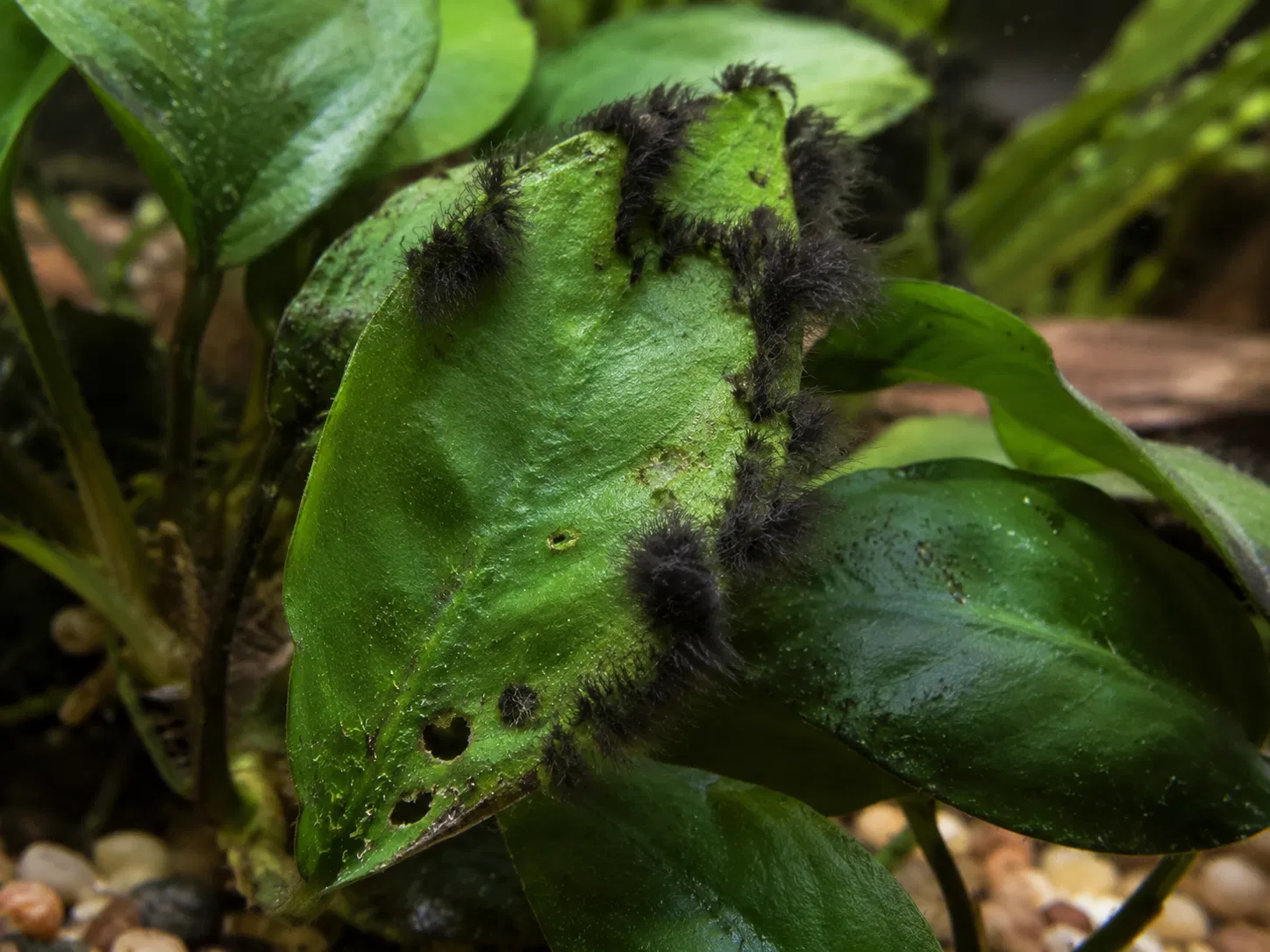
A key clue is attachment. BBA grips. Soft brown algae wipes away easily. BBA usually does not.
Why slow leaves get attacked first
Slow-growing plants are not weak plants, but their leaves stay in the tank for a long time. That gives algae more time to colonize the surface. If a leaf is already damaged by strong light, unstable CO2, poor flow, melting, or old age, it becomes an even easier target.
Do not think of BBA as only a water problem. Think of it as a surface problem plus a stability problem. Damaged surfaces invite attachment, and unstable conditions help it persist.
The light-flow-organics triangle
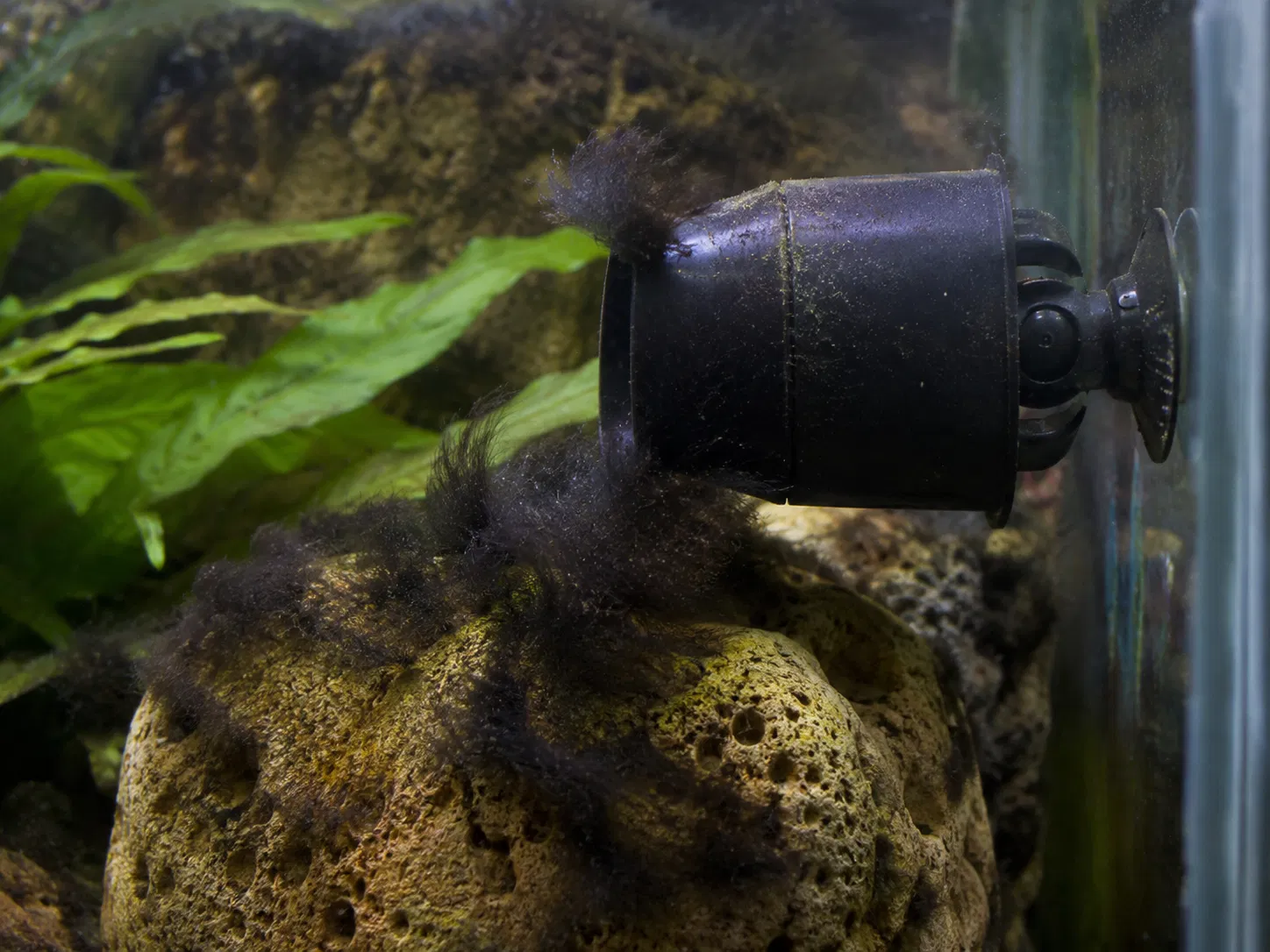
In low-tech tanks, BBA often shows up when light is stronger than the plant system can use. In higher-tech tanks, unstable CO2 can be a major trigger. In both cases, waste and poor local flow make things worse. A filter outlet may push water hard in one direction while leaving dead zones behind wood, under leaves, or in corners.
Before buying chemicals, ask three questions: Is the light too intense or too long? Are old leaves collecting waste? Is flow actually reaching the areas where BBA grows?
Safe first removal
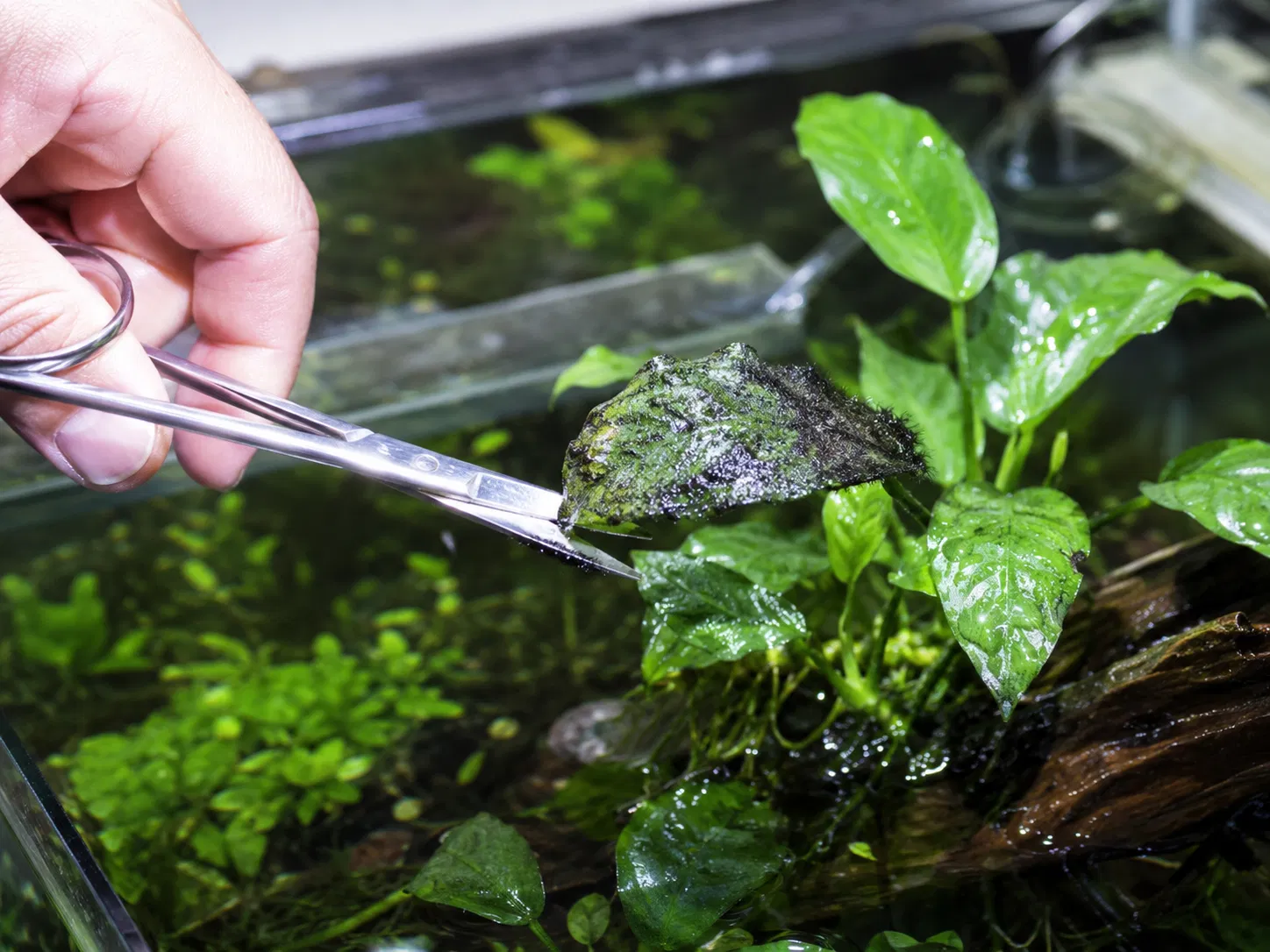
Start physically. Remove badly affected old leaves. Lift out removable rocks or wood and scrub them outside the tank. Siphon loose debris while you work so decaying algae does not stay in the aquarium. Do not deep-stir substrate to chase every trapped strand.
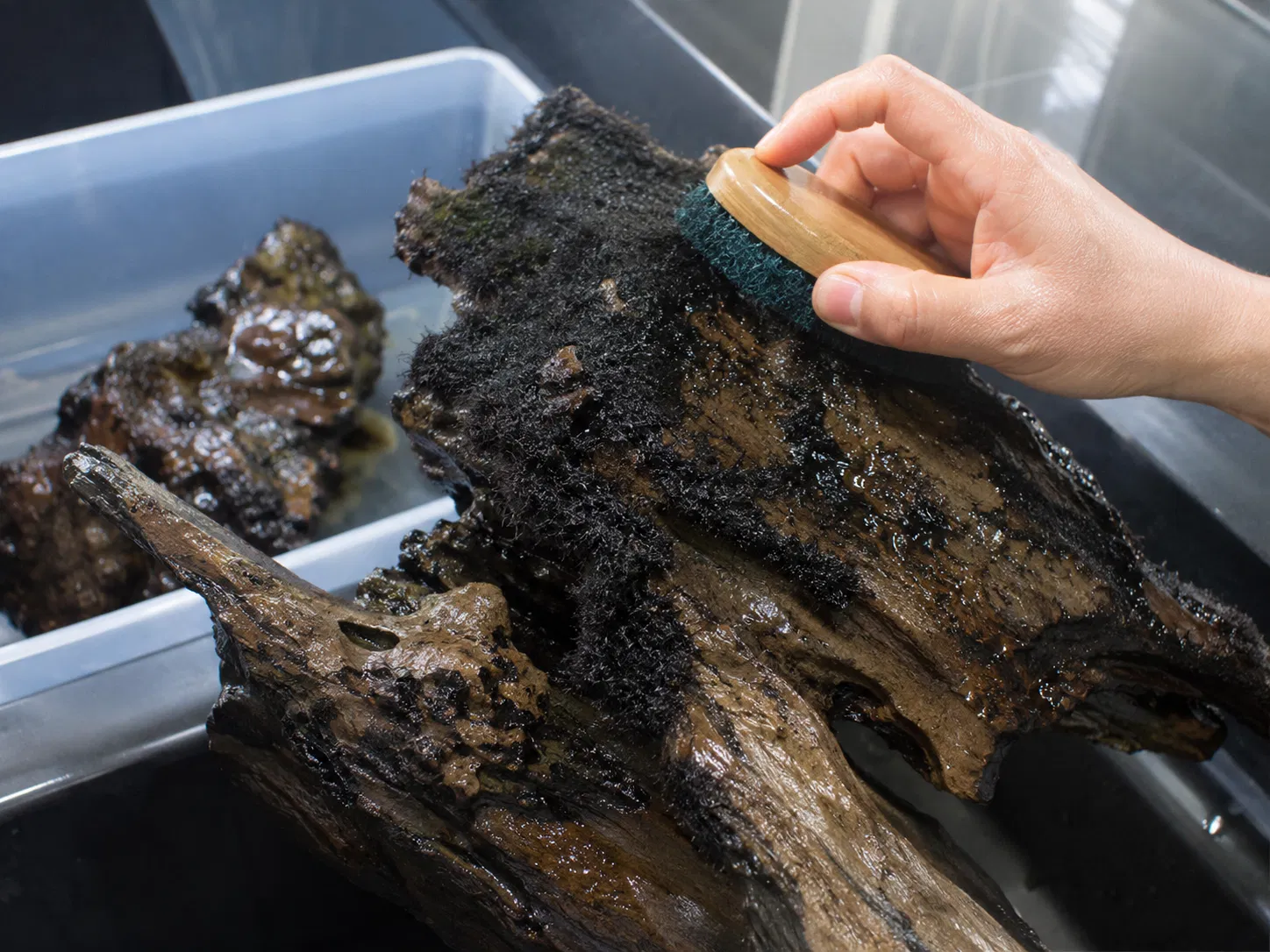
If BBA is on Anubias or Java fern, trim only leaves that are badly covered or already damaged. Do not cut healthy rhizomes. These plants recover slowly, so the goal is controlled pruning, not punishment.
Why quick chemical wins can backfire
Spot treatments can work, but beginners often overuse them. When algae dies quickly, it becomes decomposing organic matter. In small tanks, that can reduce dissolved oxygen and add biological load. Fish may look worse after the algae dies, not because the algae was the main disease, but because the cleanup was too sudden.
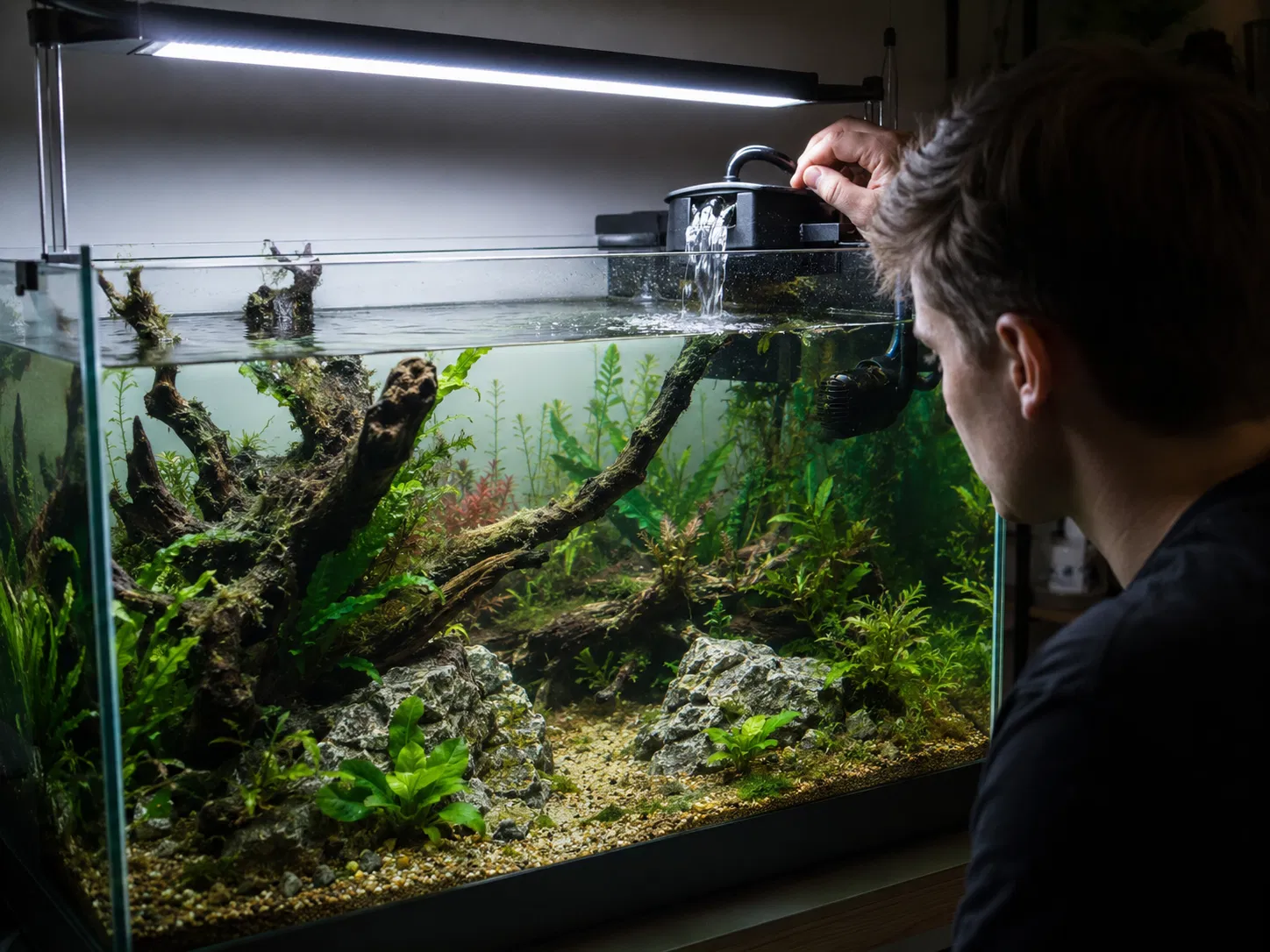
If you use any product, follow the label, increase observation, and add aeration if fish show stress. In planted tanks with pressurized CO2, do not run strong daytime aeration as a normal routine because it can drive off CO2. Use emergency aeration only when fish need oxygen support.
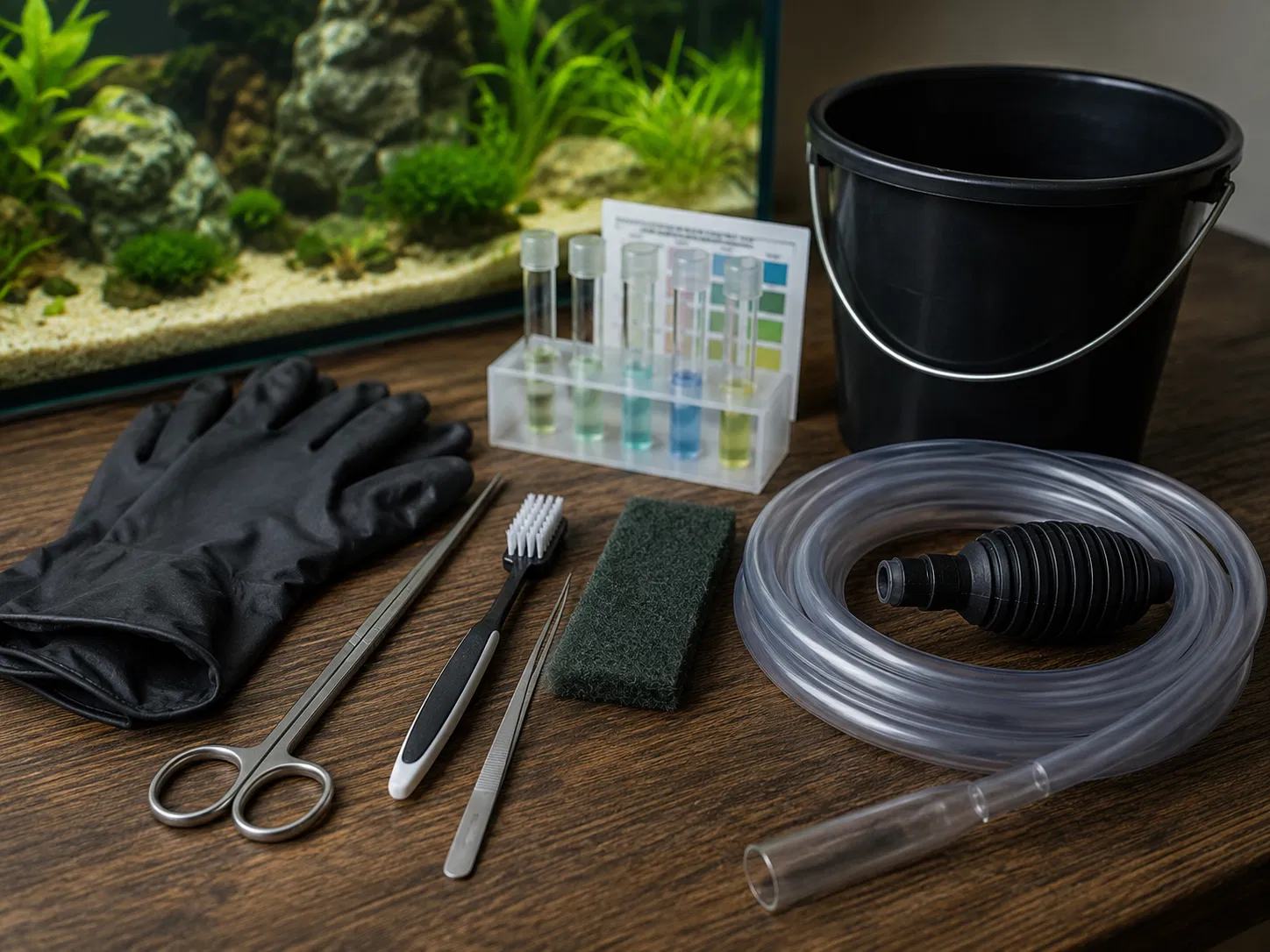
BBA Removal and Stability Kit
Useful items include curved aquascaping scissors, a soft toothbrush for removed hardscape, a siphon, liquid test kit, timer or dimmable light, filter floss, and a small circulation adjustment tool. The goal is to remove attached algae while correcting the imbalance that helped it attach.
Preventing it from returning
Reduce photoperiod to a stable 6 to 7 hours if the tank is struggling. Avoid overnight blue moonlight. Clean mechanical media before flow collapses. Remove old leaves before they become algae anchors. Feed lightly enough that the substrate does not collect fine waste.
Most importantly, do not chase a perfectly clean look overnight. BBA is stubborn, but a stable aquarium beats an aggressively cleaned aquarium.
FAQ
Is black beard algae harmful to fish?
BBA itself usually does not poison fish, but the tank conditions behind it can stress fish. Poor flow, excess organics, unstable CO2, and aggressive chemical treatment can all create fish-health problems.
Can I remove BBA by scraping it inside the tank?
You can scrape some surfaces, but siphon loose fragments as you work. Leaving detached algae and debris in the tank can add more decaying organic matter.
Why does BBA grow on Anubias and Java fern?
These are slow-growing plants with long-lived leaves. Old or damaged leaves give algae time to anchor, especially under strong light or poor local flow.
Should I increase light to help plants beat BBA?
Usually not at first. If plants are not using the current light well, stronger light can make algae worse. Stabilize photoperiod, plant health, and flow before increasing intensity.
Does BBA mean I need CO2?
Not always. Many low-tech tanks run without CO2. The key is matching light intensity to plant demand and keeping organics under control.
Can I use hydrogen peroxide or liquid carbon on BBA?
Some hobbyists use spot treatments, but overdosing can harm fish, shrimp, biofilm, and plants. Physical removal and stability should come first, and any product should be used conservatively according to instructions.
Will algae eaters remove black beard algae?
Most algae eaters do not reliably solve BBA. Some may graze young growth, but mature BBA is tough and attached. Do not buy fish only as tools.
Why is BBA near my filter outlet?
Filter outlets collect flow, oxygen, organics, and old biofilm. If the outlet is dirty or plants near it are stressed, BBA may anchor there first.
Should I throw away affected plants?
Only discard leaves or plants that are heavily covered and declining. Keep healthy rhizomes and crowns. Controlled trimming is safer than tearing the whole planted tank apart.
How long does BBA take to control?
Expect weeks, not days. You can remove visible tufts quickly, but preventing return requires stable light, flow, feeding, and maintenance.
Related Guides
/tank-problems/algae-problems/— Broader algae troubleshooting hub./best-products/best-aquarium-light-for-plants/— Helps readers choose dimmable plant lighting./guides/low-light-aquarium-plants/— Slow plants need controlled lighting and maintenance./aquarium-equipment/filters/— Flow and mechanical filtration affect BBA return./guides/aquarium-maintenance-schedule/— Stable routines beat sudden aggressive cleaning.
Author Box
Written by the Healthy Aquariums editorial team for everyday freshwater keepers. This guide prioritizes fish health, water stability, and practical maintenance over quick fixes that only make the tank look cleaner for a day.
Editorial Note
This article is written for beginner and intermediate hobbyists. It does not replace veterinary advice for sick fish, and it avoids one-size-fits-all chemical fixes. When algae or plant problems appear, test the water, review recent changes, and correct the underlying imbalance before making aggressive changes.
References
- API Fishcare. Green Water, Cloudy Water: What Should I Do? https://www.apifishcare.com/blog/green-water-cloudy-water-what-should-i-do-aquarium
- API Fishcare. Freshwater Aquarium Water Problem Solving. https://www.apifishcare.com/simple-care-guide/freshwater/water-problem-solving
- Penn State Extension. Preventing Excessive Aquatic Plant and Algae Growth. https://extension.psu.edu/preventing-excessive-aquatic-plant-and-algae-growth
- Penn State Extension. Filamentous Algae. https://extension.psu.edu/filamentous-algae/