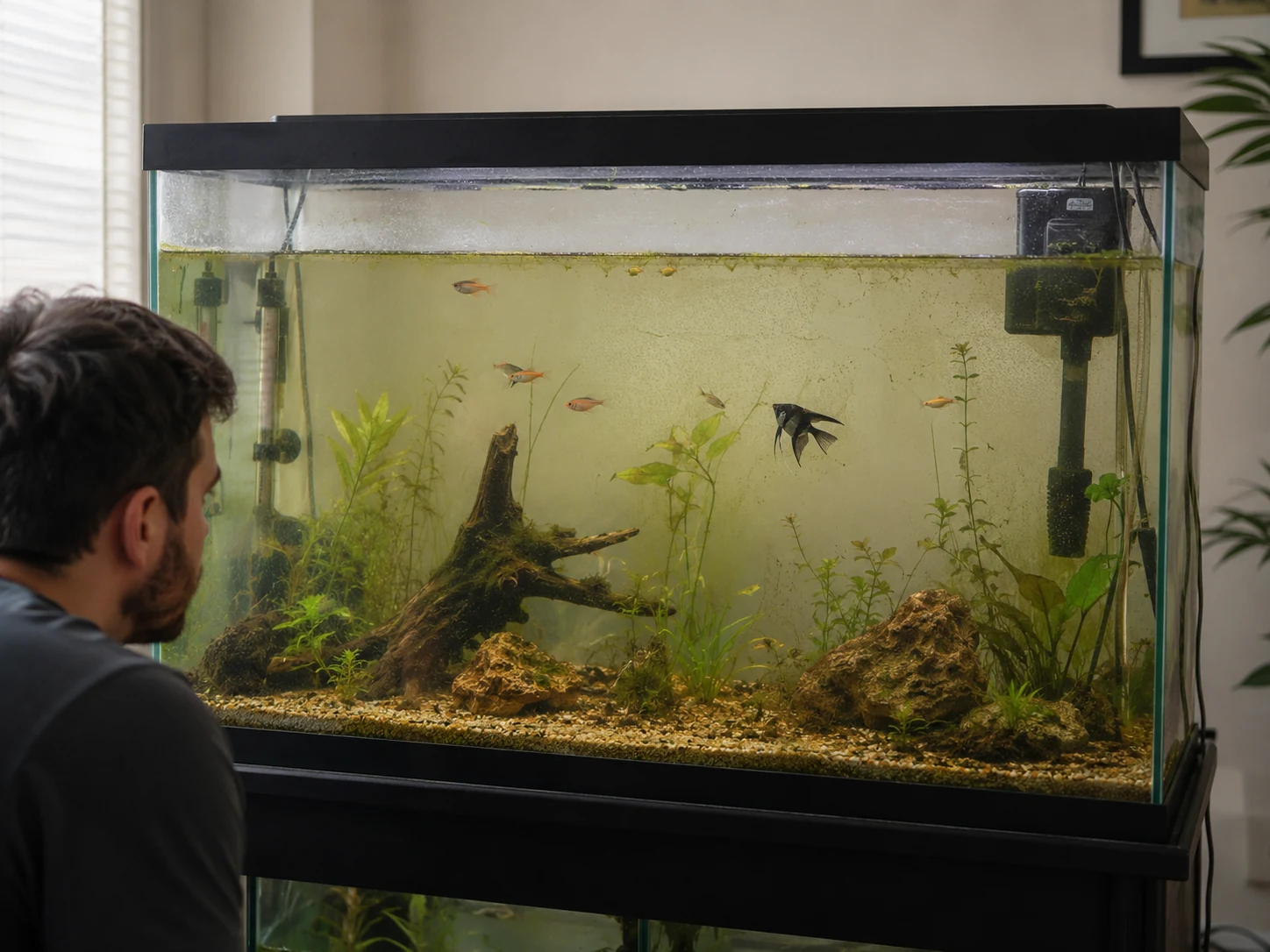
When an aquarium filter stops working, the emergency is not just dirty water. The bigger danger is oxygen loss and biofilter disruption.
Beneficial bacteria need moving, oxygenated water. Fish need surface gas exchange. If the filter stops, the tank can shift quickly, especially if it is warm, heavily stocked, or already dirty.
Quick answer
If your aquarium filter stops working, keep filter media wet, add backup aeration, check power, water level, intake blockage, impeller, priming, and hose clogs. Do not let media dry out, do not replace all media, and test ammonia and nitrite after the problem.
First emergency steps
Do these first:
- Confirm fish are not gasping.
- Add an air stone or sponge filter if available.
- Keep filter media submerged in tank water.
- Check power outlet and plug.
- Test ammonia and nitrite if the filter was off for long.
- Do not feed heavily until flow is restored.
Warm water holds less oxygen, so filter stoppage is more urgent in warm tanks.
HOB filter not working
Hang-on-back filters often fail to restart because they lose prime. Many HOB filters need the filter box filled with water before plugging in.
Check:
- water level too low;
- intake tube not seated;
- intake clogged;
- impeller jammed;
- filter box not filled;
- motor not seated correctly;
- media packed too tightly.
Do not run the motor dry. Dry-running can damage the impeller or motor.
Canister filter no flow
Canister filters can lose flow from airlocks, clogged hoses, dirty impellers, closed valves, packed media, or poor priming.
Check:
- intake and output valves open;
- hoses not kinked;
- canister fully primed;
- impeller clean;
- media trays seated correctly;
- hoses not packed with bio-sludge;
- spray bar not blocked.
A neglected canister can produce a sludge blast after restart. If hoses are visibly dirty, clean them with a flexible pipe brush before restarting full flow into the tank.
Sponge filter not bubbling
Sponge filters depend on air flow.
Check:
- air pump plugged in;
- airline connected;
- check valve installed in the correct direction;
- check valve arrow pointing toward the aquarium;
- airline not kinked;
- sponge not clogged;
- lift tube seated;
- air stone clogged if used.
A reversed check valve can block air flow, strain the pump, and leave fish without aeration.
Impeller cleaning
Many filter failures are impeller problems. Grit, snail shells, sand, biofilm, or plant debris can jam the rotor.
Unplug the filter. Remove the impeller cover. Clean the impeller and well with a soft brush or cotton swab. Do not use soap, WD-40, machine oil, cooking oil, or petroleum grease.
If an O-ring needs lubrication, use only a tiny amount of 100% aquarium-safe silicone grease and only where appropriate.
Low flow but filter still running
Low flow can be as dangerous as a full stop because oxygen transport through media drops.
Common causes:
- clogged sponge;
- dirty floss;
- packed biomedia;
- clogged intake;
- hose sludge;
- impeller buildup;
- air trapped in canister;
- media basket bypass or misalignment.
Clean mechanical blockages in old tank water and preserve biological media.
Keep a USB or battery air pump, air stone, airline tubing, check valve, flexible hose brush, impeller brush, spare sponge, water conditioner, and ammonia/nitrite test kit. These tools buy time when a filter fails.
After the filter restarts
Do not assume the tank is safe immediately. Test ammonia and nitrite, especially if the filter was off for hours or media dried out.
Feed lightly for 24–48 hours. Watch fish breathing. Confirm steady flow. If ammonia or nitrite appears, use controlled water changes, conditioner according to label, and oxygen support.
The stagnant-filter hazard after long power outages
A stopped filter is not only a motor problem. It can become a stagnant low-oxygen chamber.
If a canister filter or packed filter chamber sits without flow for several hours, oxygen inside the media drops. Organic sludge continues to decompose. In severe cases, low-oxygen zones can produce foul reduced compounds, including hydrogen sulfide risk in dirty anaerobic pockets. The practical warning sign is a rotten-egg or sewer-like smell.
Do not restart a foul stagnant canister directly into the aquarium. Disconnect it, open it in a safe area, discard stagnant water from the canister body, and rinse mechanical debris with dechlorinated water or old tank water. Keep biological media wet and handle it gently, but remove obvious foul sludge before returning flow to the display.
If the filter was off for only a short time and smells normal, restart may be straightforward. If it was off for many hours and smells foul, treat it as a water-quality emergency: use backup aeration, test ammonia and nitrite, and restart only after the filter is safe.
The hidden danger: media drying out
When a filter stops, many beginners focus only on the motor. But the media is the biological emergency.
If sponge, ceramic media, or cartridge media dries out, the attached biofilm can die back quickly. Even if the filter motor is repaired later, the aquarium may behave like a partially uncycled tank because the bacteria colony was damaged while the equipment sat dry.
If troubleshooting takes more than a few minutes, place the media in a bucket or container of aquarium water. Keep it wet and oxygenated if possible. A small air stone in the bucket is useful during longer repairs. Do not put the media under untreated tap water, and do not leave it on a towel while you work on the motor.
After the filter is restored, test ammonia and nitrite for the next few days. A filter can sound fixed mechanically while the biofilter is still biologically weakened.
When to replace the filter
Replace the filter if the motor fails, impeller shaft is damaged, housing leaks, electrical safety is questionable, or flow cannot be restored.
If replacing, preserve mature media. Move old wet media into the new filter if possible. Run both filters together if the old one still works.
FAQ
Why did my aquarium filter stop working?
Common causes include power issues, lost prime, clogged intake, dirty impeller, blocked media, airlock, or hose sludge.
How long can fish survive without a filter?
It depends on stocking, temperature, oxygen, and waste load. Add aeration immediately and test water.
Should I feed fish when the filter is off?
Avoid feeding heavily. Less food means less ammonia while filtration is compromised.
Can I rinse the filter under tap water to fix it?
Do not rinse biological media under untreated tap water. Clean mechanical blockages safely.
Why is my HOB filter humming but not pumping?
It may have lost prime, the impeller may be jammed, or water level may be too low.
Why is my canister filter rattling?
Common causes include trapped air, dirty impeller, incomplete priming, or worn parts.
Why is my sponge filter not bubbling?
Check air pump, airline, check valve direction, kinks, and sponge blockage.
Can a filter restart cause dirty water?
Yes. Hose sludge or canister debris can blast into the tank if neglected.
Should I replace all media after a filter failure?
No. Keep mature media wet and reuse it if safe.
What should I test after filter failure?
Test ammonia and nitrite first, then nitrate and pH as needed.
Related Guides
- Aquarium Filter Guide
- How Often Should You Clean an Aquarium Filter?
- Canister Filter vs HOB Filter
- Aquarium Air Pump Guide
- Ammonia, Nitrite, and Nitrate
Author Box
Written by the Healthy Aquariums editorial team. We troubleshoot equipment by first protecting oxygen, fish behavior, and the biofilter.
Editorial Note
Electrical aquarium equipment should be handled safely. Unplug equipment before opening motors or impeller areas.
References
- Aqueon. Aquarium Filters and Maintenance. https://www.aqueon.com/articles
- API Fishcare. The Nitrogen Cycle. https://www.apifishcare.com/blog/the-nitrogen-cycle-keeping-your-aquarium-healthy
- Merck Veterinary Manual. Environmental Diseases of Aquatic Animals in Aquatic Systems. https://www.merckvetmanual.com/exotic-and-laboratory-animals/aquatic-systems/environmental-diseases-of-aquatic-animals-in-aquatic-systems