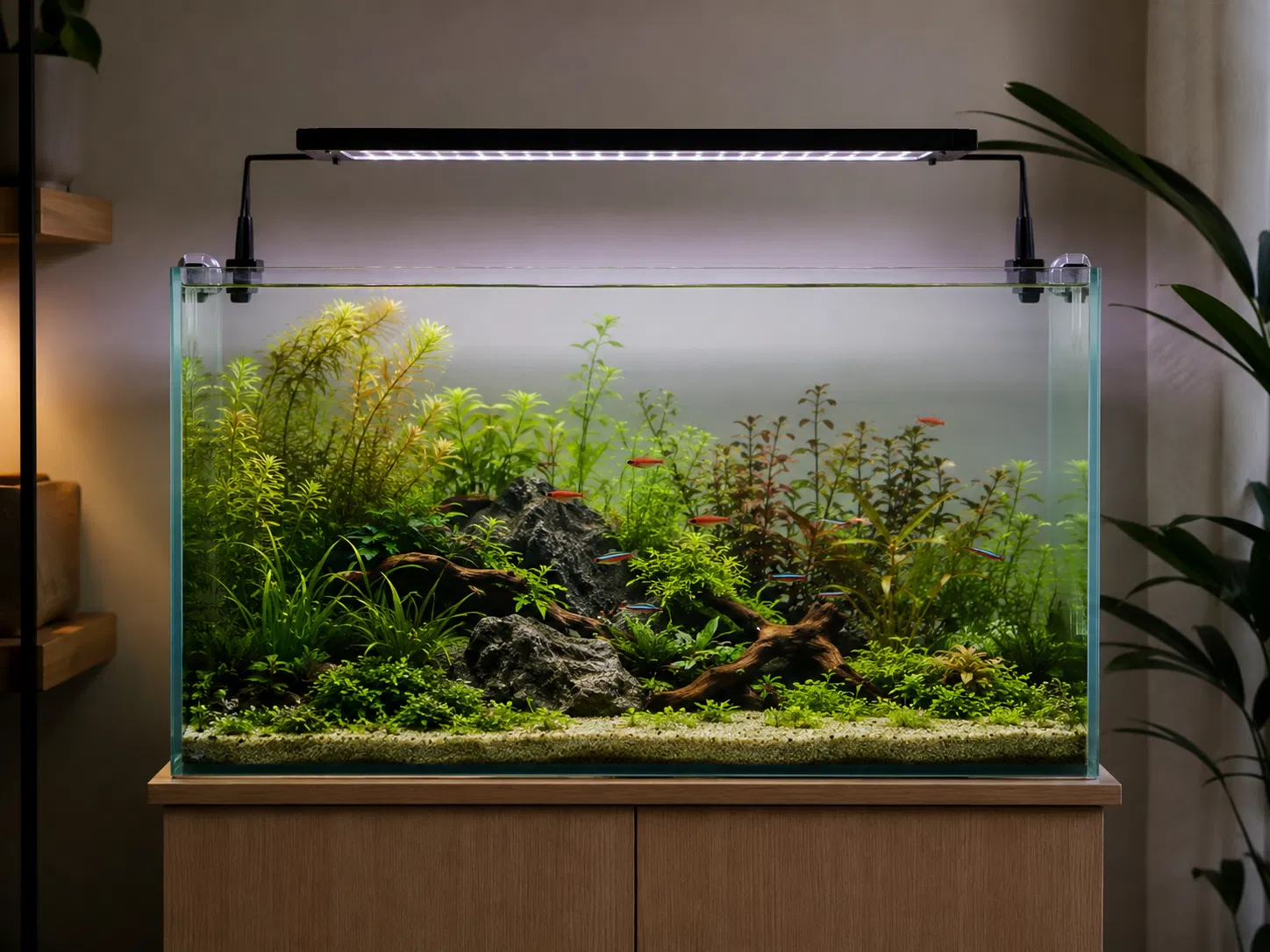
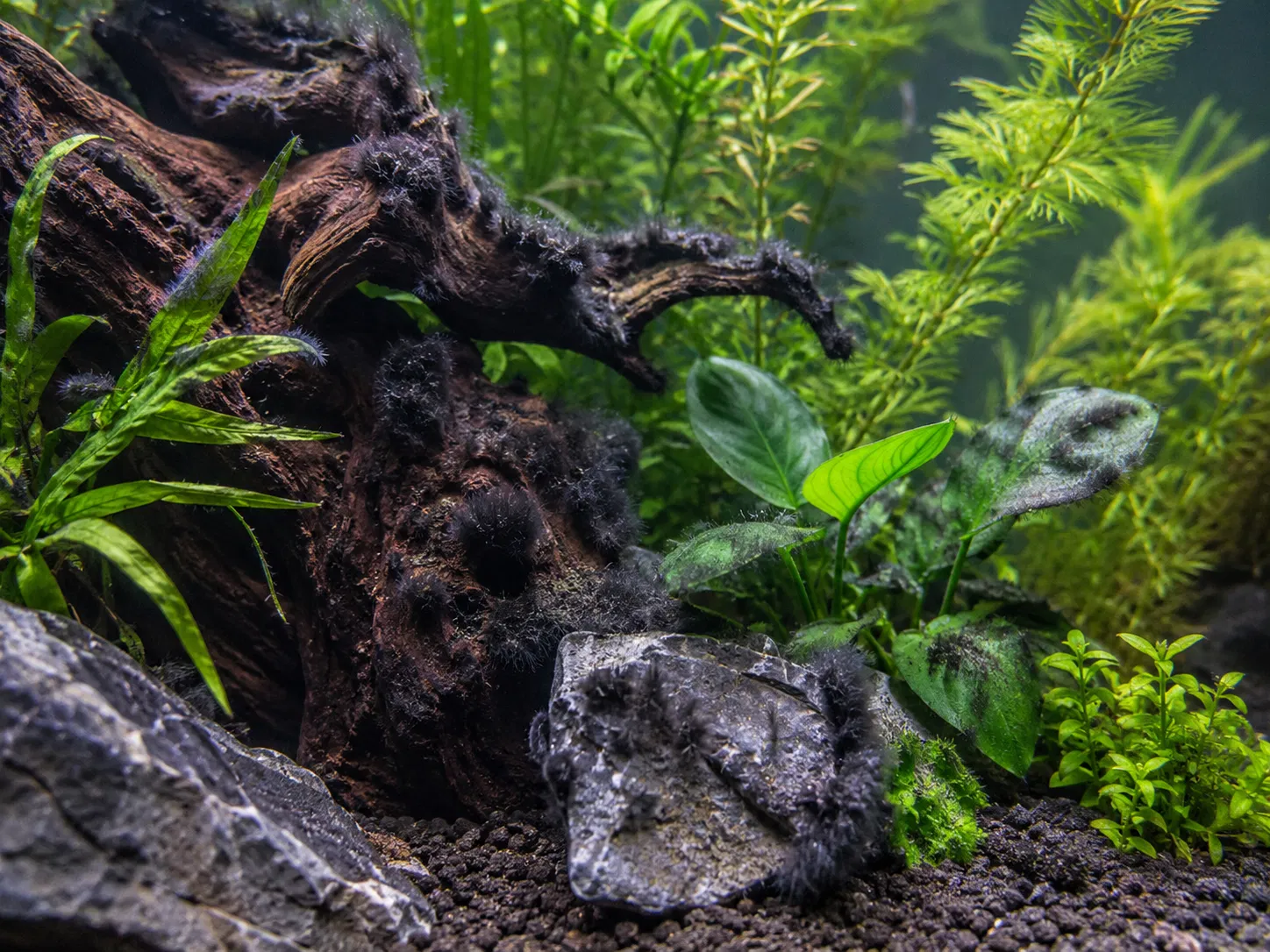
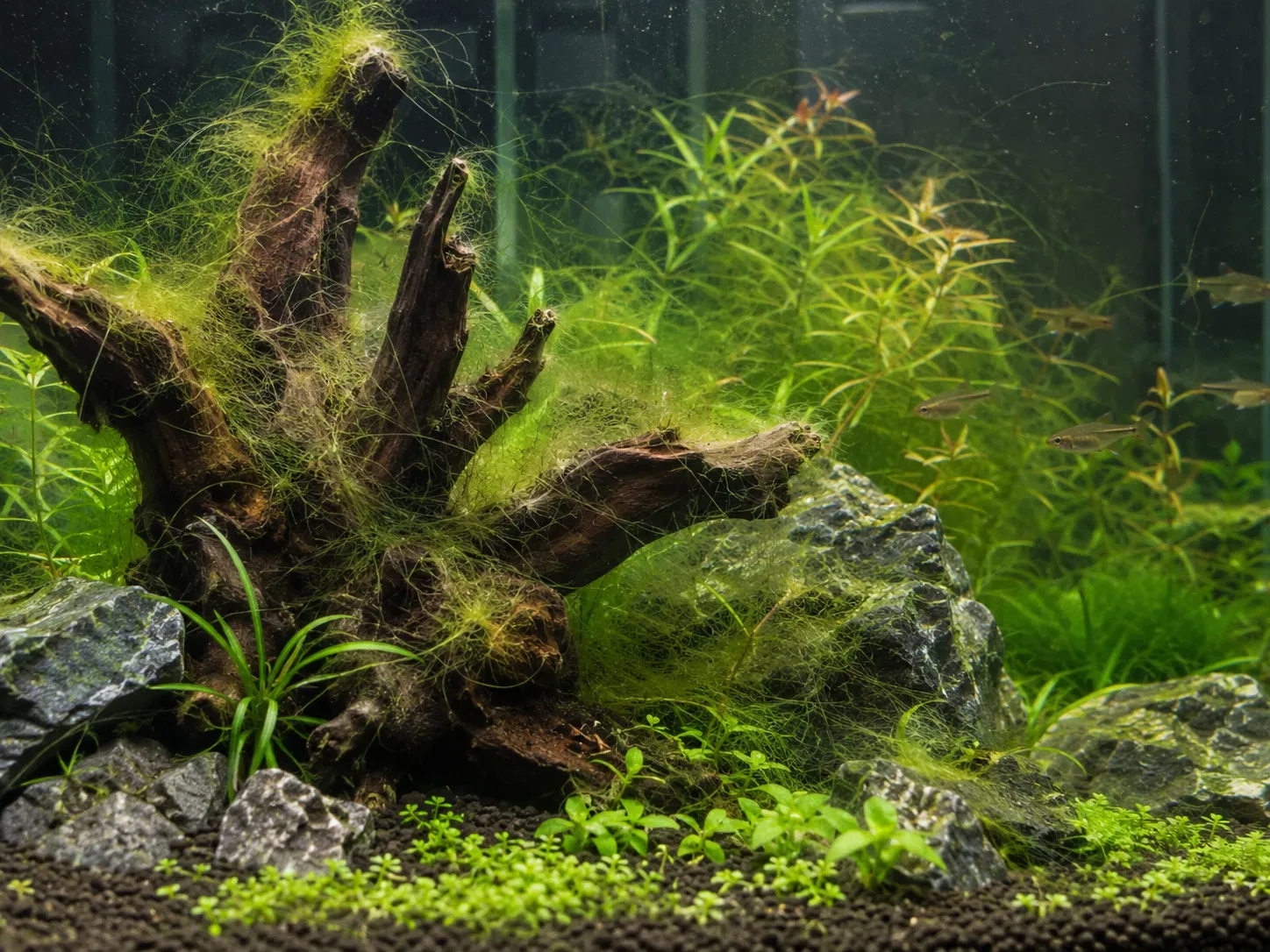
Lighting is one of the fastest ways for a beginner aquarium to become either stable or frustrating. The same fixture that makes plants look vivid can also extend the algae window, disturb fish sleep, and make water-test colors harder to read if it is used without a schedule.
Use this page as a lighting control guide, not a brightness contest. For most homepage beginners, the safer path is a dimmable light, a predictable photoperiod, and gentle transitions that support plants without turning the tank into an algae farm.
Equipment in real aquarium setups
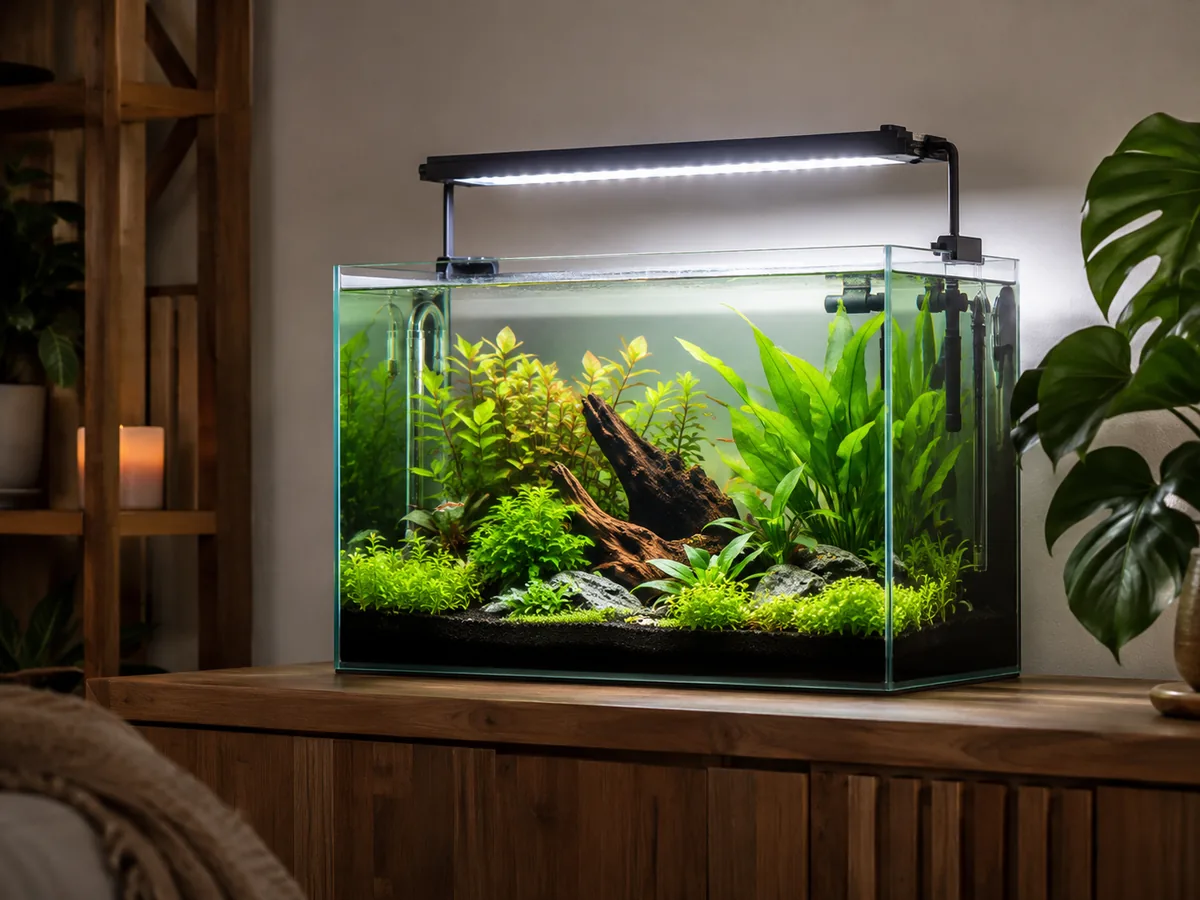
Light Is a System, Not a Bulb
Aquarium lighting affects fish behavior, plant metabolism, algae growth, and how accurately you see the tank. A beginner light should not be judged only by watts or brightness. It should be judged by how well it lets you control intensity, duration, and transitions. Stable lighting is easier on fish and easier to troubleshoot than a powerful fixture used unpredictably.
The Beginner Trap: Fixing Plants With More Light
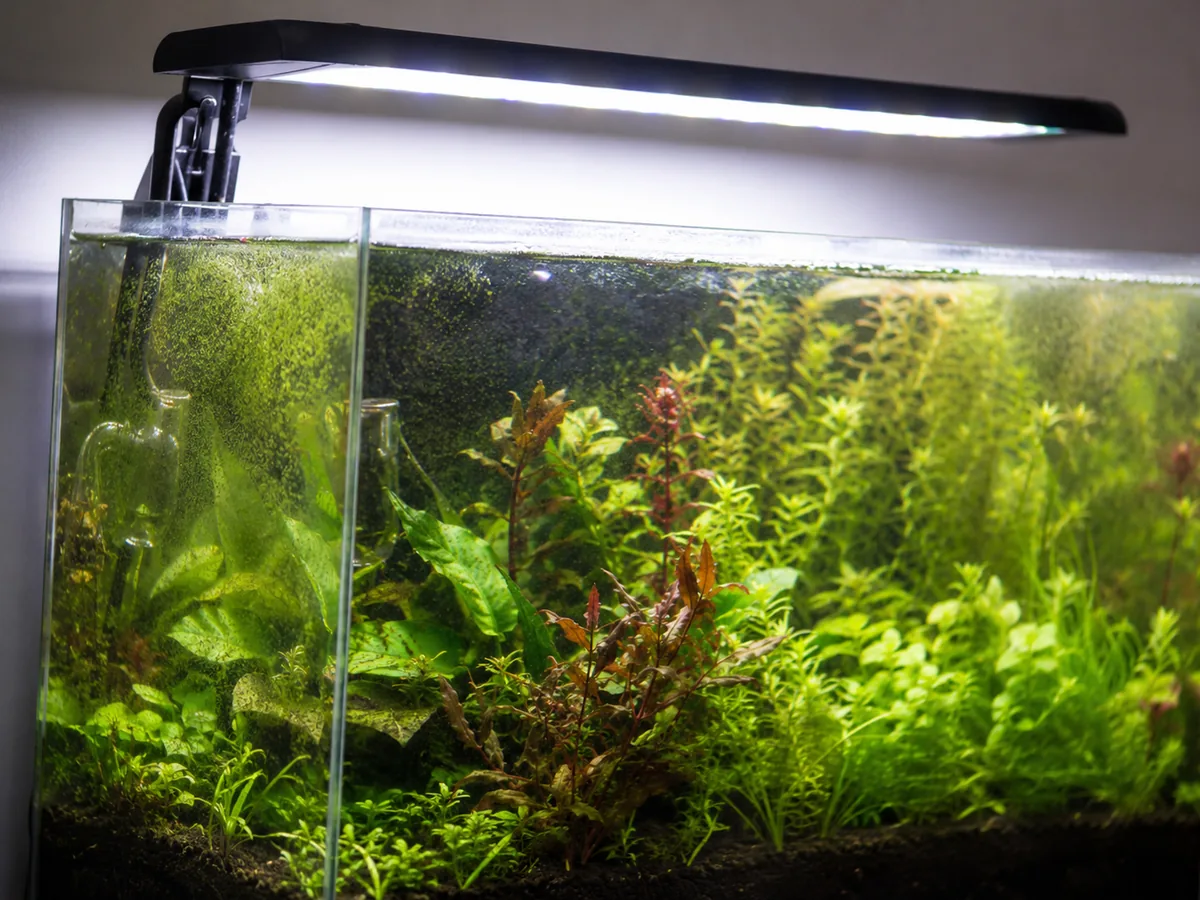
Weak plant growth is often blamed on weak light, but light is only one part of the closed system. If plant mass is low, nutrients are inconsistent, flow is poor, or CO2 is limited, stronger light can simply feed algae faster than plants can use it. For low-tech tanks, a moderate output and a consistent schedule usually beats aggressive brightness.
Beginner Lighting Control Kit
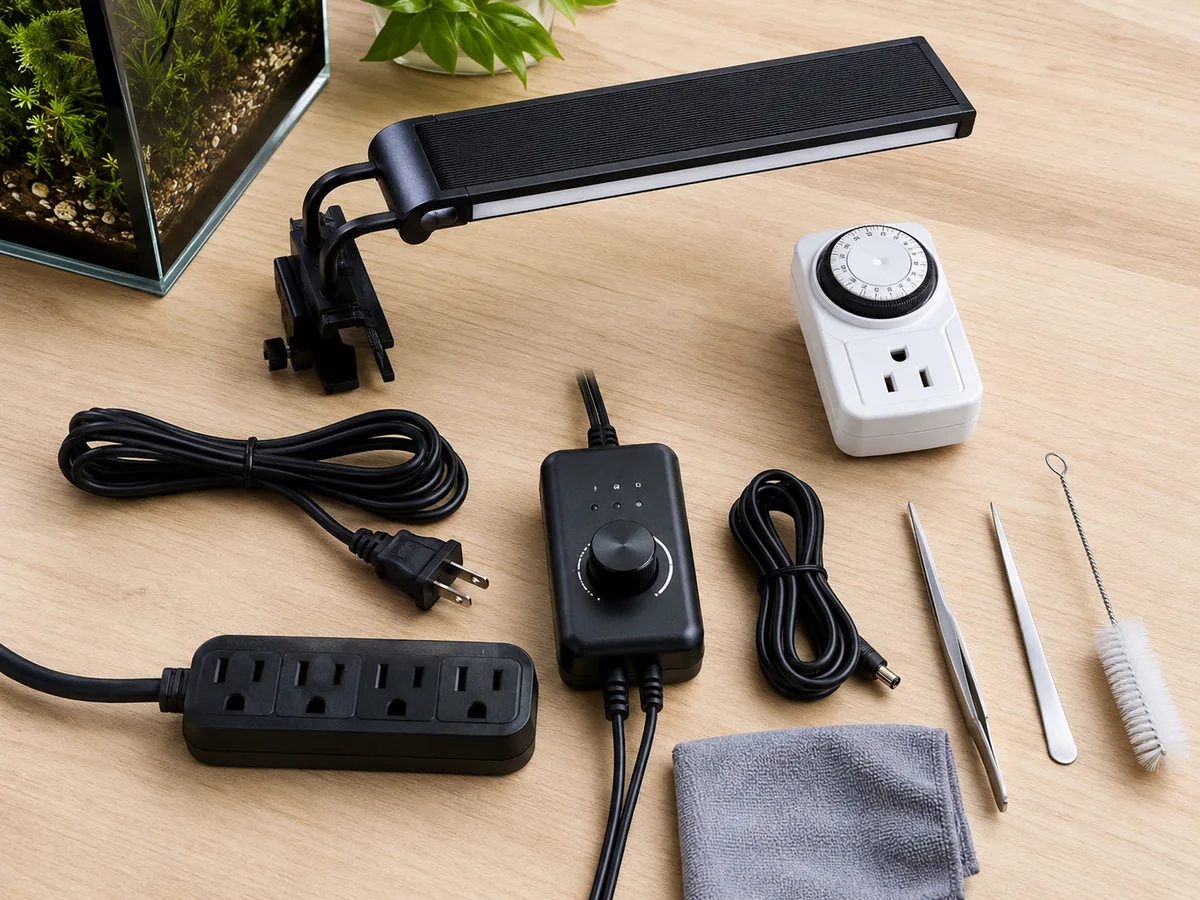
A practical starter setup for this topic should include:
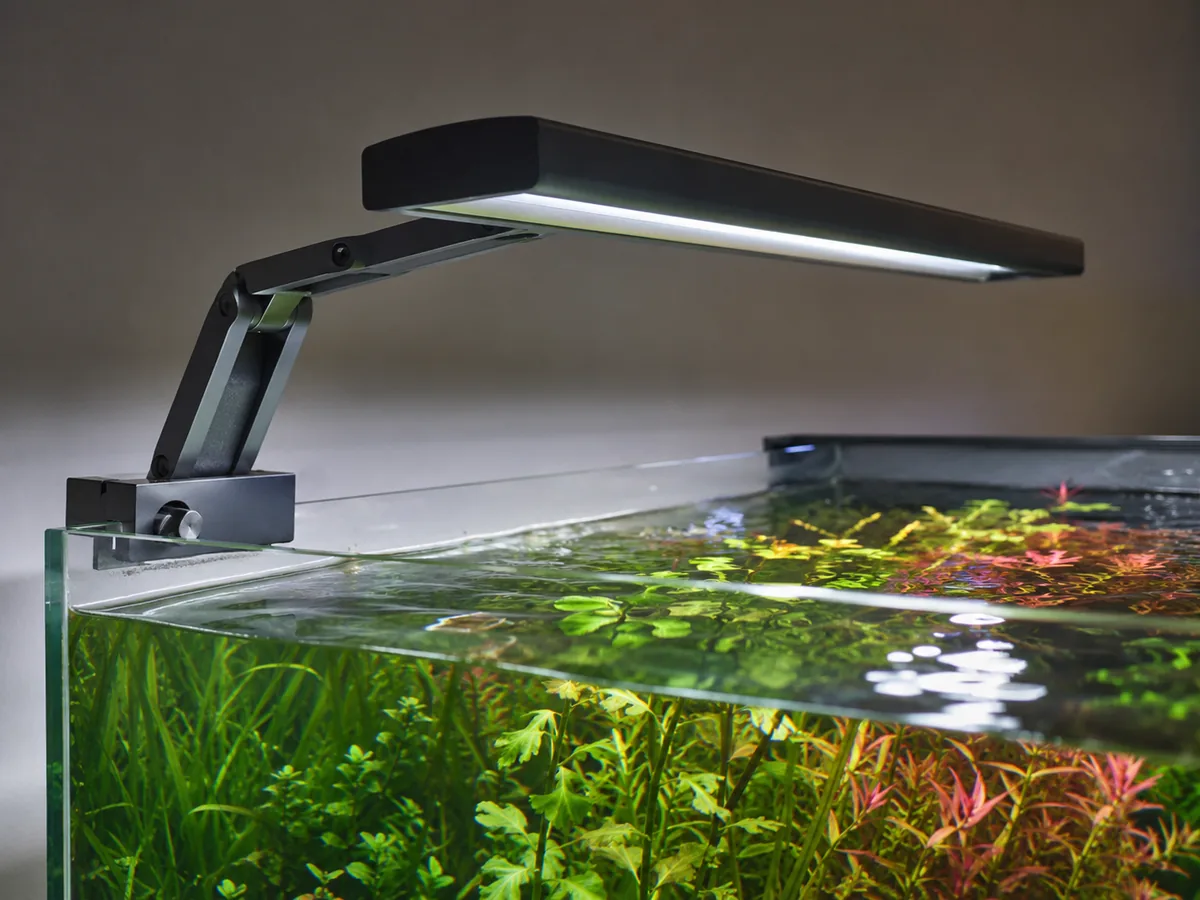
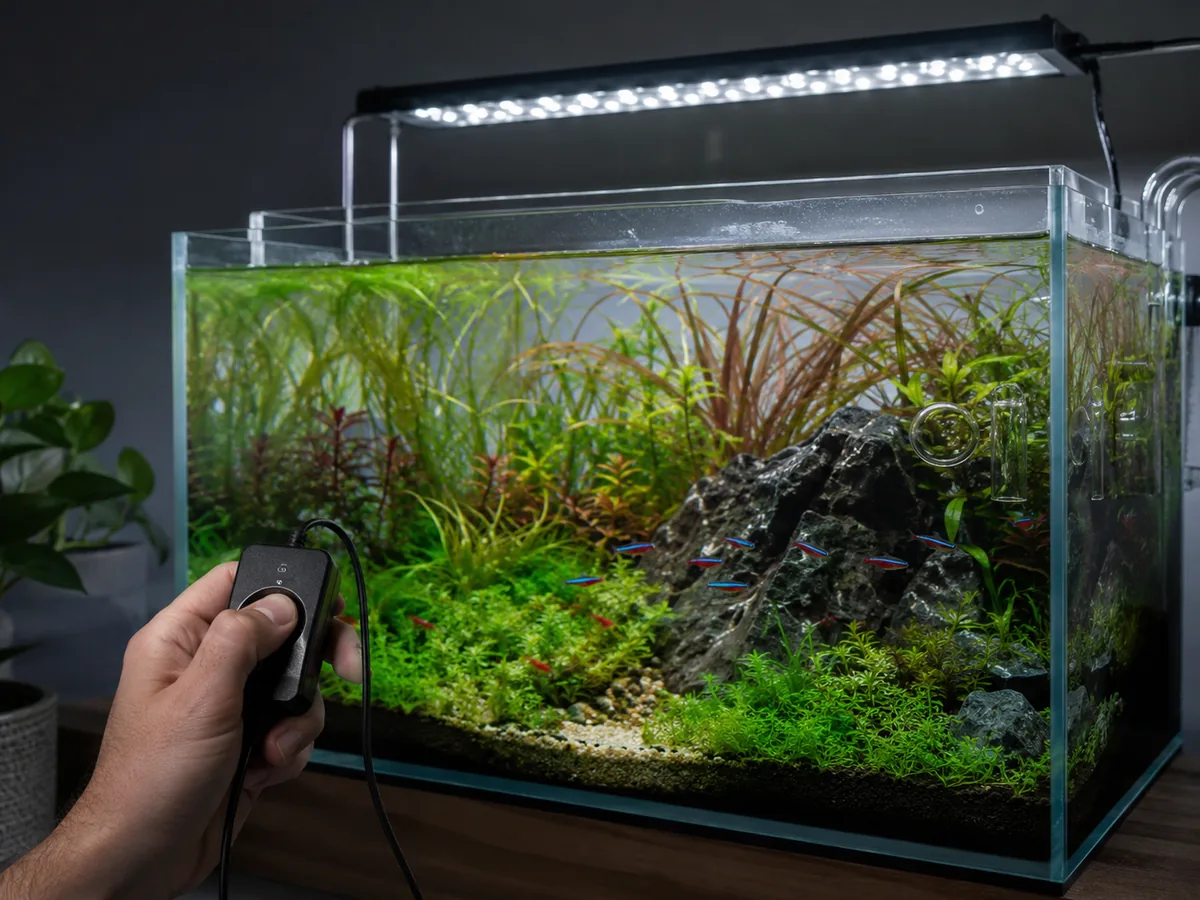
• adjustable LED aquarium light with dimming
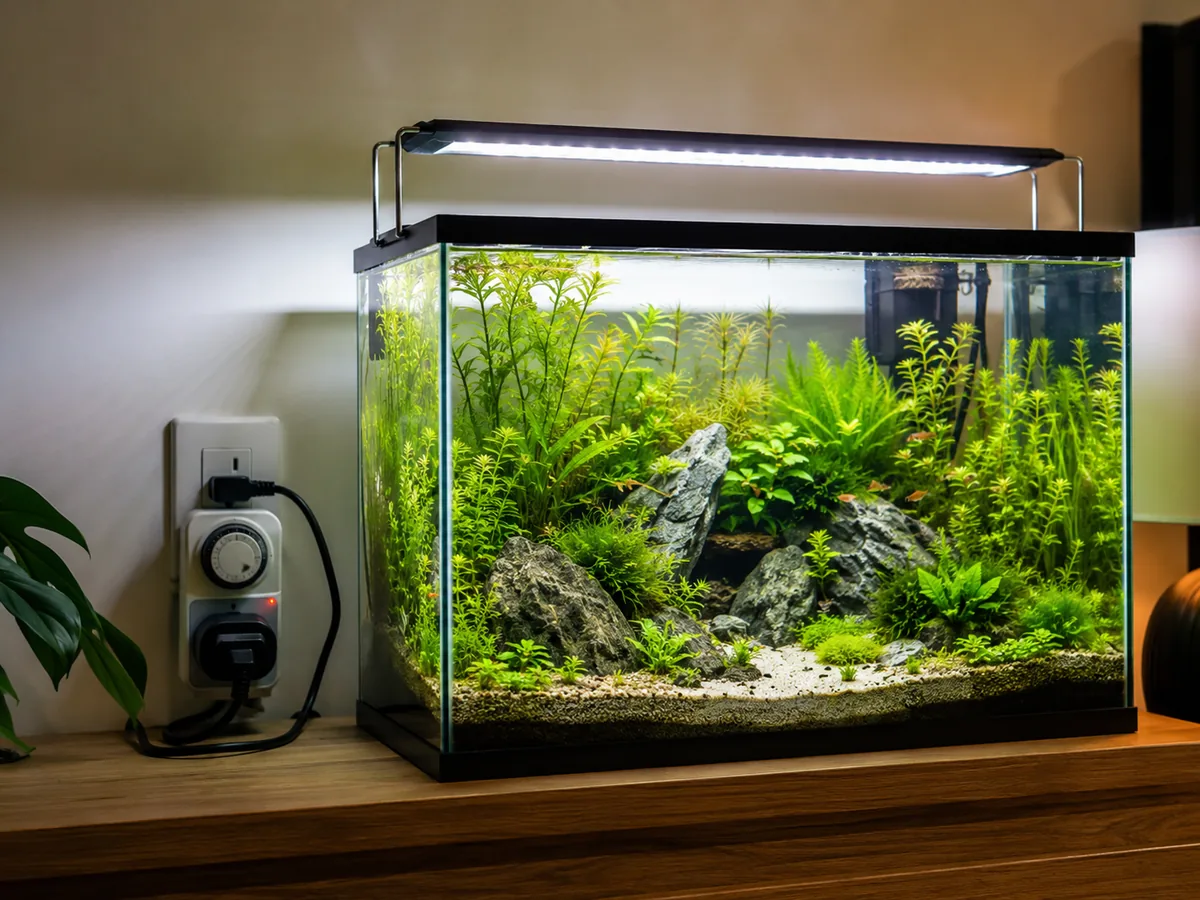
• digital timer or smart plug
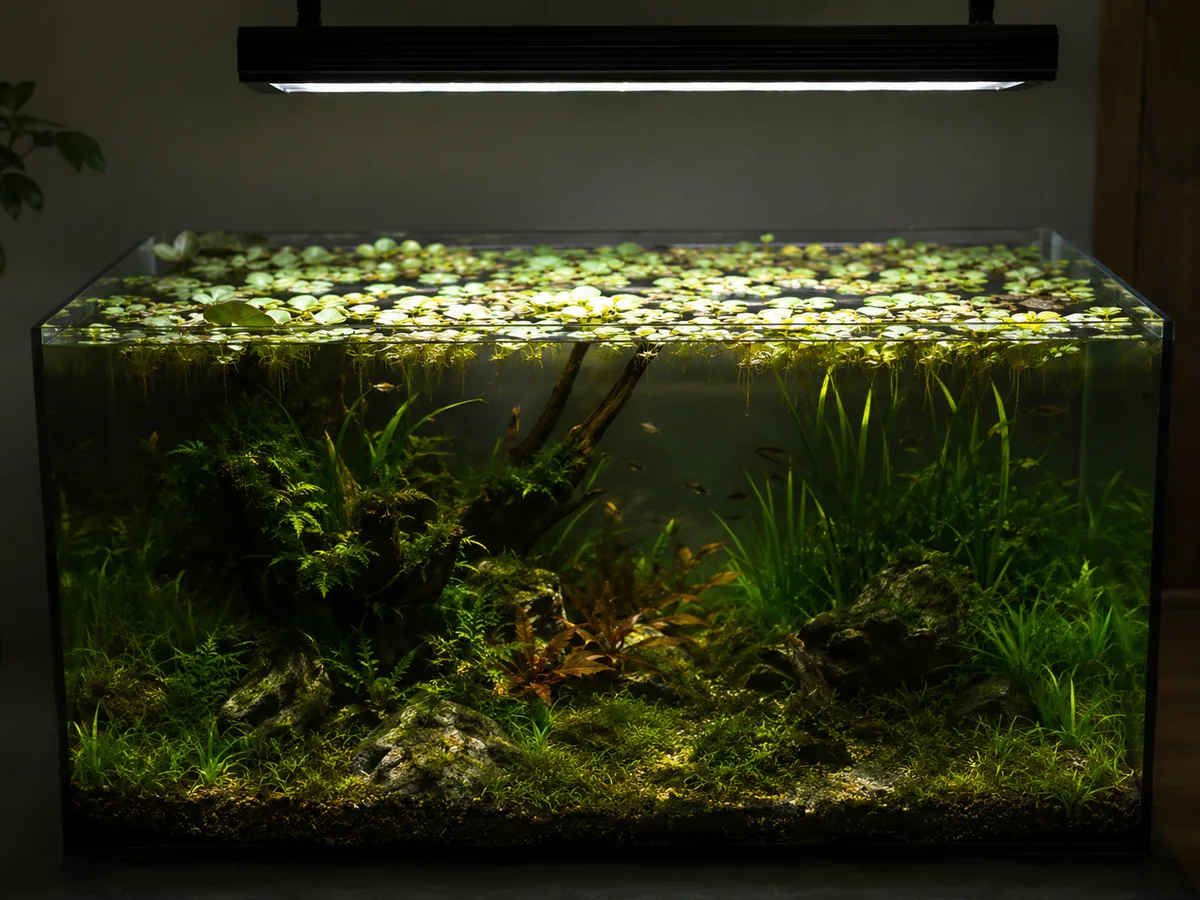
• floating plant cover for shade control
• algae scraper or soft glass pad
• liquid test kit read under neutral room light
Use this as a safety checklist, not a shopping command. Buy only what solves the actual tank problem you can observe or test.
Avoid abrupt LED startle and light shock
Strong LED changes should be treated like an ecosystem intervention, not just a visual setting. Fish do not have eyelids, and many species react badly when a dark room suddenly becomes a bright tank. When possible, use a 15–30 minute ramp-up and dim-down schedule. If your timer is only on/off, turn on the room light about 10 minutes before the aquarium light so the change is less abrupt.
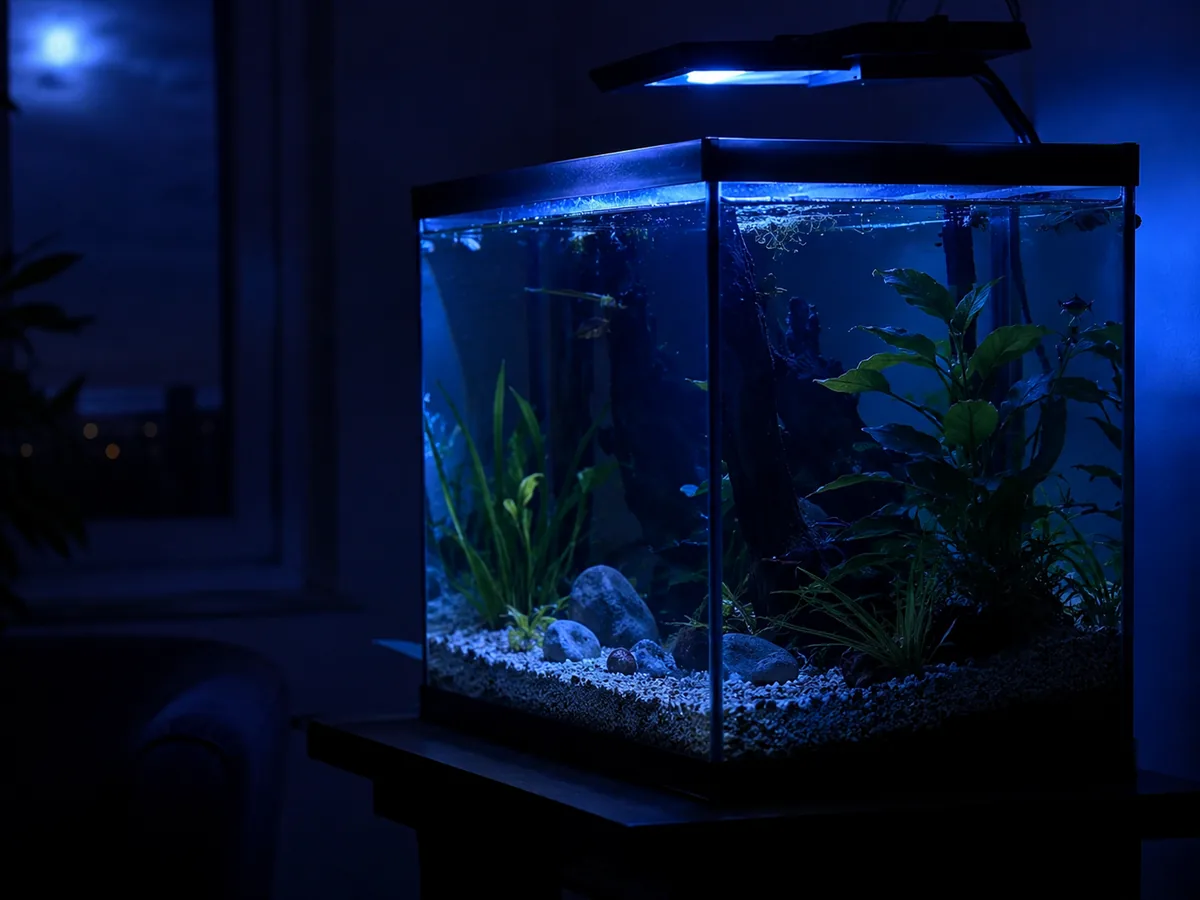
Do not leave blue moonlight on all night. Fish still need a dark rest period, and overnight light can support nuisance algae or keep shy fish from settling into normal behavior.
Related Guides
- /best-products/best-aquarium-lights/
- /best-products/best-aquarium-light-for-plants/
- /guides/planted-tank-light-schedule/
- /tank-problems/hair-algae/
- /tank-problems/black-beard-algae/
- /guides/low-light-aquarium-plants/
FAQ
How many hours should an aquarium light run?
Most beginner freshwater tanks do better with a controlled photoperiod of about 6 to 8 hours, then adjust based on plant growth and algae response. More hours rarely fixes weak plants if nutrients, CO2, or plant mass are out of balance.
Should I leave blue moonlight on overnight?
No. Blue moonlight still counts as light to fish and algae. Use it briefly for viewing if you want, then give fish a true dark period so their sleep cycle is not disrupted.
Is a brighter light always better for plants?
No. Low-light plants such as Anubias, Java fern, and many Cryptocoryne species can be stressed by excessive intensity. A dimmable light is safer than a fixed high-output light for beginners.
Can changing light suddenly cause algae?
Yes. Jumping from dim light to strong light can outpace plant adaptation and give algae more usable energy. Ramp intensity gradually over 1 to 2 weeks after a lighting upgrade.
Do I need a plant light for a fish-only tank?
Not usually. Fish-only tanks need a comfortable day/night rhythm more than plant-level output. A moderate viewing light on a timer is enough for many fish-only setups.
Should I use a timer or switch the light manually?
Use a timer. Manual switching often creates inconsistent days, long accidental photoperiods, and algae-friendly instability.
Can floating plants help with too much light?
Yes. Floating plants can diffuse harsh light and create shade, but they must be thinned so they do not block gas exchange or starve submerged plants of all light.
Can aquarium light affect water test readings?
Colored RGB lighting can distort colorimetric liquid test results. Read test tubes under neutral room light or indirect daylight, not under blue-heavy aquarium LEDs.
What is the safest first lighting upgrade?
Choose an adjustable light with dimming and a reliable timer before choosing the highest-output fixture. Control is more important than raw brightness.
When should I reduce light?
Reduce light if algae appears on slow plant leaves, fish are startled by abrupt switching, or new plants melt after a sudden intensity increase.
Author Box
Written by the HealthyAquariums editorial team for beginner freshwater aquarists who want practical, stability-first advice instead of generic product lists.
Editorial Note
This page is part of the this practical equipment guidance. The recommendations prioritize water stability, fish behavior, biofilter safety, and beginner-operable maintenance. Product mentions should be treated as category suggestions, not fixed brand endorsements.
References
- https://apifishcare.com/post/green-water-cloudy-water-what-should-i-do-aquarium
- https://extension.psu.edu/water-quality-concerns-for-ponds
- https://www.merckvetmanual.com/exotic-and-laboratory-animals/aquarium-fish/environmental-diseases-of-fish