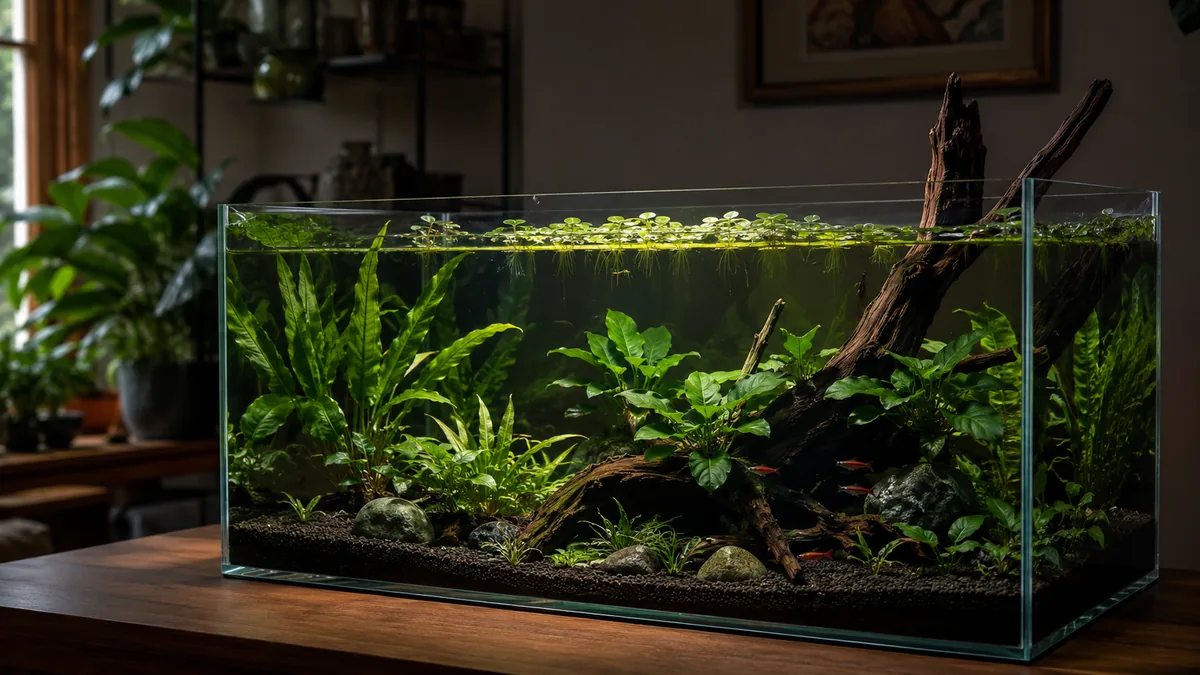
Low light plants are often misunderstood. Beginners hear “low light” and imagine plants that barely need light at all. Then the tank gets a weak lamp, a long schedule, and a layer of algae because the plants are surviving slowly while algae uses the extra hours.
Low light does not mean no light. It means the plant can grow under modest intensity if the rest of the tank stays stable.
Quick answer
Good low light aquarium plants include Anubias, Java fern, Java moss, crypts, hornwort, water sprite, and some floating plants. Use a consistent 6–8 hour photoperiod, avoid intense direct sunlight, and do not compensate for weak light by leaving the aquarium light on all day.
Low light tanks are usually more stable when they are patient. Growth is slower, trimming is easier, and CO2 demand is lower.
What low light actually means
Low light describes plant tolerance, not a promise of fast growth. A low light plant can photosynthesize under modest intensity, but it still needs a day-night cycle, nutrients, clean leaves, and reasonable water conditions.
Slow growth has a tradeoff. It means less trimming, but it also means slow plants may not outcompete algae quickly. That is why long photoperiods can backfire.
Best low light plants
Anubias
Anubias is excellent for shaded areas. Attach it to wood or rock and keep the rhizome above substrate. It grows slowly, so avoid blasting it with strong light.
Java fern
Java fern handles low to moderate light and works well in betta tanks, community tanks, and hardscape layouts. Attach it rather than burying the rhizome.
Java moss
Java moss can grow in lower light, but it traps debris. Keep it from becoming a thick dirty mat, especially in low-flow tanks.
Cryptocoryne
Crypts are strong low-tech plants after they settle. Expect possible melt when moved. Remove dead leaves and wait for new submerged growth.
Hornwort
Hornwort can float and grow quickly compared with many low light plants. It can shed when conditions change, so remove loose needles.
Water sprite
Water sprite is useful because it can float or root. It gives shade and nutrient uptake, but it needs trimming.
Floating plants
Floating plants can work very well, especially for bettas. They reduce light intensity below them and help absorb nutrients. Keep the surface from becoming completely covered.
Low light plant setup
Use a normal aquarium LED at modest intensity rather than a barely visible lamp. If the light is adjustable, start around 40–60% intensity depending on tank depth and plant response.
Run the light around 6 hours at first. Increase slowly if plants are healthy and algae is controlled. Do not use 12 hours of weak light as a substitute for appropriate intensity.
Fish comfort and lighting
Low light layouts often suit shy fish because plants and shade create security. But fish still need a clear day-night rhythm. Avoid blue moonlight all night. Darkness matters.
If the tank sits in a dark room, avoid sudden full LED brightness. Use ramp-up/dim-down for 15–30 minutes if available. With a basic timer, turn on room lighting first.
Algae in low light tanks
Algae can still grow in low light tanks. The cause is often long duration, window sunlight, overfeeding, low plant mass, or unstable nutrients.
If algae appears, do not immediately add chemicals. Reduce photoperiod, remove visible algae, check nitrate, review feeding, and improve plant health. Avoid deep-stirring substrate while trying to “clean everything.” Stability beats sudden aggressive cleaning.
Do low light plants need fertilizer?
Sometimes. Fish waste may provide some nutrients, but not all tanks have enough potassium, iron, or trace minerals for long-term plant health. Use fertilizer lightly and observe.
Root-feeding plants such as crypts and swords may benefit from root tabs. Rhizome plants mostly feed from the water column.
Low-light plant melt is still biological waste
Low-light plants are slow and forgiving, but their dying leaves are not harmless. When Cryptocoryne, Anubias, Java fern, or store-grown plants adjust to new water, older leaves can soften, yellow, or collapse. In a small tank, that material becomes dissolved organic waste before it becomes invisible.
The usual visual clue is cloudy water or a thin surface film. The more important risk is that heterotrophic bacteria consume oxygen while breaking down the plant tissue. If the tank also has low circulation, warm water, or a new biofilter, fish may breathe harder even though the aquascape simply looks like it is "settling in."
Trim weak leaves before planting. For the first 10-14 days, remove melting pieces with tweezers or a light siphon instead of stirring the substrate or cleaning the filter aggressively. Keep the tank stable, test ammonia and nitrite if animals are already inside, and use fine filter floss temporarily if plant debris is making the water hazy.
Low light and CO2
Most low light plants do not require pressurized CO2. That is one reason they are beginner-friendly. However, all plants use carbon. In low-tech tanks, keep light moderate so plant demand does not exceed available carbon.
In CO2 planted tanks, avoid strong air-stone use during the CO2/light period unless fish are in distress because surface agitation can drive off CO2.
Useful tools for low-light planted tanks
A practical low light plant kit includes an adjustable LED, timer, rhizome-safe glue or thread, aquascaping tweezers, trimming scissors, root tabs for crypts or swords, light liquid fertilizer, algae scraper, nitrate test kit, and fine mechanical media for removing early melt debris.
Choose products that support stability, maintenance access, and fish safety before considering convenience or appearance. Avoid hard-selling yourself extra gear; the right purchase should solve a real tank problem without creating sudden changes in flow, temperature, oxygen, or water chemistry.
What to avoid
Avoid burying Anubias and Java fern rhizomes. Avoid all-day lighting. Avoid direct window sunlight. Avoid buying demanding carpeting plants for a low light tank. Avoid assuming plant melt means the plant is dead. Avoid using plant fertilizer to compensate for poor lighting discipline.
FAQ
What are the best low light aquarium plants?
Anubias, Java fern, Java moss, crypts, water sprite, hornwort, and floating plants are good choices.
Do low light plants need a light?
Yes. Low light plants need less intensity, not darkness. They still need a consistent photoperiod.
How long should lights be on for low light plants?
Start around 6 hours per day. Increase slowly only if plants need more and algae is controlled.
Can low light plants grow without CO2?
Yes, most can grow without pressurized CO2 if lighting and nutrients are balanced.
Why are my low light plants melting?
They may be adapting to new conditions, planted incorrectly, shaded too heavily, or affected by unstable water. Remove dead leaves and wait for new growth.
Can low light plants stop algae?
They can help, but slow plants do not always outcompete algae quickly. Control light duration, feeding, and nutrients.
Is blue light good for low light plants?
Do not rely on blue night lighting. Plants need a proper daytime spectrum and fish need darkness at night.
Are floating plants good for low light tanks?
Yes, but they can shade plants below. Thin them regularly.
Do I need root tabs?
Root tabs help root-feeding plants such as crypts and swords. They are not as important for Anubias or Java fern.
Can I keep carpet plants in low light?
Most carpeting plants struggle without stronger light and often CO2. Choose easier foreground plants or moss instead.
Related Guides
- Best Aquarium Plants for Beginners:
/guides/best-aquarium-plants-for-beginners/ - Best Aquarium Light for Plants:
/best-products/best-aquarium-light-for-plants/ - Green Aquarium Water:
/tank-problems/green-aquarium-water/ - Aquarium Maintenance Schedule:
/guides/aquarium-maintenance-schedule/ - 10 Gallon Fish Tank Setup:
/aquarium-setup/10-gallon-fish-tank-setup/
Author Box
Written by the Healthy Aquariums editorial team. This guide focuses on realistic low-tech planted tanks where plant choice, light duration, and fish comfort matter more than chasing high-output equipment.
Editorial Note
Low light plant advice often creates algae by recommending long lighting hours. This guide separates intensity from duration and treats lighting as part of the tank’s biological balance.
References
- Low-tech planted aquarium principles from freshwater planted tank husbandry.
- Aquarium algae management principles involving light duration and nutrient availability.
- Practical plant placement guidance for rhizome, floating, and root-feeding plants.