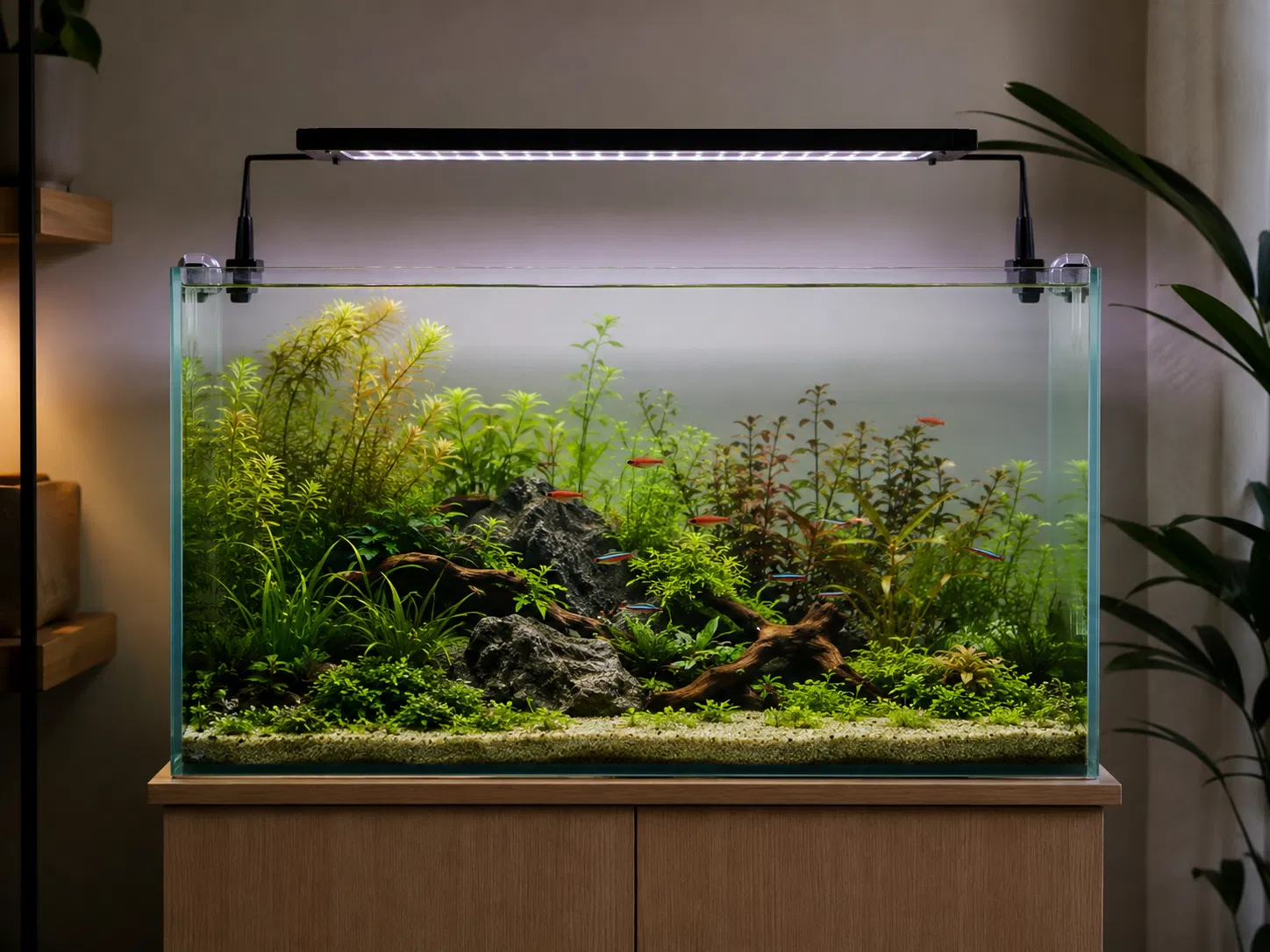
A planted tank light schedule sounds simple: turn the light on, turn it off, repeat tomorrow. But many algae problems begin with a light schedule that is too long, too intense, too abrupt, or too disconnected from the actual plant mass in the aquarium.
Plants need light, but fish need rhythm. Algae uses excess opportunity. A good schedule is not about copying the longest photoperiod someone posted online. It is about matching light to plants, nutrients, CO2 availability, and the maturity of the tank.
Start shorter than you think
For most beginner low-tech planted tanks, start with 6 hours of light per day. If plants grow cleanly and algae stays controlled after two to three weeks, you can increase toward 7 hours. Many beginner tanks do not need 10 to 12 hours.
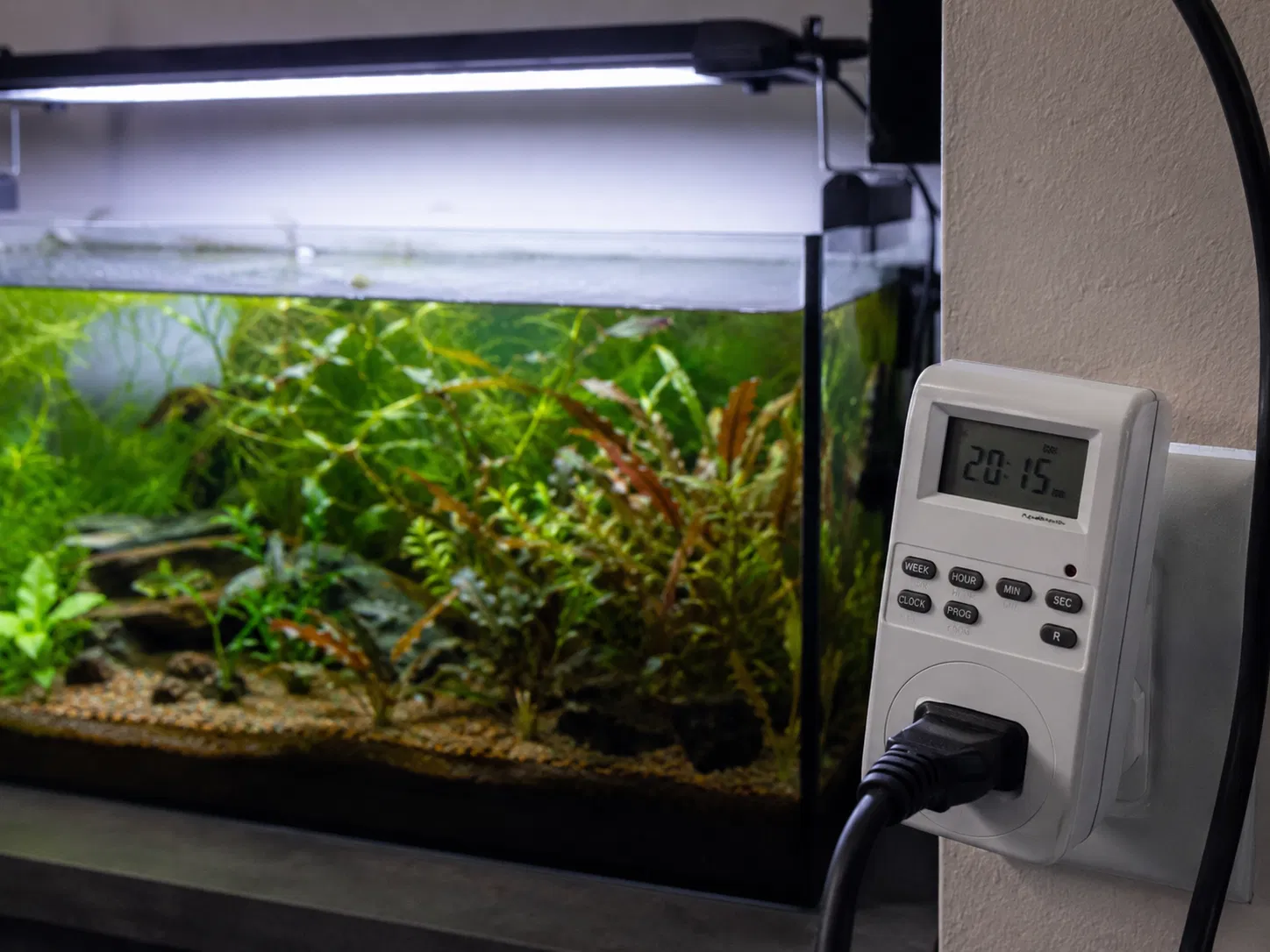
A long schedule over slow plants often creates algae before it creates lush growth. Anubias, Java fern, crypts, and floating plants can do well under moderate schedules. They do not need a stadium light over the tank all day.
Intensity matters as much as hours
Six hours at very high intensity can still be too much. Eight hours at moderate intensity may work in a mature, heavily planted tank. That is why dimmable lights are useful. They let you reduce intensity without forcing the tank into an awkward on/off routine.
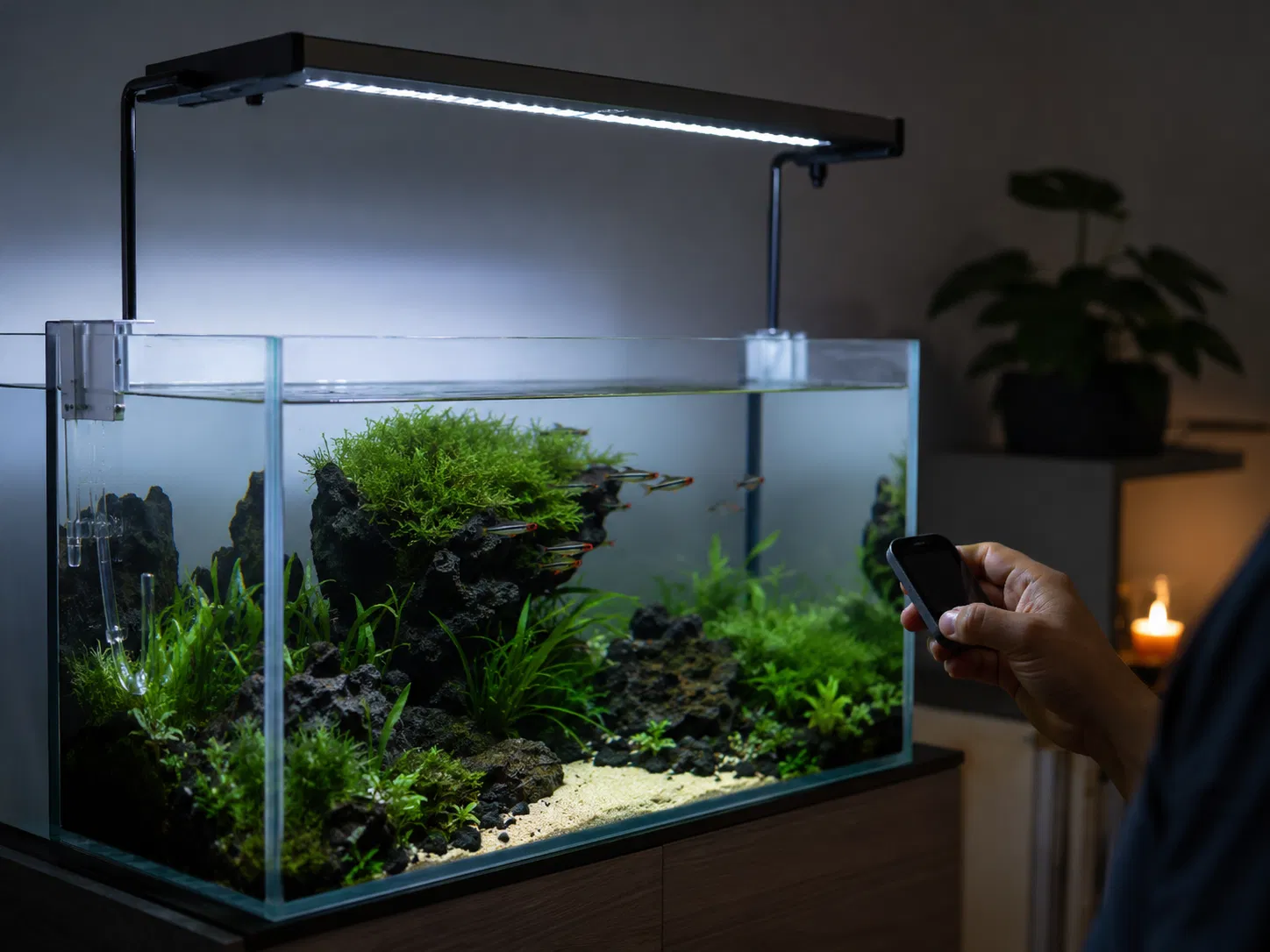
If you cannot dim the fixture, use height, floating plants, or a shorter schedule to reduce pressure. Surface floaters can act like a natural diffuser, but do not let them cover the entire surface and block gas exchange.
Ramp-up and dim-down protect fish
Fish do not have eyelids. A dark room followed by instant full LED brightness is stressful, especially in small tanks where fish cannot retreat far. Use a ramp-up and dim-down period of 15 to 30 minutes if your light supports it.
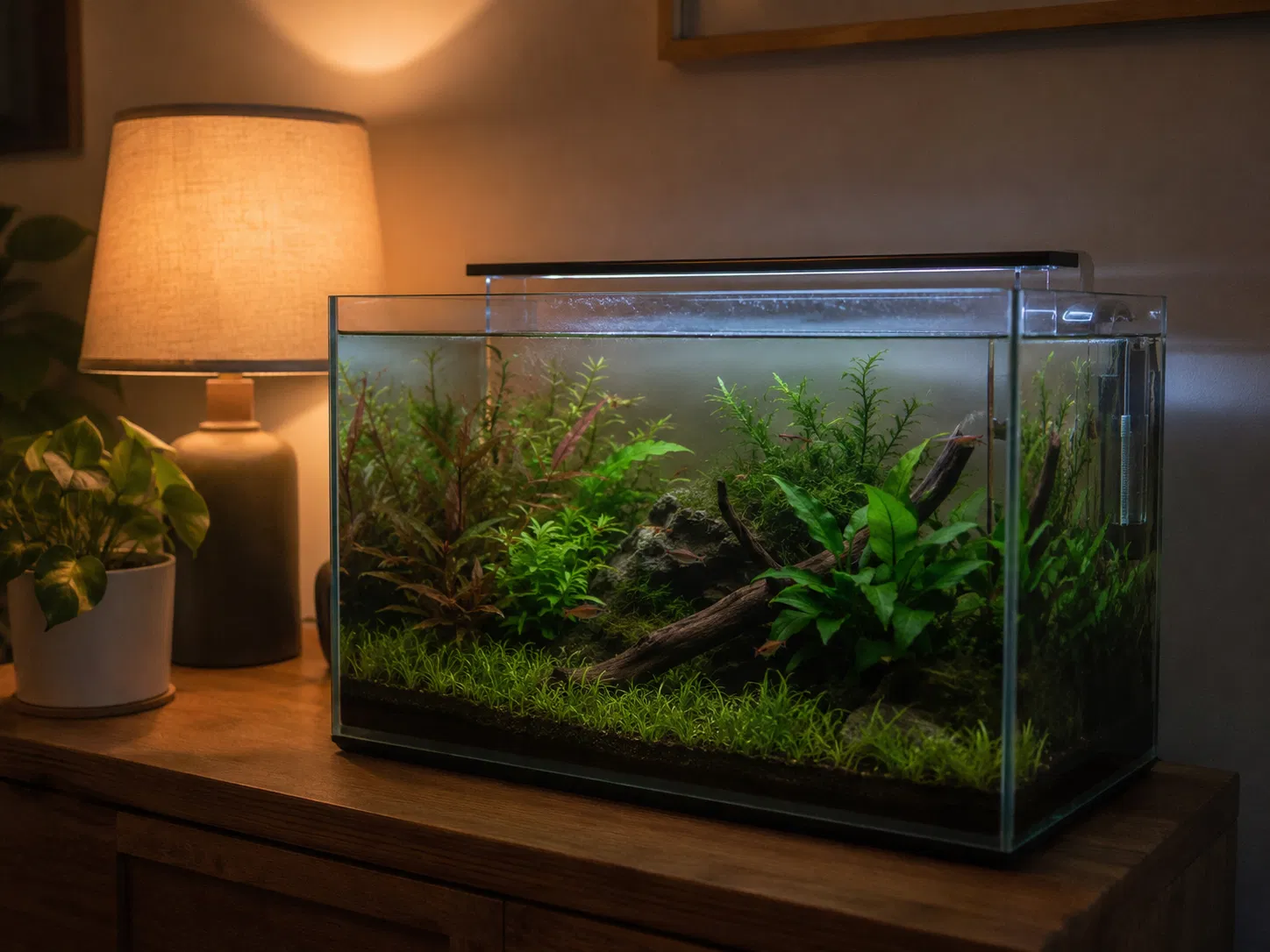
If you use a basic mechanical timer with no ramping, turn on the room light 10 minutes before the aquarium light. At night, turn the room light on briefly before the tank light shuts off if the transition is otherwise abrupt.
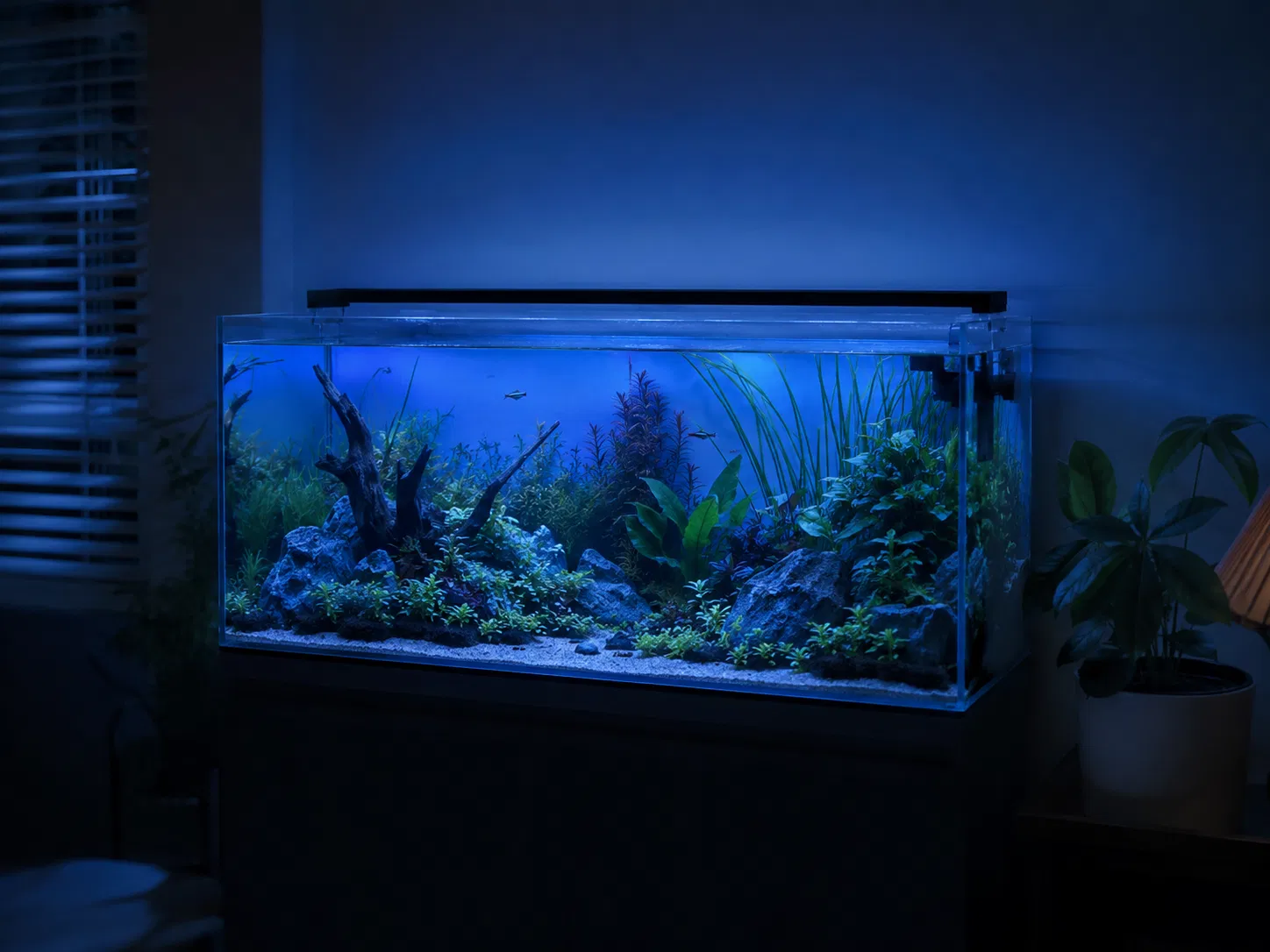
Blue moonlight is not harmless if it runs all night
Blue moonlight looks attractive, but fish still need a dark period. Leaving blue LEDs on all night can disrupt rest patterns and add extra light energy to the system. Use moonlight briefly for viewing if you want, not as an overnight habit.
CO2 planted tanks need a different rhythm
In tanks with pressurized CO2, lighting should match CO2 availability. Strong light before CO2 has built up can stress plants and feed algae. Strong surface agitation during the CO2 period can drive off CO2. Emergency aeration is different; if fish are gasping, oxygen support comes first.
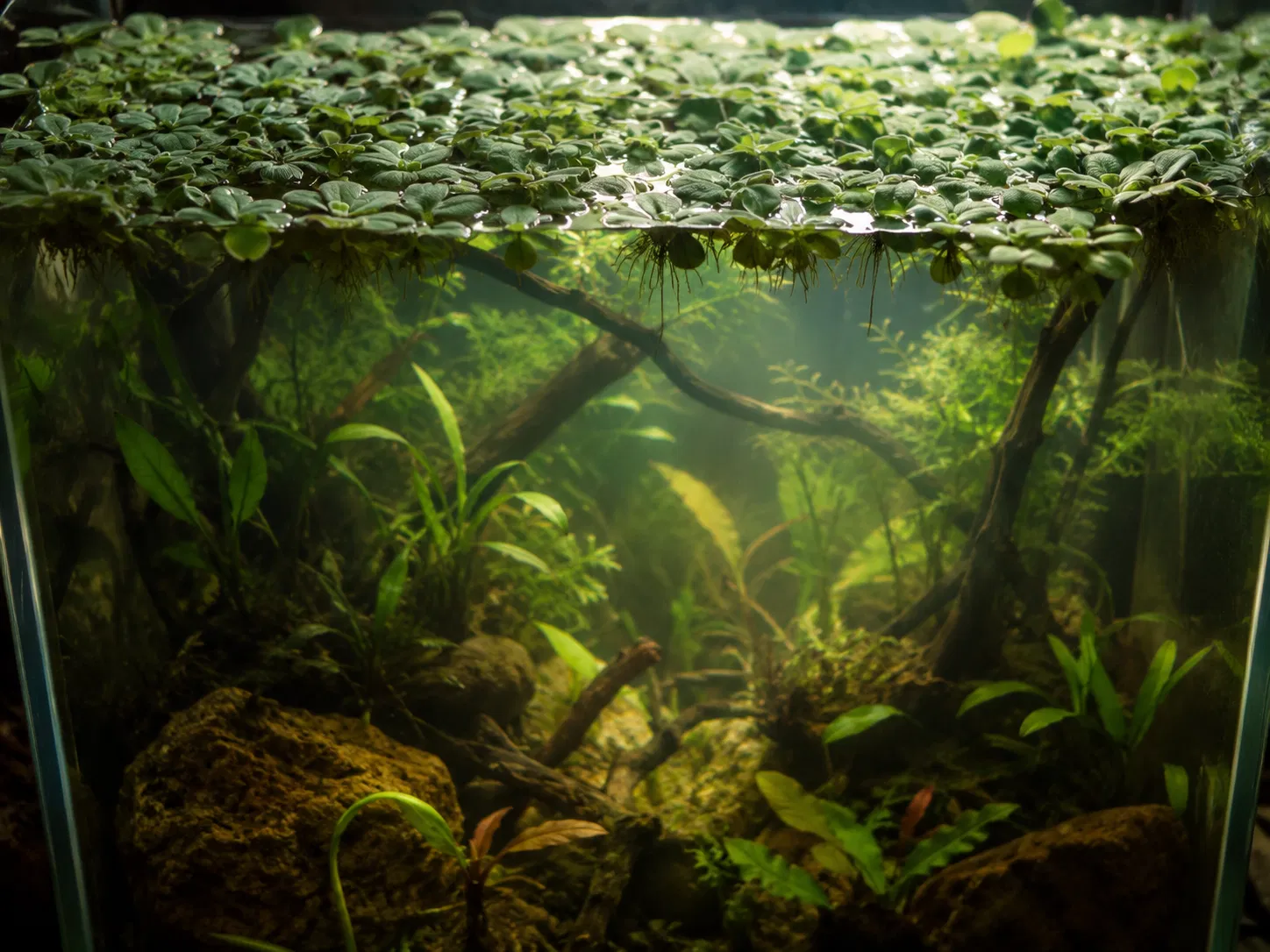
Low-tech tanks are simpler: keep light moderate, avoid sudden changes, and give plants a stable routine.
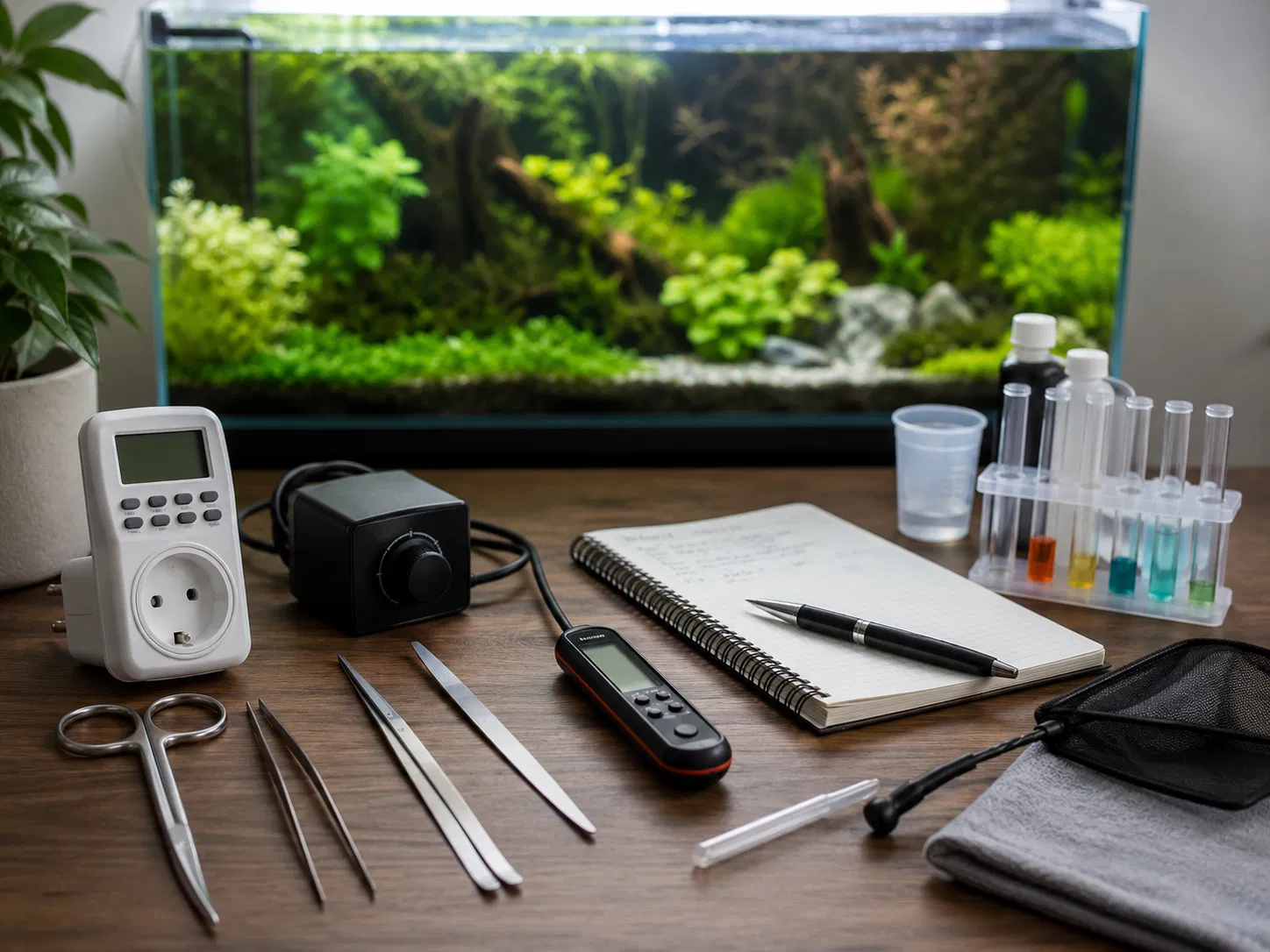
Planted Tank Lighting Control Kit
Useful items include a dimmable LED, digital timer, thermometer, liquid test kit, floating plants for diffusion, and an algae scraper. The goal is not maximum brightness. The goal is a repeatable light rhythm that plants can use without stressing fish or feeding algae.
How to adjust after algae appears
Do not change everything at once. First reduce duration or intensity by 15 to 25 percent. Remove visible algae manually. Clean clogged mechanical media. Remove melting leaves. Keep feeding light. Then watch new plant growth rather than old damaged leaves.
If new growth is clean, the schedule is closer to correct. If new growth is pale or stunted, the tank may need more nutrients, CO2 stability, or plant mass — not necessarily more hours.
FAQ
How many hours should a planted aquarium light be on?
Most beginner low-tech tanks should start around 6 hours per day. Mature, heavily planted tanks may handle 7 to 8 hours, but longer schedules are not automatically better.
Is 10 hours of light too much?
Often yes for beginner tanks. Ten hours can work in some balanced systems, but it frequently causes algae when plant mass, nutrients, and CO2 are not matched.
Should I split the light schedule?
A split schedule can work for viewing, but it is not a magic algae cure. Plants still respond to total light energy and stability.
Do fish need darkness at night?
Yes. Fish need a predictable dark period. Avoid leaving white or blue aquarium lights on all night.
Is blue moonlight safe?
Brief viewing is usually fine, but overnight blue moonlight is not a good default. It can disrupt fish rest and add unnecessary light to the tank.
What is ramp-up lighting?
Ramp-up gradually increases brightness instead of switching from dark to full power instantly. A 15 to 30 minute transition is gentler for fish.
Do low-light plants need a weak light?
They need moderate, stable light. Very weak light can cause poor growth, while intense light can damage slow leaves and invite algae.
Should I change light and fertilizer at the same time?
Avoid changing too many variables at once. Adjust light first, observe new growth, then fine-tune nutrients if plant symptoms remain.
Can floating plants help with strong lights?
Yes, floating plants can diffuse light, but they must be managed so they do not block too much surface exchange or starve plants below.
How soon will algae improve after changing the schedule?
You may see slower new algae within one to two weeks, but old algae still needs manual removal. Judge progress by cleaner new plant growth.
Related Guides
/best-products/best-aquarium-lights/— Choosing controllable lights supports stable schedules./best-products/best-aquarium-light-for-plants/— Plant lights should match plant demand./tank-problems/green-aquarium-water/— Long light schedules can support algae blooms./guides/low-light-aquarium-plants/— Low-light plants still need a stable rhythm./tank-problems/algae-problems/— Use this guide with broader algae diagnosis.
Author Box
Written by the Healthy Aquariums editorial team for everyday freshwater keepers. This guide prioritizes fish health, water stability, and practical maintenance over quick fixes that only make the tank look cleaner for a day.
Editorial Note
This article is written for beginner and intermediate hobbyists. It does not replace veterinary advice for sick fish, and it avoids one-size-fits-all chemical fixes. When algae or plant problems appear, test the water, review recent changes, and correct the underlying imbalance before making aggressive changes.
References
- API Fishcare. Green Water, Cloudy Water: What Should I Do? https://www.apifishcare.com/blog/green-water-cloudy-water-what-should-i-do-aquarium
- API Fishcare. Freshwater Aquarium Water Problem Solving. https://www.apifishcare.com/simple-care-guide/freshwater/water-problem-solving
- Penn State Extension. Preventing Excessive Aquatic Plant and Algae Growth. https://extension.psu.edu/preventing-excessive-aquatic-plant-and-algae-growth
- Penn State Extension. Filamentous Algae. https://extension.psu.edu/filamentous-algae/