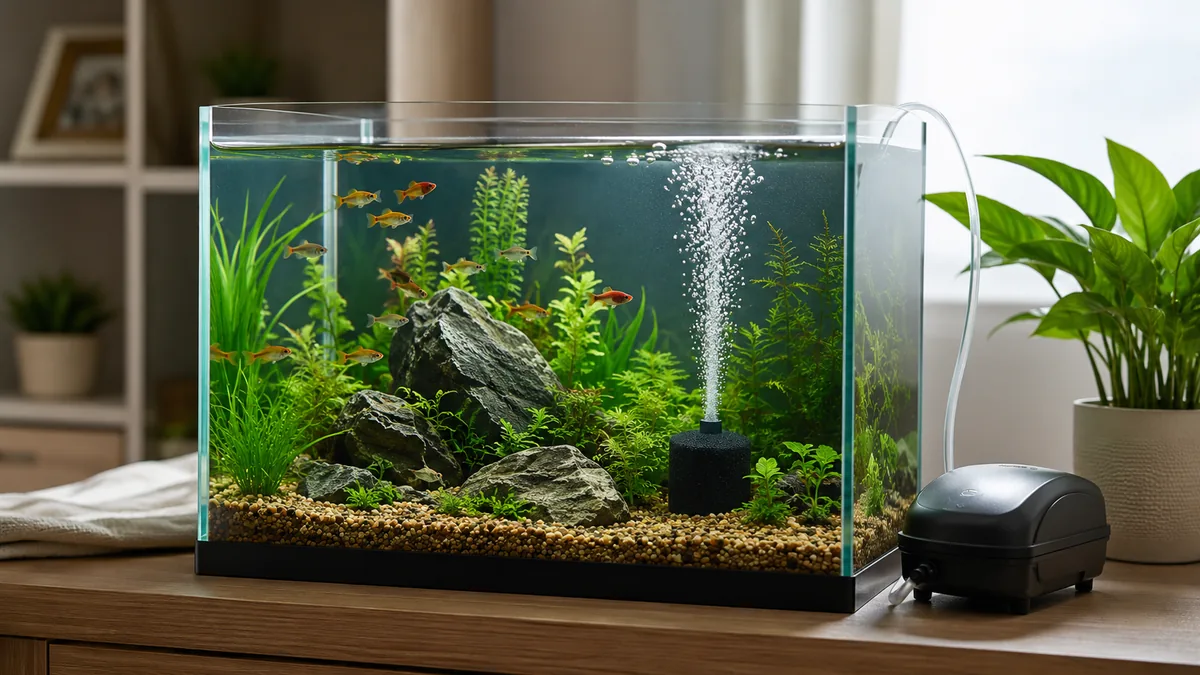
An air pump looks like a simple accessory until it becomes the only thing keeping oxygen moving during a heat wave, medication period, filter failure, or power outage recovery. It can also become a noisy, weak, overheated little box if the airline is restricted, the check valve is backward, or the pump is asked to push air deeper than it can handle.
The best aquarium air pump is not always the strongest one. It is the pump that gives steady airflow, matches the tank depth and device, runs quietly enough that you will keep using it, and can be adjusted without creating damaging back-pressure.
Quick answer
For most freshwater aquariums, choose an air pump rated for your tank size and water depth, then control output with a gang valve or bleed valve rather than choking the line completely. Use a check valve with the arrow pointing toward the aquarium, keep the pump above water level when possible, and keep a battery or USB air pump for emergency aeration.
Air pumps are most useful for sponge filters, air stones, quarantine tanks, fry tanks, medication periods, warm-water oxygen support, and backup aeration. They are not magic water cleaners. They move air, create surface agitation, and help gas exchange.
What an air pump actually does
An air pump does not inject much oxygen directly into the water bubble by bubble. Its main value is movement. The bubbles lift water, disturb the surface, and help oxygen enter while carbon dioxide leaves.
That surface exchange matters most when fish oxygen demand rises. Warm water holds less oxygen, while fish metabolism rises at higher temperature. A tank can look clear and still be oxygen stressed if the water is warm, the surface is still, the filter is clogged, or algae and bacteria are consuming oxygen at night.
Best air pump types by use case
Quiet air pump for bedroom tanks
For small tanks near a bed or desk, noise matters. A quiet pump with rubber feet, a soft internal diaphragm, and a stable surface is usually better than an oversized pump turned down hard. Oversizing and choking airflow often increases vibration and can shorten diaphragm life.
Strong air pump for deep tanks
Deeper water creates more back-pressure. A pump that works on a shallow 10-gallon tank may struggle on a tall aquarium or deep sponge filter. Check depth rating, not just tank gallons.
Multi-outlet pump for multiple tanks
A multi-outlet pump can run several sponge filters or air stones, but only if it has enough pressure and volume. Use a proper gang valve. Do not leave unused outlets sealed in a way that forces the pump to fight itself; vent excess air safely when needed.
Battery or USB air pump for emergencies
Every serious freshwater setup should have emergency aeration. During a power outage, a battery or USB pump can keep surface agitation going. This is especially important for stocked tanks, warm tanks, large fish, medication periods, or tanks with a struggling filter.
The check valve mistake beginners make
A check valve prevents aquarium water from siphoning backward into the air pump during power loss or pump shutdown. The arrow on the check valve should point in the direction of airflow: from the air pump toward the aquarium.
Many beginners install it backward because they think the arrow should point toward the pump to “block water.” That blocks airflow. The pump may buzz loudly, heat up, strain the diaphragm, and leave fish with little or no aeration.
After installing a check valve, always confirm bubbles are actually coming out at the air stone or sponge filter. Do not assume the setup is working because the pump is vibrating.
How to adjust airflow safely
A small control valve can reduce airflow, but closing it too tightly increases back-pressure. Over time, back-pressure can stretch or damage diaphragms and make the pump run hotter.
A safer method is to use a T-valve, gang valve, or bleed valve. One line goes to the aquarium device. The other vents excess air into the room or to another device. This lets the pump move air freely while the aquarium receives a gentler output.
For sponge filters, adjust until bubbles lift water steadily without blasting fish around the tank. For air stones, aim for surface movement, not a boiling pot.
Air pumps and planted tanks with CO2
In a low-tech planted tank, air pumps can be useful at night or during oxygen stress. In a planted tank with pressurized CO2, strong daytime aeration usually drives off CO2 and makes plant growth less stable.
Do not run a strong air stone during the main CO2 injection period unless there is an emergency. If extra aeration is needed, run it at night or opposite the CO2/light period. Watch fish behavior first: gasping, hanging near the outflow, or gathering at the surface are not signs to ignore.
Air pump sizing
Tank-size ratings are only rough. Consider:
- Water depth.
- Number of devices.
- Sponge filter size.
- Airline length.
- Check valve resistance.
- Whether the pump sits below or above the tank.
- Noise tolerance.
A pump for one small air stone can be modest. A pump for two sponge filters in deeper tanks needs more pressure. A pump for a fish room needs a different design entirely.
Where to place the pump
Place the pump on a dry, stable surface. If possible, keep it above the aquarium waterline. If it must sit below water level, a correctly oriented check valve is not optional.
Avoid placing the pump inside a sealed cabinet with poor airflow if it runs hot. Vibration can be reduced with a soft mat, but do not block ventilation.
Maintenance
Air pumps slowly lose output as diaphragms age, air stones clog, and airline tubing stiffens. If bubbles become weak, check the air stone, airline kinks, check valve direction, gang valve setting, and diaphragm before replacing the entire pump.
Air stones can clog with mineral deposits and biofilm. Replace or clean them when bubbling becomes uneven. Sponge filters should be squeezed gently in old tank water when flow drops, not washed under chlorinated tap water.
Useful tools for emergency aeration
A useful emergency aeration kit includes a battery or USB air pump, air stone, airline tubing, correctly installed check valve, T-valve or gang valve, sponge filter, thermometer, ammonia/nitrite test kit, and water conditioner. This small kit can prevent panic when a filter stops or oxygen drops.
Choose products that support stability, maintenance access, and fish safety before considering convenience or appearance. Avoid hard-selling yourself extra gear; the right purchase should solve a real tank problem without creating sudden changes in flow, temperature, oxygen, or water chemistry.
What to avoid
Avoid buying the largest pump and forcing it down with a tight valve. Avoid installing the check valve backward. Avoid running noisy pumps on hollow wooden shelves that amplify vibration. Avoid assuming bubbles mean filtration; an air stone does not remove ammonia. Avoid daytime air-stone use in CO2 planted tanks unless fish safety requires it.
FAQ
Do aquarium air pumps add oxygen?
They improve oxygen exchange mainly by moving water and agitating the surface. The bubbles themselves are less important than the surface movement they create.
Do I need an air pump if I have a filter?
Not always. If your filter creates good surface movement and fish behave normally, you may not need constant aeration. An emergency air pump is still wise.
Which way should the check valve arrow point?
Toward the aquarium, following airflow from the pump to the tank. A backward check valve can block air and strain the pump.
Can I turn off the air pump at night?
Usually yes if the filter provides enough oxygen. But planted tanks can have lower oxygen at night, and heavily stocked or warm tanks may need nighttime aeration.
Why is my air pump loud?
Common causes include vibration against furniture, blocked airflow, a backward check valve, a clogged air stone, or an aging diaphragm.
Can an air pump replace a filter?
No. An air pump moves air. A sponge filter powered by an air pump can provide filtration, but an air stone alone does not process ammonia.
Is too much aeration bad?
Too much turbulence can stress fish, disturb floating plants, and drive off CO2 in planted tanks. Aim for steady gas exchange, not violent bubbling.
Why did my pump get hot?
Blocked airflow or excessive back-pressure is a common reason. Check the valve direction, air stone, and control valve.
Do I need a battery air pump?
It is strongly recommended for stocked tanks. During power outages or filter failures, emergency aeration can protect fish.
How often should I replace air stones?
Replace them when bubbles become weak, uneven, or restricted after cleaning. Clogged air stones increase pump strain.
Related Guides
- Sponge Filter vs HOB Filter:
/aquarium-equipment/filters/sponge-filter-vs-hob-filter/ - Filter Not Working:
/tank-problems/filter-not-working/ - Betta Gasping at the Surface:
/fish-care/betta-gasping-at-surface/ - Aquarium Filter Guide:
/aquarium-equipment/filters/aquarium-filter-guide/ - Best Aquarium Filters:
/best-products/best-aquarium-filters/
Author Box
Written by the Healthy Aquariums editorial team. This guide focuses on practical aeration, oxygen safety, and common installation errors that cause real aquarium problems.
Editorial Note
Air pump advice is often too simple. This article treats aeration as part of the aquarium’s oxygen, temperature, filtration, and CO2 balance rather than a decorative bubble effect.
References
- General aquaculture principles on oxygen exchange and surface agitation.
- Common manufacturer installation guidance for check valves, diaphragms, and air pump placement.
- Freshwater aquarium husbandry experience with sponge filters, quarantine tanks, and emergency aeration.