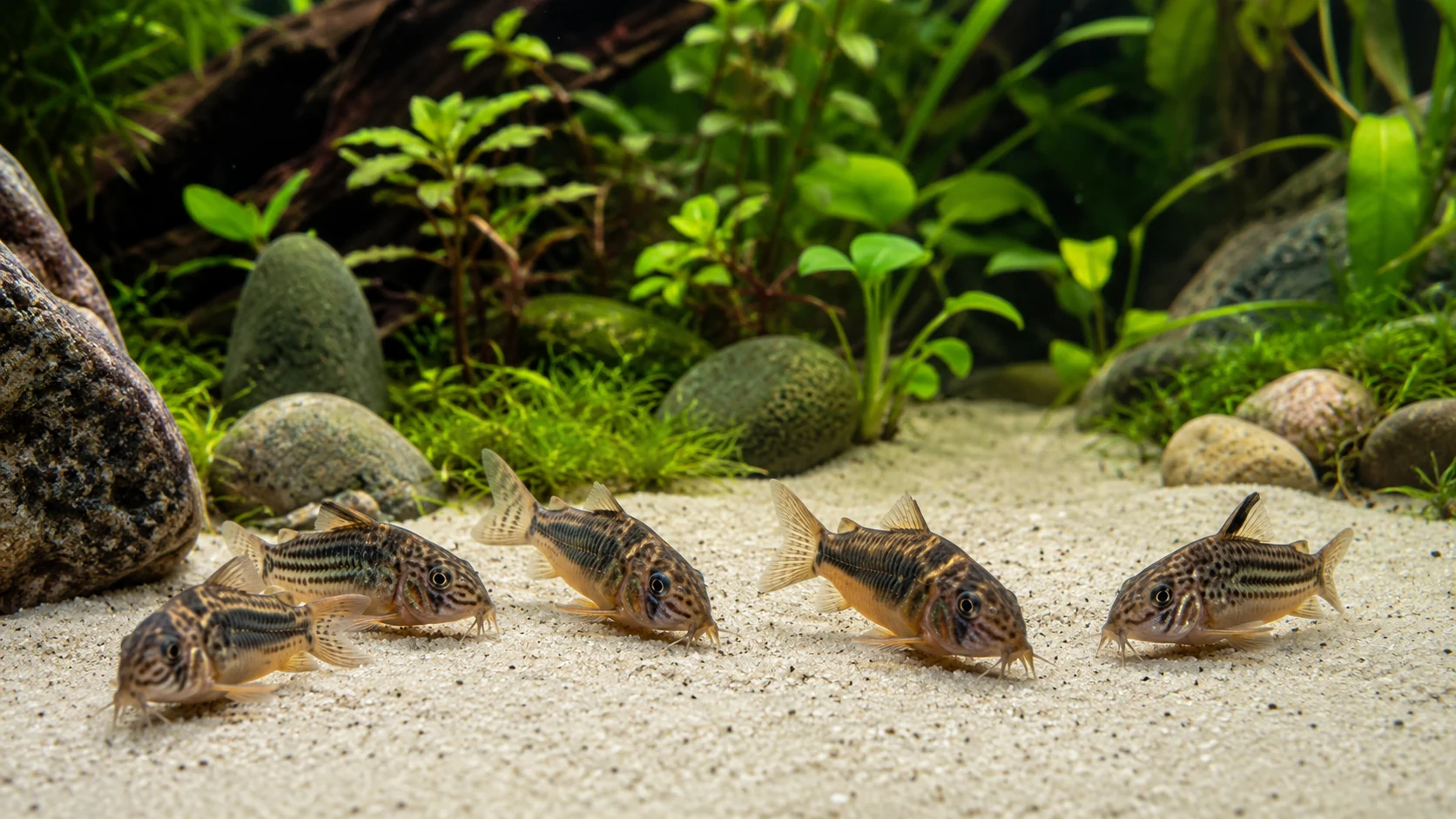
Corydoras catfish are often sold as “cleanup fish.” That label causes more bad care than almost anything else written about them.
A Corydoras is not a tiny vacuum cleaner. It is a social, active bottom-dwelling fish that spends the day searching the substrate with delicate barbels, breathing fast when water quality slips, and depending on a group for security. If you buy two corys to clean leftover flakes in a rough-gravel tank, they may survive for a while. That does not mean the setup is working.
Good Corydoras care starts with one correction: treat them as fish with their own needs, not as equipment.
Corydoras care at a glance
| Care point | Practical target |
|---|---|
| Tank maturity | Cycled, stable tank with 0 ppm ammonia and 0 ppm nitrite |
| Group size | At least 6 of the same or similar species; more is better in suitable tanks |
| Substrate | Smooth sand or very smooth fine gravel; avoid sharp gravel |
| Feeding | Target feed sinking foods; do not rely on leftovers |
| Flow | Gentle to moderate with oxygen-rich water |
| Temperature | Depends on species; many common types do well in typical tropical ranges |
| Behavior | Active foraging, schooling/resting together, quick response to food |
| Red flags | Worn barbels, rapid breathing, hiding constantly, thin bellies, flashing, surface gulping |
The “cleanup crew” myth
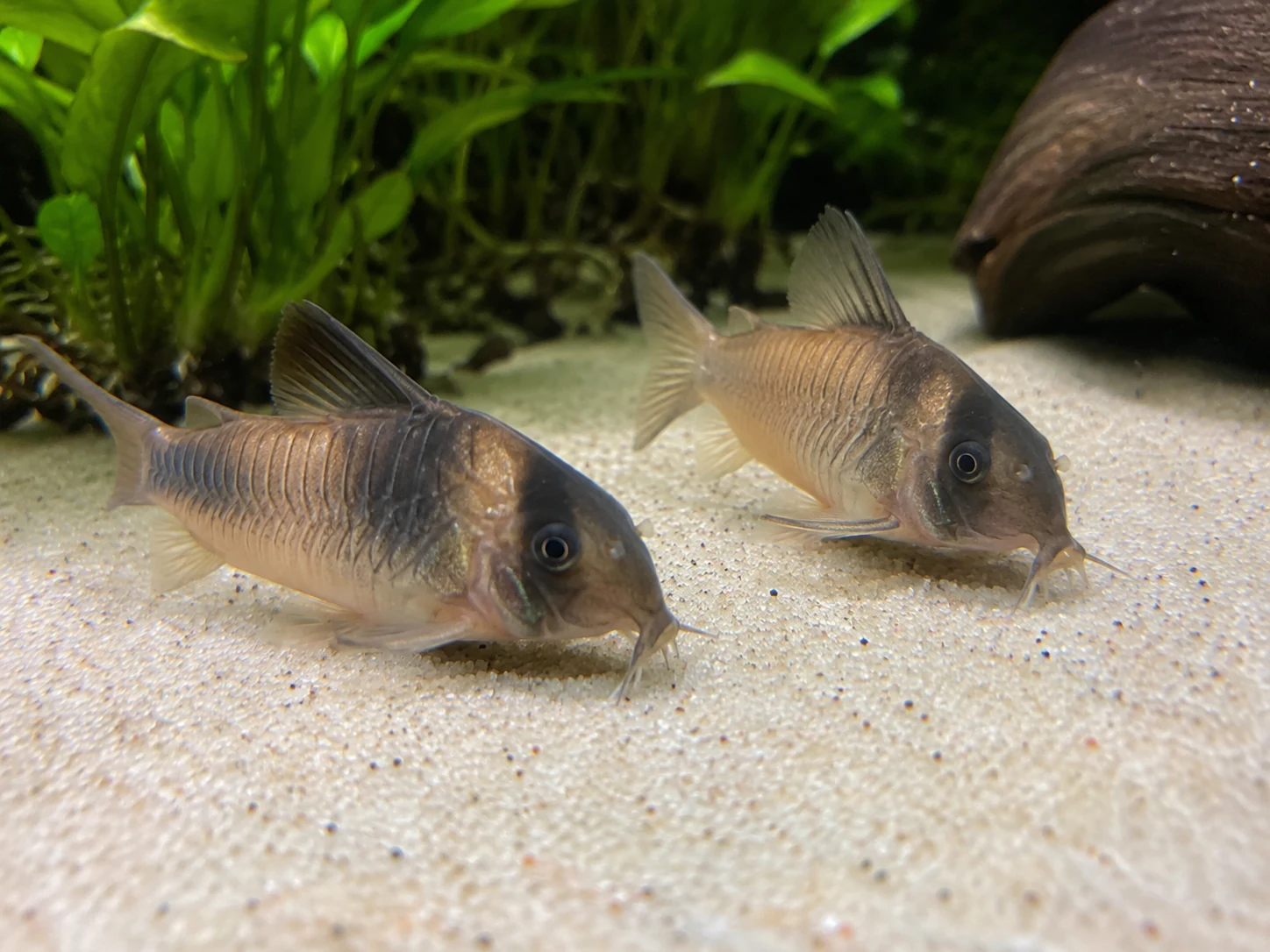
Corydoras will eat some food that reaches the bottom. That does not make them waste managers.
Uneaten food still breaks down into ammonia. Corys may miss food trapped under wood, behind plants, or deep in gravel. They also produce waste of their own. If you add corys to fix a dirty tank, you have added more bioload to a system that was already struggling.
Technical action: use Corydoras as a livestock choice, not as a maintenance shortcut.
Danger/trap: buying them to eat leftovers usually means the tank is already being overfed.
Safe process: feed the upper fish correctly, remove excess food, and target feed corys after the upper fish slow down. The goal is a clean bottom plus properly fed bottom fish.
Substrate is not cosmetic for Corydoras
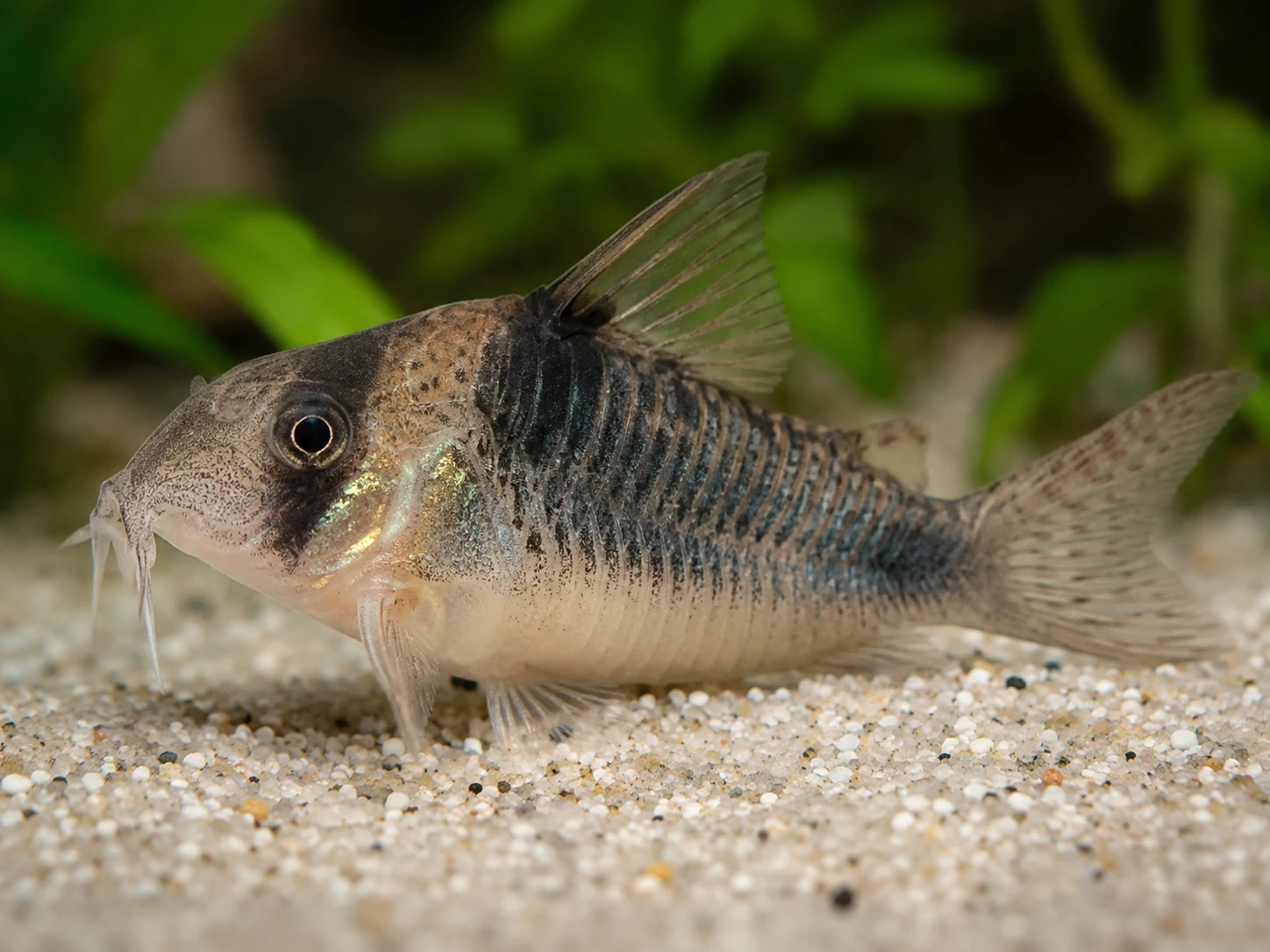
Corydoras feed with their mouths close to the bottom. Their barbels are sensory tools. They use them to search through the substrate, find edible particles, and navigate the tank floor.
That means substrate is a health issue.
Smooth sand lets them sift naturally. Fine rounded gravel can work for some keepers if it is genuinely smooth and kept clean, but sharp gravel, crushed rock, jagged decorative gravel, and rough black blasting-type substrates can damage barbels. Barbel loss is not always caused by substrate alone; dirty substrate and bacterial irritation matter too. But abrasive substrate plus trapped waste is the classic bad combination.
Technical action: choose substrate that supports natural foraging.
Danger/trap: rough gravel scratches the mouth and barbels, while dirty gravel packs food and waste into the exact area Corydoras constantly search.
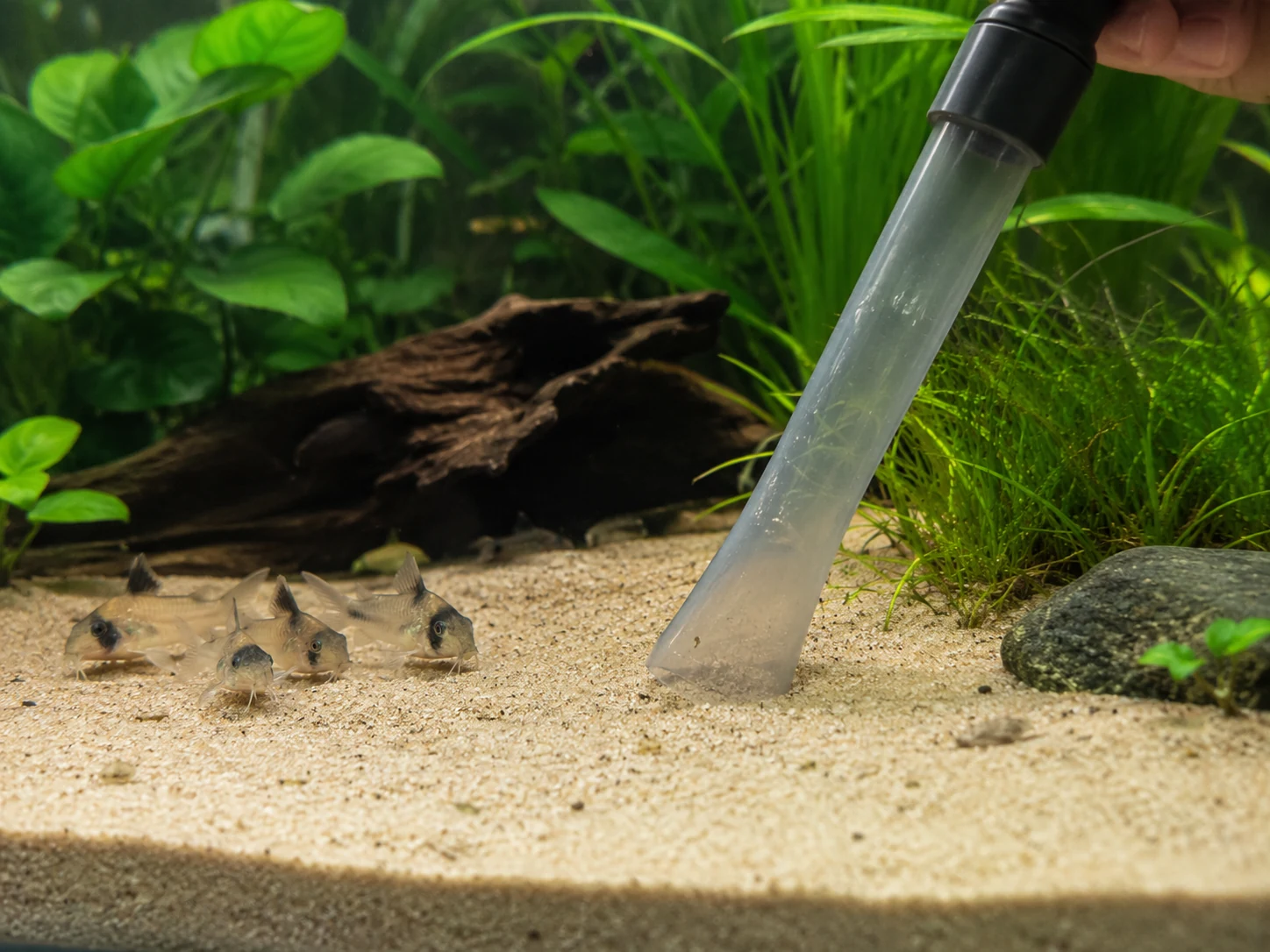
Safe process: use smooth sand or very smooth fine gravel. Keep the top layer clean with gentle siphoning. Do not deep-stir old substrate aggressively. If a pocket smells rotten, siphon directly at the disturbance point so foul water leaves the tank instead of spreading through it.
The substrate bacteria trap behind barbel erosion
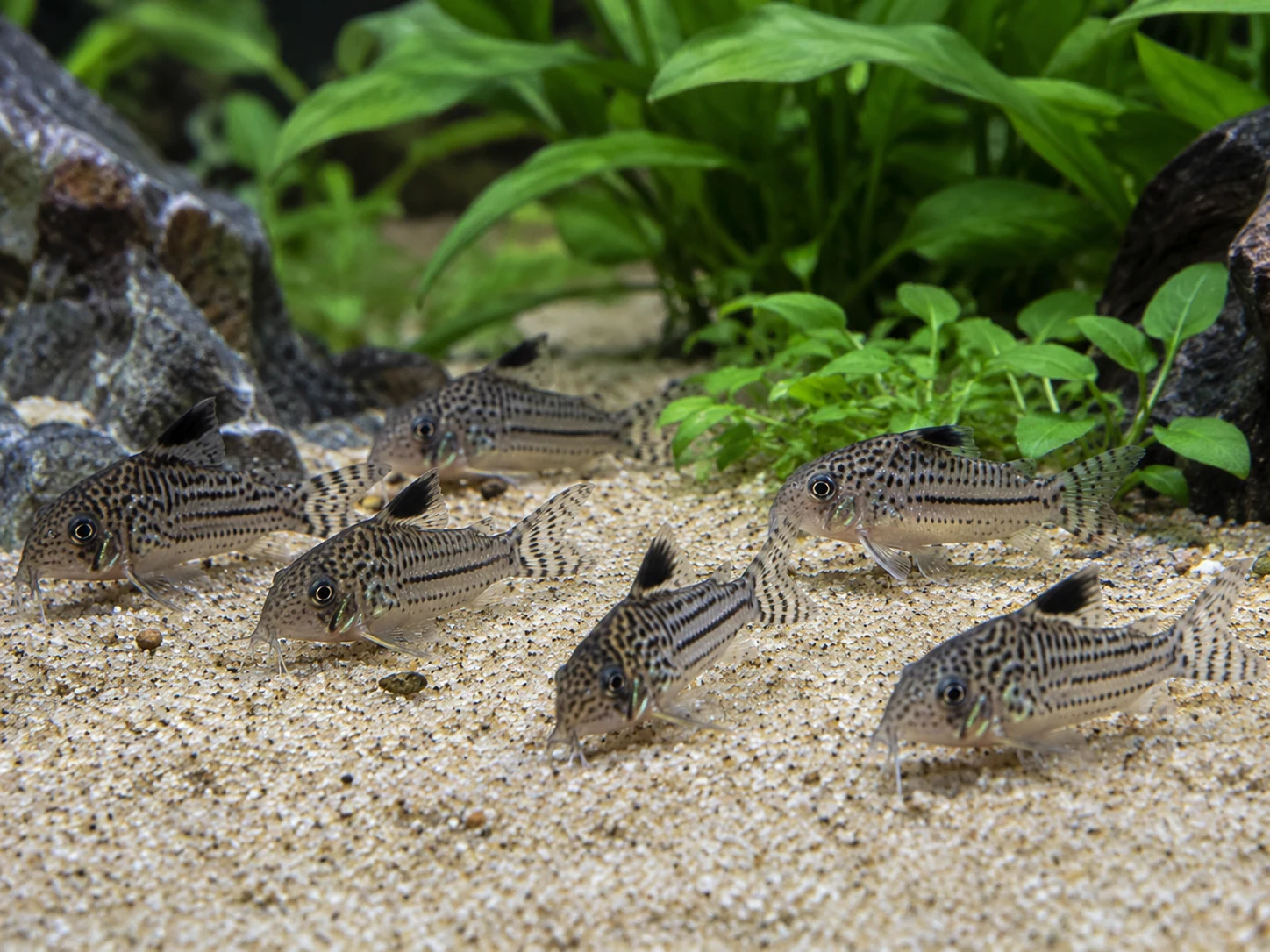
It is too simple to say Corydoras lose barbels only because gravel is sharp.
Sharp or rough substrate can create the first scratch. But the deeper biological problem is often what lives inside dirty coarse substrate. Large gaps between gravel pieces let flakes, pellets, fish waste, and plant debris fall below the surface. Corydoras cannot reliably reach that trapped food. Flow often does not remove it. Over time, those pockets become a localized bacterial and organic-waste sink exactly where Corydoras sleep, forage, and push their faces into the bottom.
That matters because barbels are soft sensory tissue. A small abrasion from rough gravel becomes much more dangerous when the fish keeps pressing that tissue into bacteria-rich, decaying debris.
Technical action: choose substrate that keeps waste accessible.
Danger/trap: coarse gravel is risky not only because it may scratch barbels, but because it can hide rotting food out of reach and create a chronic infection zone around the mouth and barbels.
Safe process: use smooth fine sand, preferably under about 2 mm, and keep it shallow enough to clean. Fine sand packs tightly enough that most food and waste stay on the surface, where filter flow, Corydoras foraging, a turkey baster, or a siphon can remove it before it becomes a bacterial sink. During maintenance, remove visible debris from the sand surface instead of pushing waste down into the substrate.
Group size: why two corys are not enough
Corydoras are social fish. A pair may sit still and look peaceful, but that does not mean the fish feel secure.
In groups, they forage more naturally, rest together, and show more confident movement. A single cory or a tiny group often hides more, darts more, or becomes less competitive at feeding time.
For most beginner community tanks, a group of six or more is the minimum worth planning around. In larger tanks, 8–12 looks and functions much better. Try to keep the same species together when possible. Mixing one bronze, one albino, one panda, and one peppered cory is not the same as a proper group.
Tank size and footprint
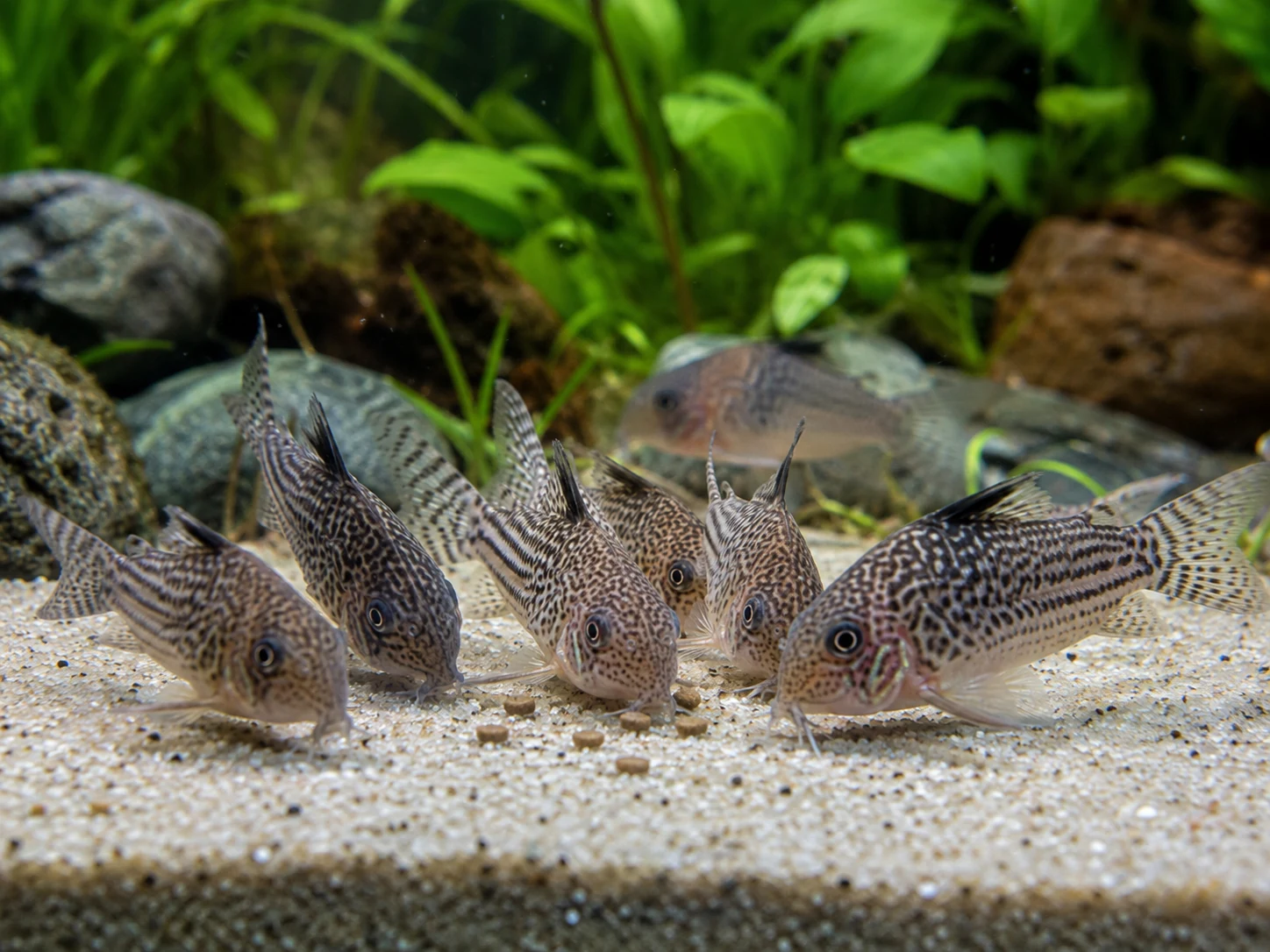
Corydoras care is about floor space, not just gallons.
A tall narrow tank gives less usable bottom area than a longer tank of similar volume. Corys forage across the substrate, so a tank with a longer footprint is usually easier. Many small Corydoras groups do better in a 20-gallon long style tank than in a narrow, tall tank.
A nano tank can work for some dwarf species in experienced hands, but common Corydoras are not ideal for cramped beginner tanks.
Feeding Corydoras properly
Corydoras should not live on scraps.
They need deliberate food that reaches them. Good staples include sinking wafers, small sinking pellets, gel food, frozen foods such as bloodworms or brine shrimp used carefully, and occasional high-quality prepared bottom-feeder foods.
Feed after the upper fish have eaten, or use a feeding tube, tongs, or targeted placement so food reaches the substrate before greedy midwater fish steal it.
Technical action: give bottom foods after lights dim slightly or after upper fish are distracted.
Danger/trap: dropping a large wafer and leaving it overnight can create an ammonia source.
Safe process: use small portions. Watch the corys eat. Remove uneaten food within about 5 minutes for soft foods and within a short feeding window for wafers that begin breaking apart. If the food is still there later, you fed too much.
The thin-belly problem
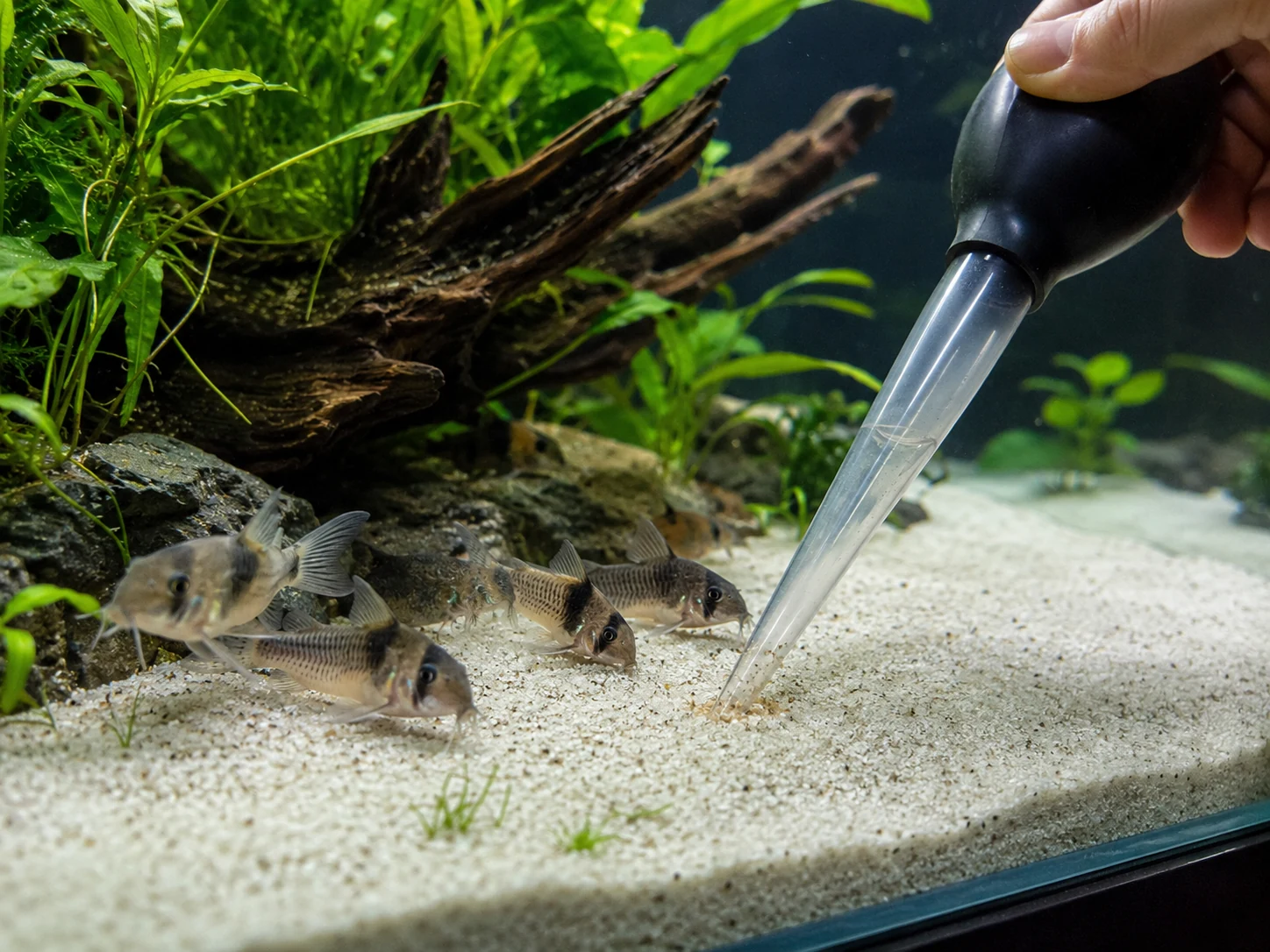
A Corydoras can starve in a tank that receives plenty of food.
This happens when fast fish grab everything before the food reaches the bottom, or when the food is too large, too hard, or placed in the wrong area. A healthy cory should not look pinched behind the head or hollow in the belly.
If corys are thin, do not simply dump more food into the tank. That creates pollution. Change the feeding method.
Use smaller sinking foods, feed after room lights dim, distract upper fish first, or place food near the cory group with a feeding tube.
Oxygen and water quality
Corydoras often react quickly to poor water. Rapid breathing, repeated surface dashes, clamped fins, hiding, and flashing can all point back to ammonia, nitrite, low oxygen, or irritation from dirty substrate.
Some Corydoras gulp air occasionally. Occasional surface trips can be normal. Constant surface gulping is not normal.
Technical action: test water when behavior changes.
Danger/trap: assuming bottom fish are “just shy” can delay ammonia or nitrite correction.
Safe process: test ammonia, nitrite, nitrate, pH, and temperature. Improve aeration if fish breathe rapidly. Clean mechanical debris without destroying biological media. Protect the filter bacteria.
Tank mates
Good tank mates are peaceful fish that do not outcompete corys constantly or nip their fins.
Many small community fish can work: small tetras in mature tanks, rasboras, peaceful livebearers in compatible water, and calm small gouramis in suitable setups. Avoid aggressive cichlids, large predatory fish, fin nippers, and fish that dominate the bottom.
Be careful with goldfish. Their cooler-water needs, size, food behavior, and waste load usually make them poor Corydoras tank mates.
Common Corydoras mistakes
Buying one or two
They need a group. Plan the group before buying the first fish.
Using rough substrate
Barbels are delicate. Rough substrate and dirty gravel can create chronic mouth and barbel problems.
Calling them scavengers
They are bottom-feeding fish, not garbage disposal.
Feeding only leftovers
Leftovers are inconsistent and often polluted. Target feeding is cleaner and safer.
Cleaning the entire substrate and filter at once
That can shock the system. Corys live close to the substrate and may be hit hard by disturbed waste and unstable bacteria.
Corydoras Bottom-Feeder Toolkit
Useful items:
- smooth aquarium sand;
- sinking micro pellets or small wafers;
- feeding tube or long tweezers;
- turkey baster for removing leftovers;
- liquid ammonia/nitrite/nitrate test kit;
- gentle siphon for surface cleaning;
- pre-filter sponge for filter intakes;
- small air stone or sponge filter for backup oxygen.
A simple Corydoras routine
Daily:
- check breathing and activity;
- target feed small portions;
- confirm food reaches the bottom;
- remove visible leftovers.
Weekly:
- test water if the tank is new or stocking changed;
- siphon visible waste from the surface of the substrate;
- clean mechanical filter media only if clogged, using old tank water;
- check barbels and bellies.
Monthly:
- review group size and stocking;
- check dead spots behind decor;
- trim plants that trap food;
- inspect substrate areas that collect debris.
FAQ
Are Corydoras good beginner fish?
Yes, if the tank is cycled, the substrate is smooth, and you keep a real group. They are poor beginner fish in sharp gravel, tiny groups, or dirty new tanks.
How many Corydoras should I keep together?
At least six of the same or similar species is a practical minimum. Larger groups behave more naturally in suitable tanks.
Do Corydoras need sand?
Smooth sand is the safest and most natural choice. Very smooth fine gravel may work, but sharp or jagged gravel is risky.
Can Corydoras live on leftover food?
No. They need deliberate sinking foods. Leftovers are inconsistent and often become pollution.
Why are my corys losing barbels?
Possible causes include rough substrate, dirty substrate, bacterial irritation, poor water quality, or injury. Test water and inspect the substrate before blaming one cause.
Is it normal for Corydoras to gulp air?
Occasional air gulping can happen. Constant surface trips, rapid breathing, or lethargy should trigger water testing and oxygen checks.
What should I feed Corydoras?
Use sinking micro pellets, small wafers, gel foods, and occasional frozen foods. Keep portions small and remove uneaten food.
Can Corydoras live with bettas?
Sometimes, in a large enough peaceful tank, but it depends on the betta. The cory group still needs floor space and food access.
Can Corydoras live with gravel?
Only if it is smooth, rounded, and kept clean. Rough gravel is not worth the risk.
Why are my Corydoras hiding all day?
Small group size, bright light, aggressive tank mates, poor water, or lack of cover can all cause hiding. Start with water testing and group size.
Is barbel erosion caused only by sharp gravel?
No. Sharp gravel can create the injury, but trapped organic waste and bacterial buildup in coarse substrate can make the damage much worse. Smooth fine sand helps because waste stays on the surface where it can be siphoned or removed.
Why is sand better than coarse gravel for Corydoras?
Sand supports natural sifting and reduces the number of deep gaps where food can rot. This keeps the feeding surface cleaner and lowers the risk of bacterial irritation around the mouth and barbels.
Related Guides
- Aquarium Substrate and Decor Guide
- How Often Should You Feed Aquarium Fish?
- Ammonia, Nitrite, and Nitrate
- Aquarium Maintenance Schedule
- Best Aquarium Plants for Beginners
- Fish Tank Size Guide
Author Box
Written by the Healthy Aquariums editorial team. We focus on practical fishkeeping that connects fish behavior with substrate choice, water quality, feeding, and long-term stability.
Editorial Note
Corydoras advice often reduces them to “bottom cleaners.” This guide intentionally treats them as sensitive social fish with specific substrate, group, oxygen, and feeding needs.
References
- Aqueon. Corydoras Catfish Care Guide. https://www.aqueon.com/resources/care-guides/corydoras-catfish
- FishKeep & Chill. Do Cory Catfish Need Sand? https://fishkeepandchill.com/do-cory-catfish-need-sand-health-and-behavioral-considerations-in-substrate-choice/
- Merck Veterinary Manual. Environmental Diseases of Aquatic Animals in Aquatic Systems. https://www.merckvetmanual.com/exotic-and-laboratory-animals/aquatic-systems/environmental-diseases-of-aquatic-animals-in-aquatic-systems
- MSD Veterinary Manual. Common Environmental Hazards for Fish. https://www.msdvetmanual.com/multimedia/table/common-environmental-hazards-for-fish