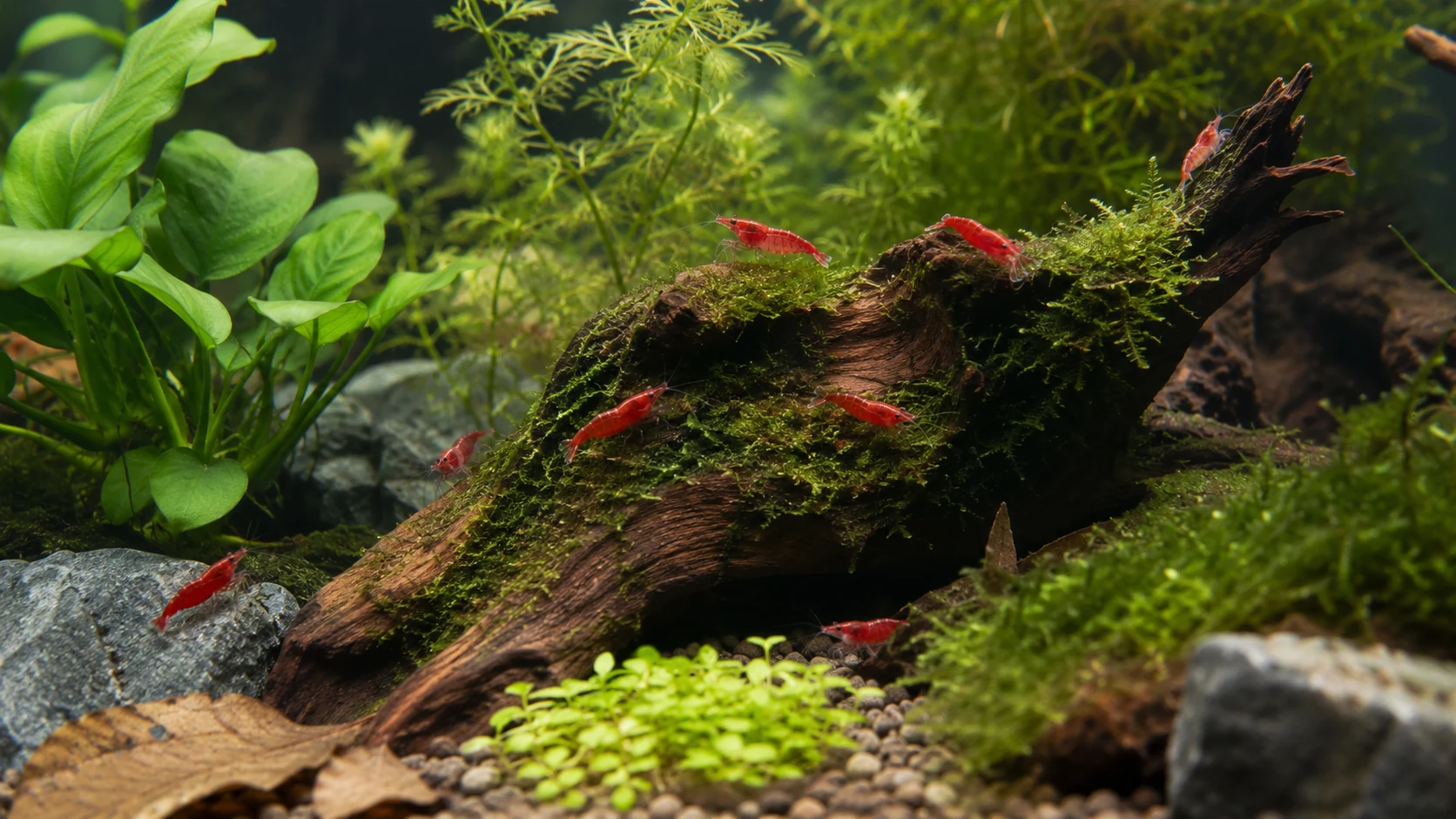
Freshwater shrimp are small enough that beginners underestimate them.
A fish can sometimes survive a messy mistake for a while. Shrimp often do not. A sudden water change, copper exposure, unstable KH, or a filter intake with no sponge can wipe out a colony before the keeper understands what changed.
Shrimp care is not about chasing perfect numbers. It is about avoiding sudden chemistry changes and building a tank where the shrimp can molt, graze, and hide without being shocked every week.
Freshwater shrimp care at a glance
| Care point | Practical target |
|---|---|
| Best beginner shrimp | Neocaridina shrimp such as cherry shrimp |
| Tank maturity | Mature, cycled, algae/biofilm present |
| Ammonia/nitrite | 0 ppm |
| Nitrate | Keep low and stable |
| GH/KH | Stable mineral content appropriate to species |
| Copper | Avoid; check medications and fertilizers |
| Filter | Sponge filter or pre-filter sponge on intake |
| Feeding | Tiny portions; biofilm is part of the diet |
| Molting | Needs minerals, stability, and hiding places |
Shrimp need a mature tank, not just clear water
A brand-new tank can look clean and still be poor shrimp habitat.
Shrimp graze constantly on biofilm, microalgae, surfaces, plant leaves, moss, and tiny organic particles. A sterile new setup may not have enough natural grazing. Worse, the biofilter may still be unstable, allowing ammonia or nitrite spikes.
Technical action: wait for maturity before adding shrimp.
Danger/trap: adding shrimp to a visually clean but biologically new tank often leads to quiet losses over the first week.
Safe process: cycle the tank fully, confirm 0 ppm ammonia and 0 ppm nitrite, and let surfaces mature. Plants, moss, and botanicals can help build grazing surfaces, but do not use rotting leaves as an excuse to skip testing.
Molting is the center of shrimp care
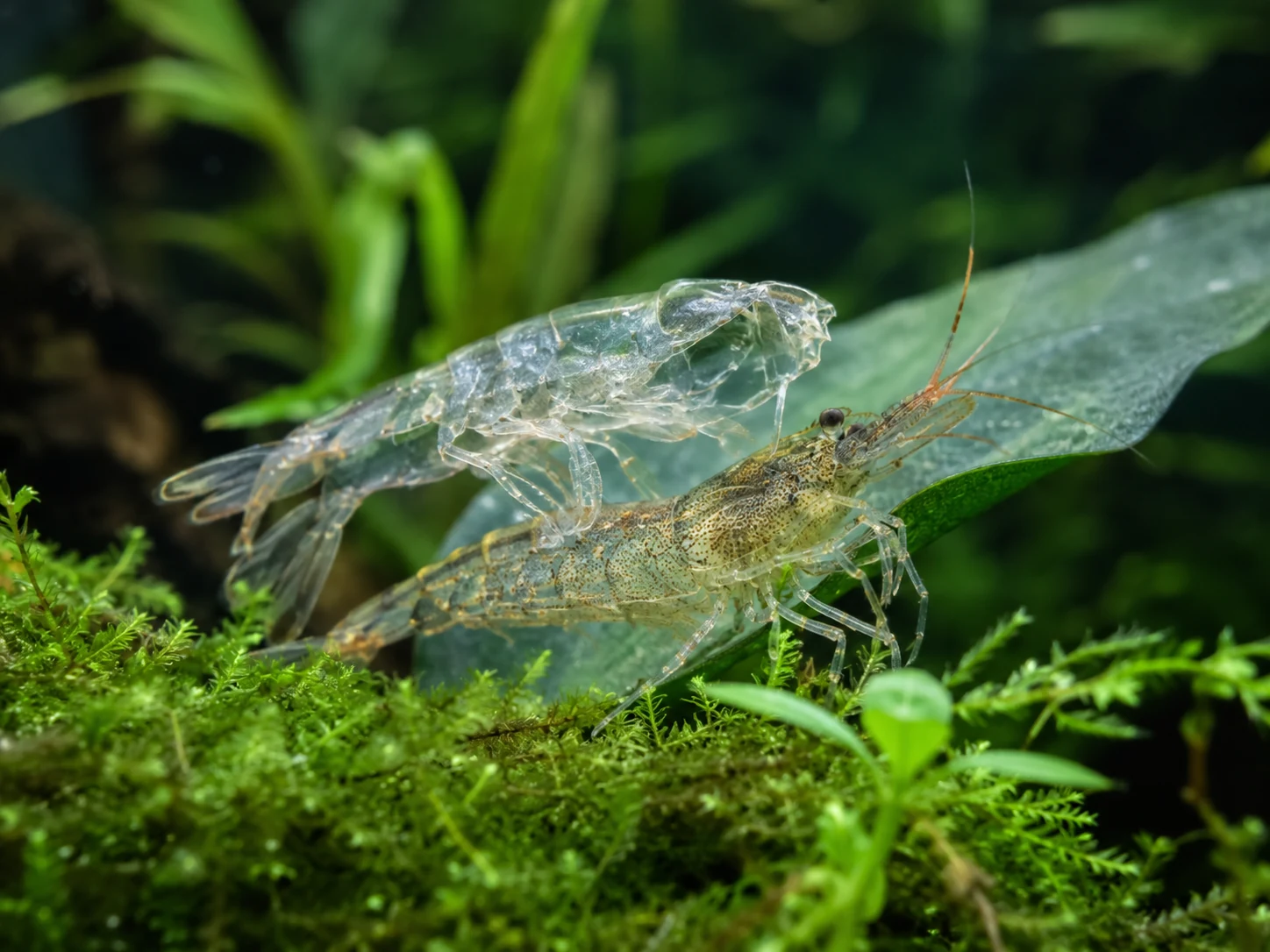
Shrimp grow by molting. They shed the old exoskeleton and harden a new one. That process depends on minerals, stable water, and low stress.
A bad molt can look like a shrimp stuck in its shell, lying on its side, or dying soon after a water change. The problem is often not one single number. It is the swing.
Technical action: keep GH, KH, TDS, and temperature stable.
Danger/trap: “cleaner water” can still kill shrimp if the new water is very different from the tank water.
Safe process: match temperature closely, remineralize RO water before it enters the tank, and avoid large sudden water changes. For a stable shrimp tank, small weekly changes are safer than dramatic corrections unless toxins are present.
GH, KH, and why minerals matter
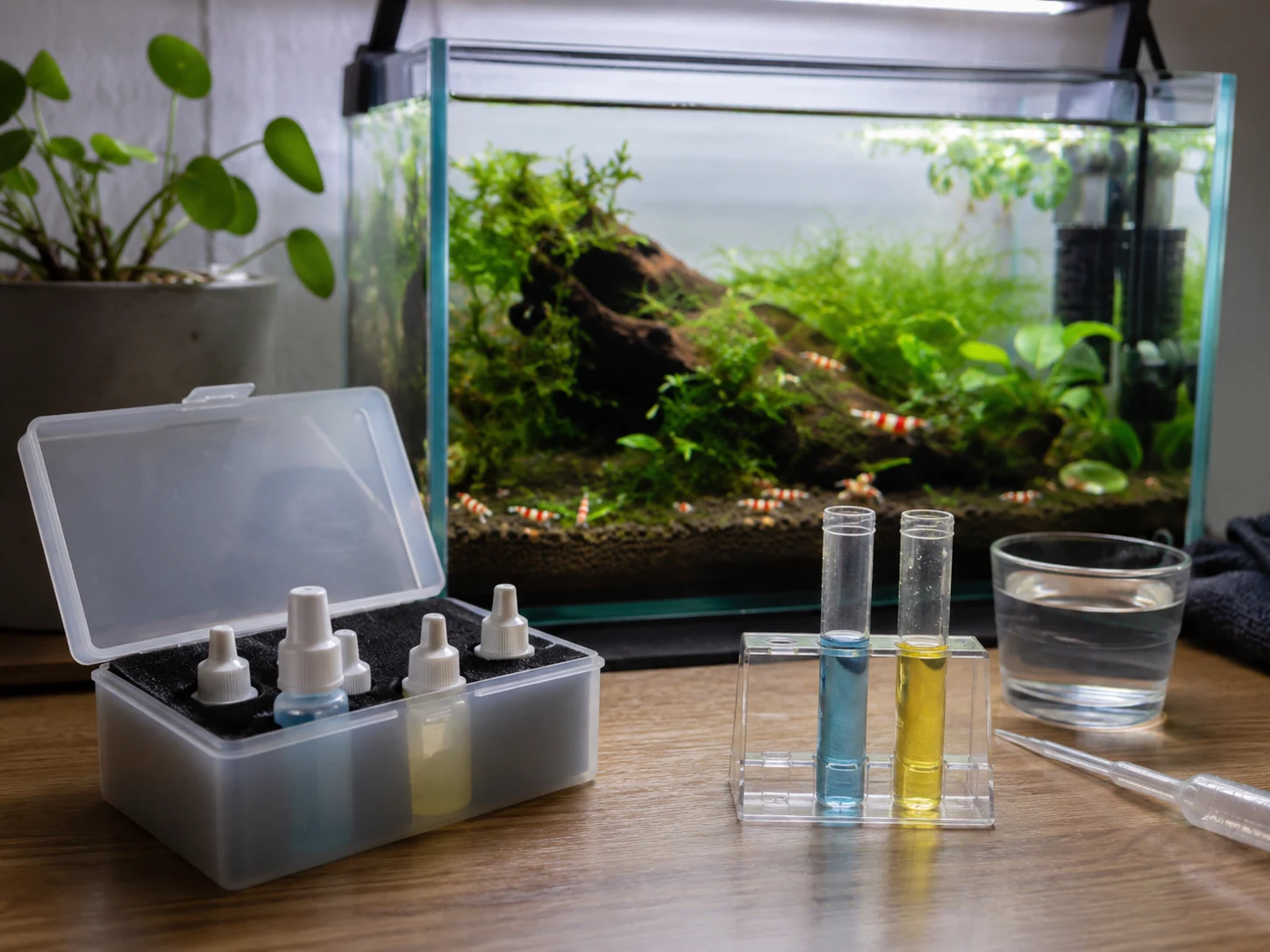
Shrimp keepers talk about GH and KH because shrimp bodies need mineral support.
GH reflects calcium and magnesium content. KH reflects carbonate buffering, which helps resist pH swings. Neocaridina shrimp are more forgiving than many Caridina shrimp, but they still dislike instability.
Practical beginner target for Neocaridina:
| Parameter | Practical range |
|---|---|
| Ammonia | 0 ppm |
| Nitrite | 0 ppm |
| Nitrate | Low, preferably below 20 ppm |
| GH | Often around 6–12 dGH |
| KH | Often around 3–8 dKH |
| pH | Stable, often neutral to slightly alkaline |
| Temperature | Stable moderate range; avoid heat spikes |
These are not magic numbers. Local-bred shrimp often adapt to local water. The point is to know your water and keep it stable.
The copper trap
Copper can be deadly to shrimp at levels that may not immediately harm fish. The risk often comes from medications, some algaecides, contaminated tools, old plumbing, or incorrect fertilizer use.
Technical action: check every medication and additive before using it in a shrimp tank.
Danger/trap: treating fish in a shrimp display tank can kill shrimp even if the fish recover.
Safe process: keep a separate hospital container for medicating fish. Use shrimp-safe fertilizers only as directed. Never use unknown metal objects, pesticides, or cleaning sprays around the tank.
Filter safety: intakes kill shrimp and fry
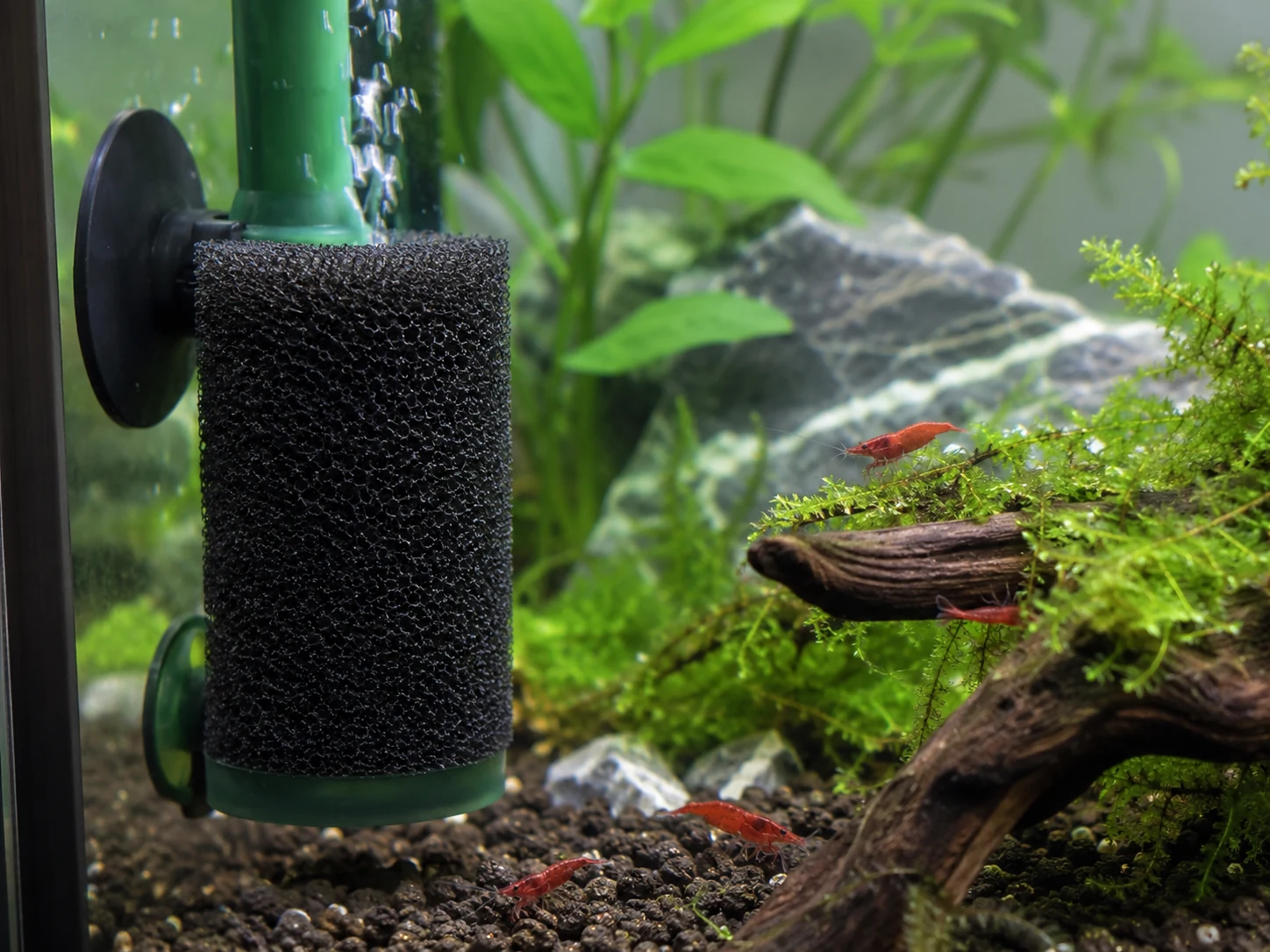
Shrimp climb, graze, and explore. Baby shrimp are tiny enough to be pulled into filter intakes.
A bare intake can turn a good filter into a shrimp trap.
Technical action: cover filter intakes.
Danger/trap: a filter that works for adult fish may quietly remove baby shrimp.
Safe process: use a sponge filter, or put a pre-filter sponge over the intake of a hang-on-back or canister filter. Rinse the sponge gently in old tank water when it clogs. Do not rinse it under untreated tap water because chlorine or chloramine can damage beneficial bacteria.
Feeding shrimp without polluting the tank
Shrimp need food, but most beginners overfeed them.
In a mature planted tank, shrimp graze all day. Supplemental food should be small. A colony may only need a tiny pellet, powdered food, blanched vegetable piece, or shrimp food portion a few times per week, depending on colony size and biofilm availability.
Technical action: feed tiny portions and observe.
Danger/trap: food left overnight can rot, feed bacteria, consume oxygen, and raise ammonia.
Safe process: remove uneaten vegetables or soft foods within a few hours. Use a feeding dish so food does not disappear into substrate. If the shrimp ignore the food, remove it and feed less next time.
Tank mates

The safest shrimp tank is shrimp-only.
Many fish will eat baby shrimp, even if they ignore adults. Small peaceful fish can work in heavily planted tanks, but breeding success drops when predators are present.
Safer options include shrimp-only tanks, snails, or very peaceful nano fish in dense planted setups. Avoid bettas with hunting behavior, larger tetras, barbs, cichlids, goldfish, and anything with a mouth large enough to test a shrimp.
Plants and hiding places
Moss, fine-leaf plants, floating plants, and wood help shrimp. They create grazing surfaces and shelter for molting shrimp and babies.
A freshly molted shrimp is soft and vulnerable. If it cannot hide, it may be stressed by fish, other shrimp, or constant movement around the tank.
Good shrimp cover:
- Java moss or similar mosses;
- floating plants with roots;
- fine-leaf stems;
- cholla wood or smooth driftwood;
- leaf litter used carefully;
- ceramic shrimp hides.
Water changes: small and steady

Shrimp can die after a water change even when the new water is “clean.”
The issue is sudden change: temperature, GH, KH, pH, TDS, chlorine/chloramine, or dissolved gas differences.
Technical action: change water to remove waste.
Danger/trap: a large sudden water change can trigger molting stress or shock.
Safe process: use conditioner for chlorine and chloramine, match temperature closely, and add water slowly. For stable tanks, 10–20% weekly is often safer than infrequent large water changes. If the tank has been neglected, correct it gradually while testing.
The white ring of death: preventing premature molt failures
Shrimp grow by molting. To escape the old shell, the shrimp absorbs water, expands slightly, and splits the exoskeleton at the seam between the head section and abdomen. When that process works, the shrimp backs out and hides while the new shell hardens.
The “white ring of death” is the hobby name for a failed molt where a pale band appears around that seam and the shrimp cannot fully escape. The name is dramatic, but the risk is real. A sudden change in GH, KH, TDS, temperature, or osmotic pressure can push shrimp into molting stress before the new shell is ready.
Technical action: make shrimp water changes small and slow.
Danger/trap: a large fast water change, especially over 20% with different mineral content, can trigger molting stress or failed molts even when the new water looks clean.
Safe process: for stable shrimp tanks, remove only about 10–15% weekly unless there is an emergency. Prepare replacement water first, match temperature, match mineral targets, and add it back slowly. The safest method is airline tubing with a control valve, dripping replacement water back over 2–3 hours. This slow dilution gives shrimp time to adjust instead of forcing a sudden internal water-balance shift.
Acclimating shrimp slowly
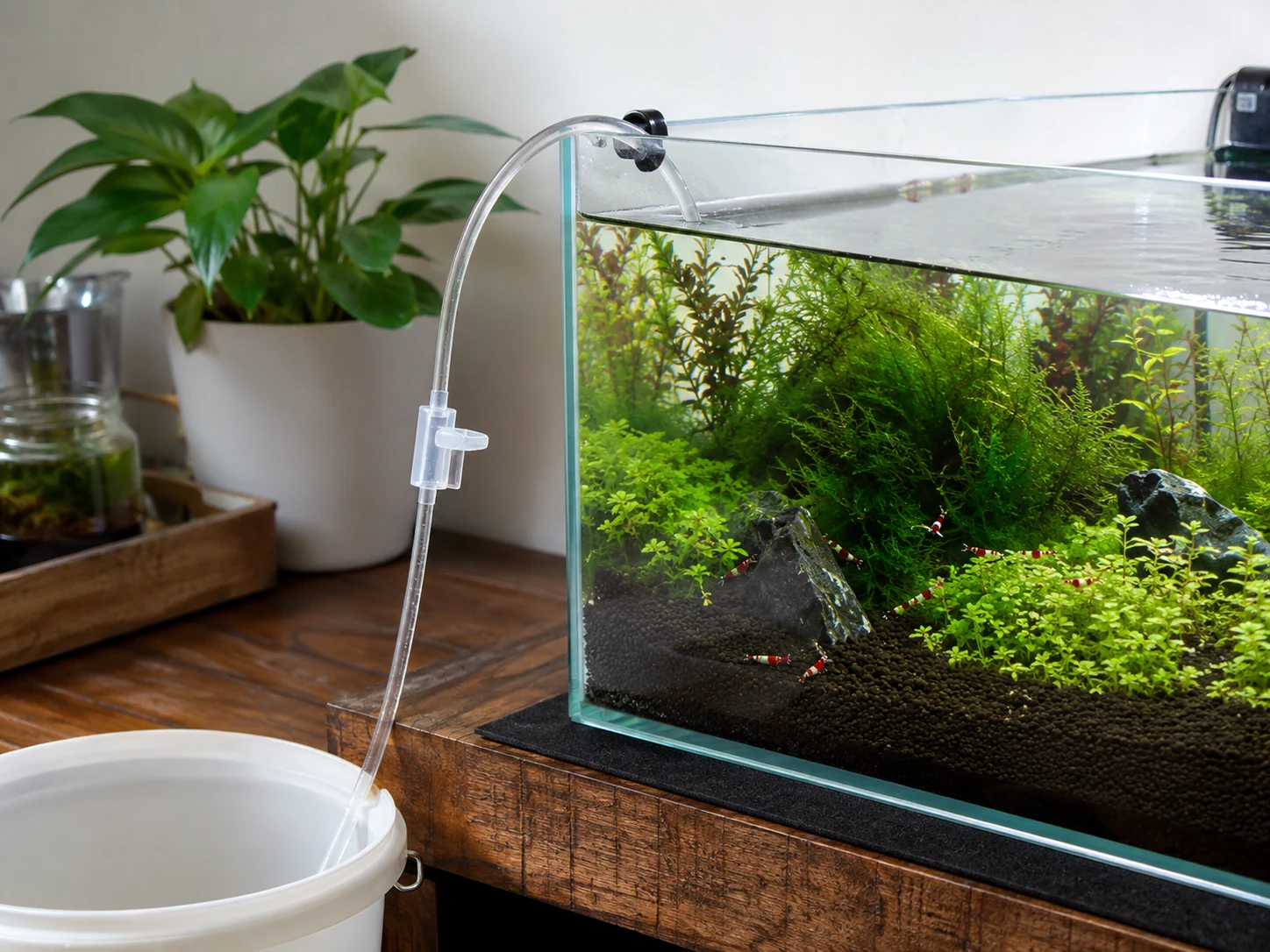
Shrimp are more sensitive to dissolved solids and mineral shifts than many beginner fish. A bag of shrimp may be close in temperature but very different in GH, KH, TDS, and pH.
Technical action: acclimate shrimp slowly before release.
Danger/trap: floating the bag and dumping shrimp into the tank only solves temperature. It does not solve mineral shock.
Safe process: place the shrimp and bag water into a clean container used only for aquariums. Use airline tubing with a loose knot or valve to drip tank water into the container slowly for about 60–90 minutes. When the water volume has doubled or tripled, net or gently transfer the shrimp into the tank and discard transport water. Keep lights dim during the first few hours.
Why “too clean” can be bad for shrimp
Shrimp tanks should be clean, but not sterile.
A shrimp tank with no algae film, no biofilm, no mature plant surfaces, and no grazing areas can leave shrimp constantly searching for food. Beginners sometimes scrub every surface, replace decor, vacuum aggressively, and then wonder why shrimp stop breeding.
Technical action: remove pollution, not every natural surface.
Danger/trap: sterilizing the tank removes grazing habitat while still leaving the colony vulnerable to ammonia if the biofilter is disturbed.
Safe process: clean the front glass for viewing, siphon obvious waste, and leave some mature surfaces on plants, moss, wood, and filter sponge. Stability matters more than a showroom-clean look.
Common shrimp mistakes
Adding shrimp too early
Wait until the tank is cycled and mature enough for grazing.
Ignoring GH and KH
Shrimp problems often start with mineral instability, not visible dirt.
Using copper medications
Always check labels and treat fish elsewhere when possible.
Leaving food overnight
Rotting food can be more dangerous than mild underfeeding.
Keeping shrimp with hungry fish
If it fits in a mouth, it may become food.
Cleaning too aggressively
Shrimp depend on biofilm. Do not sterilize the tank.
Freshwater Shrimp Stability Toolkit
Useful items:
- liquid ammonia/nitrite/nitrate test kit;
- GH/KH test kit;
- thermometer;
- shrimp-safe water conditioner;
- remineralizer if using RO water;
- sponge filter or pre-filter sponge;
- feeding dish;
- moss or fine-leaf plants;
- small siphon or airline tubing for gentle water changes.
FAQ
Are freshwater shrimp good for beginners?
Neocaridina shrimp can be beginner-friendly in a mature, stable tank. They are not forgiving of ammonia, copper, sudden water changes, or unstable minerals.
Do shrimp need a cycled tank?
Yes. Shrimp should go into a cycled tank with 0 ppm ammonia and 0 ppm nitrite.
Why are my shrimp dying after water changes?
Common causes include temperature mismatch, chlorine/chloramine, GH/KH/TDS swings, pH change, or adding water too fast.
What GH and KH do cherry shrimp need?
Many Neocaridina shrimp do well around 6–12 dGH and 3–8 dKH, but stability and local stock matter. Test your source water.
Is copper always dangerous to shrimp?
Copper can be dangerous at low levels. Avoid copper medications and unknown additives in shrimp tanks.
Do shrimp need special food?
They need biofilm plus small supplemental foods. Feed lightly and remove leftovers.
Can shrimp live with fish?
Adults may survive with peaceful fish, but baby shrimp are often eaten. Shrimp-only tanks breed best.
Should I remove shrimp molts?
Usually no. Shrimp often eat molts to reclaim minerals. Remove only if a molt is growing fungus or causing obvious problems.
Why are shrimp hiding after molting?
Freshly molted shrimp are soft and vulnerable. Hiding is normal if water quality is stable.
Can I use tap water for shrimp?
Sometimes, if it is dechlorinated and has suitable stable GH/KH. Very soft or very hard tap water may need adjustment depending on species.
How do I prevent the white ring of death in shrimp?
Keep GH, KH, TDS, and temperature stable. Avoid large sudden water changes. For routine shrimp care, 10–15% weekly with slow drip replacement is safer than pouring a large bucket of different water into the tank.
Should I drip new water back into a shrimp tank?
Yes, especially for sensitive colonies or remineralized water. Airline tubing with a control valve lets you add replacement water over 2–3 hours, reducing osmotic and mineral shock.
Related Guides
- Aquarium Water Care Guide
- Aquarium Substrate and Decor Guide
- Ammonia, Nitrite, and Nitrate
- Aquarium Maintenance Schedule
- Best Aquarium Plants for Beginners
- Fish Tank Size Guide
Author Box
Written by the Healthy Aquariums editorial team. We help everyday fishkeepers understand aquarium care as a water-chemistry and stability problem, not just a decoration project.
Editorial Note
Shrimp advice online often focuses on color grades and breeding. This guide focuses on survival first: stable water, safe filtration, minerals, and controlled feeding.
References
- The Shrimp Farm. Freshwater Aquarium Shrimp Water Parameters. https://www.theshrimpfarm.com/posts/freshwater-aquarium-shrimp-water-parameters/
- Aquarium Co-Op. Cherry Shrimp Care Guide. https://www.aquariumcoop.com/blogs/aquarium/cherry-shrimp-care
- MSD Veterinary Manual. A Summary of Water Quality Tests and Recommended Use. https://www.msdvetmanual.com/multimedia/table/a-summary-of-water-quality-tests-and-recommended-use
- Merck Veterinary Manual. Environmental Diseases of Aquatic Animals in Aquatic Systems. https://www.merckvetmanual.com/exotic-and-laboratory-animals/aquatic-systems/environmental-diseases-of-aquatic-animals-in-aquatic-systems