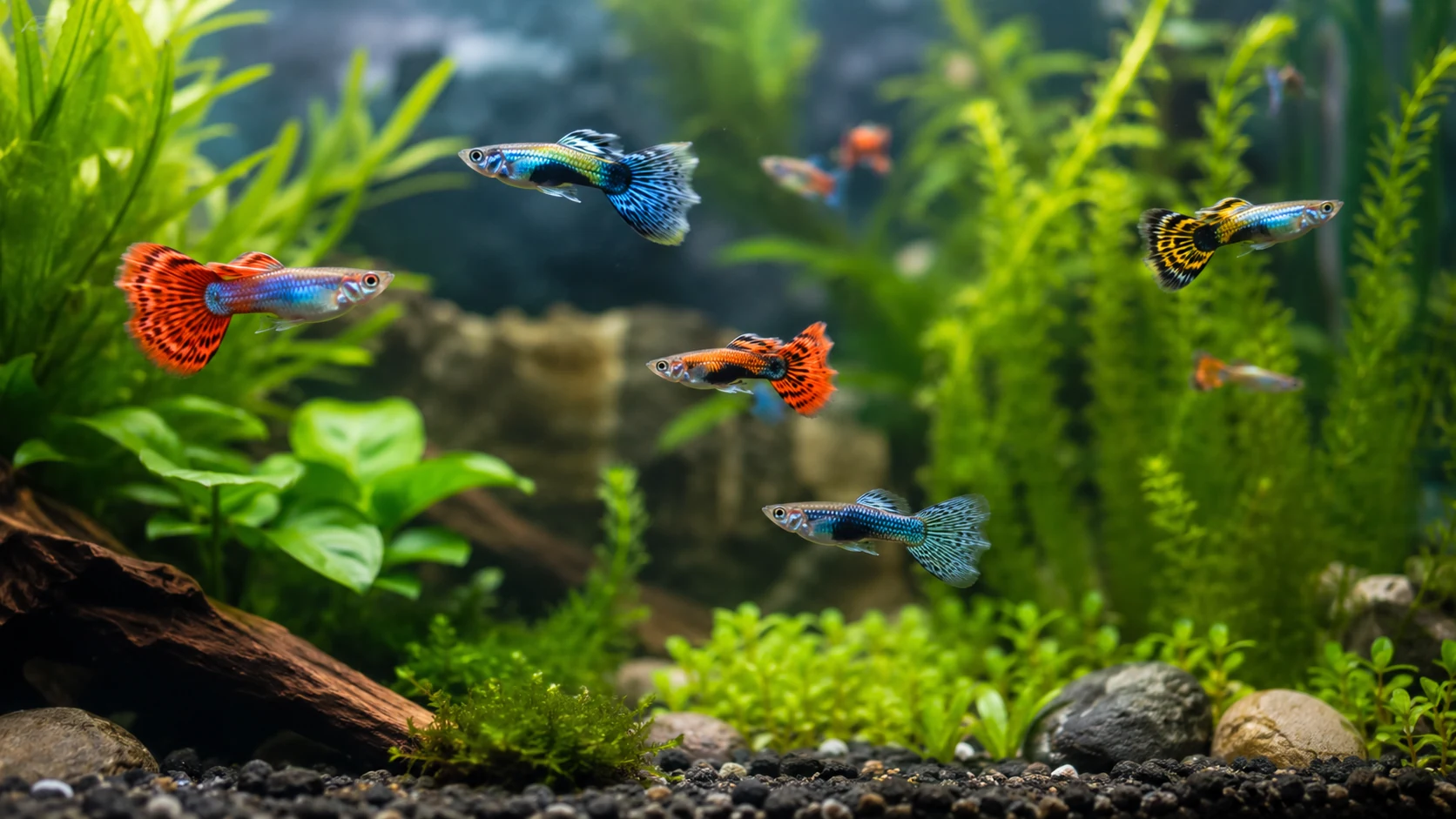
Guppies are beginner-friendly in the right tank.
That last part matters.
A healthy guppy is active, colorful, curious, and quick to eat. A poorly kept guppy is often treated like disposable beginner livestock: kept in a tiny uncycled tank, mixed into soft acidic water, overbred, overfed, or crowded with too many males chasing too few females.
The result is predictable. Torn fins, hiding females, fry everywhere, cloudy water, flashing, clamped fins, and a beginner wondering why an “easy fish” keeps dying.
Guppies are not hard fish. But they are livebearers with specific needs: stable water, enough minerals, warm temperatures, controlled stocking, and clean but not sterile maintenance.
The real reason guppies are popular
Guppies are adaptable, colorful, active, and widely available. They eat prepared foods, breed easily, and do not need a huge aquarium compared with many fish.
But “adaptable” does not mean “anything is fine.”
The guppy care problems I would watch first are:
- uncycled tanks;
- soft water with too little mineral content;
- unstable temperature;
- overfeeding;
- too many males chasing females;
- weak store stock from mass breeding;
- overstocking after fry appear;
- mixing guppies with fin-nipping or aggressive tank mates.
Guppy care at a glance
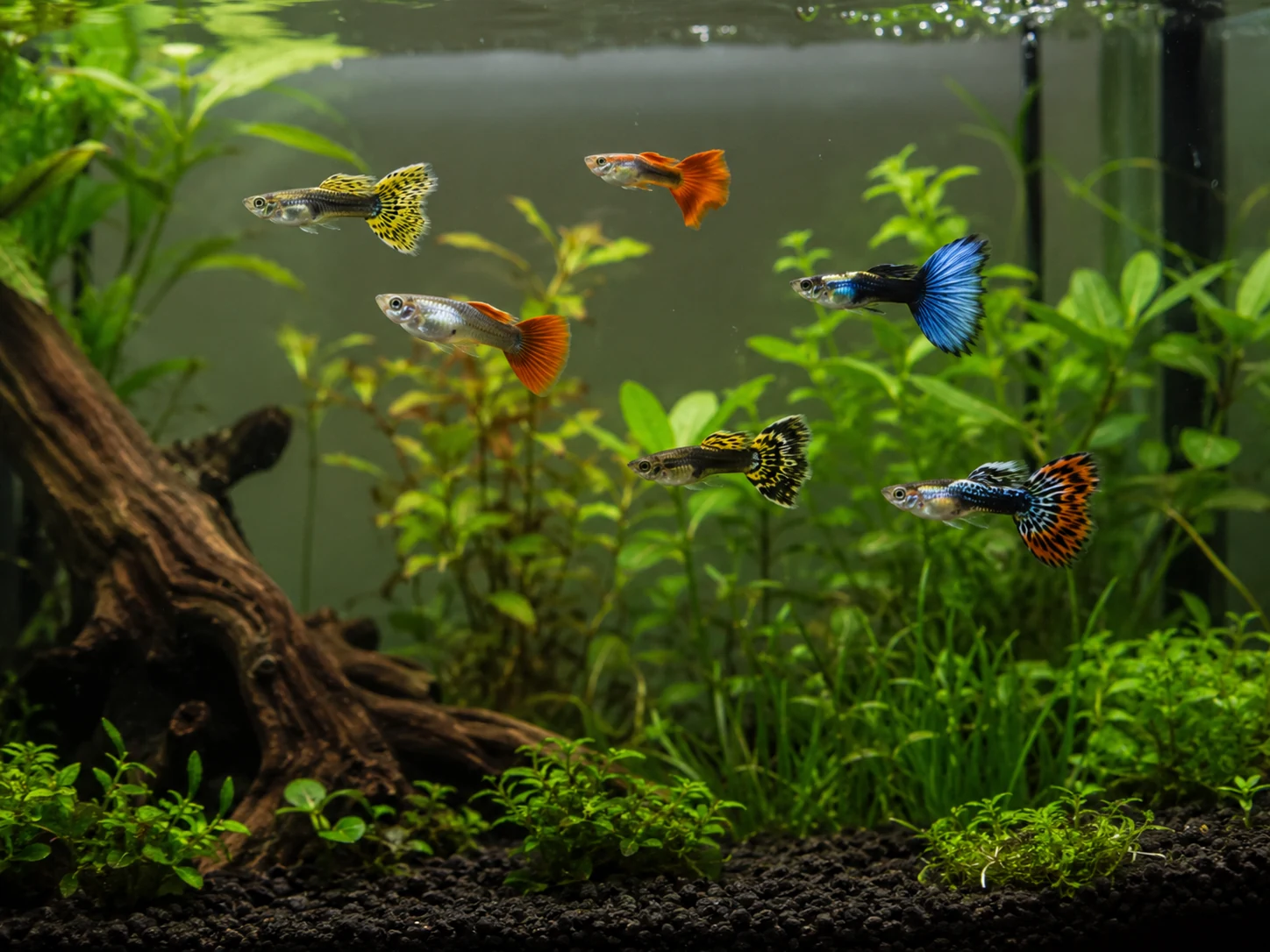
| Care point | Practical beginner target |
|---|---|
| Tank size | 10 gallons can work for a small group, but 20 gallons is easier and more stable |
| Temperature | Around 74–78°F / 23–26°C for most home setups |
| pH | Usually neutral to alkaline is preferred; avoid chasing exact pH |
| Hardness | Moderate to hard water is usually better than very soft water |
| Group | Plan sex ratio carefully or keep males only |
| Food | Small varied omnivore foods, controlled portions |
| Filtration | Gentle-to-moderate filter with protected intake if fry are present |
| Water changes | Regular partial changes based on nitrate and stocking |
Tank size: 20 gallons is easier than 10
A 10-gallon tank can keep a small guppy group, but it leaves little room for mistakes. Guppies breed. Males chase. Food gets overused. Fry hide in plants. Waste output rises quietly.
A 20-gallon tank gives you more water volume, more swimming space, and more time to notice problems before they become emergencies.
If you are brand new, choose the bigger tank if you can.
Water hardness matters
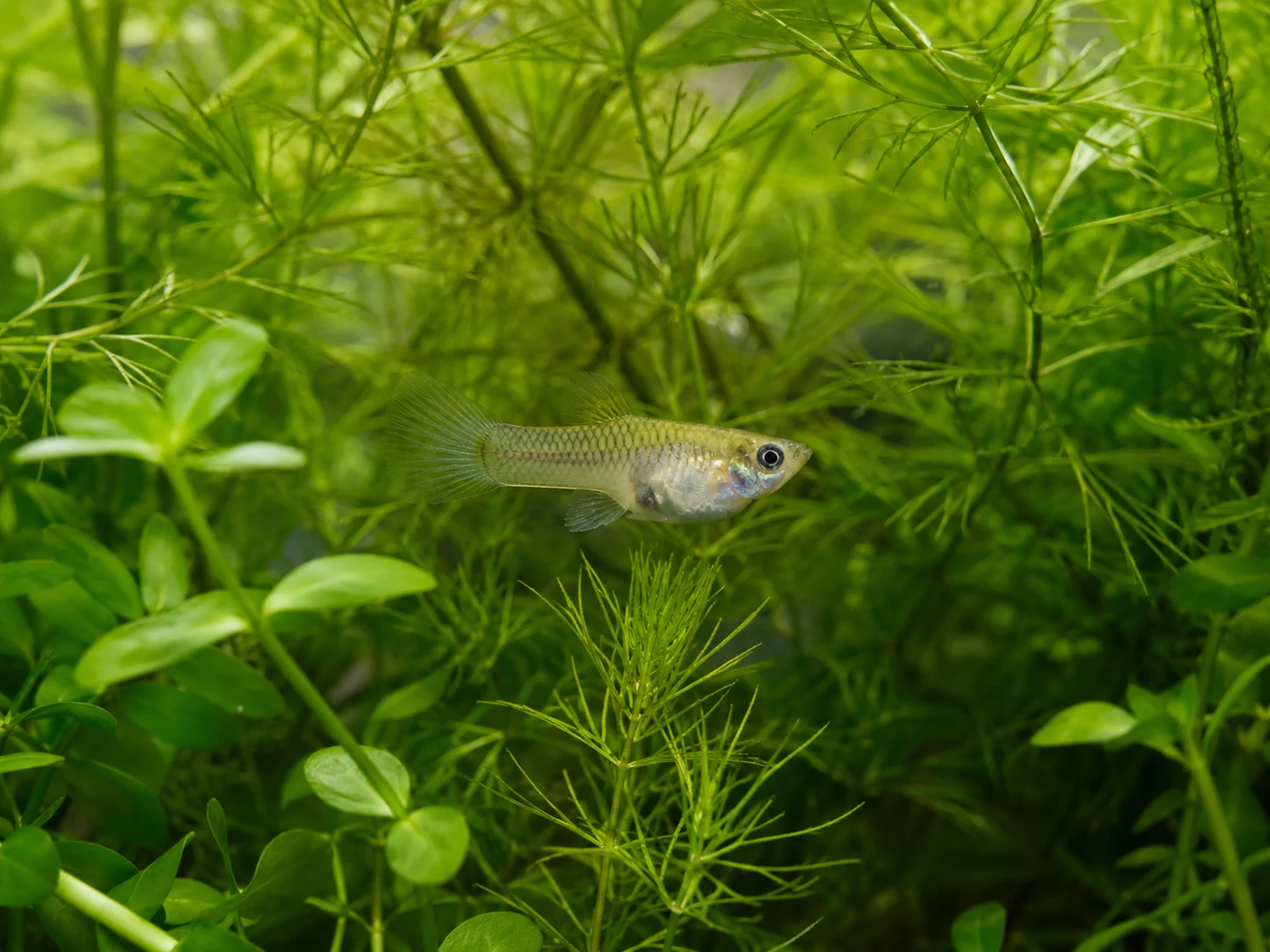
Clean water is not enough for guppies if the mineral profile is wrong.
Guppies are livebearers that usually do best in mineral-rich, moderately hard to hard water. They rely on dissolved calcium, magnesium, and carbonate buffering to maintain normal osmoregulation, muscle function, pregnancy recovery, and fin structure. When beginners keep guppies in very soft tap water or straight RO water, the tank can look clean while the fish are physiologically struggling.
This is the soft-water osmotic trap.
In very soft water, there is less mineral support outside the fish’s body. Water can move across the gills and skin in a way that forces the fish to spend more energy regulating internal salts and fluids. Over time, that chronic stress may show as clamped fins, shimmying, weak fry, poor recovery after transport, ragged tails, repeated “fin rot” that comes back after treatment, or sudden deaths after water changes.
Technical action: test pH, GH, and KH before blaming food, “weak stock,” or bacteria.
Danger/trap: adding random pH-up chemicals can create unstable swings without actually solving the mineral problem.
Safe process: aim for roughly 8–15 dGH general hardness and 4–8 dKH carbonate hardness, with a stable pH around 7.2–8.0. If your tap water is very soft, remineralize gradually with a livebearer-appropriate mineral product or use crushed coral carefully in the filter or substrate. Make changes slowly over multiple water changes, not all at once.
If your guppies came from very different water, acclimate them slowly. Sudden mineral changes can stress fish even when the final numbers look “better.”
Cycling still matters
Guppies are hardy compared with many fish, but they are not immune to ammonia and nitrite.
In a new tank, uneaten food and fish waste become ammonia. If nitrifying bacteria are not established, ammonia and nitrite can irritate gills, reduce oxygen transport, and weaken fish quickly. Guppies may keep swimming and eating while already being stressed.
Do not use guppy activity as proof the water is safe. Test it.
A cycled guppy tank should read:
- ammonia: 0 ppm;
- nitrite: 0 ppm;
- nitrate: controlled with water changes;
- temperature: stable;
- pH/GH/KH: suitable and not swinging.
Male-only or mixed group?
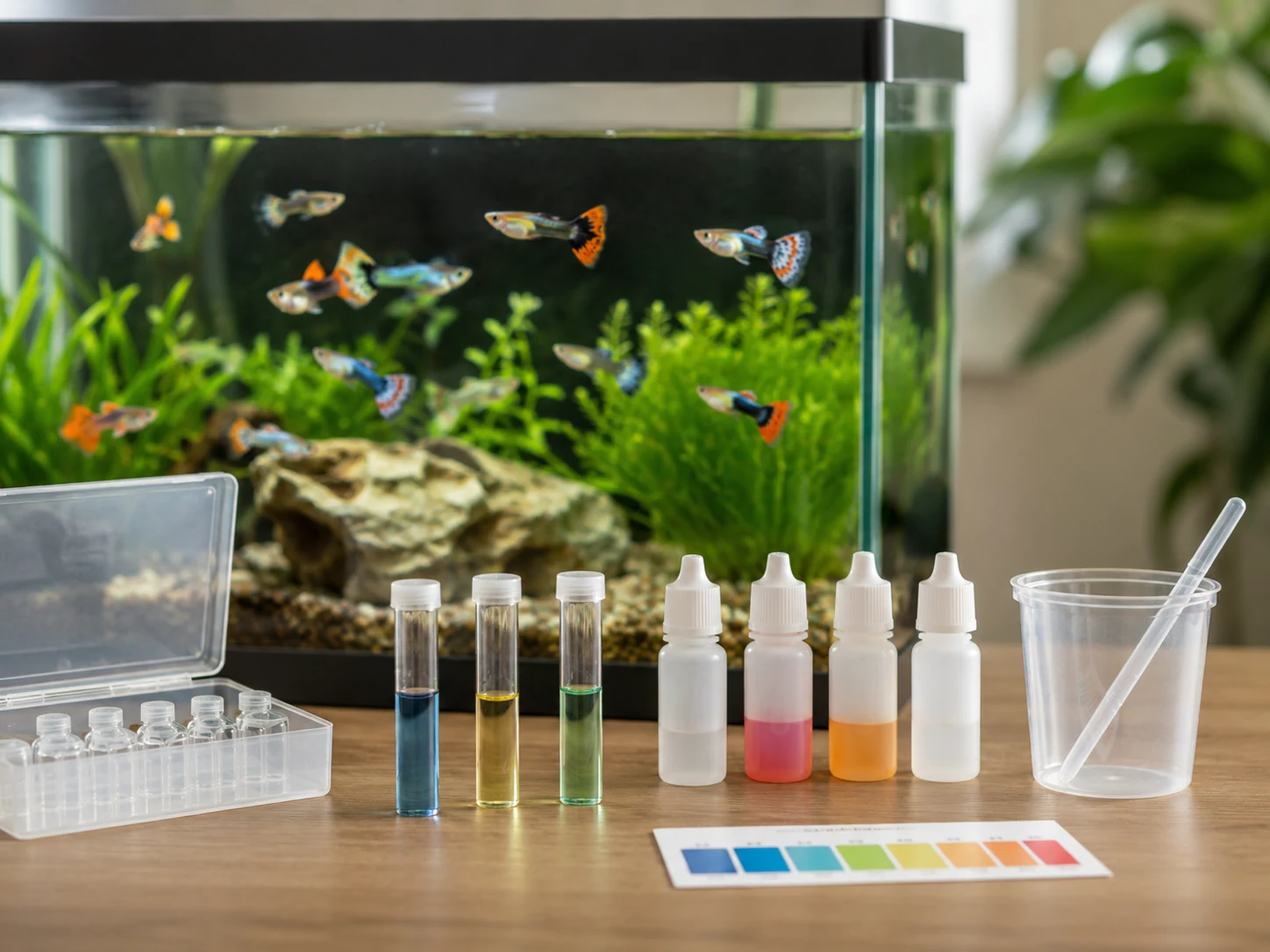
This decision matters more than beginners expect.
Male guppies are colorful and active, but they constantly court females. In a mixed group, too few females can be stressed by nonstop chasing. A common beginner ratio is one male to two or three females, but even that does not guarantee peace in a small tank.
Male-only tanks avoid fry explosions, but males can still spar and display. Choose enough space, visual breaks, and healthy stock.
Female-only tanks are calmer, but store females may already be pregnant.
If you do not want fry, do not buy mixed-sex guppies.
Guppy breeding is not always a bonus
Guppies breed easily. That is fun until the tank becomes crowded.
More fry means more food, more waste, more competition, and more pressure on the filter. If you save every fry without upgrading the tank or rehoming fish, water quality will decline.
Technical action: decide before buying guppies whether fry are welcome.
Danger/trap: letting population growth outrun filtration and water change capacity leads to nitrate buildup, stress, stunting, and disease.
Safe process: use a male-only group if you do not want fry, or plan grow-out space and rehoming before breeding starts.
Feeding guppies
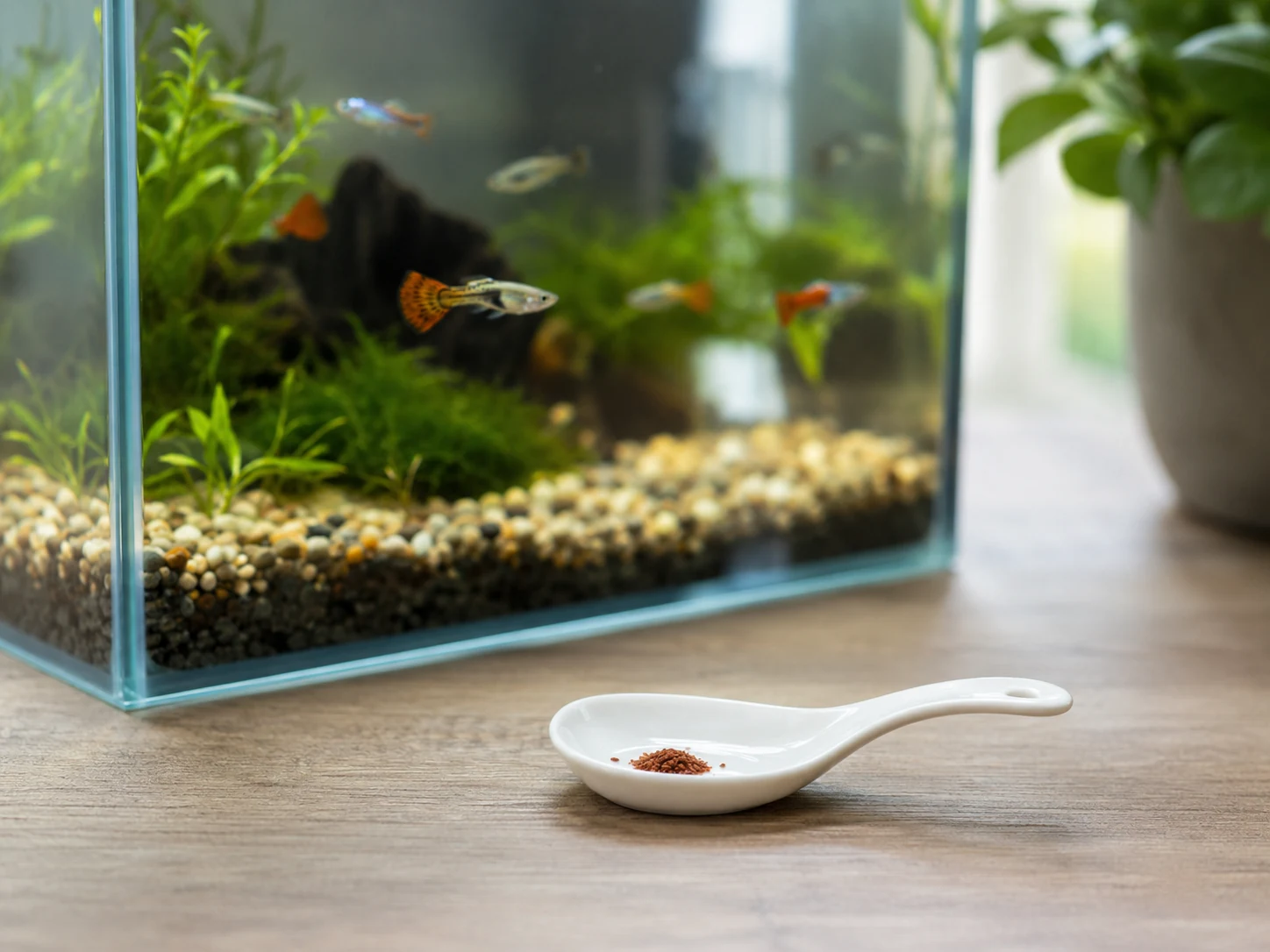
Guppies eat eagerly. That is useful, but it causes overfeeding.
Feed small foods that match their mouth size: quality micro pellets, crushed flakes, frozen baby brine shrimp, daphnia, or other appropriate small foods. Variety is good, but the amount matters more than the menu.
A practical schedule is once daily for most adult guppy tanks, or two tiny meals if the tank is mature and water quality stays stable. Remove leftovers within 5 minutes. If food reaches the bottom every day, reduce the portion.
Guppies peck constantly by nature, but a closed aquarium cannot absorb constant feeding without consequences.
Plants and cover
Guppies do well with plants.
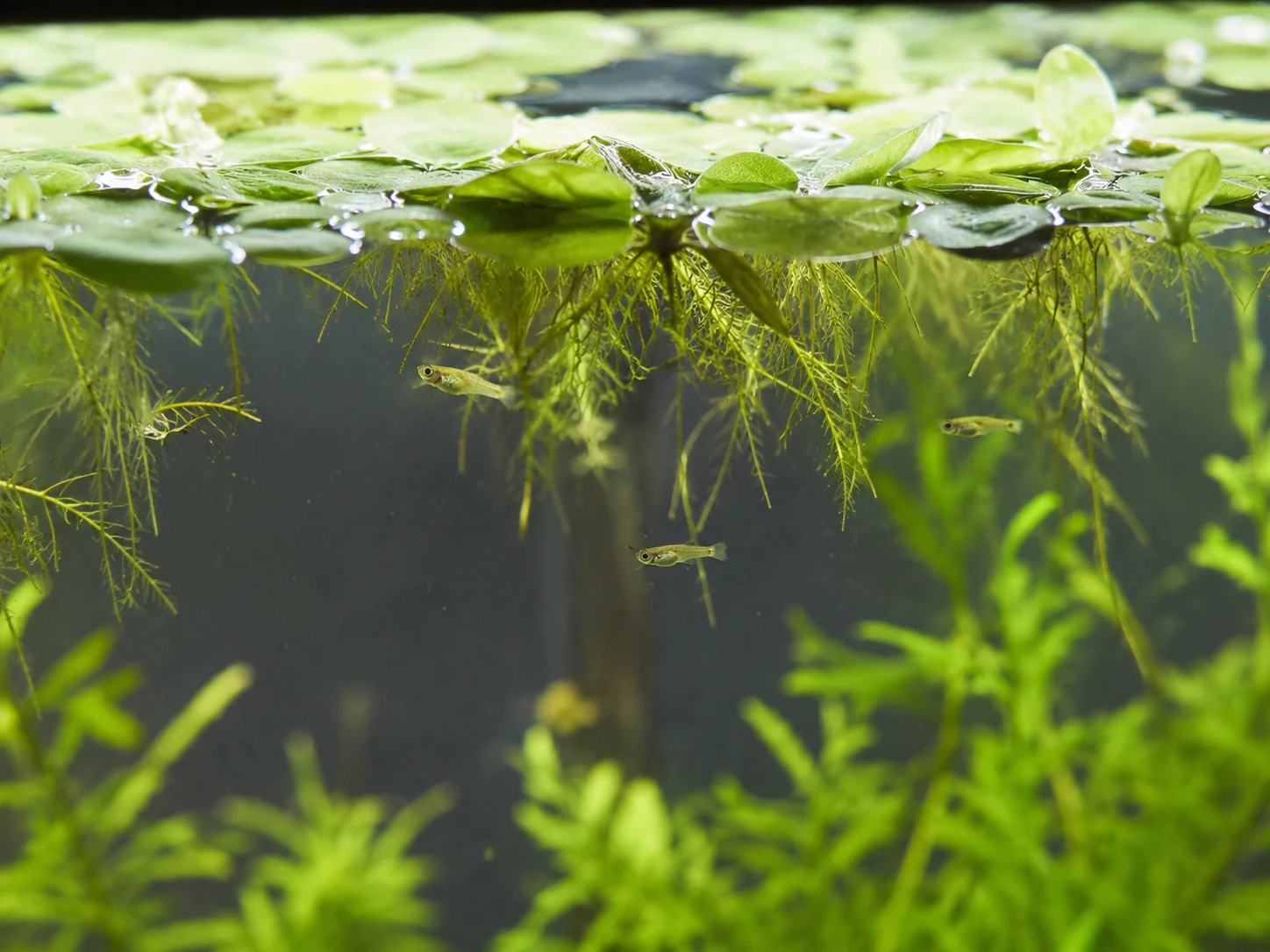
Plants give females and fry places to hide, break lines of sight, and make the aquarium feel safer. Floating plants can soften light and shelter fry, but do not let them cover the entire surface and block gas exchange.
Good beginner plant options include Java fern, Anubias, hornwort, water sprite, guppy grass, and floating plants used carefully.
Filtration and flow
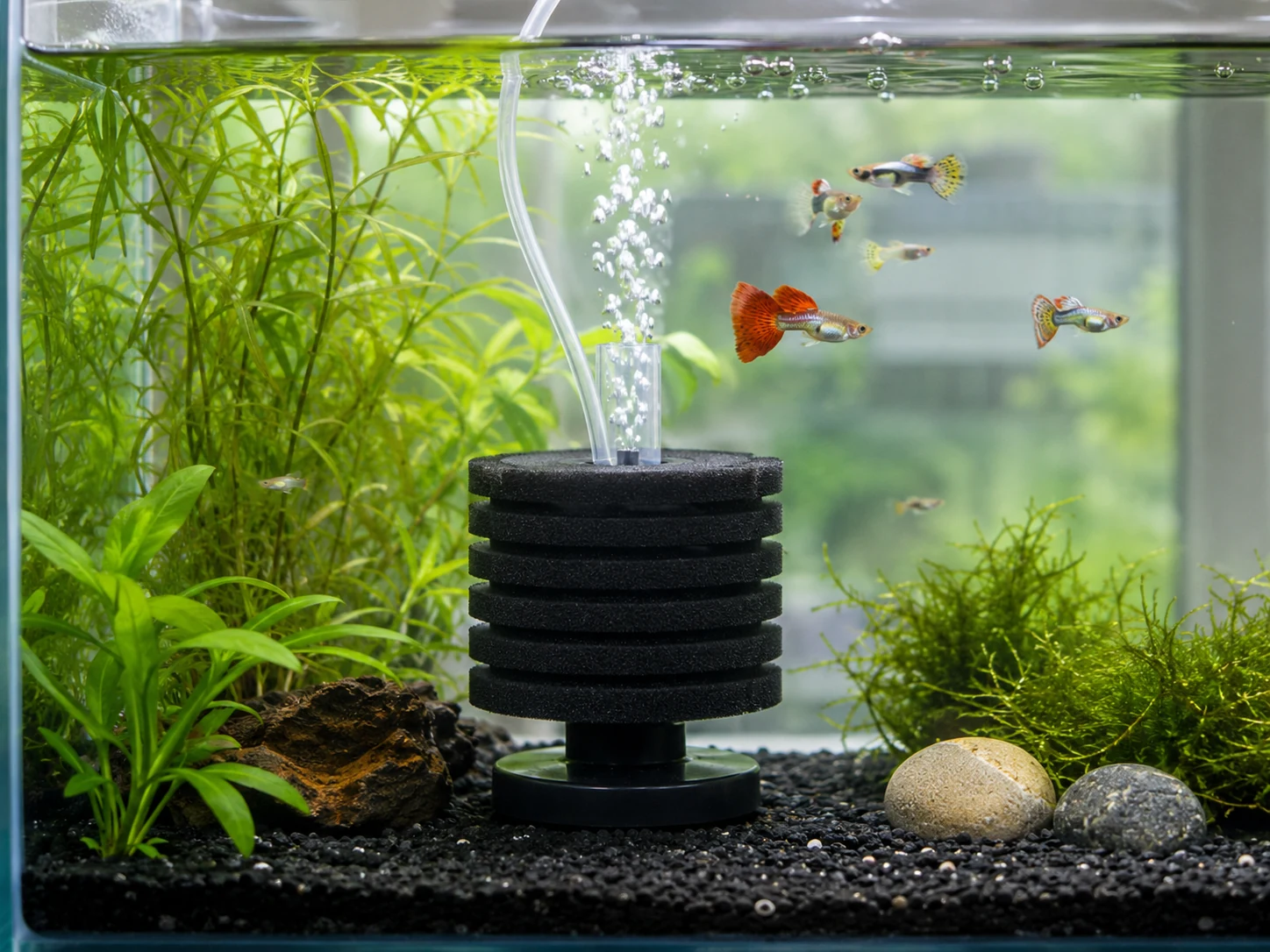
Use a filter that keeps the water moving and oxygenated without throwing guppies around. Sponge filters are excellent in fry tanks because they provide gentle flow and protect small fish from intakes. Hang-on-back filters can work, but use a pre-filter sponge if fry or small guppies are present.
Do not replace all media at once. Guppy tanks with many fish rely heavily on the biofilter.
If flow drops, rinse mechanical sponges in old tank water. Protect biological media.
Temperature and oxygen
Guppies are tropical fish, but warmer is not always better.
Raising temperature speeds metabolism and can make fish more active. It also lowers dissolved oxygen and can increase waste processing demand. In a crowded, overfed tank, warm water plus weak surface movement can become a stress amplifier.
Keep temperature stable and appropriate. If the room is cool, use a heater. If the room is hot, improve aeration and avoid overfeeding.
Tank mates
Good guppy tank mates are peaceful, similar-sized fish that tolerate similar water conditions.
Avoid fin nippers, aggressive fish, and fish that need very soft acidic water. Guppies’ long fins and bright colors can attract trouble.
Possible companions in suitable tanks may include platies, some peaceful livebearers, corydoras in appropriate groups and substrate, and certain small peaceful community fish. But compatibility depends on tank size, water parameters, and stocking.
Do not build a community tank by buying one of everything.
Common guppy problems
Clamped fins
Check water first: ammonia, nitrite, nitrate, pH, GH/KH, and temperature. Clamped fins are not a diagnosis; they are a stress sign.
Shimmying
Shimmying can be linked with stress, unsuitable water chemistry, temperature issues, or disease. In livebearers, very soft water and mineral imbalance are worth checking.
Torn fins
Look for male fighting, fin-nipping tank mates, sharp decor, and poor water quality.
Females hiding
Could be pregnancy, stress from males, bullying, or water quality. If males constantly chase females, add space, cover, or reconsider the group.
Sudden deaths after purchase
New guppies can be weakened by transport, poor store conditions, parasites, or different water chemistry. Quarantine is ideal if you have multiple tanks.
Guppy Starter Toolkit
Helpful items:
- liquid ammonia/nitrite/nitrate/pH test kit;
- GH/KH test kit if your water is soft or guppies struggle repeatedly;
- heater and thermometer;
- sponge filter or pre-filter sponge;
- small high-quality foods;
- floating plants or plant cover;
- water conditioner for chlorine and chloramine;
- siphon for light substrate cleaning.
A simple beginner guppy setup
For a beginner, I would rather see:
- 20-gallon tank;
- cycled sponge filter or gentle filter with pre-filter sponge;
- heater if needed;
- live plants or safe cover;
- male-only group if fry are not wanted;
- moderate-to-hard stable water;
- controlled feeding once daily;
- weekly testing until the tank’s pattern is predictable.
That setup is not fancy. It works because it respects the biology of the fish and the limits of the aquarium.
FAQ
Are guppies good beginner fish?
Yes, in the right tank. They are best for beginners who can provide stable, cycled, mineral-appropriate water and controlled stocking.
What size tank do guppies need?
A 10-gallon tank can work for a small group, but 20 gallons is easier, more stable, and better for beginners.
Do guppies need a heater?
In cool rooms, yes. Guppies need stable warm water. In naturally warm climates or rooms, a heater may not run often, but a thermometer is still needed.
Why are my guppies dying one by one?
Test water first: ammonia, nitrite, nitrate, pH, temperature, and ideally GH/KH. Also check stocking, male harassment, store quality, and disease signs.
Can I keep only male guppies?
Yes. Male-only groups can work and prevent fry, but males may still display or spar. Provide space and cover.
How many female guppies per male?
A common starting ratio is one male to two or three females, but this is not a guarantee in small tanks. Watch for female stress.
Do guppies like hard water?
Many guppies do better in moderately hard to hard water than in very soft acidic water. Stability matters more than chasing a perfect number.
How often should I feed guppies?
Most adult guppies do well with one small daily feeding. Two tiny meals can work in mature tanks if water quality stays stable.
Will guppies eat their fry?
They may. Dense plants help fry hide, but if you want to raise fry, plan a separate strategy.
Can guppies live with bettas?
Sometimes, but it is risky. Bettas may attack colorful male guppies, and guppies may stress some bettas. It depends on the individual fish and tank setup.
What GH and KH do guppies need?
A practical target is about 8–15 dGH and 4–8 dKH, with a stable pH around 7.2–8.0. Exact numbers can vary by local stock, but very soft, poorly buffered water is often harder on guppies than beginners expect.
Why do guppy tails split even when the tank looks clean?
Sometimes it is infection or fin-nipping, but repeated tail splitting can also come from chronic stress: soft water, unstable KH, poor recovery after shipping, ammonia/nitrite exposure, or mineral imbalance. Test GH, KH, pH, ammonia, and nitrite before assuming one medication will fix it.
Related Guides
- How to Cycle a Fish Tank Without Guessing When It’s Safe for Fish
- Fish Tank Size Guide
- How Often Should You Feed Aquarium Fish?
- Ammonia, Nitrite, and Nitrate
- Best Fish Food for Beginners
- Aquarium Maintenance Schedule
Author Box
Written by the Healthy Aquariums editorial team. We write for everyday fishkeepers who want practical, stable systems rather than quick fixes and guesswork.
Editorial Note
Guppies vary widely in quality because of mass breeding, store handling, and local water differences. This guide focuses on practical stability: cycled water, suitable hardness, controlled feeding, and stocking that does not overwhelm the system.
References
- Aquarium Co-Op. Care Guide for Guppies. https://www.aquariumcoop.com/blogs/aquarium/guppy-care-guide
- LiveAquaria. An Introduction to Livebearing Fish. https://www.liveaquaria.com/blogs/stocking-your-aquarium/an-introduction-to-livebearing-fish
- Merck Veterinary Manual. Environmental Diseases of Aquatic Animals in Aquatic Systems. https://www.merckvetmanual.com/exotic-and-laboratory-animals/aquatic-systems/environmental-diseases-of-aquatic-animals-in-aquatic-systems
- MSD Veterinary Manual. A Summary of Water Quality Tests and Recommended Use. https://www.msdvetmanual.com/multimedia/table/a-summary-of-water-quality-tests-and-recommended-use
- Tropical Fish Co. Guppy Care Guide. https://tropicalfishco.co.uk/care-guides/guppy
- Seriously Fish. Poecilia reticulata species profile. https://www.seriouslyfish.com/species/poecilia-reticulata/