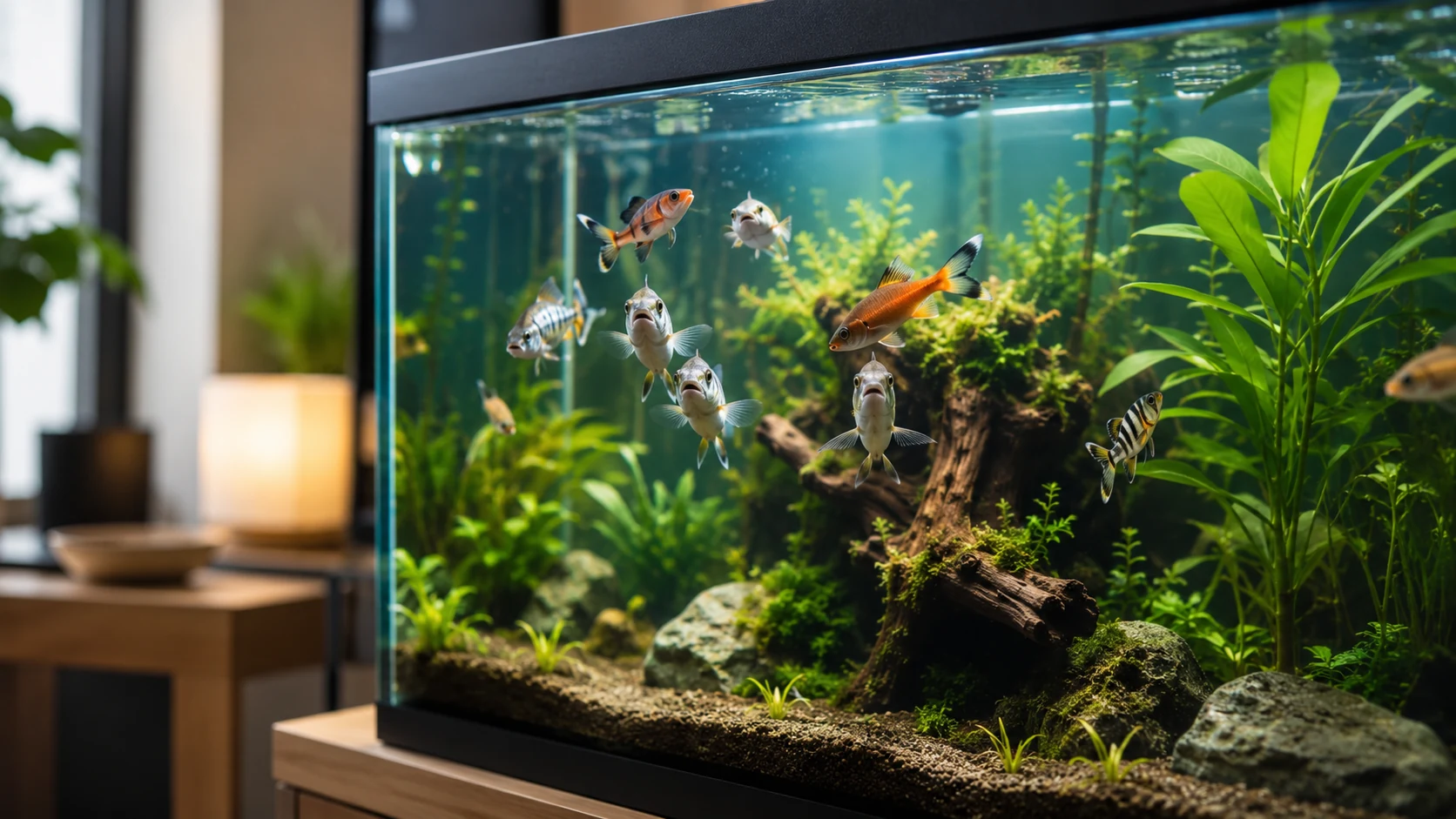
Most beginner feeding problems do not look like feeding problems at first.
The tank gets a little cloudy. The filter starts collecting slime faster than usual. The fish still rush to the front glass every time you walk by, so you add another pinch. A week later, one fish is hanging near the surface, another is hiding, and the test kit finally shows the real story: ammonia or nitrite has started to appear.
That is why feeding is not just nutrition. In a closed aquarium, feeding is also water pollution management.
Every flake, pellet, wafer, frozen cube, or vegetable slice becomes part of the tank’s chemistry. Food eaten by fish becomes waste. Food missed by fish breaks down directly in the water. Both routes feed bacteria, consume oxygen, and add nitrogen compounds that the biofilter has to process.
The safest beginner rule is simple: feed most adult community fish once per day, only as much as they can finish in about 2–3 minutes, and remove leftovers within 5 minutes.
That rule is not perfect for every species, but it prevents the most common beginner mistake: feeding the fish as if they live in a river instead of a small glass box.
Feed less than your eyes want to
Fish are very good at making people feel guilty.
Many species learn that a human near the tank means food. They crowd the glass, wiggle, follow your hand, and look hungry even when they are not starving. That behavior is not proof that they need another meal. It is often conditioning.
The practical question is not, “Do the fish want food?”
The better question is, “Can this tank safely process the waste from this feeding?”
The expanded-pellet trap: why dry food can cause bloating
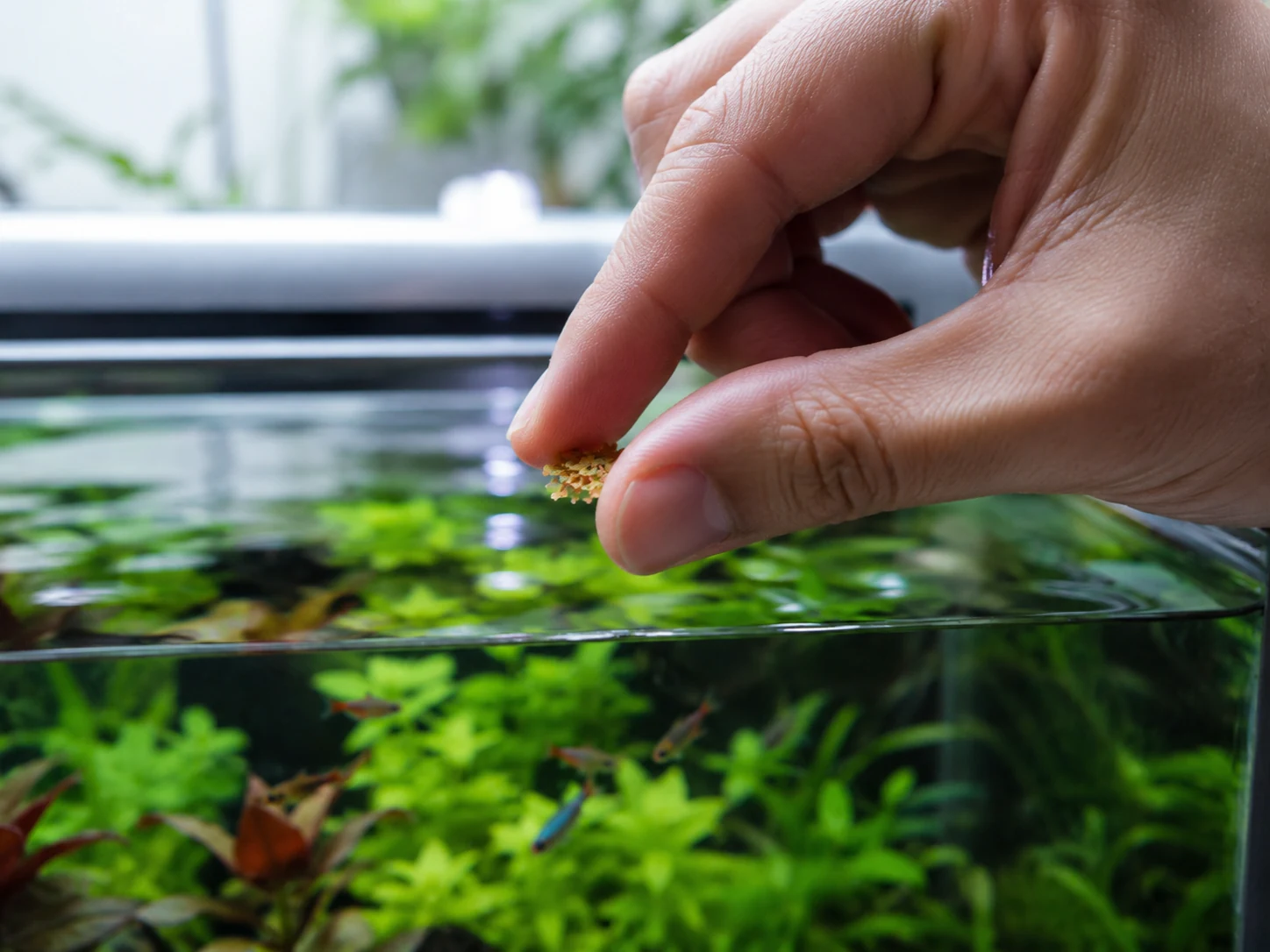
One beginner mistake looks harmless: pouring dry pellets straight from the container into the tank.
Dry pellets are made to stay shelf-stable. Once they hit water, many of them soften and expand. If a fish swallows a hard pellet immediately, some of that expansion can happen inside the digestive tract instead of in the cup or tank water first. This is not only a portion-size problem. It is a mechanical problem.
Goldfish are the classic risk species because they do not process food the same way a mammal does, and their rounded body shape gives the digestive tract less room to swell without affecting buoyancy. Some bottom feeders and short-bodied fish can also struggle when they gulp hard, oversized foods too quickly. The visible result may look like “swim bladder disease”: floating, tipping sideways, belly swelling, constipation, or a fish that looks normal until shortly after feeding.
Technical action: feed dry pellets only after measuring the portion.
Danger/trap: dry pellets can continue absorbing water after a fast-feeding fish has swallowed them, increasing digestive pressure and worsening constipation or buoyancy trouble.
Safe process: put the measured pellet portion into a small cup of aquarium water for 60–90 seconds before feeding. For larger pellets or very hard foods, soak a little longer until the pellet is soft but not disintegrating. Then pour in only what the fish can finish cleanly. This matters most for goldfish, fancy-bodied fish, bottom feeders, and any fish with a history of bloating after pellets.
Do not pre-soak a large batch for later use. Wet food spoils faster. Soak only the portion you are about to feed.
The beginner feeding rule that works most of the time
For a stable, cycled freshwater aquarium:
| Fish situation | Feeding frequency | Portion guide | Leftover rule |
|---|---|---|---|
| Most adult community fish | Once daily | What they finish in 2–3 minutes | Remove leftovers within 5 minutes |
| Small active fish in a mature tank | 1–2 small meals daily | Smaller pinches, not larger meals | No food should drift around later |
| Fry or young growing fish | 2–4 tiny meals daily | Very small portions | Siphon or remove excess quickly |
| Bottom feeders | Target feed after upper fish slow down | Sinking food placed deliberately | Remove uneaten pieces after feeding window |
| Goldfish | Usually once daily, sometimes two small meals | Sinking pellet or gel food portioned carefully | Watch waste load closely |
| Bettas | Usually once or twice daily | Few small pellets or measured foods | Stop before the belly looks swollen |
If the tank is new, overstocked, under-filtered, or recovering from ammonia/nitrite problems, feed less. A fish can usually handle a light feeding schedule much better than it can handle toxic water.
What happens when food enters the aquarium
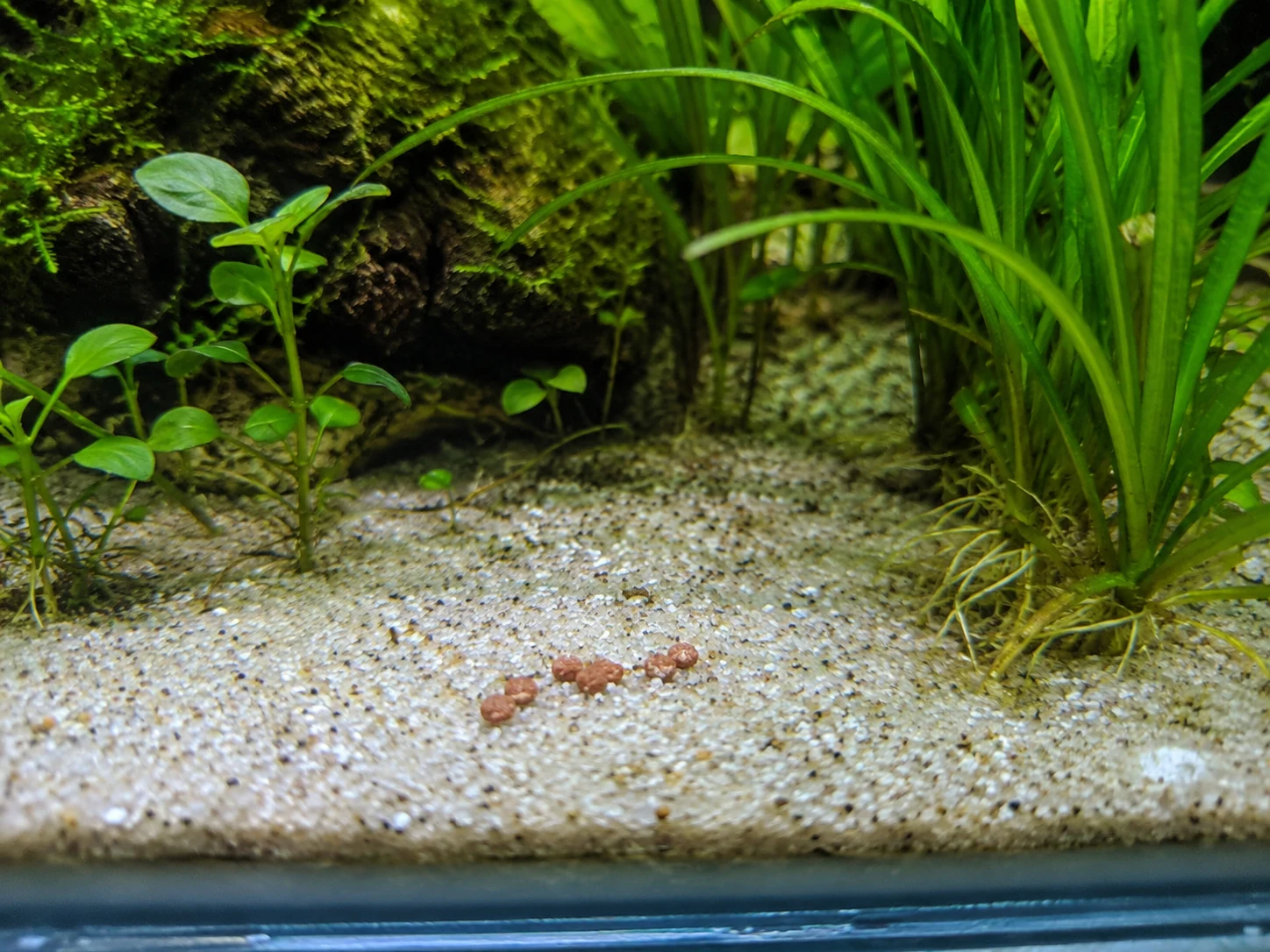
Here is the domino chain that matters.
You add too much food. Fish eat some of it, but not all. Uneaten food softens, breaks apart, and settles into gravel, plant bases, filter intakes, and dead spots. Bacteria start breaking it down. That process consumes dissolved oxygen and releases ammonia. Fish also release ammonia directly through the gills and through waste.
In a mature tank, nitrifying bacteria convert ammonia into nitrite, then nitrate. In a new or overloaded tank, that conversion may not keep up. Ammonia and nitrite can then irritate the gills, reduce oxygen transport, and make fish act sick even though the food itself looked harmless.
This is why a small extra pinch every day can become a water quality problem by the weekend.
The 5-minute removal rule
Any experimental food needs a removal rule.
When you try a new pellet, wafer, frozen food, vegetable slice, gel food, or treat, do not drop it in and walk away. Watch what happens. If it is not being eaten cleanly, remove it.
For most beginner tanks, use this rule:
Remove uneaten food within 5 minutes.
For soft foods that break apart quickly, use a shorter window: 2–3 minutes. Frozen foods, powdered foods, soft gels, and crushed flakes can disappear into the substrate fast. Once they get into the gravel, they stop looking like food and start acting like ammonia fuel.
Technical action: try only a small amount of the new food.
Danger/trap: if the food is ignored or crumbles, it can rot in the tank and raise ammonia.
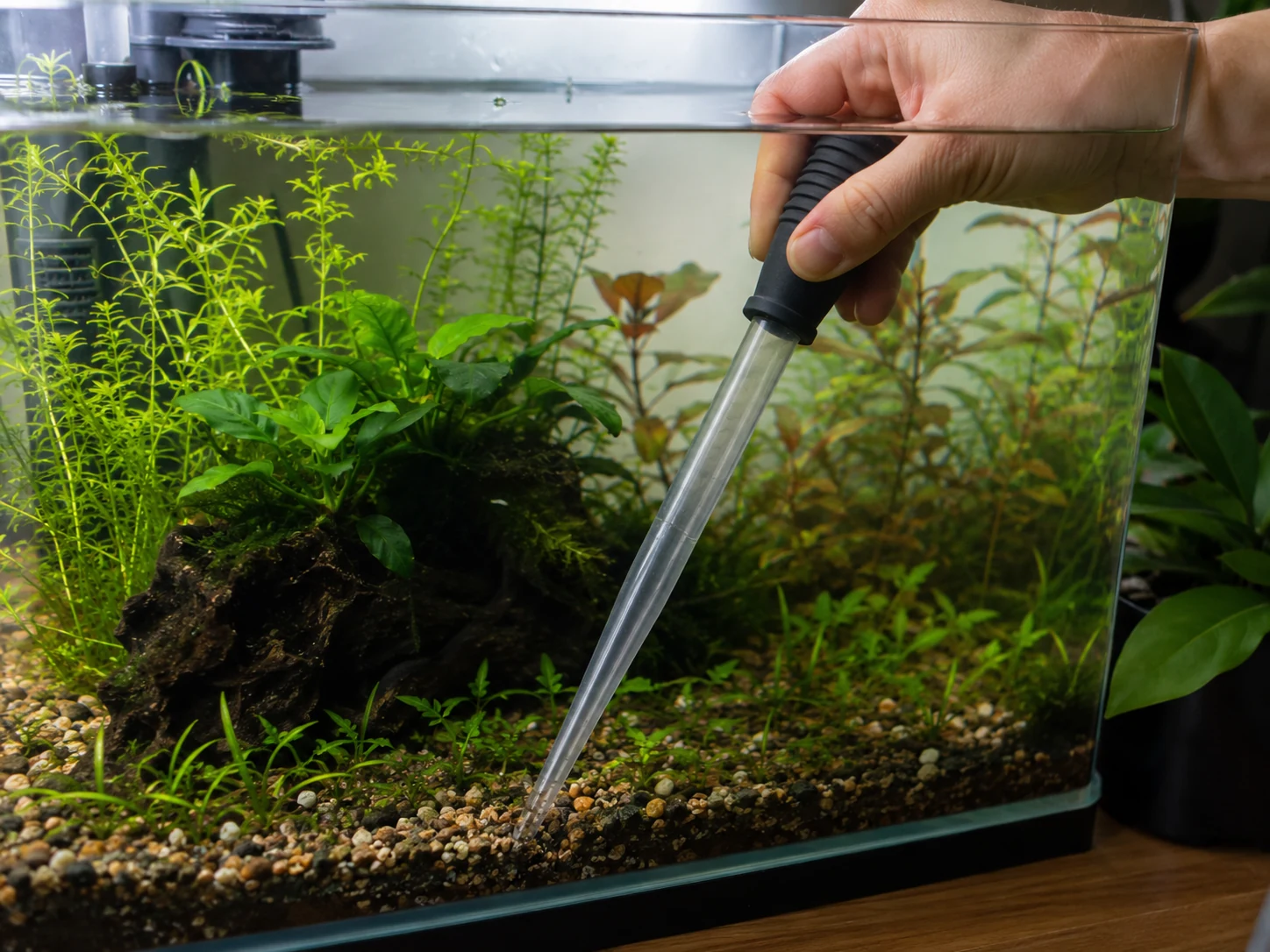
Safe process: feed a tiny test portion, watch for 2–5 minutes, then remove leftovers with a net, turkey baster, feeding pipette, or siphon.
How much food is a “small pinch”?
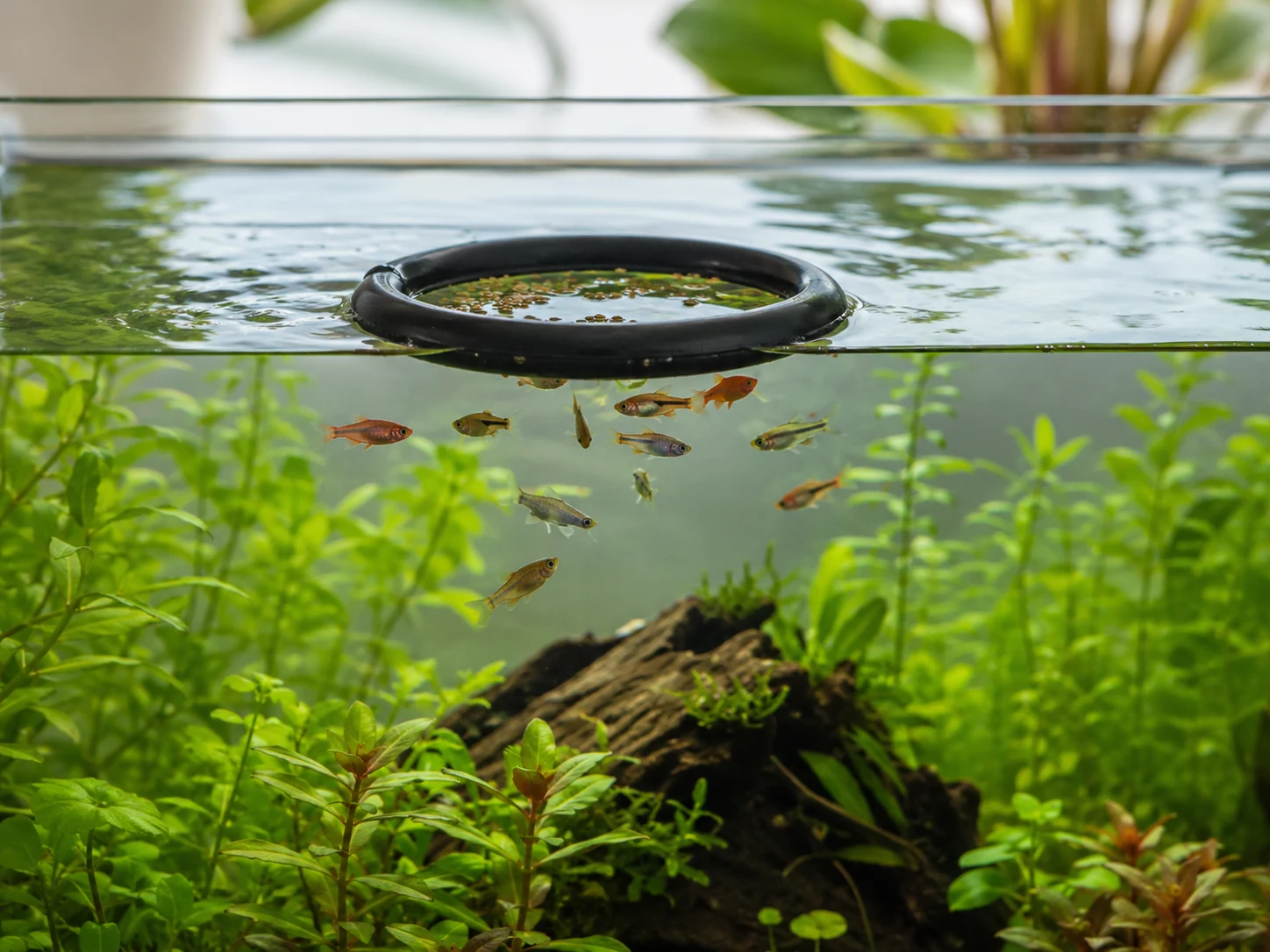
A small pinch is usually smaller than beginners think.
For tiny community fish such as small tetras, rasboras, guppies, white clouds, and small danios, a reasonable first portion is a pinch that disappears quickly while the fish are still actively eating. If flakes are still floating around after the first minute, you probably added too much.
For pellets, count them at first. It feels fussy, but it teaches your eye. If a betta reliably eats 4–6 small pellets, that is more useful than “a pinch.” If six small goldfish pellets leave the fish still active but not swollen, that is better than shaking the container over the tank.
Food manufacturers often write generous feeding instructions because they do not know your tank size, filtration, stocking level, or nitrate trend. Your test kit is a better judge than the back of the food container.
Feed the fish, not the filter
Food that goes into the filter is not “saved for later.” It is waste.
A strong filter can hide feeding mistakes for a while because it collects uneaten food. But if that food stays trapped in mechanical media, it still decomposes. The filter becomes a rotting food box with water constantly passing through it.
That does not mean you should clean the entire filter aggressively. It means you should protect the biofilter while removing the trapped waste.
Technical action: rinse clogged mechanical media when flow drops or debris builds up.
Danger/trap: replacing all filter media or washing biological media under untreated tap water can damage nitrifying bacteria and trigger ammonia/nitrite problems.
Safe process: rinse sponges or floss gently in old tank water during a water change. Preserve established biological media unless it is physically falling apart.
Fish begging is not a feeding schedule
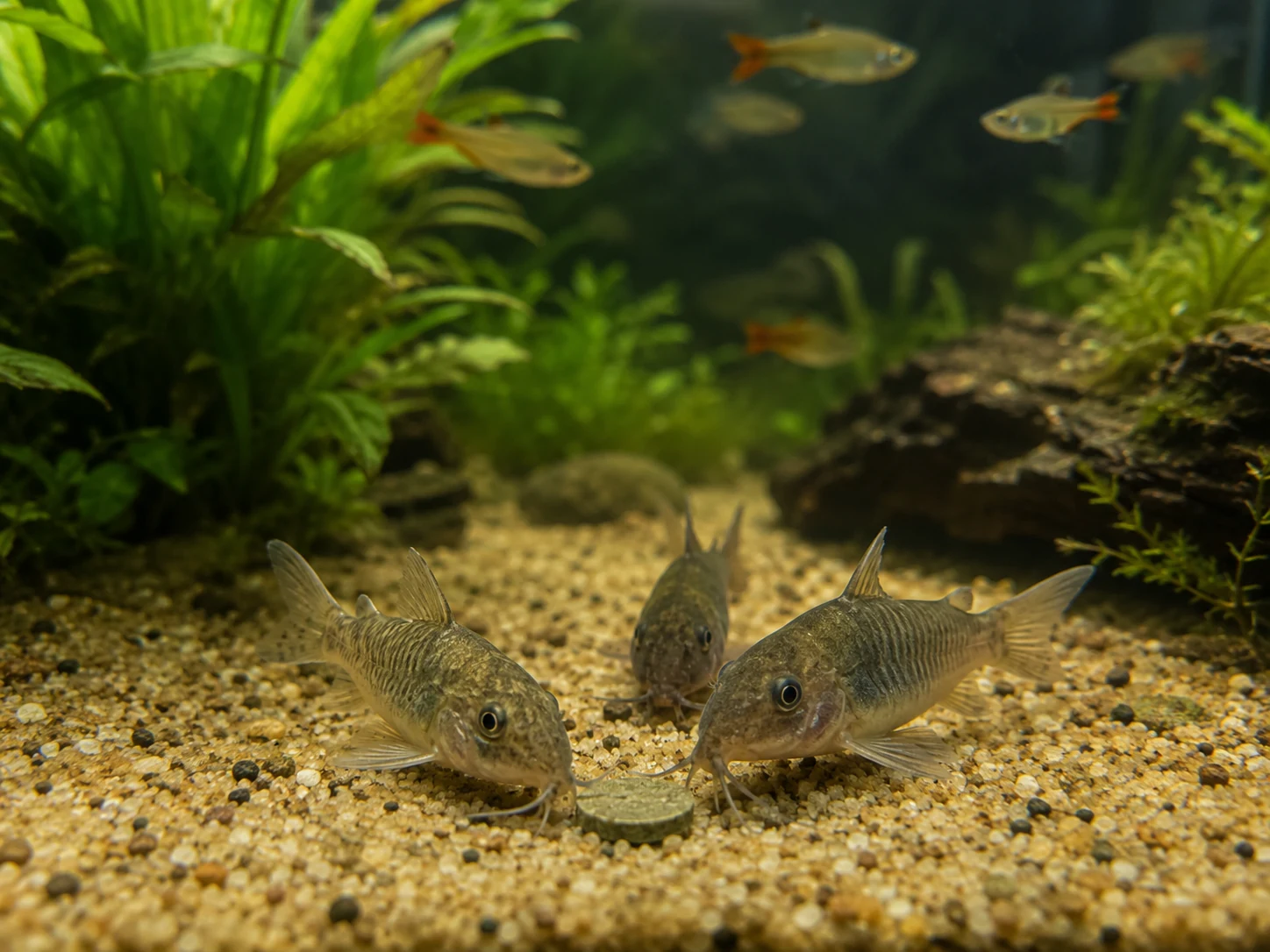
Many aquarium fish will beg because begging works.
Guppies, goldfish, mollies, platies, bettas, cichlids, and many community fish quickly learn feeding cues. They respond to footsteps, shadows, lids opening, or the food container. That behavior looks like hunger because mammals associate begging with need.
In fish, it is often opportunity.
A healthy fish that rushes to the front, eats strongly, then returns to normal swimming is usually fine. A fish that begs all day but has a round belly and produces long strings of waste is not underfed. It may be overfed.
When fish spit food out
Do not immediately label the fish picky.
A fish that takes food and spits it out may be dealing with several different problems:
- the food is too large or too hard;
- the fish is stressed from a recent move;
- the water is irritating its gills or mouth;
- the fish has mouth damage;
- internal parasites or gill irritation are affecting feeding behavior;
- temperature is outside the comfortable range, slowing appetite or metabolism.
The first check is not a new food. The first check is water.
Test ammonia, nitrite, nitrate, pH, and temperature. Watch breathing rate, clamped fins, hiding, flashing, gasping, and whether other fish are eating normally. If several fish suddenly start spitting food or refusing food, assume a water or environmental problem until proven otherwise.
Feeding and temperature are connected
Fish metabolism changes with temperature.
Warmer water usually increases metabolism and feeding response, but warmer water also holds less dissolved oxygen. If the tank is warm, overfed, and low in surface movement, the system is pushed in two directions at once: fish need more oxygen while the water holds less of it and decaying food uses more of it.
Do not fix poor appetite by raising temperature blindly.
Technical action: keep species in their appropriate temperature range.
Danger/trap: raising temperature can lower oxygen availability and increase fish oxygen demand.
Safe process: when temperature is raised for a valid reason, improve surface agitation or aeration, test water, and feed lightly until behavior and water quality are stable.
How often to feed common beginner fish
| Fish type | Practical beginner schedule | Notes |
|---|---|---|
| Guppies | Once daily, or two tiny meals | Easy to overfeed because they beg constantly. Watch fry production and waste. |
| Platies | Once daily | Hardy, but still pollute the tank if fed heavily. |
| Zebra danios | Once daily | Active fish; small meals are better than large dumps. |
| White cloud mountain minnows | Once daily | Cooler-water fish; match food to mouth size. |
| Neon tetras | Once daily | Feed small foods; they do better in mature, stable tanks. |
| Corydoras | Target feed sinking food after lights dim slightly | Do not assume they live on leftovers. |
| Bettas | Once or twice daily | Count pellets and avoid swollen belly feeding. |
| Goldfish | Once daily for many beginner tanks | Heavy waste producers; feeding and water changes are tightly linked. |
The exact schedule depends on temperature, age, species, filtration, and tank maturity. But for beginners, a conservative schedule is safer than a generous one.
Bottom feeders still need deliberate feeding

A common mistake is assuming corydoras, kuhli loaches, shrimp, and snails will clean up everything.
They may eat some leftovers, but they are not a waste disposal team. If upper-water fish eat all the food before it sinks, bottom feeders may go hungry. If you overfeed so food reaches the bottom, the tank may become polluted.
Use targeted feeding instead.
Add a sinking pellet, wafer, or gel food after the main fish slow down or when room lights are dim. Watch whether bottom feeders actually reach it. Remove leftovers later. Corydoras especially should not be treated as cleanup tools; they are social fish with their own feeding needs.
Should you skip a day of feeding?
For most healthy adult fish, one fasting day per week is usually safe and often helpful in beginner tanks.
A fasting day gives the digestive system a break and reduces waste input. It does not replace water changes, but it can help prevent the slow creep of overfeeding.
Do not fast fry, very young fish, recovering fish, or species with specific grazing needs without understanding their needs. Also, do not use fasting to compensate for chronic overstocking. If nitrate climbs too quickly even with moderate feeding, the tank needs a stocking, filtration, or maintenance review.
Vacation feeding: the safest option is often less food
Many beginner disasters happen right before a trip.
The owner adds a vacation block, asks a friend to feed generously, or pre-feeds heavily “so they won’t be hungry.” The fish would have been safer with less food.
For many healthy adult fish, a few days without food is safer than several days of overfeeding by a helper. For longer trips, use pre-portioned feeding packets or an automatic feeder that you test for at least a week before leaving.
Technical action: prepare feeding portions before travel.
Danger/trap: untrained helpers often feed too much because fish look hungry.
Safe process: place each feeding in a small labeled container or bag. Hide the main food container.
Signs you may be overfeeding
Overfeeding rarely announces itself with one dramatic symptom. Look for patterns:
- cloudy water after feeding;
- food reaching the bottom every day;
- fish with swollen bellies;
- long strings of waste;
- rising nitrate despite water changes;
- ammonia or nitrite appearing in a cycled tank;
- algae getting worse after increasing food;
- filter pads clogging quickly;
- fish gasping, hiding, or acting dull after meals.
If ammonia or nitrite appears, treat it as a water quality issue first. Reduce or pause feeding temporarily, test daily, improve aeration, remove decaying food, and do safe partial water changes with conditioned water.
A simple 7-day feeding reset
Use this when the tank is cloudy, algae is increasing, nitrate is rising, or you suspect overfeeding.
Day 1: Test ammonia, nitrite, nitrate, pH, and temperature. Remove visible leftovers and debris. Feed nothing or only a very small meal if fish are healthy adults.
Days 2–3: Feed once daily at half the previous amount. Watch whether every piece is eaten.
Days 4–7: Continue one small daily meal. Remove leftovers within 5 minutes. Rinse mechanical media only if it is clogged, using old tank water.
At the end of the week, compare nitrate trend, water clarity, fish behavior, and filter clogging. If the tank improves, the original feeding routine was too heavy.
Beginner Feeding Toolkit
A simple toolkit makes feeding safer and more consistent:
- a reliable liquid water test kit for ammonia, nitrite, nitrate, and pH;
- a small feeding ring for floating foods;
- sinking pellets or wafers for bottom feeders;
- a turkey baster or feeding pipette for removing leftovers;
- small containers for pre-portioned food;
- a gravel siphon for trapped food and waste;
- high-quality staple food matched to the species;
- an automatic feeder only after testing it for several days.
This is not about buying more gadgets. It is about removing guesswork.
The best feeding schedule for beginners
Start with this:
Feed once per day. Give only what fish finish in 2–3 minutes. Remove leftovers within 5 minutes. Skip one day per week for healthy adult fish if the tank is stable. Test water weekly, and test immediately if fish stop eating, gasp, hide, clamp fins, flash, or act abnormal.
Then adjust based on evidence, not begging.
If fish are healthy, active, and water parameters stay stable, the schedule is working. If nitrate climbs too fast, algae worsens, the filter clogs quickly, or ammonia/nitrite appears, the tank is telling you the food load is too high.
FAQ
How many times a day should I feed aquarium fish?
Most adult freshwater community fish do well with one small feeding per day. Some active small fish can handle two very small meals, but beginners usually do better starting with one controlled feeding.
Is it okay to feed fish twice a day?
Yes, if each meal is small and water quality stays stable. Two small meals are safer than one large dump of food, but they still add up.
How long should fish take to eat their food?
A practical beginner target is 2–3 minutes. Remove leftovers within 5 minutes, sooner if the food softens or breaks apart quickly.
Why do my fish always act hungry?
Many fish learn to associate people with food. Begging does not always mean hunger. Watch body condition, waste, behavior, and water quality instead of feeding every time they ask.
Can overfeeding kill fish?
Yes. Overfeeding can lead to uneaten food, ammonia, nitrite, low oxygen, clogged filters, and unstable water. The fish may die from the water quality collapse rather than from the food itself.
Should I feed fish if ammonia or nitrite is present?
Feed very lightly or pause feeding temporarily while you correct the water quality problem. Ammonia and nitrite emergencies should be handled with testing, conditioned water changes, aeration, and protection of the biofilter.
Do bottom feeders eat leftover food?
They may eat some, but they should not be used as cleanup tools. Corydoras and other bottom fish need deliberate feeding with appropriate sinking foods.
Should I remove uneaten food?
Yes. Uneaten food should be removed before it breaks down. Use a net, turkey baster, feeding pipette, or siphon.
Can fish go a day without food?
Most healthy adult fish can handle one fasting day per week. Fry, very young fish, and certain specialized feeders may need more frequent feeding.
What should I do if a fish spits food out?
Check food size first, but do not stop there. Test water, check temperature, watch breathing and fins, and look for mouth damage, bullying, or disease signs.
Should I soak pellets before feeding aquarium fish?
For many small tropical fish eating tiny micro pellets, soaking is optional. For goldfish, fancy-bodied fish, bottom feeders, or fish that bloat after eating, soaking pellets in a small cup of aquarium water for 60–90 seconds is safer. It lets the food soften and expand before the fish swallows it.
Can dry pellets cause swim bladder problems?
Dry food is not the only cause of buoyancy trouble, but hard pellets that expand after being swallowed can contribute to constipation and digestive pressure, especially in goldfish and short-bodied fish. If a fish floats, tips, swells, or struggles after pellet meals, stop feeding dry pellets directly and review food size, soaking, water quality, and constipation risk.
Related Guides
- How to Cycle a Fish Tank Without Guessing When It’s Safe for Fish
- Ammonia, Nitrite, and Nitrate: What They Mean in a Fish Tank
- Fish Not Eating: Common Causes, Warning Signs, and What to Check First
- Fish Gasping at the Surface: What to Check First
- Best Fish Food for Beginners
- Aquarium Maintenance Schedule for Beginners
Author Box
Written by the Healthy Aquariums editorial team. Our goal is to help everyday fishkeepers make calmer, safer decisions by connecting fish behavior, water chemistry, and practical maintenance instead of treating aquarium problems as isolated guesses.
Editorial Note
This guide is educational and does not replace veterinary care. Sudden appetite loss, gasping, flashing, clamped fins, visible sores, swelling, or repeated deaths should be treated as warning signs. Test water first, stabilize the tank, and seek qualified aquatic veterinary help when disease is suspected.
References
- Merck Veterinary Manual. Environmental Diseases of Aquatic Animals in Aquatic Systems. https://www.merckvetmanual.com/exotic-and-laboratory-animals/aquatic-systems/environmental-diseases-of-aquatic-animals-in-aquatic-systems
- MSD Veterinary Manual. Common Environmental Hazards for Fish. https://www.msdvetmanual.com/multimedia/table/common-environmental-hazards-for-fish
- Aqueon. The Dangers of Uneaten Fish Food. https://www.aqueon.com/articles/dangers-of-uneaten-fish-food
- LiveAquaria. The Dangers of Overfeeding Fish. https://www.liveaquaria.com/blogs/fish-health-nutrition/the-dangers-of-overfeeding-fish
- The Spruce Pets. Determining How Much to Feed Aquarium Fish. https://www.thesprucepets.com/how-much-should-i-feed-my-fish-1378746
- Canadian Veterinary Medical Association. Swim Bladder Problems in Goldfish. https://www.canadianveterinarians.net/related-resources/swim-bladder-problems-in-goldfish/