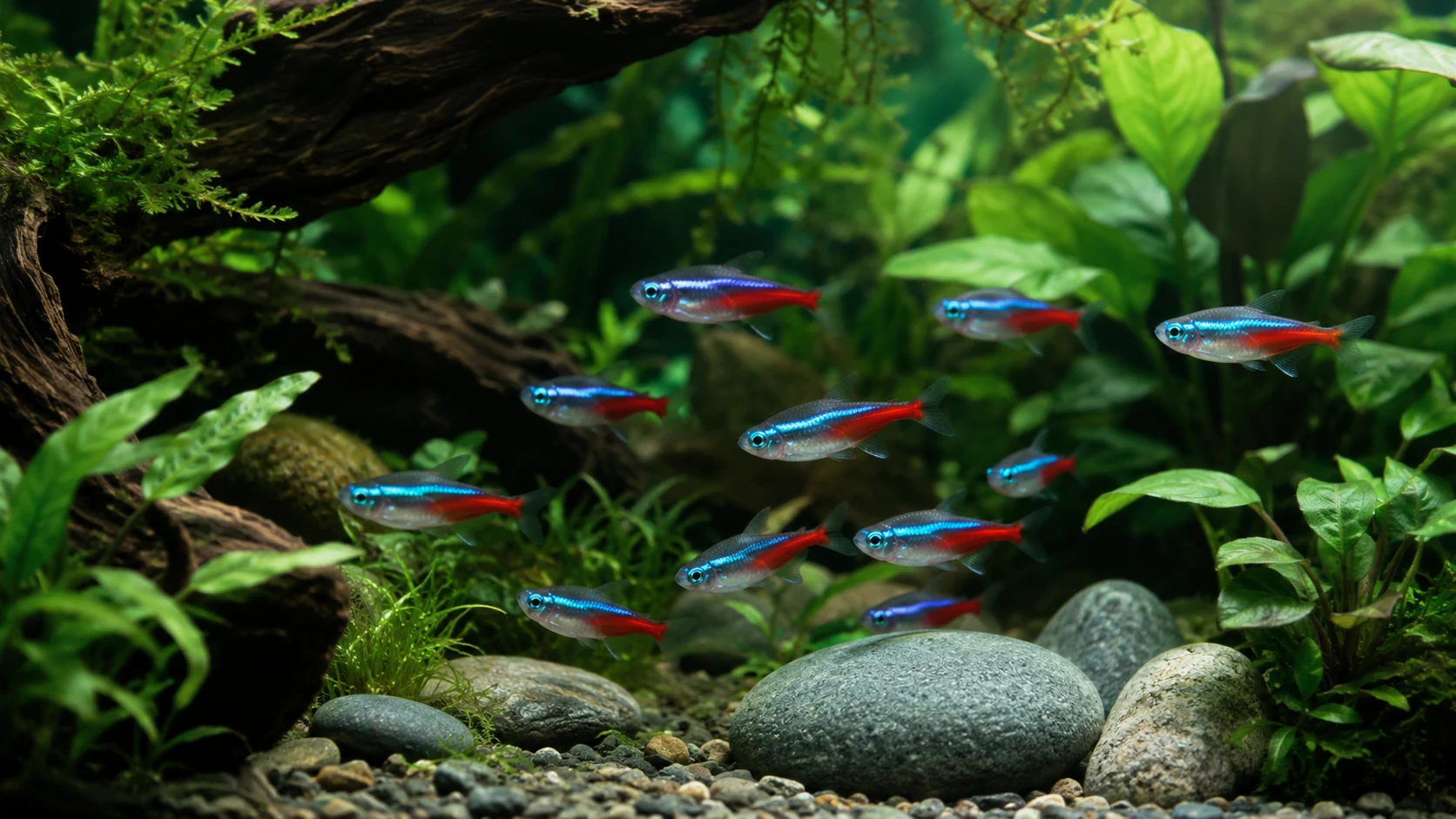
Neon tetras look like perfect beginner fish.
They are small, peaceful, cheap, colorful, and available almost everywhere. A school of neons in a planted tank is one of the classic images that makes people want an aquarium in the first place.
But neon tetras are not always the best first fish for a brand-new tank.
The problem is not that neons are impossible. The problem is that many beginners add them too early, into tanks that are not mature, stable, or biologically settled. Neon tetras can be more sensitive to poor water quality, transport stress, sudden parameter changes, and weak store stock than tougher beginner fish such as zebra danios, platies, white cloud mountain minnows, or carefully sourced guppies in suitable water.
A neon tetra can be a good beginner fish after the tank is stable. It is not the fish I would use to test whether a new aquarium is ready.
Beautiful fish, not disposable starter fish
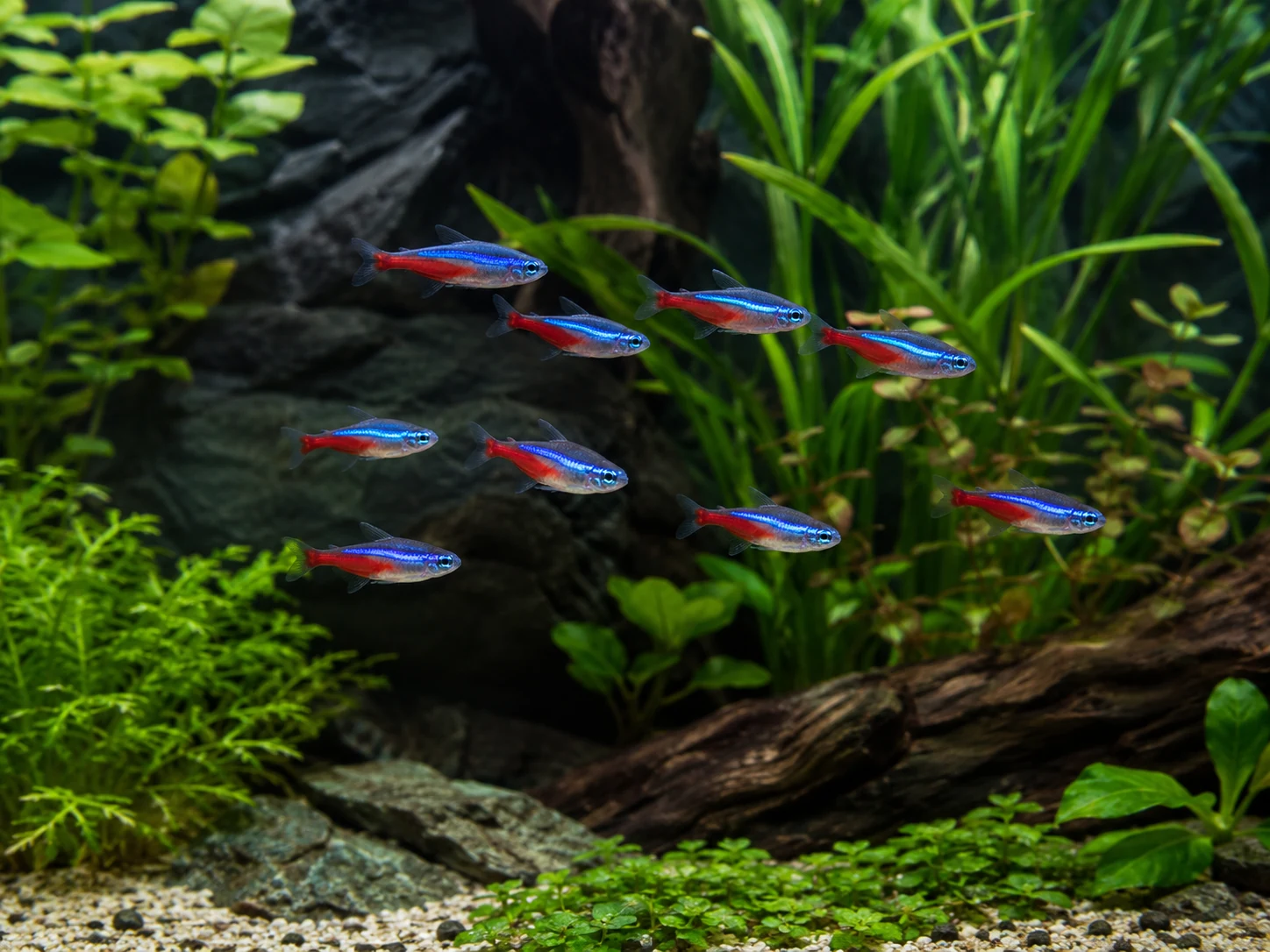
Neon tetras are schooling freshwater fish with a bright blue stripe and red lower body. They look best and behave best in groups. A single neon hiding in a corner is not “calm.” It is a social fish without enough security.
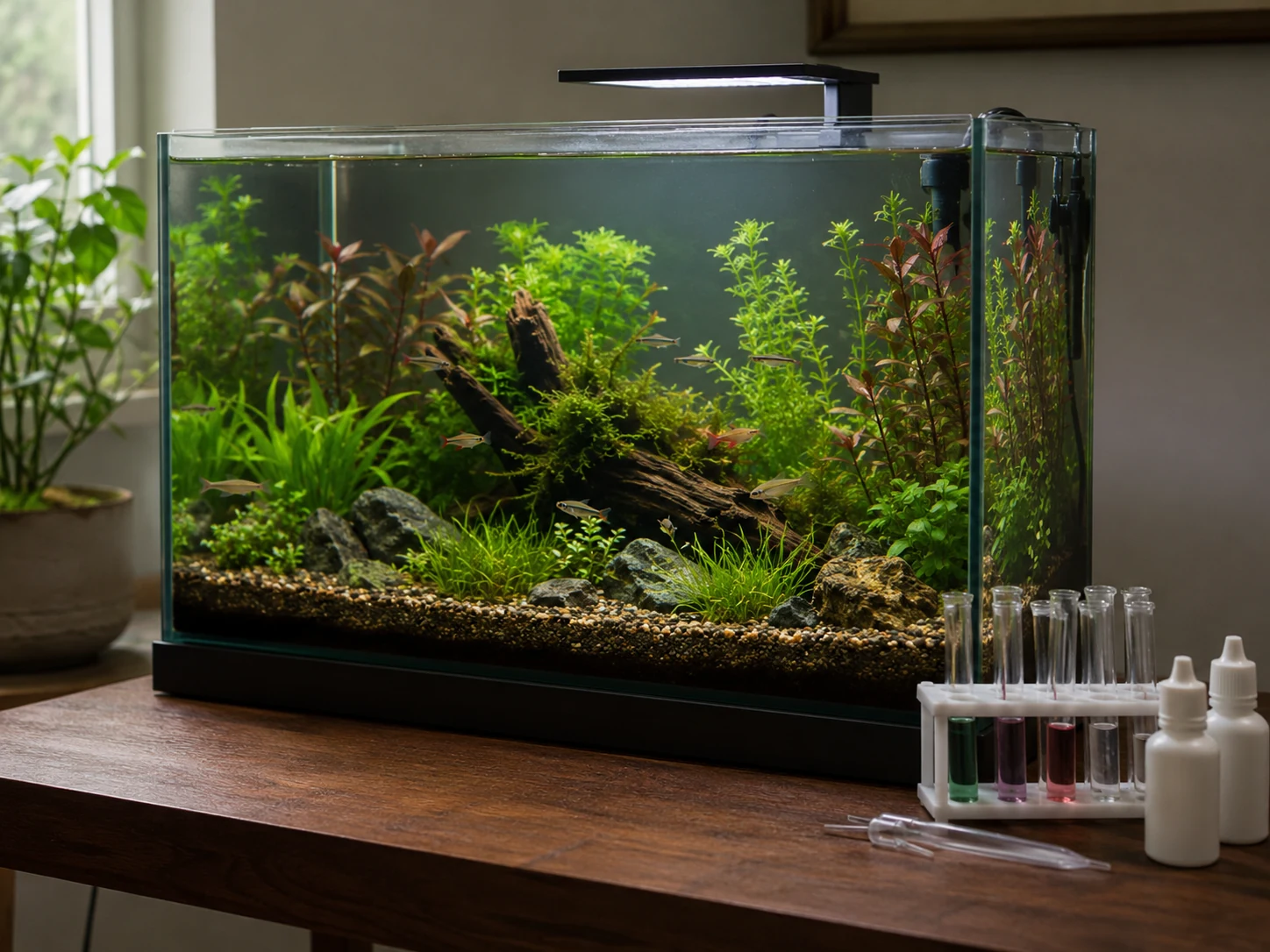
A proper neon setup is not complicated, but it must be stable:
- mature cycled aquarium;
- zero ammonia and zero nitrite;
- gentle filtration;
- stable temperature;
- group of at least 6, with more better if tank size allows;
- small foods;
- peaceful tank mates;
- cover from plants, wood, or shaded areas.
Neon tetra care at a glance
| Care point | Practical beginner target |
|---|---|
| Tank maturity | Better after the tank has been stable for several weeks or months |
| Tank size | 10 gallons minimum for a small group, 20 gallons easier and better |
| Group size | At least 6; 10+ is better in suitable tanks |
| Temperature | Around mid-to-upper 70s °F / roughly 24–26°C for most home setups |
| Water | Stable, clean, low ammonia/nitrite; avoid sudden swings |
| Food | Tiny foods that fit their mouths |
| Flow | Gentle to moderate; avoid blasting the school |
| Tank mates | Peaceful, small, non-predatory fish |
Why neons fail in new tanks
A new aquarium may look clear before it is biologically ready.
Neons added during cycling can be exposed to ammonia and nitrite. Even low-level stress can make them fade, hide, clamp fins, breathe faster, or die over the next few days. A beginner may think the fish were weak. Sometimes they were. But often the tank was simply not ready.
The domino chain:
New tank → immature biofilter → ammonia/nitrite instability → gill irritation and oxygen stress → weakened fish → disease or death.
This is why “the water looks clean” is not enough.
Neon tetras vs tougher first fish
If someone is setting up their first aquarium, I would usually suggest learning stability with more forgiving choices first.
| Fish | Beginner resilience | Best context |
|---|---|---|
| Zebra danio | Very hardy and active | Mature or cycling-aware beginner setups with enough swimming room |
| Platy | Hardy livebearer | Stable neutral-to-hard water |
| White cloud mountain minnow | Hardy cooler-water fish | Unheated or cooler stable setups |
| Guppy | Good in the right water | Mineral-rich stable tanks, careful stock source |
| Neon tetra | Peaceful but more sensitive | Mature planted community tanks |
This does not mean neons are “expert only.” It means they should not be treated as the safest first test fish for a new aquarium.
Tank size and group size
Neons are small, but a school needs room.
A 10-gallon tank can hold a small group if it is mature, lightly stocked, and well maintained. A 20-gallon tank is better because the school has more swimming room and the water is more stable.
Do not buy two or three neons because they are small. Under-sized groups often hide, scatter, or act nervous. A proper school helps them feel secure.
Practical beginner choice: aim for 8–12 neons in a mature 20-gallon planted tank rather than 4 neons in a brand-new 5-gallon aquarium.
Water parameters: stability beats chasing numbers
Wild neon tetras come from soft, acidic, shaded waters, but many aquarium neons are commercially raised and can adapt to a range of local conditions. The beginner danger is not usually that pH is 7.4 instead of 6.8. The danger is swinging the water around with chemicals.
Do not chase pH aggressively.
Technical action: keep water clean and stable.
Danger/trap: using pH-down chemicals repeatedly can cause swings that stress fish more than a stable, slightly imperfect pH.
Safe process: test your tap and tank water, make gradual changes only when necessary, and prioritize zero ammonia, zero nitrite, stable temperature, and consistent maintenance.
Temperature and oxygen
Neons are tropical fish, but temperature still has a domino effect.
Warmer water increases metabolism and can speed up disease processes. It also holds less dissolved oxygen. If the tank is warm, crowded, overfed, or low in surface movement, neons may breathe faster and become stressed.
Keep temperature stable and provide gentle surface movement. Avoid sudden temperature shifts during water changes. Match new water within about ±1°C / ±2°F when possible.
Lighting and cover
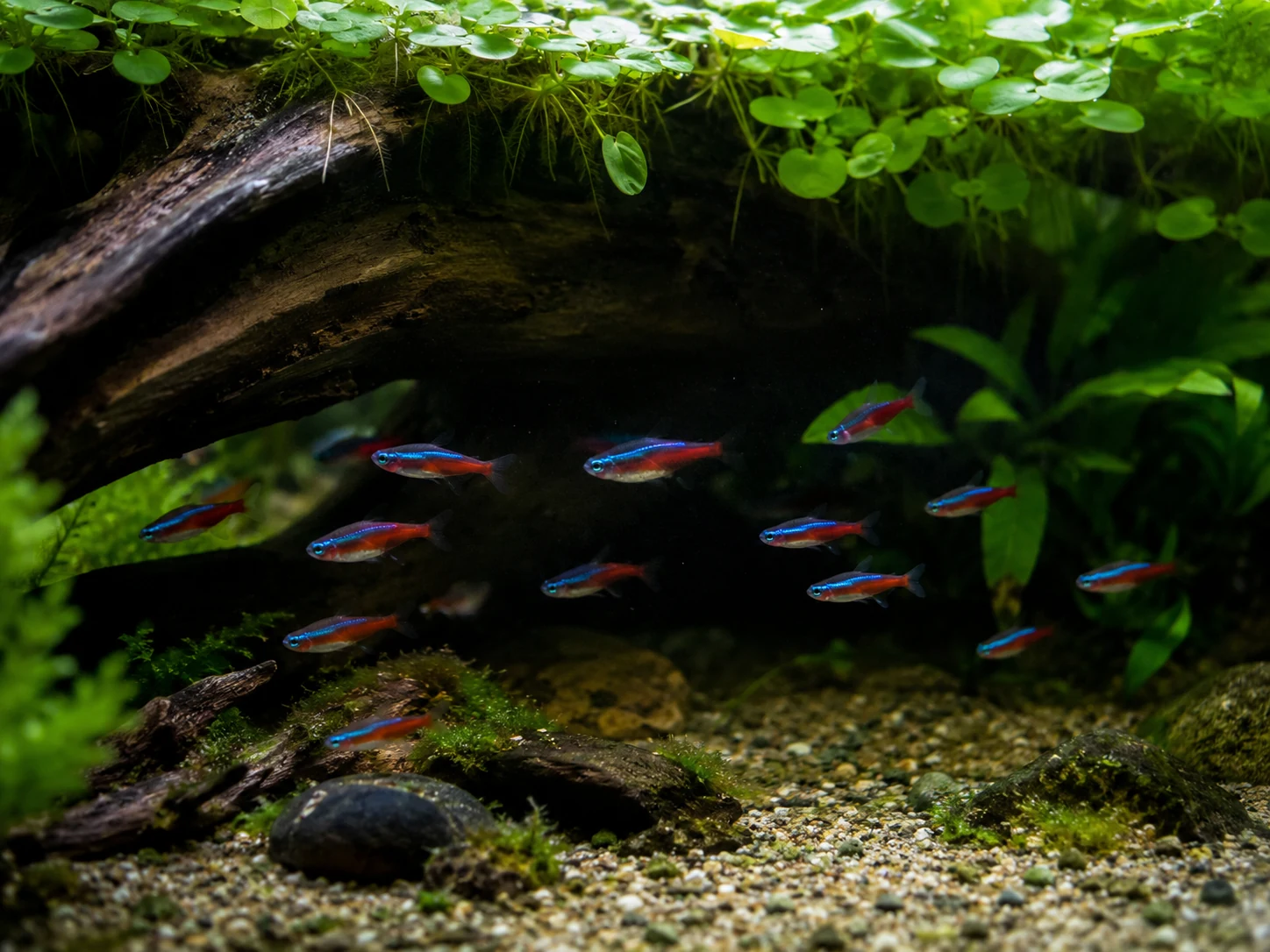
Neons often look best under controlled light with darker background, plants, and shaded areas.
A bare bright tank can make them nervous. Floating plants, tall background plants, driftwood, and leaf-litter-style shade can help them feel secure. You do not need a blackwater biotope, but you should avoid making them live in a bright empty box.
Lights should follow a consistent schedule. Do not leave blue moonlight on all night. Fish need a dark period to rest, and blue light still acts as light.
Feeding neon tetras
Neons have small mouths.
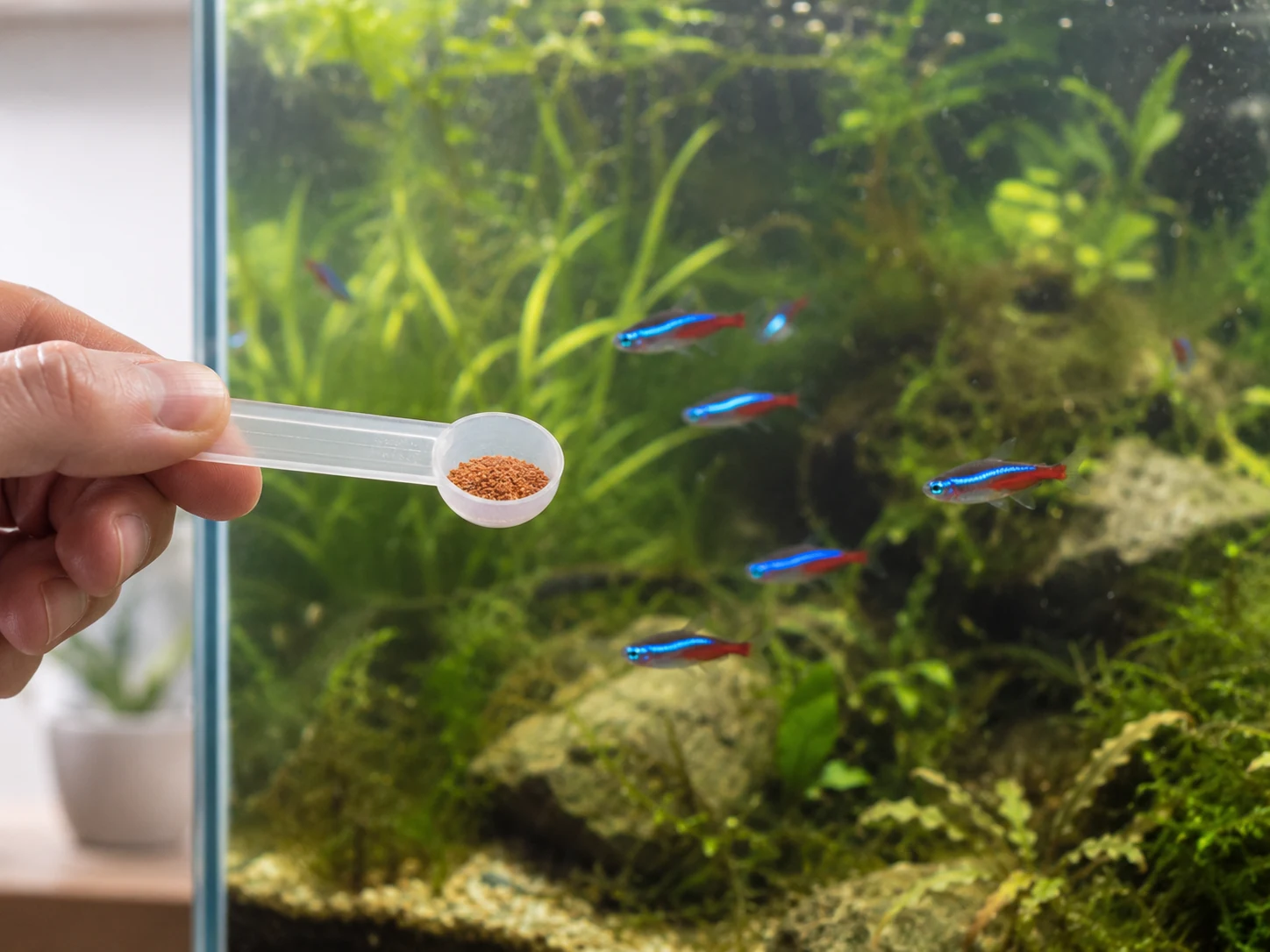
Use fine flakes, micro pellets, frozen baby brine shrimp, daphnia, or other tiny foods. Large flakes should be crushed. If food hits the bottom before they eat it, the portion or size is wrong.
Feed once daily in most beginner tanks. They should eat actively, but the food should be gone quickly. Remove leftovers within 5 minutes.
If a neon takes food and spits it out, do not immediately call it picky. Check food size, but also check water, breathing, mouth condition, and whether stronger fish are outcompeting it.
Tank mates
Good tank mates are peaceful and small enough not to view neons as food.
Avoid large angelfish, aggressive cichlids, fin nippers, and fast aggressive feeders that bully the school. Even if a fish cannot swallow a neon today, it may be able to later.
Good community planning is about adult size, temperament, temperature, water preferences, and feeding behavior.
Buying healthy neon tetras
Source quality matters.
Look for fish that school normally, hold color, breathe steadily, and do not show white patches, curved spines, clamped fins, or isolation. Avoid tanks with dead fish or obvious disease.
Transport and acclimation matter too. Neons are small fish with little body mass, so sudden temperature or chemistry changes can hit them hard.
Technical action: acclimate carefully after purchase.
Danger/trap: dumping store water and fish directly into a different tank can create sudden stress.
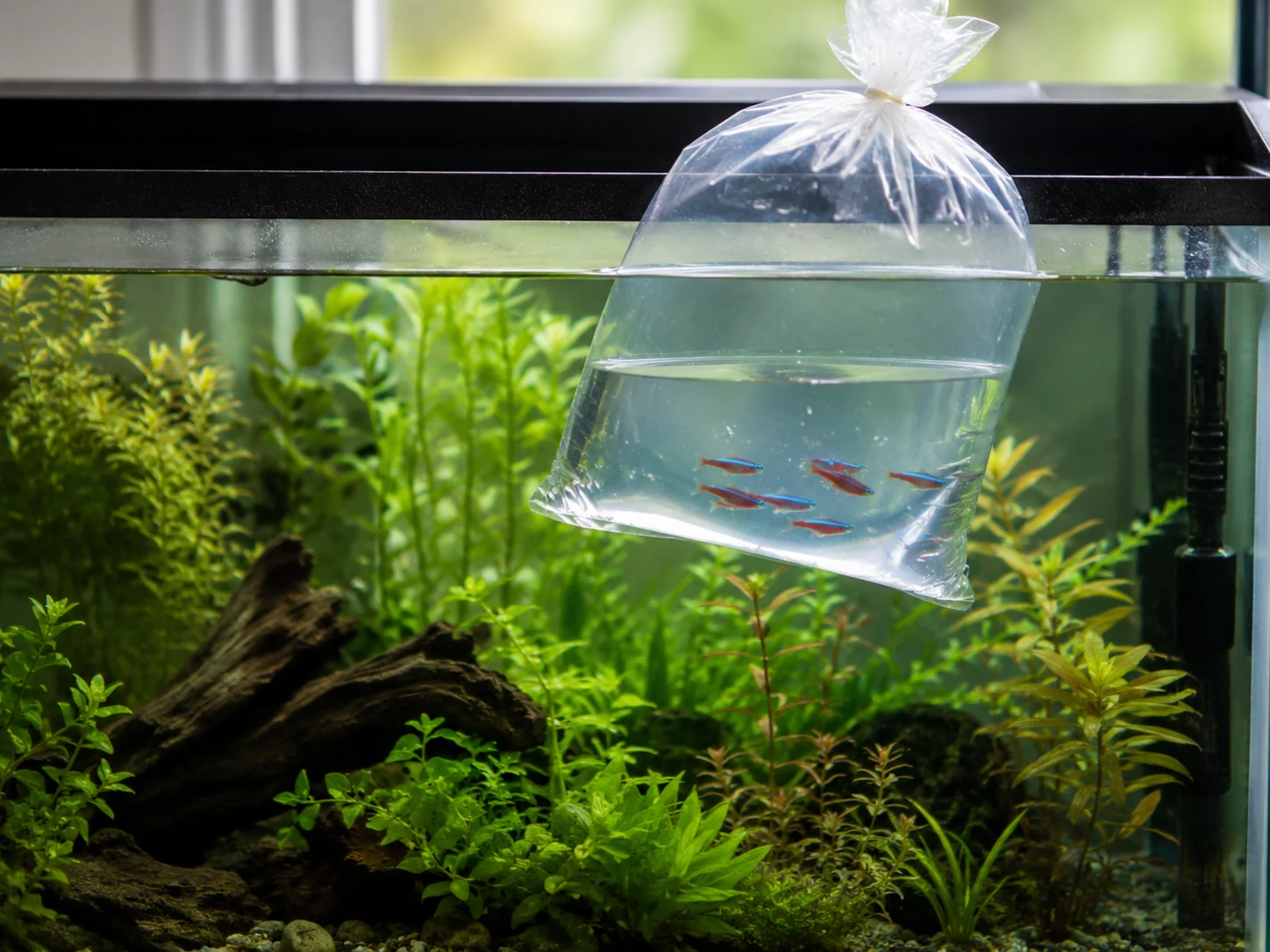
Safe process: float the bag to equalize temperature, then gradually mix small amounts of tank water over time. Net fish into the tank when appropriate and avoid adding store water if possible.
Neon Tetra Disease vs false NTD: the antibiotic blind spot
Not every faded neon has true Neon Tetra Disease. Poor water, shipping stress, aggression, starvation, columnaris, injury, and other infections can mimic some signs. That is why the first response should never be “dump medication into the display tank and hope.”
True Neon Tetra Disease is associated with the microsporidian parasite Pleistophora hyphessobryconis. Classic warning signs include a fish separating from the school, fading or broken color bands, pale muscle patches, weight loss, abnormal swimming, and sometimes spinal curvature. Unfortunately, true NTD has no reliable beginner cure once symptoms are obvious.
Technical action: identify and isolate suspicious fish early.
Danger/trap: broad-spectrum antibiotics may not help true NTD, and unnecessary medication in the display tank can damage the biofilter or stress already weakened fish. A medication mistake can turn one sick neon into a whole-tank ammonia problem.
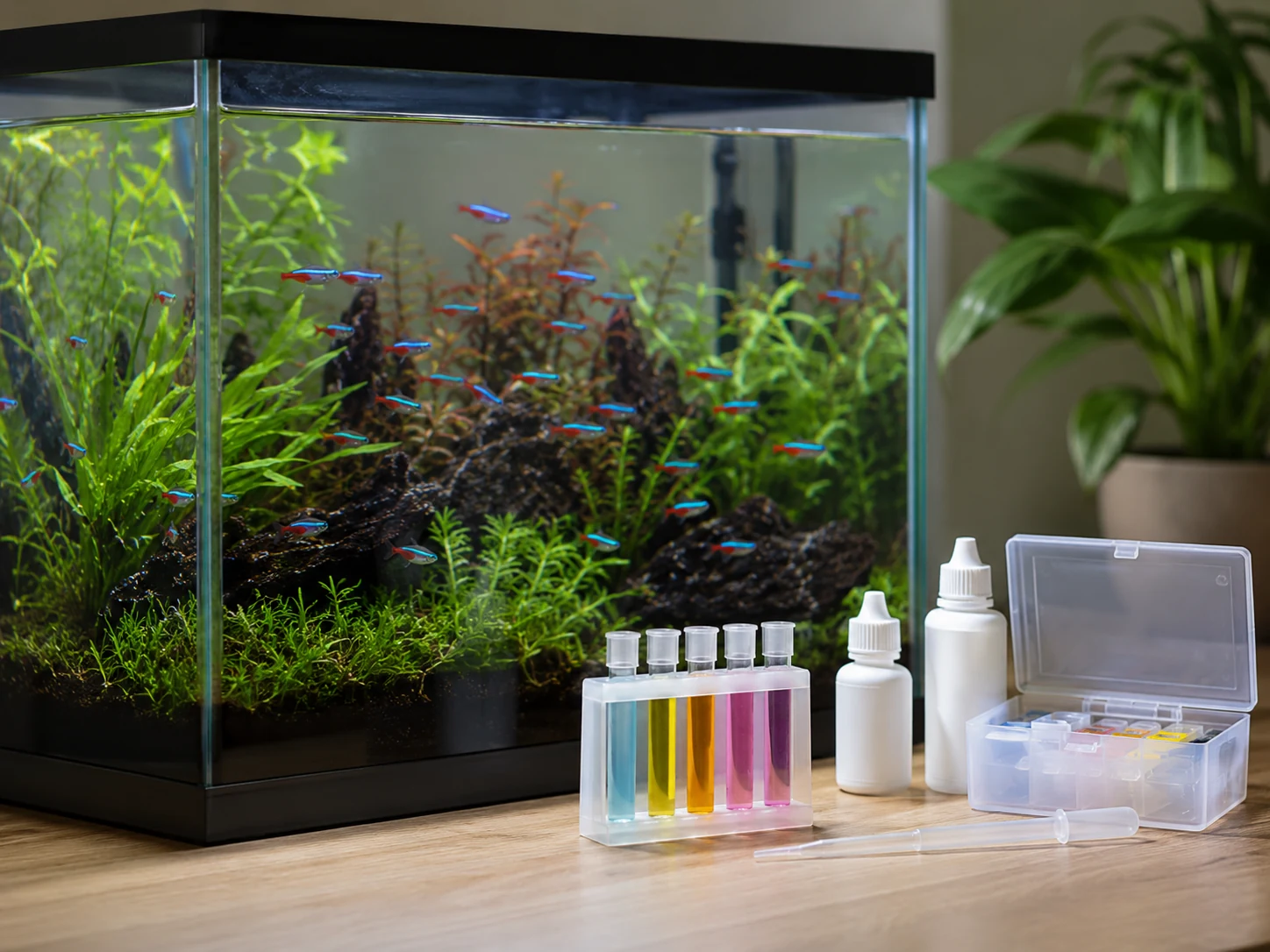
Safe process: move the affected fish to a hospital/quarantine container if possible, test ammonia and nitrite in the main tank, and prevent other fish from picking at a dead tankmate. If the fish shows severe wasting, white muscle patches, spinal deformity, or loss of swimming control, humane euthanasia may be the safest option to reduce suffering and transmission risk. When signs are unclear, quarantine and observation are safer than medicating the display blindly.
Acclimation: do not dump neons from the bag into the tank
Neon tetras are small fish with little body mass, so sudden changes hit them fast. Floating the bag only equalizes temperature. It does not equalize pH, dissolved solids, or other chemistry differences between store water and your aquarium.
Technical action: acclimate neons gradually before release.
Danger/trap: dumping store water and fish straight into the tank can expose neons to sudden pH and osmotic change, plus it may introduce dirty transport water into your display.
Safe process: after temperature floating, move the fish and bag water into a clean bucket or container used only for aquarium work. Use airline tubing with a loose knot or valve to drip tank water into the container at roughly 2–4 drops per second for 30–45 minutes. When the water volume has roughly doubled, net the fish gently into the aquarium and discard the transport water. Keep the room calm and the aquarium lights dim during the first few hours.
Common neon tetra mistakes
Adding them to an uncycled tank
This is the big one. Neons should not be used to test a new biofilter.
Keeping too few
A group of two or three is not a school. Small groups are more nervous and less natural.
Feeding food that is too large
Neons may chase food they cannot swallow well. Crush flakes or use micro foods.
Keeping them with predators
Many fish eat whatever fits in their mouth. Neons are small.
Chasing soft acidic water with chemicals
Stable water is safer than repeated pH swings.
Buying weak stock and skipping quarantine
Mass-produced neons vary in condition. Quarantine is especially useful if you already have an established community tank.
Neon Tetra Mature Tank Toolkit
Useful items:
- liquid ammonia/nitrite/nitrate/pH test kit;
- reliable heater and thermometer;
- gentle filter or pre-filter sponge;
- micro pellet or fine food;
- floating plants or shaded plant cover;
- drip acclimation airline or small cup for gradual acclimation;
- quarantine tank or spare small cycled filter if possible;
- water conditioner for chlorine and chloramine.
The honest beginner verdict
Neon tetras are good fish for a stable aquarium, not the best fish for proving a new aquarium is stable.
If your tank is new and you are still learning cycling, testing, and water changes, start with more forgiving species or wait. Once the tank has a track record of zero ammonia, zero nitrite, steady nitrate control, stable temperature, and no sudden swings, neons become a much better choice.
FAQ
Are neon tetras good beginner fish?
They can be good for beginners with mature, stable tanks. They are not the best first fish for a brand-new uncycled aquarium.
How many neon tetras should be kept together?
Keep at least 6. In suitable tanks, 8–12 or more usually looks and behaves better.
What tank size do neon tetras need?
A 10-gallon tank can work for a small group, but a 20-gallon tank is easier and more stable.
Why do neon tetras die after I buy them?
Common causes include transport stress, weak store stock, uncycled tanks, ammonia/nitrite, temperature shock, sudden water chemistry changes, or disease.
Do neon tetras need soft acidic water?
They appreciate stable clean water and often come from soft-water ancestry, but many commercially raised neons adapt to a range. Avoid chasing pH with sudden chemical changes.
What should I feed neon tetras?
Use tiny foods: crushed flakes, micro pellets, baby brine shrimp, daphnia, and other small foods. Food must fit their mouths.
Can neon tetras live with bettas?
Sometimes, but it depends on tank size, betta temperament, cover, and feeding competition. It is not guaranteed.
Why are my neon tetras hiding?
Check group size, lighting, cover, tank mates, water quality, and recent stress. Hiding is often a security or stress signal.
Do neon tetras need plants?
They do not require live plants, but plants and shaded cover help them feel secure and show better behavior.
Should I quarantine neon tetras?
Yes, if possible. Quarantine helps protect an established tank from weak or sick store stock.
How should I acclimate neon tetras?
Float the bag to match temperature, then use slow drip acclimation for about 30–45 minutes if the store water and tank water may differ. Net the fish into the aquarium and discard the transport water. Keep lights dim and avoid feeding immediately.
Can Neon Tetra Disease be cured?
True Neon Tetra Disease has no reliable beginner cure once symptoms such as severe fading, white muscle patches, wasting, abnormal swimming, or spinal deformity appear. Because some other problems can look similar, isolate suspicious fish, test the water, and avoid medicating the display tank blindly.
Related Guides
- How to Cycle a Fish Tank
- Fish Tank Size Guide
- How Often Should You Feed Aquarium Fish?
- Fish Not Eating
- Ammonia, Nitrite, and Nitrate
- Best Aquarium Plants for Beginners
Author Box
Written by the Healthy Aquariums editorial team. We aim to help beginners make fish choices based on stability, adult needs, and water quality rather than just color and store availability.
Editorial Note
Neon tetra care advice varies because store stock, local water, and tank maturity vary. This guide intentionally avoids calling neons the ideal first fish for every beginner. They are better treated as a peaceful schooling fish for a mature, stable aquarium.
References
- PetMD. Tetra Fish Care Guide: Tank Size, Diet & Setup. https://www.petmd.com/fish/tetra-fish-care-sheet
- Aqueon. Tetras Care Guide. https://www.aqueon.com/resources/care-guides/tetras
- The Spruce Pets. Neon Tetra Species Profile. https://www.thesprucepets.com/neon-tetra-paracheirodon-1381835
- Merck Veterinary Manual. Environmental Diseases of Aquatic Animals in Aquatic Systems. https://www.merckvetmanual.com/exotic-and-laboratory-animals/aquatic-systems/environmental-diseases-of-aquatic-animals-in-aquatic-systems
- MSD Veterinary Manual. Common Environmental Hazards for Fish. https://www.msdvetmanual.com/multimedia/table/common-environmental-hazards-for-fish
- The Spruce Pets. Neon Tetra Disease: Signs, Treatment, and Prevention. https://www.thesprucepets.com/neon-tetra-disease-1378484
- Sanders JL et al. Pleistophora hyphessobryconis infecting zebrafish. https://pmc.ncbi.nlm.nih.gov/articles/PMC4155925/