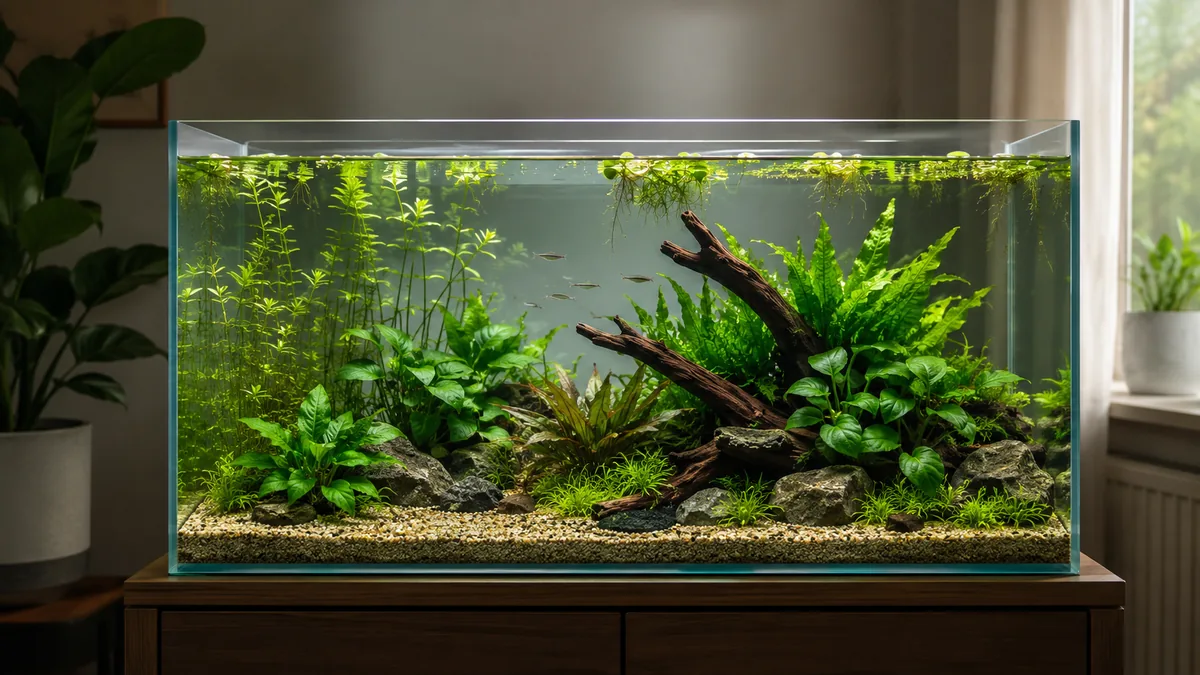
Beginner aquarium plants are often sold as if they are plastic decorations with roots. Put them in, turn on a light, and the tank becomes natural. Real plants are tougher than that story and more sensitive at the same time. Some survive neglect. Some melt after planting. Some are buried incorrectly. Some grow algae because the light is too strong for the rest of the tank.
The best beginner plants are not just easy to grow. They are forgiving when the tank is still finding balance.
Quick answer
The best aquarium plants for beginners include Anubias, Java fern, Java moss, water sprite, hornwort, Amazon sword in suitable tanks, crypts after the tank stabilizes, floating plants, and hardy stem plants such as water wisteria. Start with low to moderate light, avoid burying rhizomes, and do not treat plant melt as an instant failure.
Plants help stabilize an aquarium, but they do not replace cycling, testing, filtration, or water changes.
What makes a plant beginner-friendly
A beginner-friendly plant should tolerate a range of water conditions, grow under moderate light, recover from trimming, and not require pressurized CO2. It should also fit the tank size.
A huge sword plant in a tiny tank may be hardy, but it can dominate the aquascape. A delicate carpeting plant may look beautiful online, but it often needs stronger light, CO2, and careful nutrients.
Anubias
Anubias is one of the safest beginner plants because it grows slowly and tolerates low light. Attach it to rock or wood. Do not bury the thick rhizome in substrate, or it may rot.
Because Anubias grows slowly, algae can settle on its leaves if the light is too strong or runs too long. Place it in shade or moderate light.
Java fern
Java fern is another rhizome plant. Attach it to hardscape rather than burying the rhizome. It is excellent for betta tanks, low-tech tanks, and shaded layouts.
Old leaves may develop spots or baby plantlets. That is not always disease. Remove dying leaves when needed, but do not panic at normal transition growth.
Java moss
Java moss is forgiving and useful for shrimp, fry, and natural-looking tanks. It can trap debris, so it needs gentle maintenance. Do not let thick moss mats become waste collectors in low-flow areas.
Water sprite
Water sprite can be planted or floated. It grows quickly under decent conditions and helps absorb nutrients. Fast growth can help compete with algae, especially in newer tanks.
Trim it before it shades everything below.
Hornwort
Hornwort grows fast and can float. It is useful for nutrient uptake and fry cover, but it may shed needles when conditions change. That shedding can create debris, so remove loose pieces before they rot.
Amazon sword
Amazon swords are hardy but larger. They are better for medium tanks than tiny tanks. They feed heavily from roots, so root tabs can help. Expect older leaves to decline after moving while new adapted leaves grow.
Cryptocoryne
Crypts are excellent low-tech plants once settled, but they can melt after moving. Crypt melt looks alarming, yet the roots may still be alive. Do not throw the plant away immediately if the crown is healthy. Keep water stable and wait for new growth.
Floating plants
Frogbit, red root floaters, salvinia, and similar floating plants can help absorb nutrients and shade fish. They are useful in betta tanks. They dislike being constantly splashed or pushed under by strong flow.
Floating plants can also block too much light if left unmanaged. Thin them regularly.
Hardy stem plants
Water wisteria, bacopa, and similar stems can work well for beginners if the light is reasonable. Stem plants show problems quickly, which can be useful. Pale growth, melting bottoms, or leggy stems often point to light or nutrient imbalance.
Plants beginners should be cautious with
Carpeting plants such as dwarf baby tears, Monte Carlo, and some hairgrass setups often disappoint beginners without strong light and CO2. Red plants may need more light, nutrients, and CO2 than a simple tank provides.
That does not make them impossible. It makes them less forgiving.
Planting mistakes
Do not bury rhizomes. Do not leave lead weights or tight foam around stems if they restrict growth. Do not plant too sparsely under strong light. Do not run the light for 12 hours to “help plants settle.”
If plants melt, remove decaying leaves before they become ammonia. But do not deep-clean the whole tank in response. Stability helps recovery.
Plant melt can become an oxygen and ammonia problem
Plant melt is often described as a cosmetic issue, but in a small aquarium it can become a water-quality event. Cryptocoryne, Anubias, Java fern, and many store-grown plants may shed old emersed leaves after being moved into new submerged conditions. Those damaged leaves release dissolved organic carbon and other cellular material as they break down.
Heterotrophic bacteria respond quickly to that easy food source. The visible sign may be cloudy water, surface film, or a sour organic smell. The invisible problem is dissolved oxygen drawdown. In a 10-gallon tank with low flow, plant decay plus bacterial bloom can reduce oxygen while also adding ammonia from decomposing tissue.
The fix is simple but often skipped. Before planting, trim damaged, yellowing, or melting leaves outside the aquarium. During the first two weeks, remove dying leaves daily with tweezers or a siphon. Do not respond by deep-stirring the whole substrate or replacing filter media. That can turn a plant-adjustment problem into a biological crash. Keep circulation gentle, test ammonia/nitrite if livestock are present, and use temporary fine mechanical filtration or fresh polishing media if the water turns cloudy.
Plants and the nitrogen cycle
Plants can take up ammonia and nitrate, but they do not make the nitrogen cycle irrelevant. A new planted tank can still have ammonia or nitrite. A dead plant leaf can become waste. A heavily planted tank with poor circulation can still have oxygen issues at night.
This is the closed-ecosystem rule: every plant decision affects light, nutrients, oxygen, debris, flow, and fish behavior.
Useful tools for beginner aquarium plants
A useful beginner plant kit includes rhizome-safe plant glue or thread, aquascaping tweezers, trimming scissors, root tabs for root-feeders, a timer, low-to-moderate adjustable light, liquid fertilizer used carefully, algae scraper, nitrate test kit, and fine mechanical polishing media for the first-week melt phase.
Choose products that support stability, maintenance access, and fish safety before considering convenience or appearance. Avoid hard-selling yourself extra gear; the right purchase should solve a real tank problem without creating sudden changes in flow, temperature, oxygen, or water chemistry.
FAQ
What is the easiest aquarium plant for beginners?
Anubias and Java fern are among the easiest because they tolerate low light and do not need substrate planting.
Do beginner plants need CO2?
The plants in this guide can usually grow without pressurized CO2 if light and nutrients are reasonable.
Why are my new aquarium plants melting?
Many plants melt when adapting to new water or changing from emersed to submerged growth. Remove dead leaves and keep conditions stable.
Can aquarium plants replace water changes?
No. Plants help with nutrient uptake, but water changes still manage dissolved waste, minerals, and overall stability.
Should I use fertilizer in a beginner tank?
Use it only when plants need it and algae is controlled. Too much fertilizer under excessive light can worsen algae.
Are floating plants good for beginners?
Yes, but they need management. They can block light and dislike strong surface turbulence.
Can plants help with algae?
Healthy fast-growing plants can compete with algae, but plants do not fix excessive light, overfeeding, or poor maintenance by themselves.
Should I plant before adding fish?
Yes, that is often helpful. Plants can settle before fish arrive, and you can adjust the layout without stressing livestock.
Are aquarium plant weights safe?
Temporary weights are common, but remove tight bands or materials that damage stems. Do not leave anything that traps rot.
What light schedule is best for beginner plants?
Start with about 6 hours daily and increase slowly only if plant growth is healthy and algae is controlled.
Related Guides
- Low Light Aquarium Plants:
/guides/low-light-aquarium-plants/ - Best Aquarium Light for Plants:
/best-products/best-aquarium-light-for-plants/ - Green Aquarium Water:
/tank-problems/green-aquarium-water/ - 10 Gallon Fish Tank Setup:
/aquarium-setup/10-gallon-fish-tank-setup/ - Aquarium Maintenance Schedule:
/guides/aquarium-maintenance-schedule/
Author Box
Written by the Healthy Aquariums editorial team. This guide focuses on beginner plant choices that support tank stability rather than fragile aquascaping trends.
Editorial Note
Plant recommendations are based on tolerance, recovery, and practical maintenance. A plant is not beginner-friendly if it only works under perfect lighting, CO2, and nutrient control.
References
- Freshwater planted aquarium husbandry references for rhizome plants, floating plants, and low-tech setups.
- Aquarium algae control principles involving light, nutrients, and plant mass.
- Practical aquascaping maintenance guidance for trimming, melt, and debris removal.