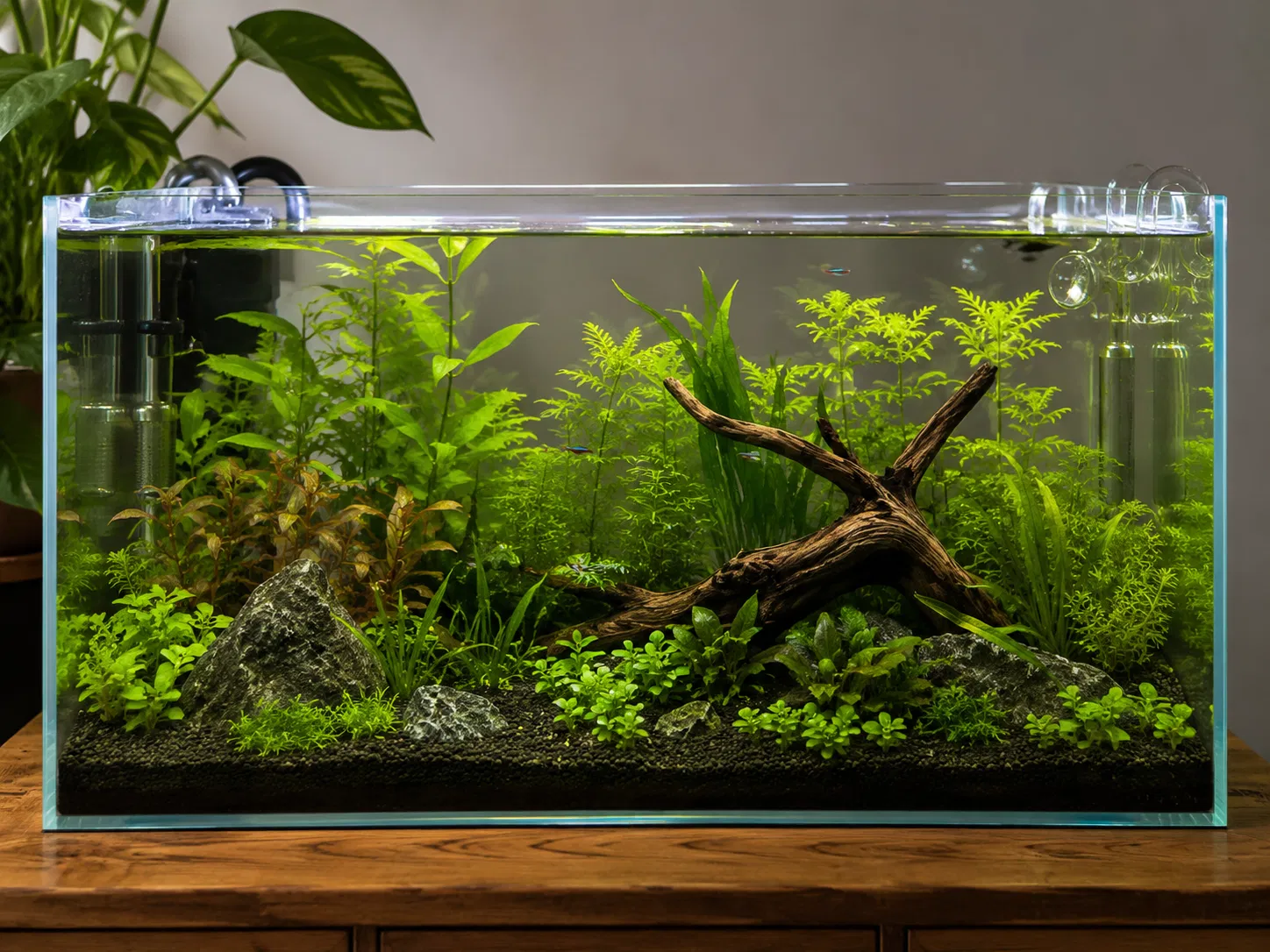
An easy planted tank is not the tank with the most plants, the brightest light, or the fanciest substrate. An easy planted tank is the one that stays stable when a beginner makes normal beginner mistakes.
That means moderate light, realistic plant choices, gentle filtration, enough oxygen, simple maintenance, and a layout that does not trap waste everywhere. The goal is not a competition aquascape. The goal is a living aquarium that helps fish and does not become an algae farm after three weeks.
Start with the tank size and livestock
For beginners, a 10-gallon or larger tank is easier than a tiny vase-style setup. More water volume gives more buffer against temperature swings, feeding mistakes, and small ammonia changes. If the tank is for a betta, use gentle flow. If it is for small community fish, plan swimming room before filling the tank with hardscape.
Do not choose plants first and then force fish into the leftover space. Fish health comes first.
Use moderate light from day one
A low-tech planted tank does not need extreme light. Start with 6 hours per day and a moderate intensity. If the fixture is dimmable, use 40 to 60 percent at first depending on plant density. Increase slowly only after you see clean new growth.
Avoid overnight blue light. Use ramp-up and dim-down if available, or turn the room light on before the aquarium light if the fixture snaps on suddenly.
Choose plants that fit beginner reality
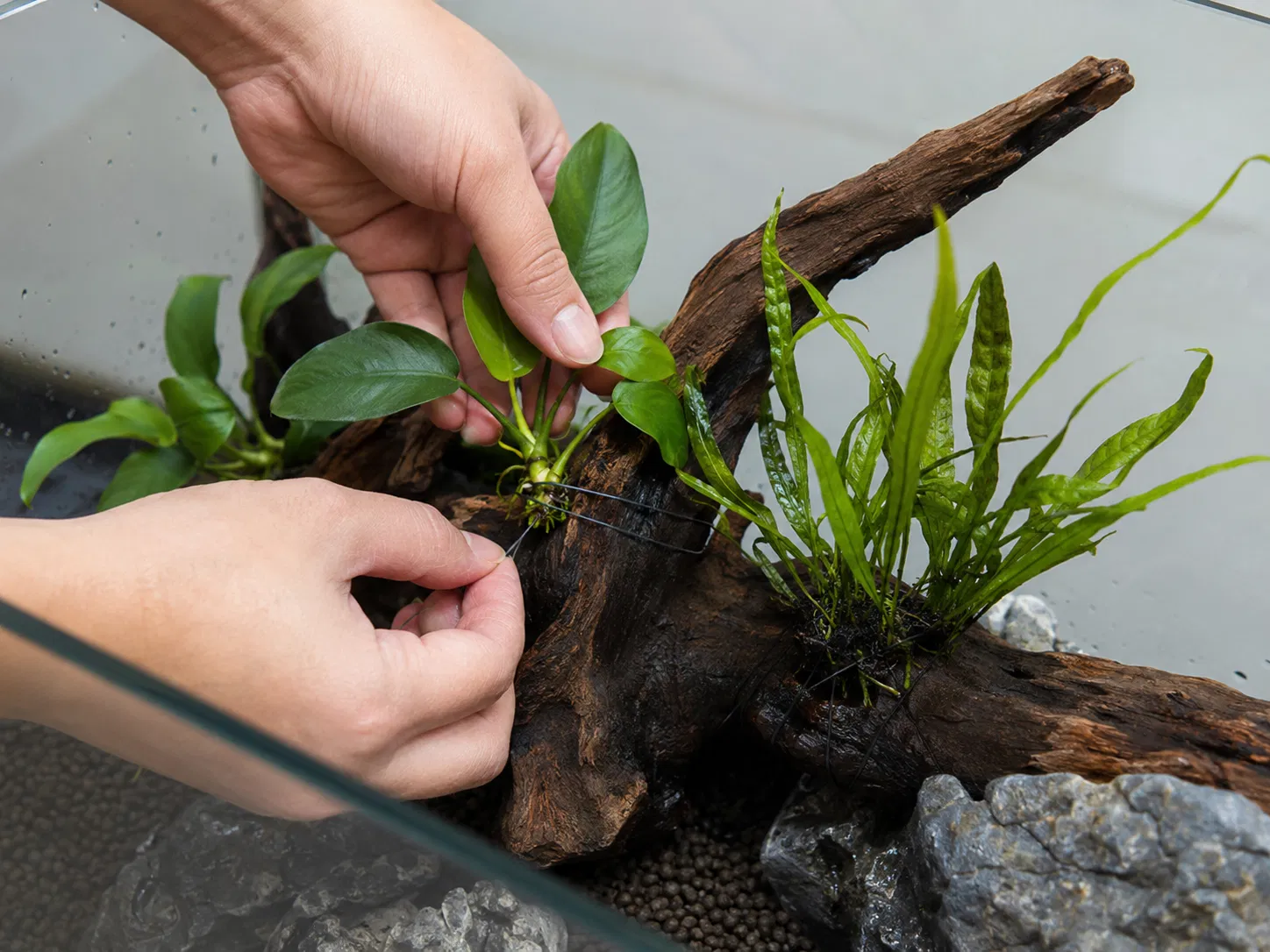
Good beginner plants include Anubias, Java fern, many Cryptocoryne species, water sprite, hornwort in some setups, and floating plants if managed carefully. Do not bury Anubias or Java fern rhizomes. Attach them to wood or rock. Crypts can go into the substrate, but expect possible melt.
Fast growers help absorb nutrients, but they still need trimming. Slow growers look clean longer when light is moderate and leaves are not coated with debris.
Build the layout for maintenance
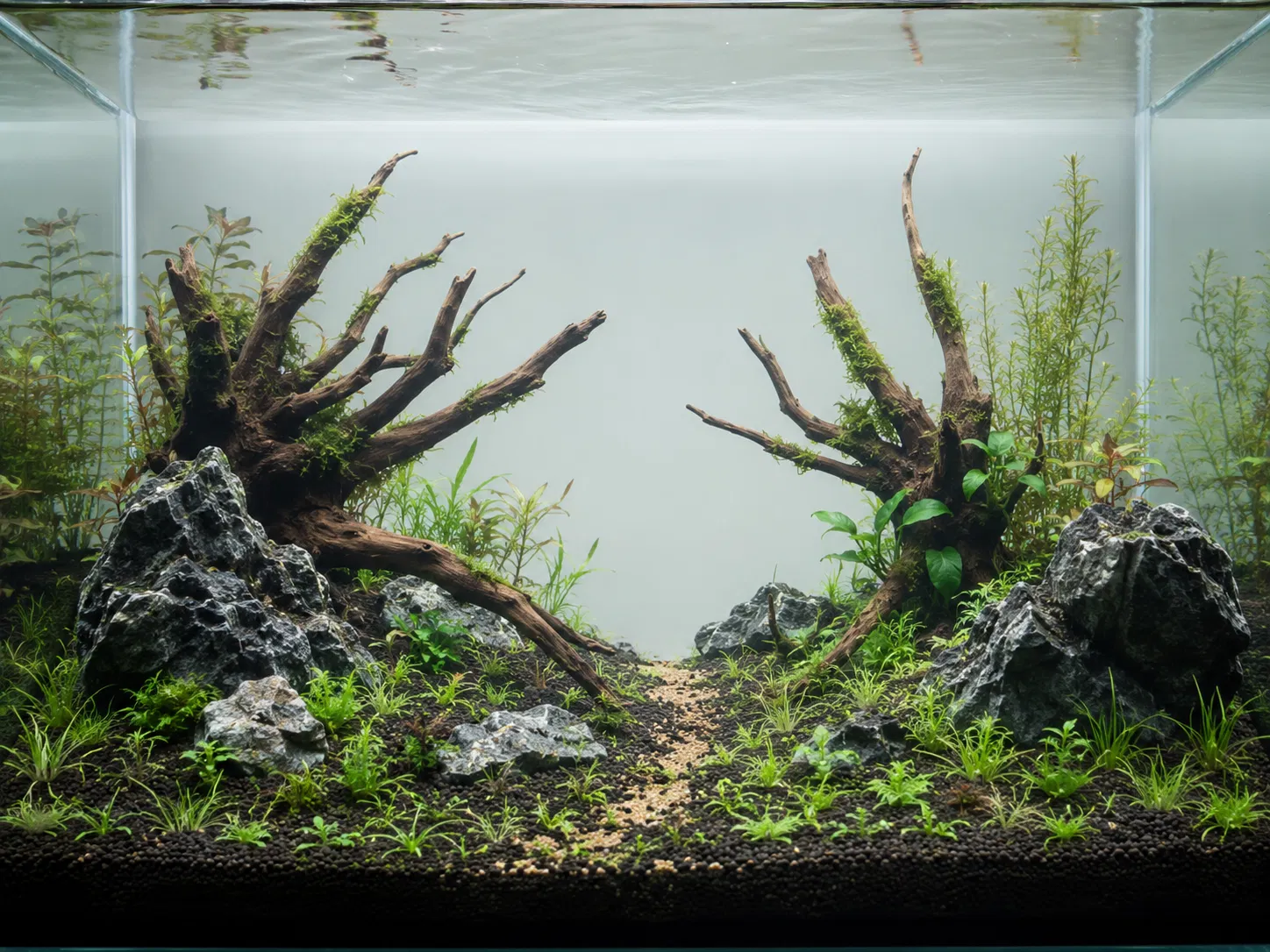
Leave space around the front glass for a siphon. Avoid packing wood so tightly that fish waste collects behind it. Keep plants away from the filter intake. Create hiding areas, but make them cleanable.
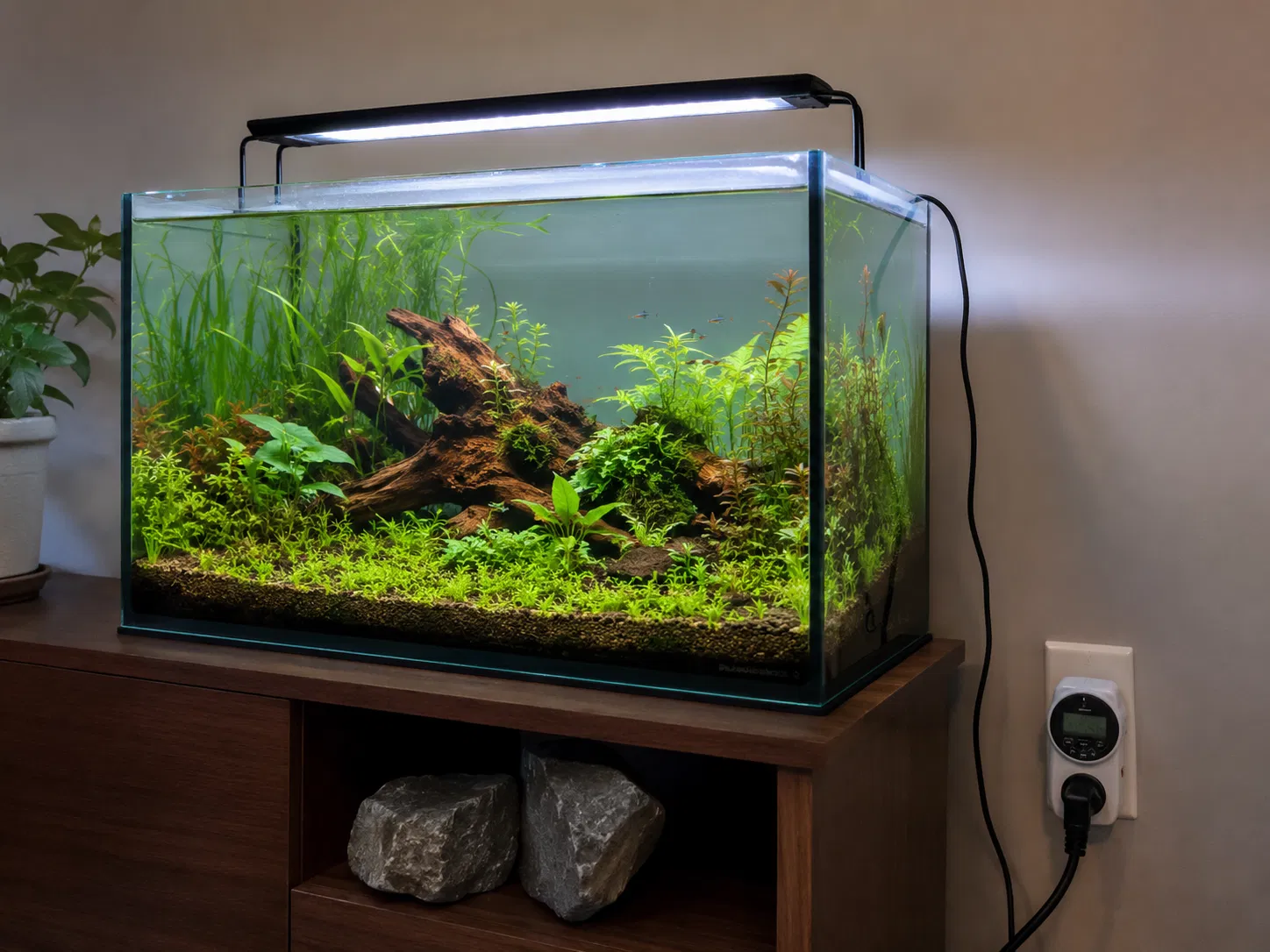
A beautiful layout that cannot be maintained will become an algae trap.
Filtration and flow
Use a filter that moves water gently across the tank without blasting fish. Sponge filters are simple and stable. Small HOB filters can work if flow is adjustable and media is not replaced carelessly. Canisters can work, but hoses and intake areas must be cleaned before sludge blasts back into the tank.
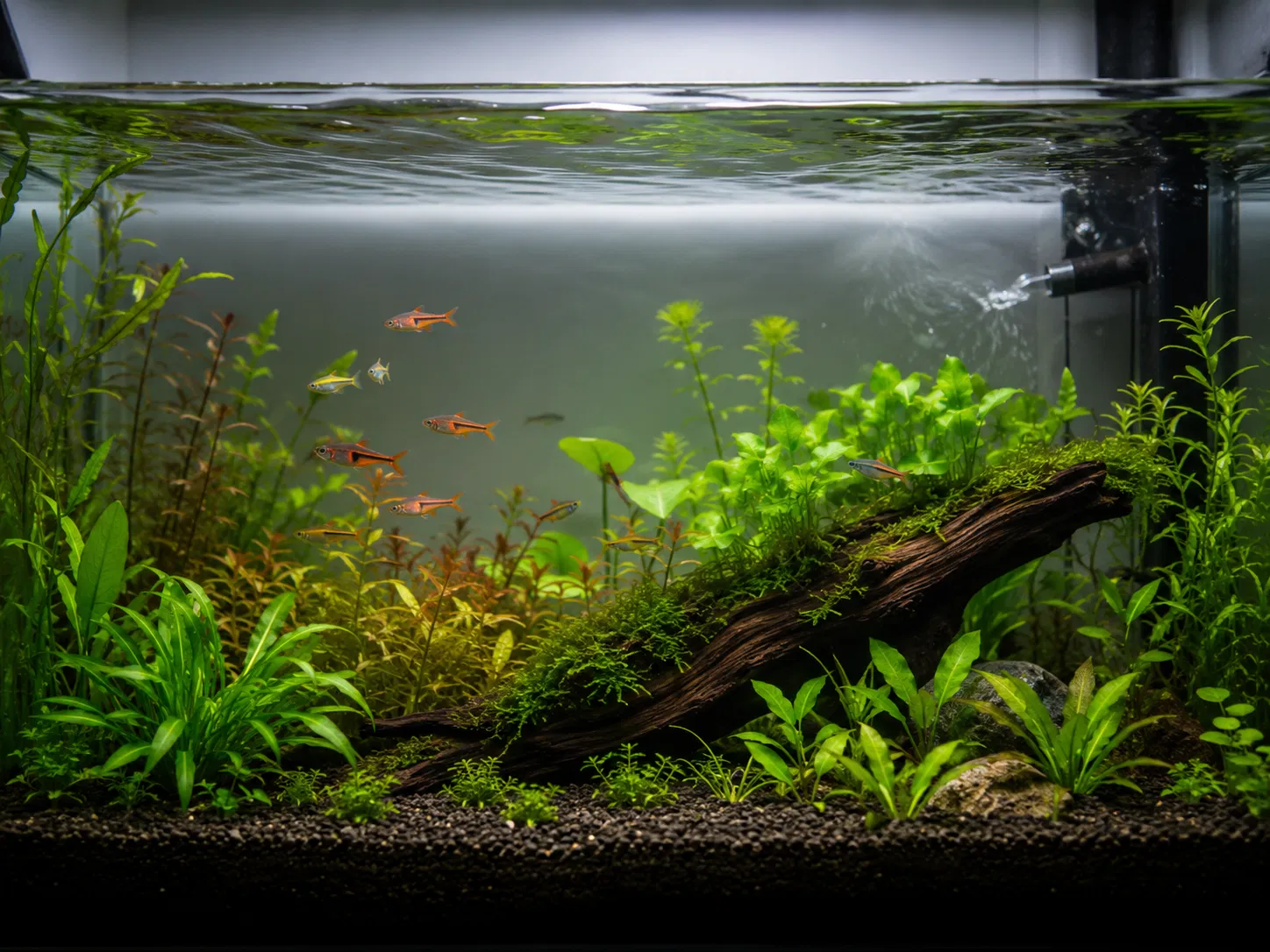
Flow should move fine particles toward the filter while leaving calm zones for fish. Dead zones behind hardscape become waste pockets.
Easy Low-Tech Planted Tank Kit
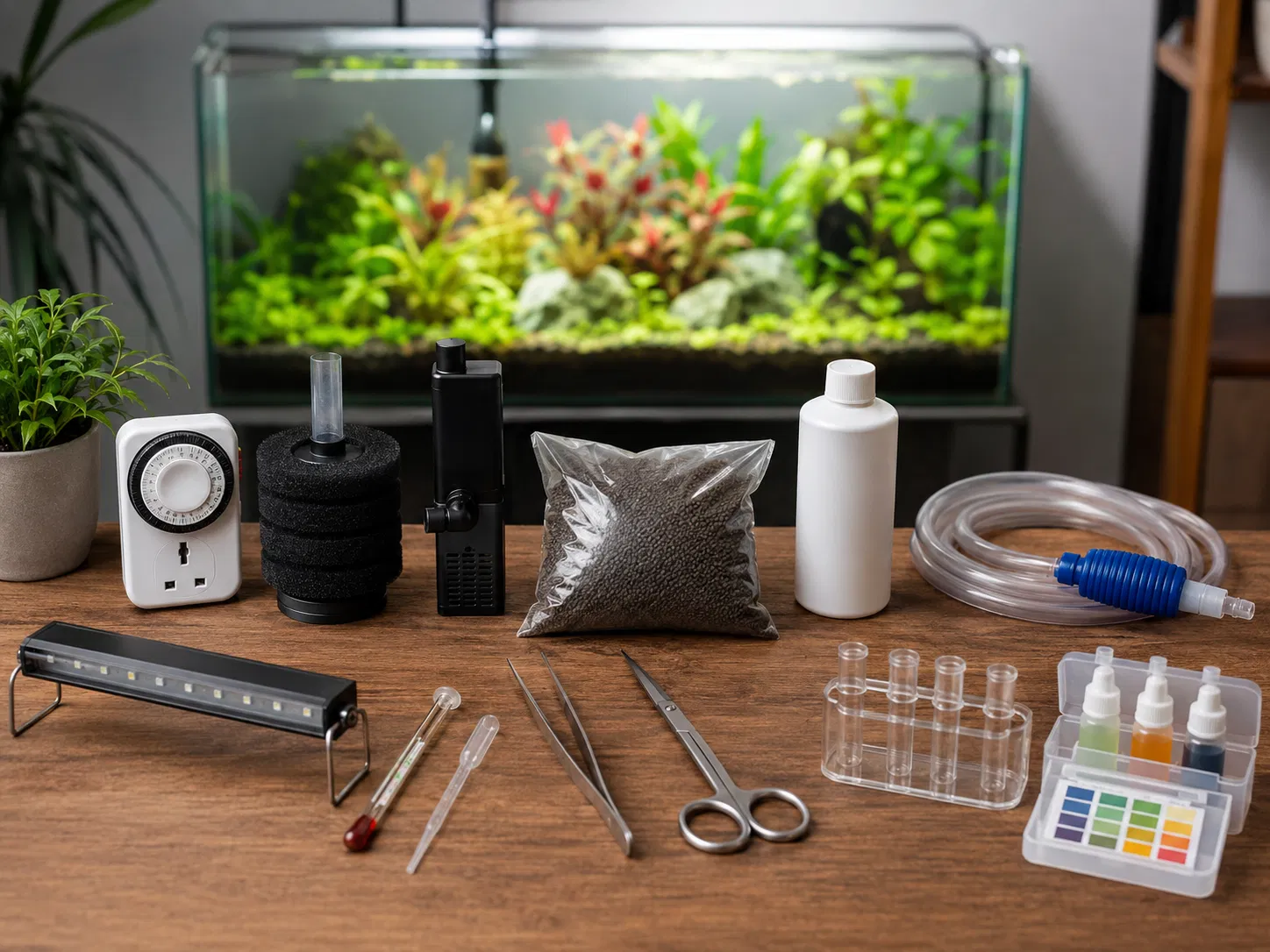
Useful items include a moderate dimmable LED, timer, sponge or adjustable filter, liquid test kit, dechlorinator, aquascaping tweezers, small siphon, easy plants, and a thermometer. Skip the extreme light and complicated dosing until the tank proves stable.
The first month
Week one is about setup and cycling, not perfection. Week two often reveals plant melt or brown algae. Week three is where overfeeding and too-long lighting usually show up. Week four should show cleaner new growth if the system is settling.
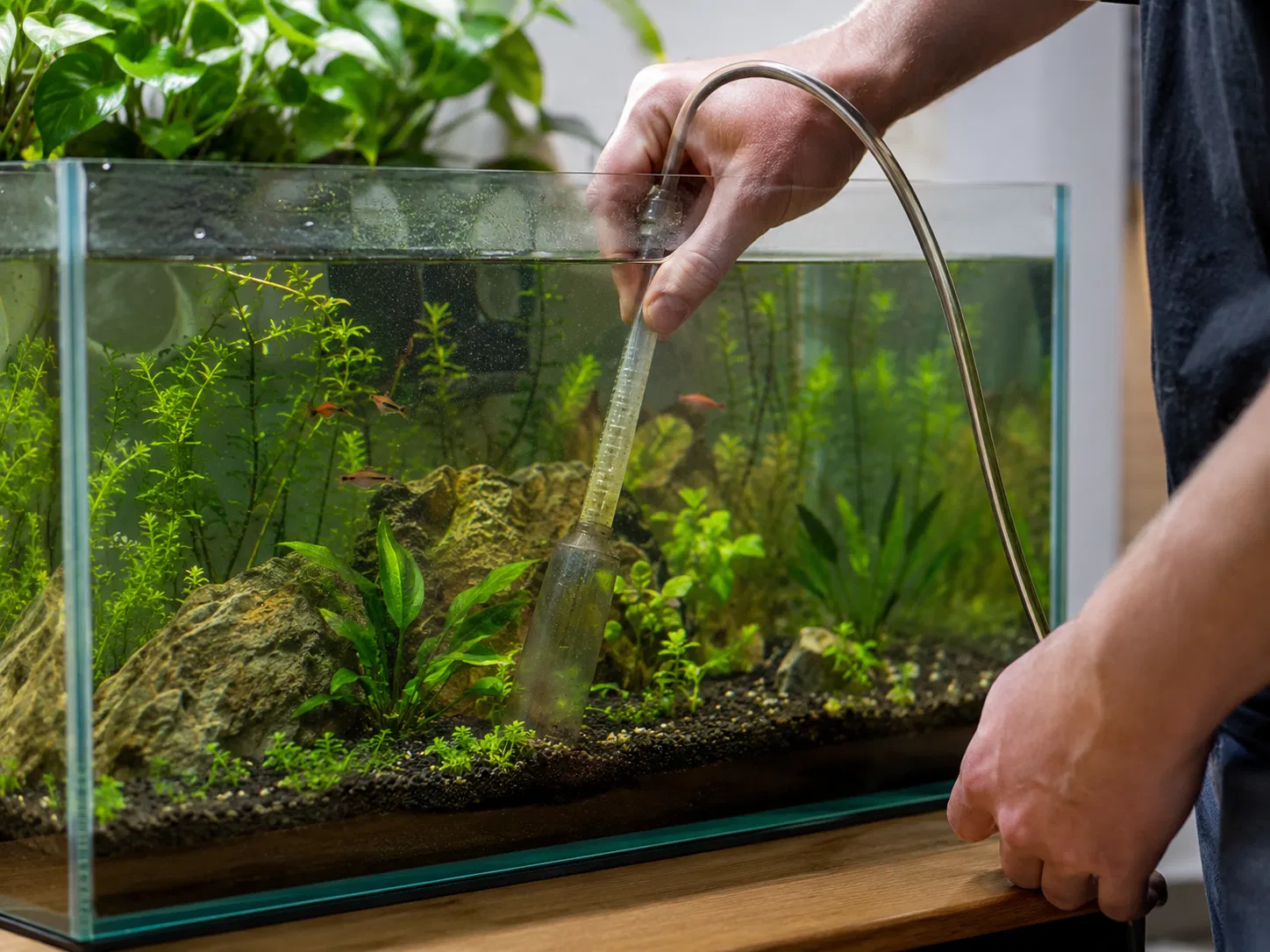
Test water, feed lightly, remove dead leaves, and keep changes small. Stability builds the planted tank faster than constant redesign.
FAQ
What is the easiest planted aquarium setup?
A low-tech tank with moderate light, easy plants, stable filtration, and simple maintenance is usually easiest. Avoid high light and complicated dosing at the start.
Do beginner planted tanks need CO2?
No. Many beginner tanks can grow easy plants without CO2 if the light is moderate and the plant choices are realistic.
How many hours of light should an easy planted tank get?
Start around 6 hours per day. Increase slowly only if plants are growing cleanly and algae is under control.
What plants should beginners avoid?
Avoid demanding carpeting plants and high-light stems until you understand light, nutrients, and maintenance. Start with forgiving plants first.
Should I use aquasoil or gravel?
Either can work. Aquasoil can feed root plants but may release nutrients early. Gravel is simpler but may need root tabs for heavy root feeders.
Can I add fish right away?
Only if the tank is properly cycled or you understand fish-in cycling risks. Test ammonia and nitrite before adding livestock.
Why did algae appear in my new planted tank?
New tanks often have unstable plant growth, available nutrients, and immature biofilm. Check light duration, feeding, plant melt, and filtration before using chemicals.
How do I avoid dead zones?
Leave open flow paths around hardscape, keep intakes clear, and avoid cramming plants so tightly that debris cannot reach the filter.
Do floating plants help beginners?
They can shade the tank and absorb nutrients, but they need thinning so they do not block too much light or gas exchange.
What is the biggest beginner mistake?
Using strong light before the plant mass and maintenance routine can support it. Bright light makes every other imbalance show faster.
Related Guides
/aquarium-setup/10-gallon-fish-tank-setup/— Small planted tanks need stable beginner layout choices./guides/best-aquarium-plants-for-beginners/— Choose hardy plants for the first setup./guides/planted-tank-light-schedule/— Lighting schedule is the core algae-prevention tool./aquarium-equipment/filters/— Filtration and flow shape planted tank stability./tank-problems/algae-problems/— Use algae diagnosis if the setup starts going off balance.
Author Box
Written by the Healthy Aquariums editorial team for everyday freshwater keepers. This guide prioritizes fish health, water stability, and practical maintenance over quick fixes that only make the tank look cleaner for a day.
Editorial Note
This article is written for beginner and intermediate hobbyists. It does not replace veterinary advice for sick fish, and it avoids one-size-fits-all chemical fixes. When algae or plant problems appear, test the water, review recent changes, and correct the underlying imbalance before making aggressive changes.
References
- API Fishcare. Green Water, Cloudy Water: What Should I Do? https://www.apifishcare.com/blog/green-water-cloudy-water-what-should-i-do-aquarium
- API Fishcare. Freshwater Aquarium Water Problem Solving. https://www.apifishcare.com/simple-care-guide/freshwater/water-problem-solving
- Penn State Extension. Preventing Excessive Aquatic Plant and Algae Growth. https://extension.psu.edu/preventing-excessive-aquatic-plant-and-algae-growth
- Penn State Extension. Filamentous Algae. https://extension.psu.edu/filamentous-algae/