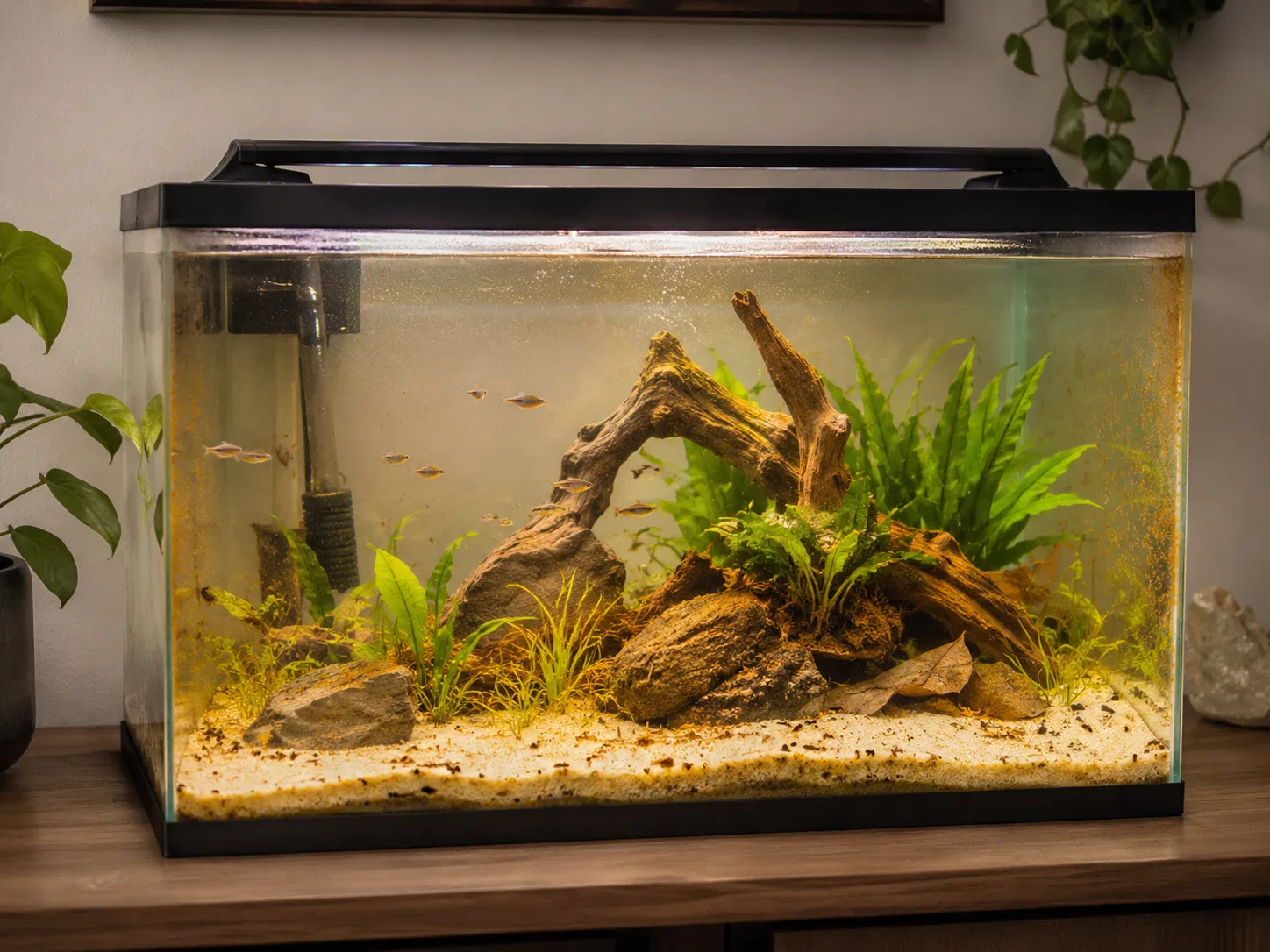
Brown algae is one of the most discouraging problems in a new aquarium because it often appears right when the tank finally starts to look stable. You set up the light, add a few plants, keep the water clear, and then a dusty brown film starts coating the glass, sand, plant leaves, filter outlet, and decorations. It looks dirty, but in many beginner tanks it is not a sign that the whole aquarium is failing.
Most brown algae outbreaks in freshwater aquariums are really diatoms. Diatoms behave differently from green water or hair algae. They often show up in young tanks, low-light corners, slow-flow areas, and surfaces that collect fine waste. In a new 10-gallon or low-tech planted tank, brown dust can appear before the aquarium has settled into a mature rhythm of plant growth, filter biology, and regular cleaning.
The mistake is treating brown algae like a stain instead of a symptom. Scraping the glass helps, but it does not answer the bigger question: why are surfaces being colonized faster than the tank can stabilize?
What brown algae usually looks like
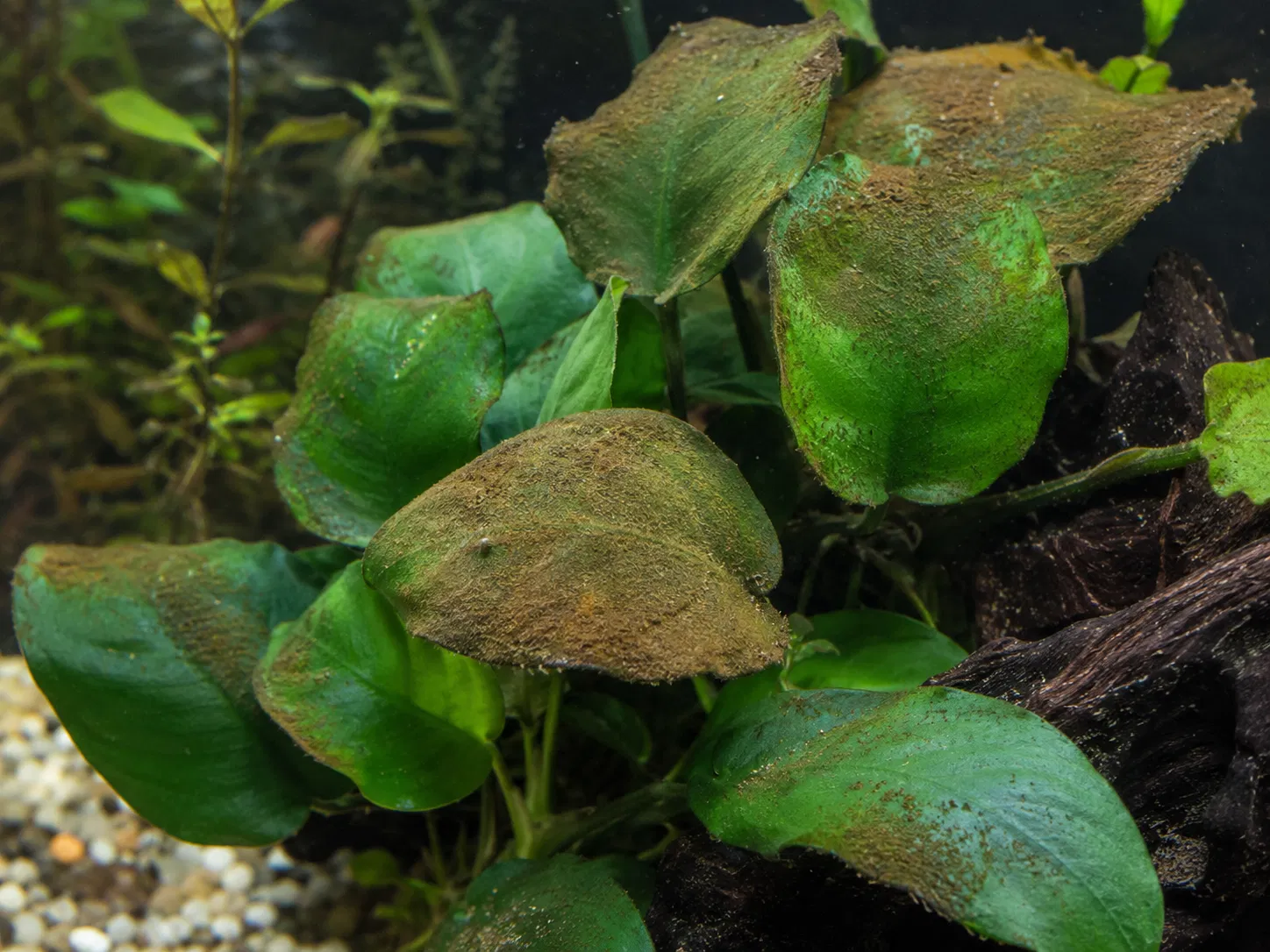
Brown algae usually looks like a soft cinnamon, tan, or rusty-brown film. It wipes off glass easily with a sponge or algae pad. On slow plant leaves, it can look like dusty dirt. On sand, it can form patches that come back a few days after a water change.
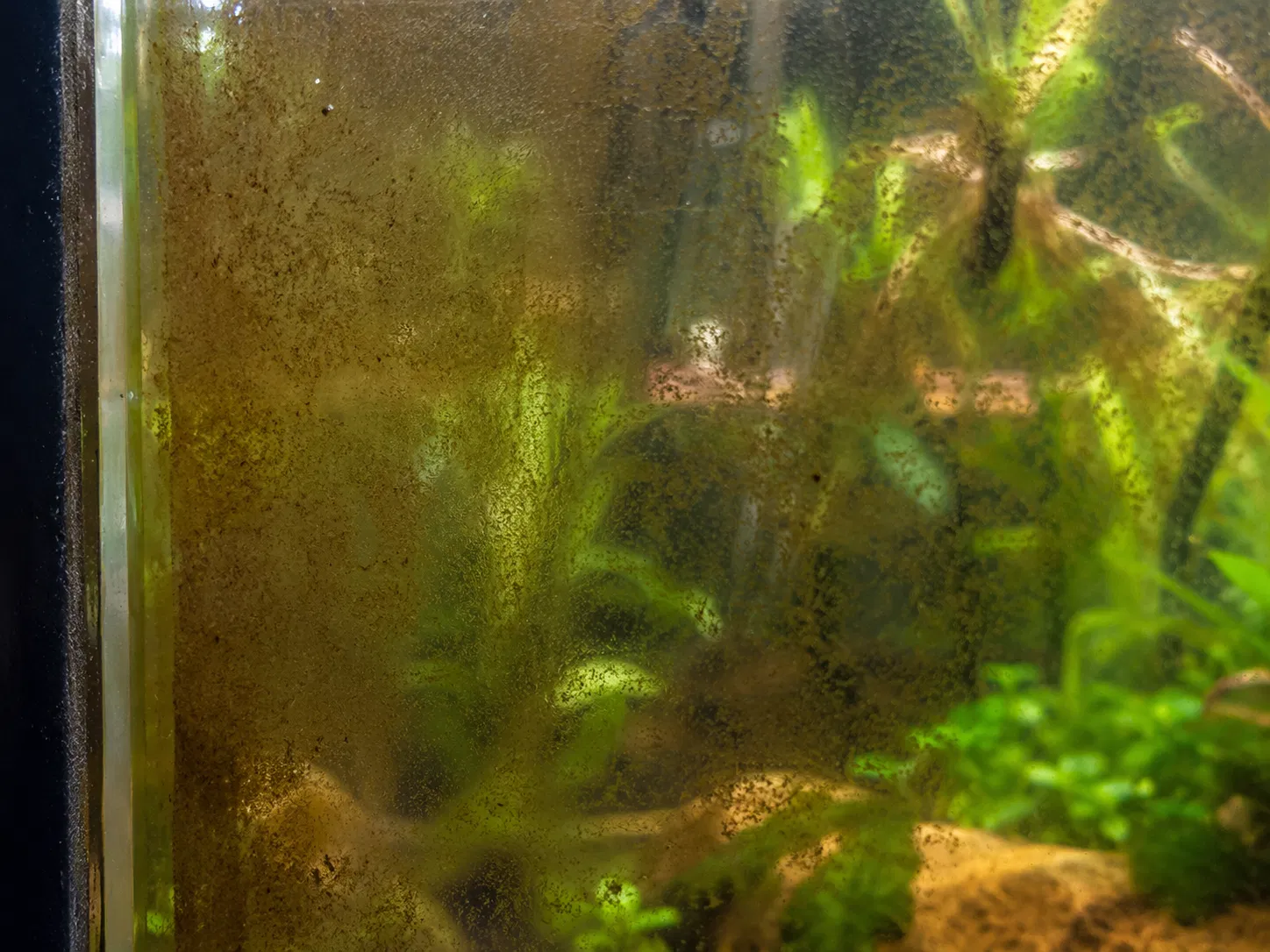
That soft texture matters. If the growth is slimy, blue-green, sheet-like, and peels up in mats, you may be dealing with cyanobacteria instead. If it is long and stringy, think hair algae. Brown diatoms are usually more like dust than hair.
Why new tanks get brown algae
New aquariums are chemically and biologically unsettled. The filter bacteria are still building. Plants may be adapting. Fine organics from substrate, food, melting leaves, and new hardscape can collect on surfaces. In that window, diatoms often take advantage of available dissolved nutrients and surface space.
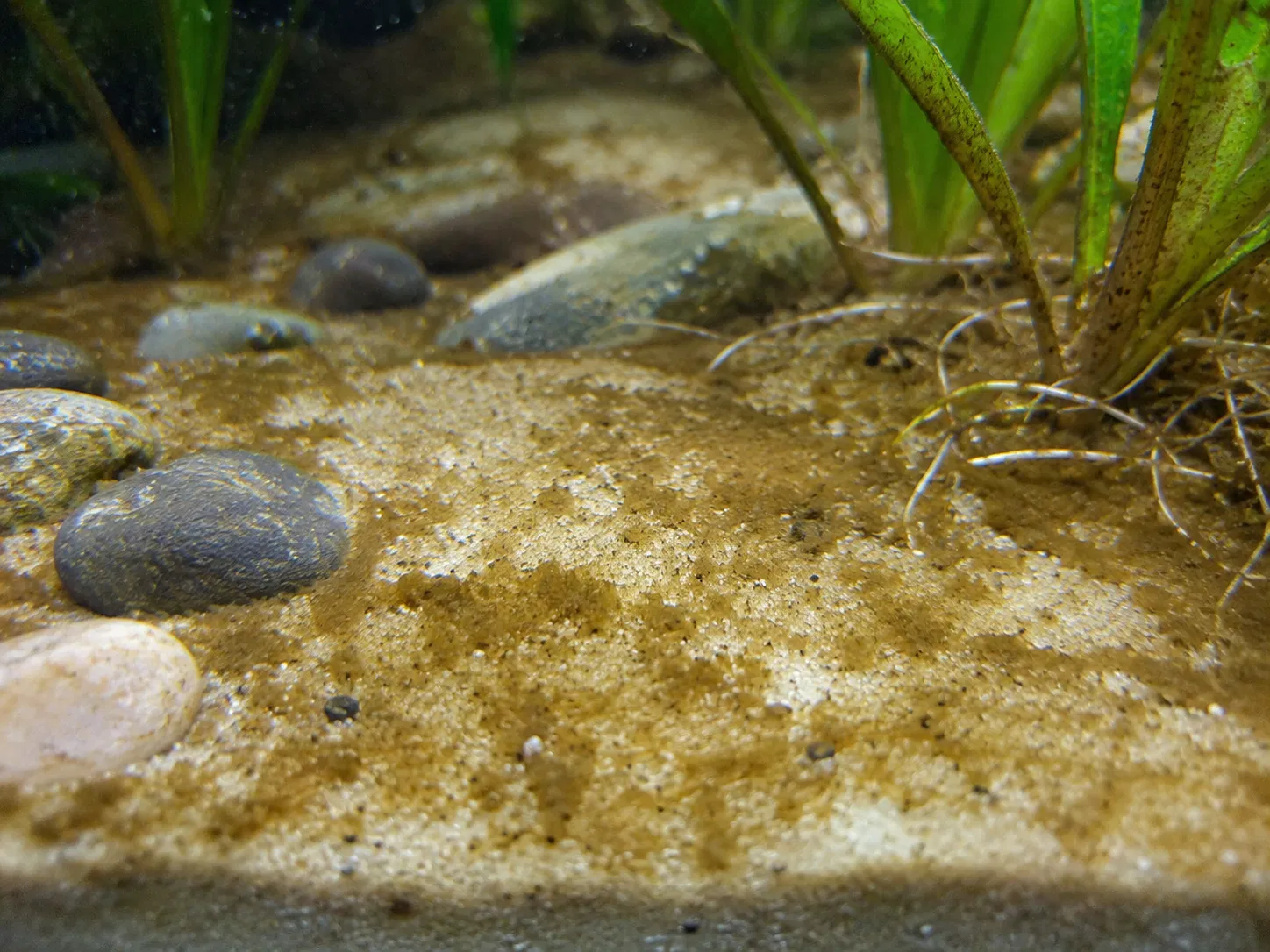
Silica is often mentioned with diatoms, but beginners should not reduce the whole problem to silica. Many tanks contain silicates from tap water, sand, glass, or rock, yet not every tank turns brown forever. In practice, the pattern matters more: new tank, weak plant competition, too much surface waste, inconsistent water changes, or a light schedule that keeps plants alive but not actively growing.
The safest fix is boring but effective
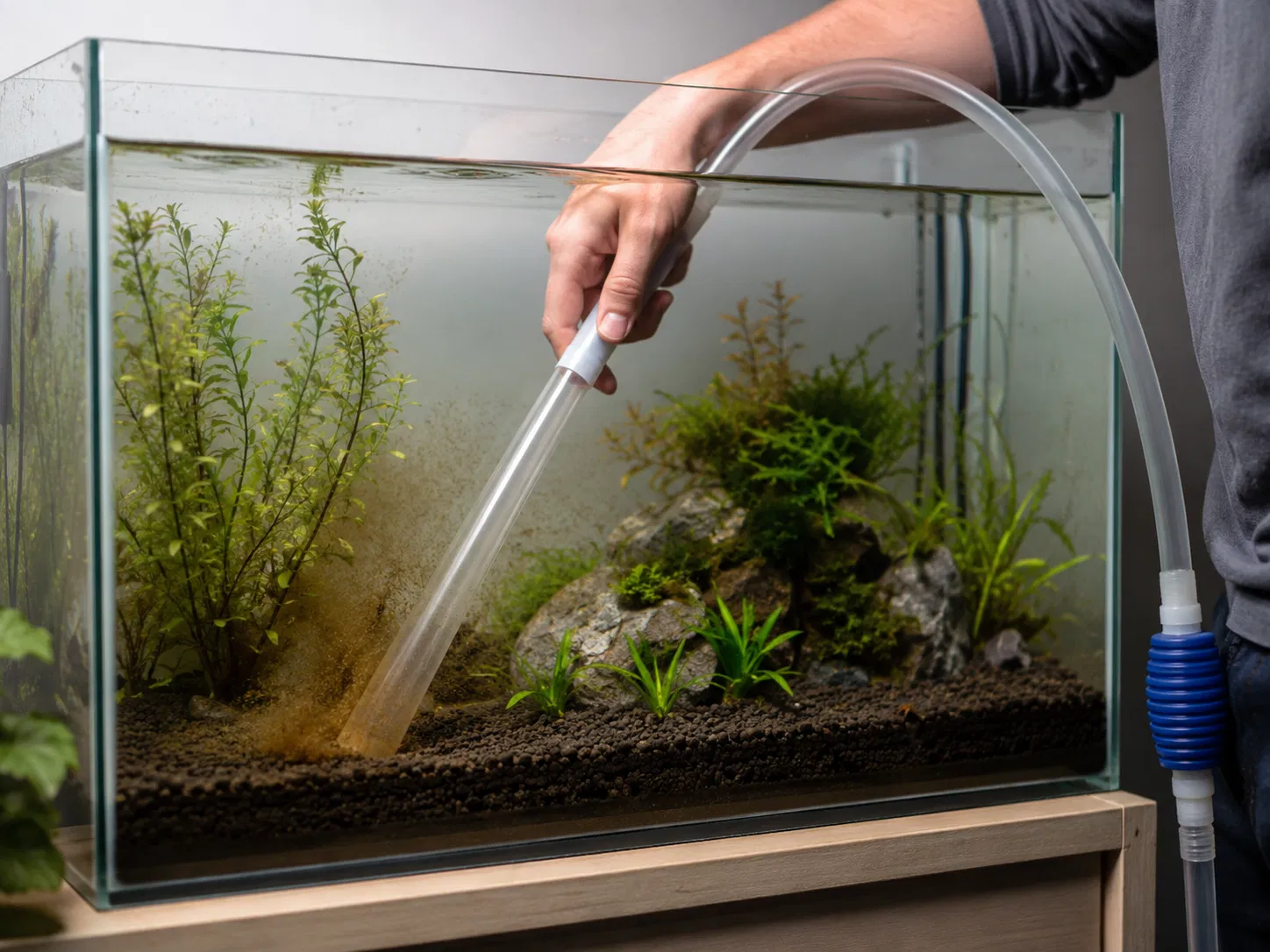
Start by removing what the tank is physically giving the diatoms. Wipe glass during water changes. Gently siphon surface dust from the substrate. Remove melting leaves before they decay. Rinse clogged mechanical sponge or floss in old tank water, not tap water, and avoid replacing all filter media at once.
Do not deep-stir the substrate to chase every brown patch. In older or dirty tanks, deep disturbance can release trapped organics and create a second problem. Work only on the surface layer you can siphon away directly.
Light: not too much, not too little
Brown diatoms often appear in lower-light tanks, but the answer is not blasting the aquarium with a stronger LED. A sudden jump from dim light to high light can shift the tank from brown dust to green hair algae. For beginner planted tanks, keep the light stable at roughly 6 to 7 hours per day while the tank matures.
If the aquarium is in a dark room, avoid shocking fish with instant full brightness. Use a dimmable light, ramp up over 15 to 30 minutes, or turn the room light on before the aquarium light. Fish and plants both respond better to stable transitions than to abrupt corrections.
When cleanup crews help
Nerite snails, some shrimp, and certain small algae grazers may eat soft brown film, but they are not a substitute for stable care. Do not add algae eaters to a tank with ammonia or nitrite problems. They add bioload, and sensitive invertebrates can suffer quickly in unstable water.
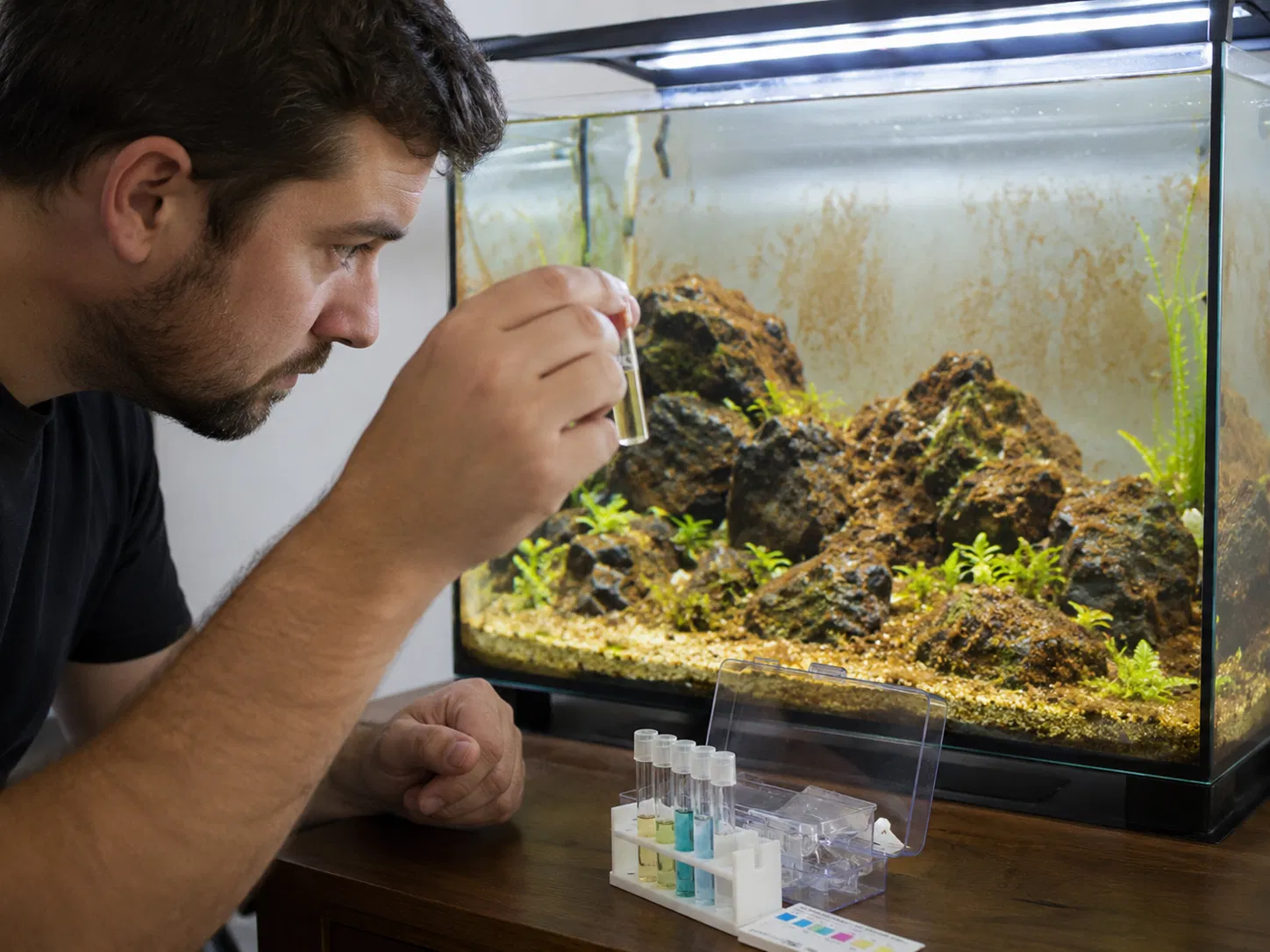
For a new tank, solve water quality first. Test ammonia, nitrite, nitrate, and pH. If ammonia or nitrite is present, do not treat the tank like an algae problem. Treat it like an immature biological filter.
Brown Algae Control Kit
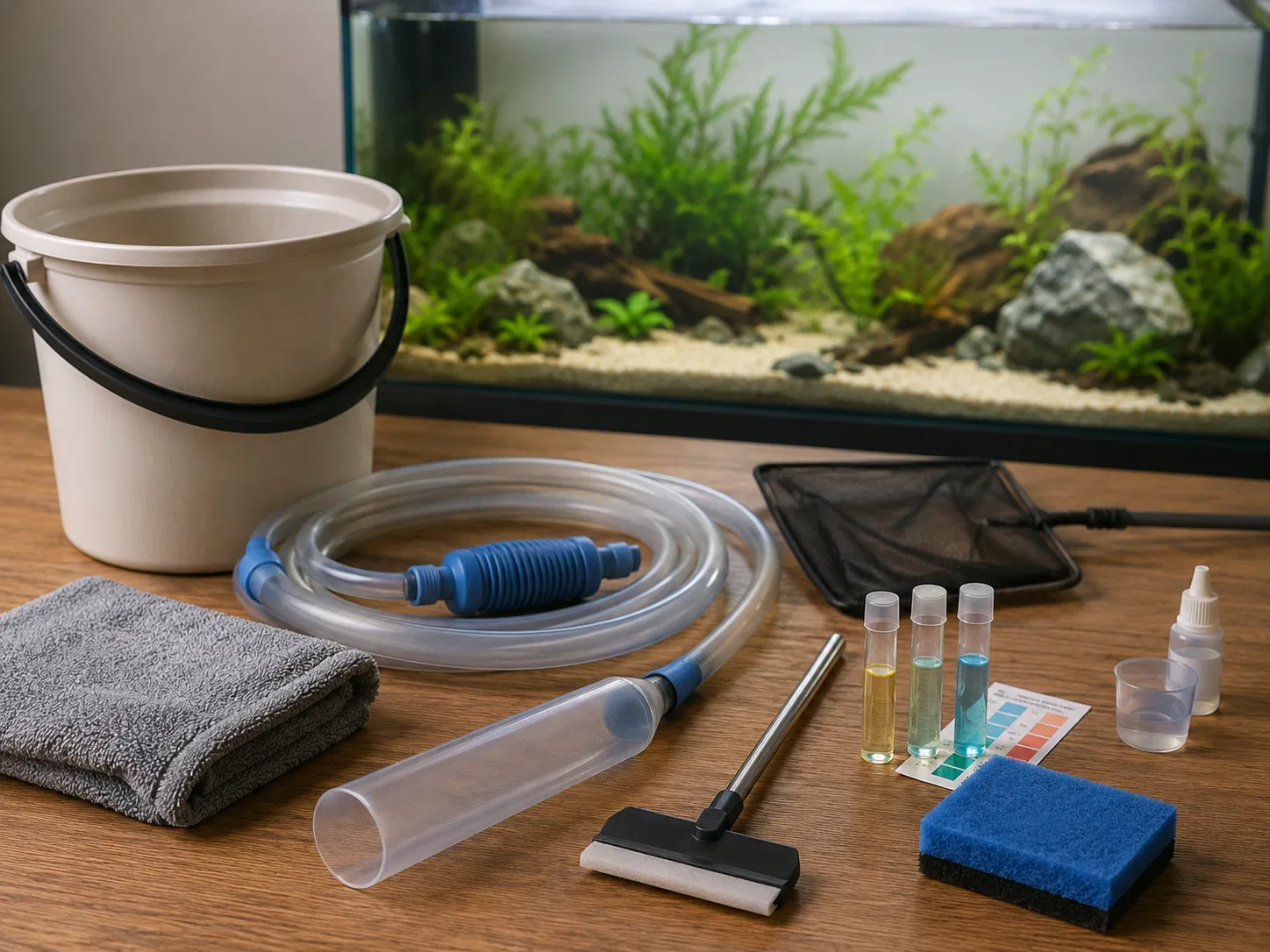
Useful items for this problem include a liquid test kit, algae pad or scraper, small siphon, filter floss or sponge, dechlorinator, and a simple timer. The goal is not to sterilize the tank. The goal is to remove surface waste while giving the filter and plants time to stabilize.
What not to do
Do not dump algaecide into a new tank just because the glass looks brown. Chemicals can kill algae faster than the aquarium can process the waste, and dying algae can consume oxygen as it breaks down. Do not replace all filter media. Do not scrub every surface and perform a huge careless water change on the same day. That is how a cosmetic algae issue turns into a biological crash.
A simple seven-day correction plan
Day one: test the water, wipe the front glass, siphon obvious surface dust, remove dead leaves, and clean mechanical media only if it is clogged. Days two to four: keep feeding light and leave the tank alone except for removing obvious debris. Day five: repeat a modest water change if nitrate or visible waste is building. Day seven: review whether the brown film is returning slower.
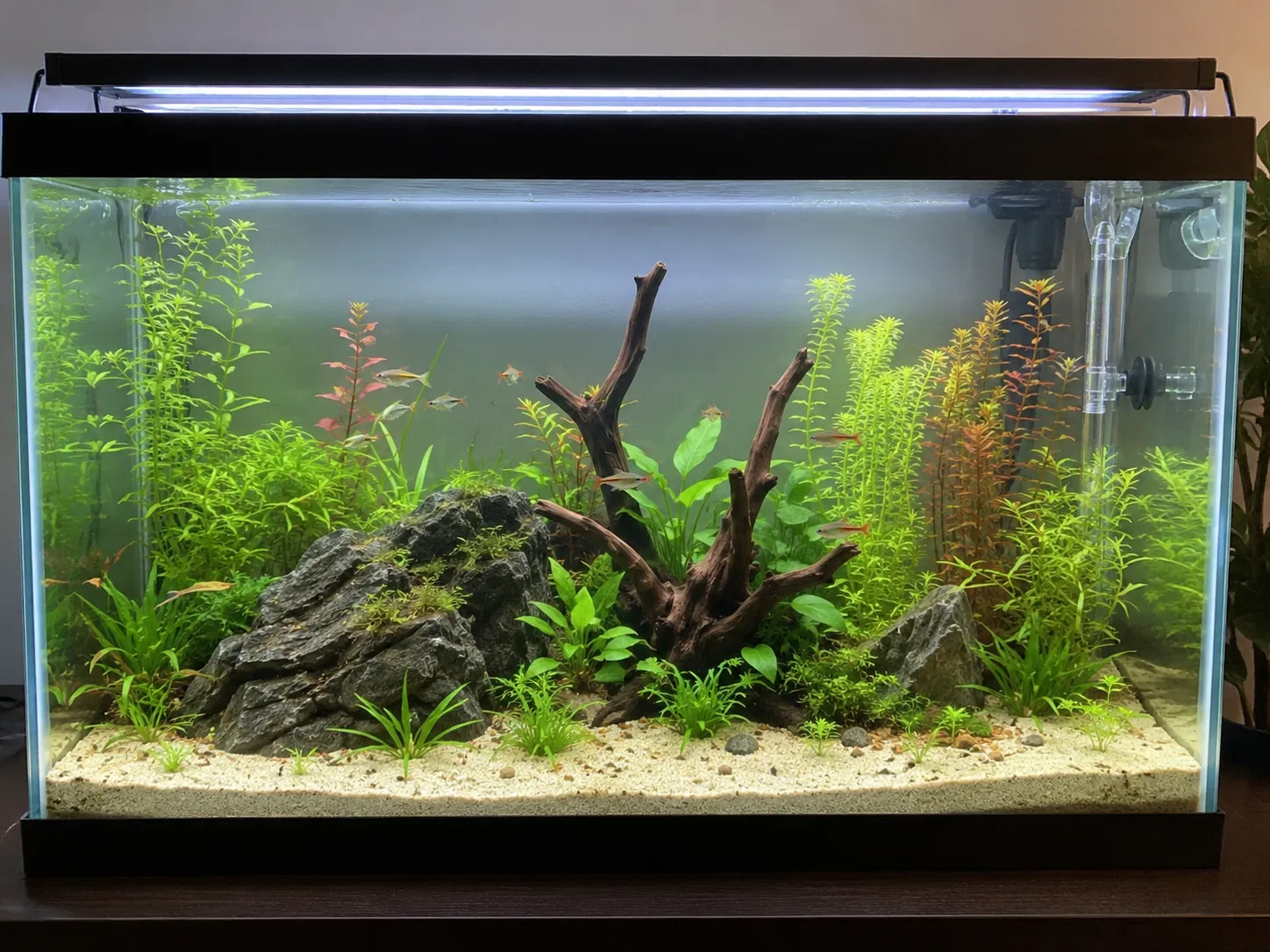
If it returns less aggressively, the tank is improving. If it returns heavier every day, look at overfeeding, dead plant tissue, poor mechanical filtration, weak flow behind decor, or a light schedule that is too long for the plant mass.
FAQ
Is brown algae dangerous to fish?
Brown diatom film itself is usually not directly dangerous, but the conditions around it can be. A new tank with brown algae may also have immature filtration, ammonia, nitrite, or decaying plant waste. Test the water before assuming it is only cosmetic.
Will brown algae go away on its own?
In many young tanks it fades as the aquarium matures, plants adapt, and cleaning becomes consistent. It still helps to wipe glass, remove decaying leaves, and keep mechanical filtration from clogging.
Should I turn the light up to stop brown algae?
Not suddenly. A small adjustment may help plant growth, but jumping to strong light can trigger green algae. Keep a stable 6 to 7 hour schedule first and improve maintenance before increasing intensity.
Do nerite snails eat brown algae?
Nerite snails often graze soft brown film, but they should only be added to a stable tank with safe ammonia and nitrite readings. They are helpers, not a cure for poor water quality.
Is brown algae caused by silica?
Silica can support diatoms, but it is rarely the only factor. New-tank instability, surface debris, low plant competition, and weak maintenance usually matter just as much in home aquariums.
Can I use algaecide for brown algae?
It is usually unnecessary and risky in a young tank. Removing the film manually and correcting waste, light, and filtration is safer than killing algae chemically and adding more decaying material.
Why is brown algae growing on slow plant leaves?
Slow leaves collect dust, biofilm, and fine organics. Wipe broad leaves gently during maintenance and remove damaged leaves so they do not feed bacterial and algae growth.
Should I deep-clean the substrate?
No. Lightly siphon the surface where brown dust collects. Deep-stirring substrate can release trapped waste and destabilize the tank, especially in older or dirty aquariums.
Does brown algae mean my tank is not cycled?
Not always, but it is common in new tanks. Test ammonia and nitrite. If either is present, the cycling issue is more important than the brown film.
How long should I wait before changing strategy?
Give a stable routine one to two weeks. If the film is returning slower, keep going. If it gets worse despite stable care, reassess feeding, flow, plant health, and source water.
Related Guides
/tank-problems/algae-problems/— Use this as the broader algae troubleshooting hub./tank-problems/green-aquarium-water/— Compare brown surface film with green water in the water column./guides/nitrogen-cycle-explained/— New-tank biology often overlaps with early diatom blooms./guides/aquarium-maintenance-schedule/— Maintenance rhythm matters more than aggressive scrubbing./best-products/best-aquarium-test-kits/— Water testing separates cosmetic algae from cycling problems.
Author Box
Written by the Healthy Aquariums editorial team for everyday freshwater keepers. This guide prioritizes fish health, water stability, and practical maintenance over quick fixes that only make the tank look cleaner for a day.
Editorial Note
This article is written for beginner and intermediate hobbyists. It does not replace veterinary advice for sick fish, and it avoids one-size-fits-all chemical fixes. When algae or plant problems appear, test the water, review recent changes, and correct the underlying imbalance before making aggressive changes.
References
- API Fishcare. Green Water, Cloudy Water: What Should I Do? https://www.apifishcare.com/blog/green-water-cloudy-water-what-should-i-do-aquarium
- API Fishcare. Freshwater Aquarium Water Problem Solving. https://www.apifishcare.com/simple-care-guide/freshwater/water-problem-solving
- Penn State Extension. Preventing Excessive Aquatic Plant and Algae Growth. https://extension.psu.edu/preventing-excessive-aquatic-plant-and-algae-growth
- Penn State Extension. Filamentous Algae. https://extension.psu.edu/filamentous-algae/