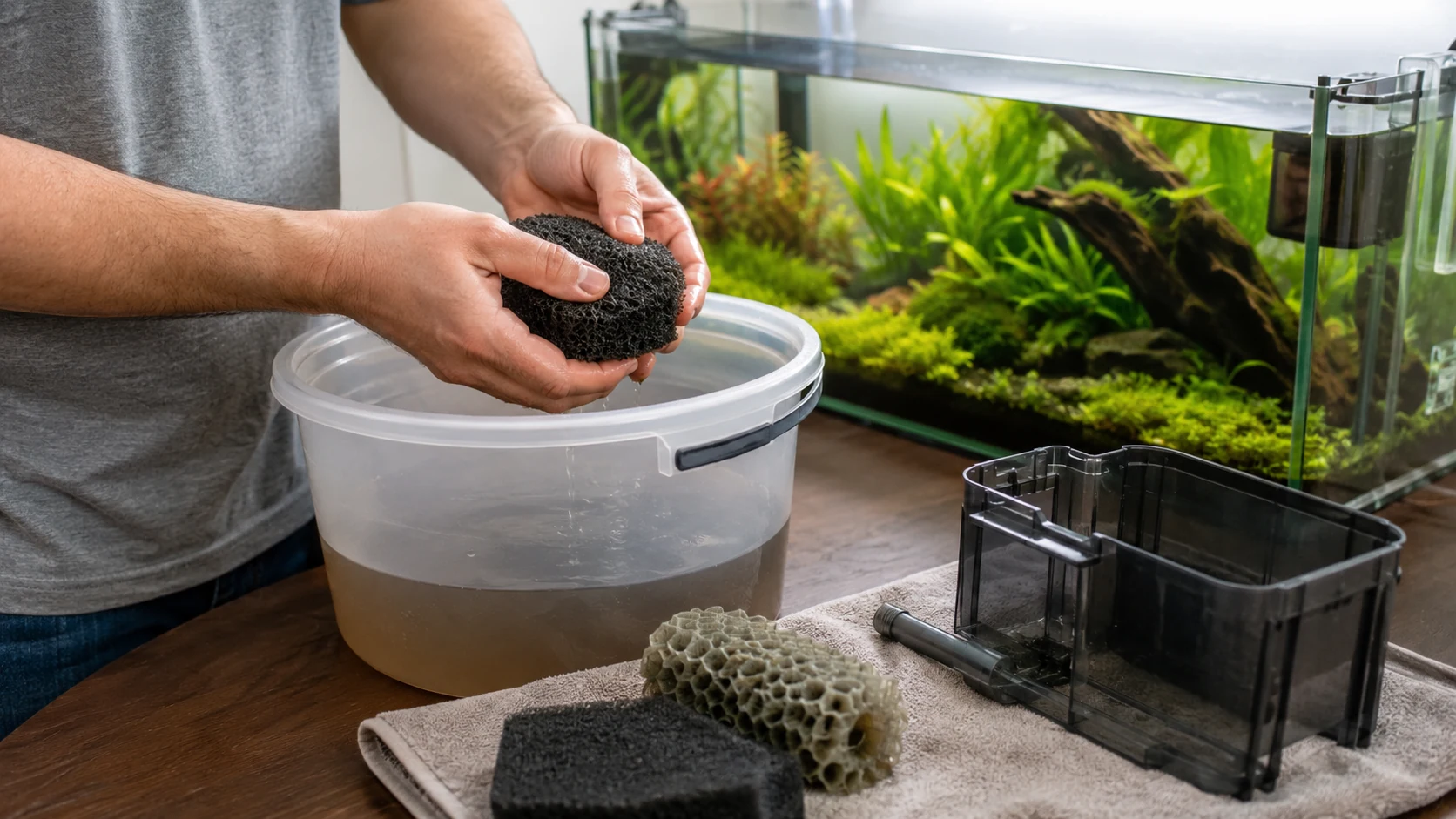
You can physically rinse aquarium filter media in tap water, but that does not mean you should.
The problem is not that tap water is "dirty." The problem is that many tap-water supplies contain chlorine or chloramine, which are added to control microbes. Those disinfectants can also harm the beneficial bacteria living in aquarium filter media. If that media is the main biofilter, careless rinsing can weaken the tank's ability to process ammonia and nitrite.
Quick answer
Do not rinse your main biological filter media under untreated tap water. Rinse sponge, ceramic media, and other bio-media gently in old aquarium water removed during a water change.
You can use tap water on some purely mechanical parts, such as plastic filter housings, impeller covers, or empty trays, if they are dried or treated safely before returning. But the bacteria-bearing media should be protected.
Why this question matters
The filter is where much of the aquarium's nitrifying bacteria live. These bacteria convert toxic ammonia into nitrite and then nitrate. They grow on surfaces such as sponge, ceramic rings, porous media, and even filter walls.
When beginners see brown sponge or dirty media, they often think it needs to be scrubbed clean. That instinct is understandable but dangerous. Brown media can be biologically active media.
The goal is not sterile media. The goal is open water flow and stable bacteria.
Chlorine vs chloramine
Chlorine and chloramine are not the same.
Chlorine may dissipate from water over time, especially with aeration. Chloramine is more stable and does not simply disappear overnight in a reliable way. Many municipal water systems use chloramine because it lasts longer in pipes.
This is why "I let the water sit out" is not a safe universal method for aquarium maintenance. If your tap water contains chloramine, you need a conditioner that handles chloramine.
Filter bacteria are microbes. Disinfectants are designed to suppress microbes. That is the biological conflict.
What media should not be rinsed under untreated tap water?
Avoid untreated tap water for:
- sponge media;
- ceramic rings;
- porous biomedia;
- bio balls used as biological media;
- mature filter floss if it is part of the biofilter;
- cartridge media if it is the only bacteria surface;
- seeded media from an established tank.
If the media has been running in the aquarium and is part of the nitrogen cycle, assume it contains beneficial bacteria.
What can be cleaned more aggressively?
Some parts can be cleaned more thoroughly because they are not the main bacteria home:
- empty plastic filter boxes;
- intake tubes;
- impeller covers;
- motor housing exterior;
- spray bars;
- hose exterior;
- clips, baskets, and trays.
Even then, avoid soap, detergent, bleach, household cleaners, scented products, or chemical residue. If a part is cleaned with tap water, make sure it is free of untreated water before returning it to the aquarium, or use dechlorinated water for the final rinse.
Safe way to rinse filter media
Use this process:
- During a water change, collect some old tank water in a clean aquarium-only bucket.
- Remove the filter media.
- Swish or squeeze the media gently in that bucket.
- Remove heavy debris, not all staining.
- Keep biological media wet.
- Put it back promptly.
- Restart the filter and confirm normal flow.
Do not let media dry out. Beneficial bacteria live in a wet, oxygenated environment. Drying media can harm the colony.
Molecular damage: how chlorine attacks the biofilm shield
The usual warning that tap water "kills beneficial bacteria" is true, but incomplete. Nitrifying bacteria on mature filter media do not live as isolated loose cells. They grow inside a sticky, self-produced protective matrix called extracellular polymeric substances, or EPS. In aquarium language, this is part of the mature biofilm.
EPS helps anchor slow-growing bacteria to sponge pores, ceramic media, and other surfaces. It also protects the colony from minor environmental changes.
Untreated tap water can damage that structure. Free chlorine and hypochlorous acid are aggressive oxidizing agents. They can injure bacterial cells and weaken the polysaccharide and protein structure that holds the biofilm together. When that matrix is damaged, parts of the colony can slough off the media surface instead of remaining attached and functional.
This is why biological media should not be exposed to unconditioned municipal water. The risk is not only "some bacteria die." The bigger danger is physical and chemical damage to the attached biofilm structure that makes the media biologically mature.
The safety standard is simple: biological media should be submerged and gently swirled only in old aquarium water or properly dechlorinated water. Old tank water is easiest because it protects both the bacteria and the chemistry they are already adapted to.
What if you already rinsed media in tap water?
Do not panic. One tap-water rinse does not always destroy the entire biofilter, especially if the tank has bacteria on substrate, decor, plants, and other media.
But treat the tank as at-risk for a mini-cycle.
For the next several days:
- test ammonia and nitrite;
- feed lightly;
- increase aeration;
- avoid adding fish;
- do not replace more media;
- use conditioner properly during water changes;
- consider adding established media if available.
If ammonia or nitrite appears, respond with controlled water changes, conditioner according to label, and oxygen support.
The cartridge replacement trap
Many filter cartridges combine mechanical floss, carbon, and biological surface area in one disposable piece. The package may tell you to replace it monthly.
That is convenient for product sales, but risky for the aquarium if the cartridge is your main bacteria colony.
A safer plan is to add reusable sponge or ceramic media inside the filter. Let that media mature. Then, if a carbon cartridge is replaced, the tank still has stable biological media.
Tap water and old tank syndrome
In a very neglected tank, filter cleaning must be even more careful. Fish may have adapted to high nitrate, low minerals, or altered pH. A massive clean-out plus large water change plus media rinse can shock fish and damage the biofilter at the same time.
Do not combine every major correction in one day. Restore stability gradually. Test first. Clean clogged mechanical media enough to restore flow, but do not sterilize the system.
Filter media safety table
| Media / part | Safe cleaning method |
|---|---|
| Mature sponge | Squeeze in old tank water |
| Ceramic biomedia | Swish gently in old tank water |
| Bio balls | Swish gently if clogged |
| Filter floss | Replace if disposable and not the main biofilter |
| Plastic housing | Rinse without soap; final rinse with dechlorinated water if needed |
| Impeller | Brush clean; no oils or soap |
| Hoses | Use flexible brush; rinse safely |
| Carbon | Replace when exhausted; do not rely on it as main biofilter |
Biofilter Protection Maintenance Kit
Keep one dedicated aquarium bucket, dechlorinator, soft brush, spare reusable sponge, ceramic biomedia, and ammonia/nitrite test kit near your maintenance area. These items help you clean debris without accidentally sterilizing the biofilter.
FAQ
Can I rinse aquarium filter sponge in tap water?
Do not rinse mature filter sponge in untreated tap water. Use old tank water to protect beneficial bacteria.
Does tap water kill beneficial bacteria instantly?
Not always instantly, but chlorine or chloramine can harm bacteria. The risk is unnecessary when old tank water is available.
Can I wash ceramic rings in tap water?
Avoid untreated tap water. Swish ceramic media in old aquarium water if debris is blocking flow.
Can I clean the plastic filter box in tap water?
Yes, if no soap or cleaners are used and the part is safe before returning. Keep biological media separate and protected.
What should I do if I washed all media in tap water?
Test ammonia and nitrite for several days, feed lightly, increase aeration, and avoid adding new fish.
Is dechlorinated tap water safe for rinsing media?
It is safer than untreated tap water, but old tank water is still the easiest and most stable option.
Can I replace filter media after rinsing it?
Do not replace all media at once. If replacement is necessary, overlap old and new media first.
Why does filter media smell bad?
It may contain trapped organic waste or low-oxygen sludge. Clean gently, restore flow, and check water quality.
Can I use soap on filter parts?
No. Soap residue can harm fish and should never be used on aquarium equipment.
Should biological media look dirty?
It can look brown or stained and still be healthy. Do not judge it by appearance alone.
Related Guides
- How Often Should You Clean an Aquarium Filter?
- Aquarium Filter Guide
- Aquarium Water Care Guide
- What Size Aquarium Filter Do I Need?
- Ammonia Nitrite Nitrate
Author Box
Written by the Healthy Aquariums editorial team. We focus on protecting the biofilter because sudden "clean" corrections often create the very water-quality problems beginners are trying to avoid.
Editorial Note
This article applies to freshwater aquarium biological media. Always follow equipment instructions, but do not treat disposable cartridge schedules as a substitute for biofilter protection.
References
- Aqueon. The Nitrogen Cycle. https://www.aqueon.com/articles/the-nitrogen-cycle
- API Fishcare. The Nitrogen Cycle. https://www.apifishcare.com/blog/the-nitrogen-cycle-keeping-your-aquarium-healthy
- U.S. Environmental Protection Agency. Chloramines in Drinking Water. https://www.epa.gov/dwreginfo/chloramines-drinking-water