The nitrogen cycle is the reason a glass box of water can become a stable aquarium instead of a toxic container.
Beginners often hear “cycle your tank” but are not told what that actually means. It does not mean running a filter for a few days. It does not mean the water is clear. It does not mean adding a bottle and assuming the job is finished.
Cycling means building enough living bacteria to process the waste your fish produce every day.
Quick answer
The aquarium nitrogen cycle converts toxic ammonia into nitrite, then into nitrate. A cycled tank can keep ammonia at 0 ppm and nitrite at 0 ppm while nitrate appears slowly and is removed through water changes, plants, and maintenance.
Cycling takes time because the bacteria involved grow on surfaces, especially filter media. They need oxygen, stable water, and a steady waste source. Sudden filter cleaning, untreated tap water, drying media, overstocking, or power outages can damage the cycle.
The cycle in plain English
Fish produce ammonia. Uneaten food and waste rot into more ammonia. Beneficial bacteria turn ammonia into nitrite. Another group of bacteria turns nitrite into nitrate.
Nitrate is removed by water changes, plant growth, and responsible stocking.
That is the simple version. The important part is that these bacteria do not live mostly in open water. They live on surfaces: filter sponge, ceramic media, substrate, glass, plants, decor, and biofilm. The filter matters because it provides oxygenated flow across those surfaces.
Why clear water does not mean cycled water
Clear water only means particles are not clouding the view. Ammonia and nitrite are invisible.
A new tank can look perfect and still be toxic. A mature tank can look slightly tinted and still be chemically safe. This is why testing matters.
Cycling is not judged by appearance. It is judged by ammonia, nitrite, and nitrate behavior over time.
The three stages
| Stage | What happens | Test result pattern |
|---|---|---|
| Ammonia stage | Waste appears before bacteria can process it | Ammonia rises |
| Nitrite stage | Ammonia bacteria grow, nitrite appears | Ammonia drops, nitrite rises |
| Nitrate stage | Nitrite bacteria grow | Ammonia 0, nitrite 0, nitrate appears |
A tank is not reliably cycled until it can process the expected waste load without ammonia or nitrite appearing.
Fish-in cycling vs fishless cycling
Fishless cycling is safer because ammonia can be supplied without exposing fish to toxic spikes. It gives bacteria time to grow before animals are added.
Fish-in cycling happens when fish are already in the tank. It requires restraint: light feeding, frequent testing, controlled water changes, and sometimes conditioner that detoxifies ammonia or nitrite according to the label.
The biological goal is the same. The ethical risk is different.
What beneficial bacteria need
Nitrifying bacteria need oxygen, surface area, water flow, and stability.
They do not need the filter to be spotless. They do not need media replaced monthly. They do not need dramatic pH swings or huge cleaning sessions.
They are slow-growing organisms. Treat them like livestock you cannot see.
The oxygen trap in clogged media
A filter can contain plenty of media and still fail if water cannot move oxygen through it.
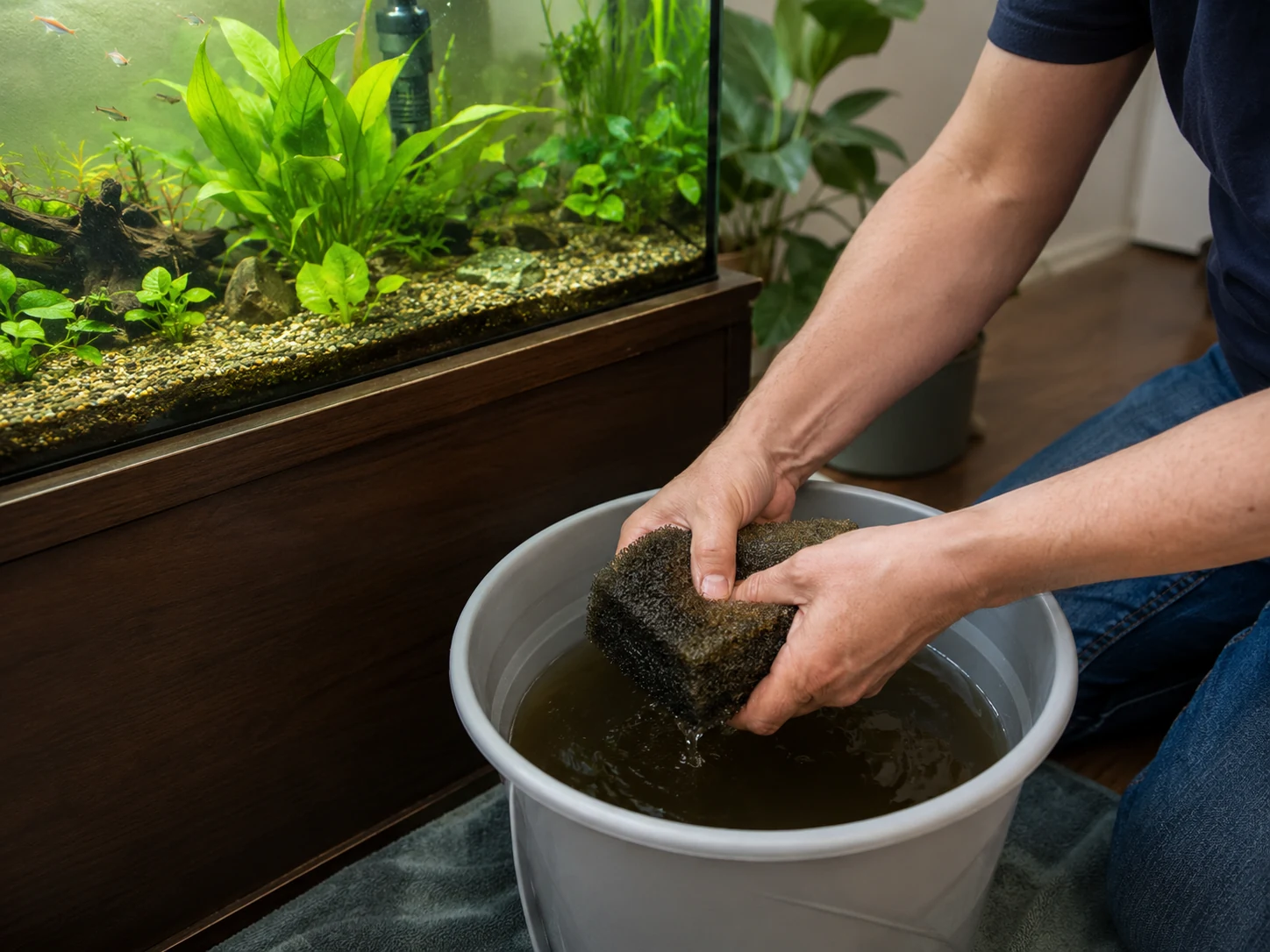
When sponge, floss, or biomedia becomes packed with detritus, heterotrophic bacteria consume oxygen while breaking down organic waste. Deep inside clogged media, oxygen can become limited. Nitrifying bacteria then slow down or die back.
This is why filter maintenance is not cosmetic. It is oxygen transport. Clean the mechanical stage when flow drops, but preserve biological media.
Cycling danger: low pH can hide ammonia until maintenance exposes it
During cycling or cycle failure, pH changes can make ammonia risk look confusing. At lower pH, more total ammonia is present as ammonium. At higher pH, more shifts toward un-ionized ammonia. This means a stalled acidic tank can appear survivable until a sudden large water change raises pH and exposes the fish to a sharper NH3 spike.
This is one reason testing only ammonia is not enough during a crisis. Test pH and temperature with ammonia, especially in tanks that have been neglected, overstocked, or heavily fed. If pH is very low and total ammonia is high, correct the tank slowly. Support oxygen, bind ammonia if needed, protect filter media, and use small staged water changes rather than a single large reset.
What breaks the cycle
Common cycle damage comes from:
- replacing all filter media;
- rinsing bio-media under untreated tap water;
- letting filter media dry out;
- power outages that stop oxygenated flow;
- deep-cleaning filter and substrate together;
- adding too many fish at once;
- heavy overfeeding;
- medication misuse that harms bacteria;
- chlorine or chloramine exposure.
A cycle crash does not always look dramatic on day one. Fish may become quiet, breathe faster, hide, clamp fins, or hang near flow.
How to know a tank is cycled
A cycled tank should show:
- ammonia: 0 ppm;
- nitrite: 0 ppm;
- nitrate: present or slowly rising;
- fish behaving normally;
- filter running continuously;
- no sudden unexplained losses.
If nitrate is zero in a tank with fish and no plants, question the test or the cycling status. If the tank is heavily planted, nitrate may remain low because plants use it.
New Tank Syndrome
New Tank Syndrome happens when fish are placed into a tank before the biofilter can process waste. The tank may look clean. The fish may appear fine for a few days. Then ammonia or nitrite rises.
The tragedy is that many beginners respond by cleaning everything. That removes the bacteria the tank was trying to grow.
The correct response is testing, oxygen, controlled water changes, lighter feeding, and protecting the filter.
A practical cycling kit includes a liquid ammonia/nitrite/nitrate test kit, water conditioner that handles chloramine, seeded sponge or biomedia if available, thermometer, bucket, and backup air pump. These are more useful than chasing every bottled additive on the shelf.
FAQ
How long does the nitrogen cycle take?
Many tanks take several weeks, but timing varies with temperature, pH, bacteria source, ammonia source, and filter media.
Can a tank cycle in one week?
Sometimes with mature seeded media, but do not assume it. Test ammonia and nitrite.
Does bottled bacteria instantly cycle a tank?
It may help, but it does not remove the need for testing.
Where do beneficial bacteria live?
Mostly on surfaces, especially filter media, sponge, substrate, decor, and biofilm.
Can I turn off the filter during cycling?
No. Bacteria need oxygenated flow.
Can I change water while cycling?
Yes. Water changes protect fish and do not remove most bacteria because bacteria live on surfaces.
Can I clean the filter while cycling?
Only gently if flow is blocked. Do not replace or sterilize media.
Why is nitrite still high after ammonia drops?
The second bacterial group is still catching up.
Is nitrate the final goal?
Nitrate appearing is a sign the cycle is progressing, but nitrate still needs control.
Can plants cycle a tank?
Plants can absorb nitrogen and help stability, but you should still test ammonia and nitrite.
Related Guides
- Ammonia, Nitrite, and Nitrate
- How Often Should You Change Aquarium Water?
- Aquarium Maintenance Schedule
- Aquarium Filter Guide
- Can You Wash Filter Media in Tap Water?
Author Box
Written by the Healthy Aquariums editorial team. We explain the nitrogen cycle as a living filtration process, not a memorized diagram.
Editorial Note
This guide is written for freshwater aquariums. Marine systems, high-tech planted systems, and ponds may require additional interpretation.
References
- Aqueon. The Nitrogen Cycle. https://www.aqueon.com/articles/the-nitrogen-cycle
- API Fishcare. The Nitrogen Cycle. https://www.apifishcare.com/blog/the-nitrogen-cycle-keeping-your-aquarium-healthy
- Merck Veterinary Manual. Environmental Diseases of Aquatic Animals in Aquatic Systems. https://www.merckvetmanual.com/exotic-and-laboratory-animals/aquatic-systems/environmental-diseases-of-aquatic-animals-in-aquatic-systems