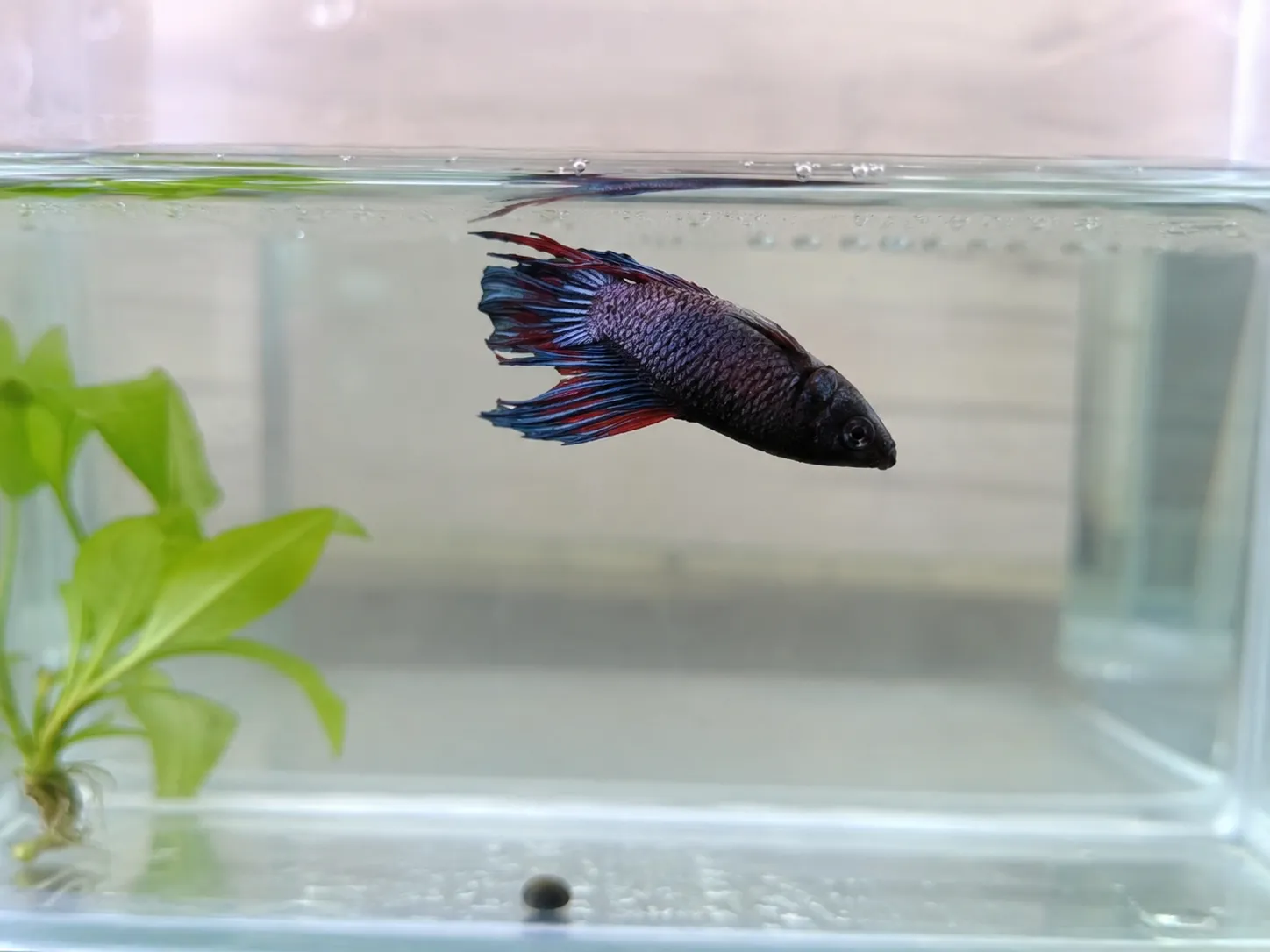
A betta floating sideways, sinking, or struggling to stay level is scary. It is also one of the most misunderstood problems in beginner fishkeeping. People often call every buoyancy problem “swim bladder disease,” then jump to peas, salt, fasting, or medication without asking the more important question: what caused the fish to lose normal balance?
The swim bladder is involved in buoyancy, but a betta’s balance can be affected by constipation, bloating, low temperature, poor water quality, bacterial inflammation, organ swelling, injury, genetic body shape, or stress. The symptom is visible. The cause is not always obvious.
First: separate early signs from emergency signs
Mild cases may look like slight floating after meals, resting more than usual, or occasional trouble diving. Severe cases include floating upside down, sinking and unable to rise, rapid breathing, pineconing scales, red sores, severe bloating, or refusal to move. Severe signs need urgent water testing and may require a hospital tank.
If the betta is bloated and pineconing, this may not be simple constipation. Treat it as a serious systemic problem, not a food issue.
Test water before changing food or adding medicine
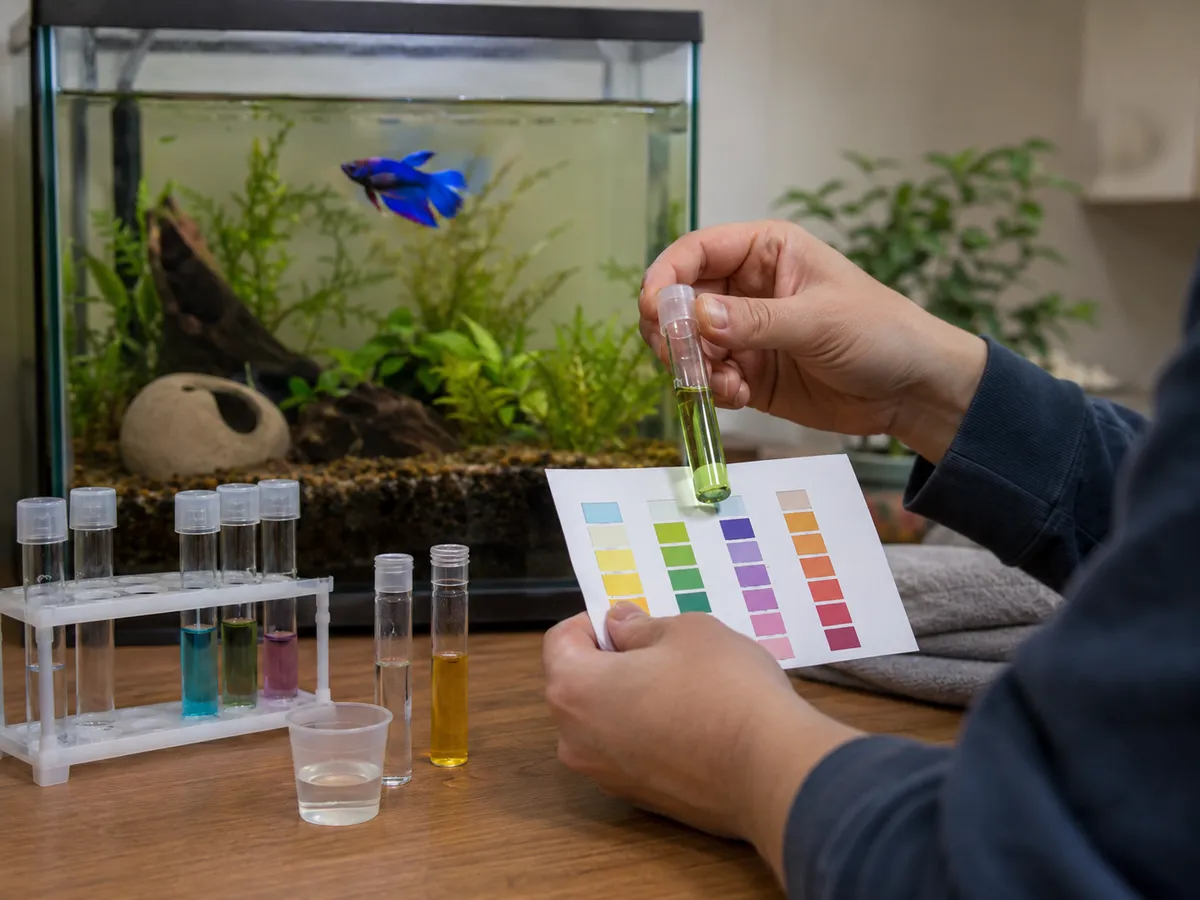
Check ammonia, nitrite, nitrate, pH, and temperature. Ammonia and nitrite irritate gills and stress internal organs. High nitrate, unstable pH, or a dirty filter can weaken the fish before buoyancy problems appear. Medication added into bad water is a common trap.
If ammonia or nitrite is present, stabilize water first with conditioner, gentle aeration, and controlled water changes. Do not deep-clean the substrate, replace all filter media, and medicate on the same day unless the situation is clearly life-threatening. That combination can crash the biofilter and make recovery harder.
Temperature and digestion
Bettas are tropical fish. When water is too cool, digestion slows. Food stays in the gut longer, bloating is more likely, and the fish may become lethargic. But overheating is not a fix. Warmer water increases metabolism and lowers dissolved oxygen. A stable, species-appropriate temperature matters more than chasing a high number.
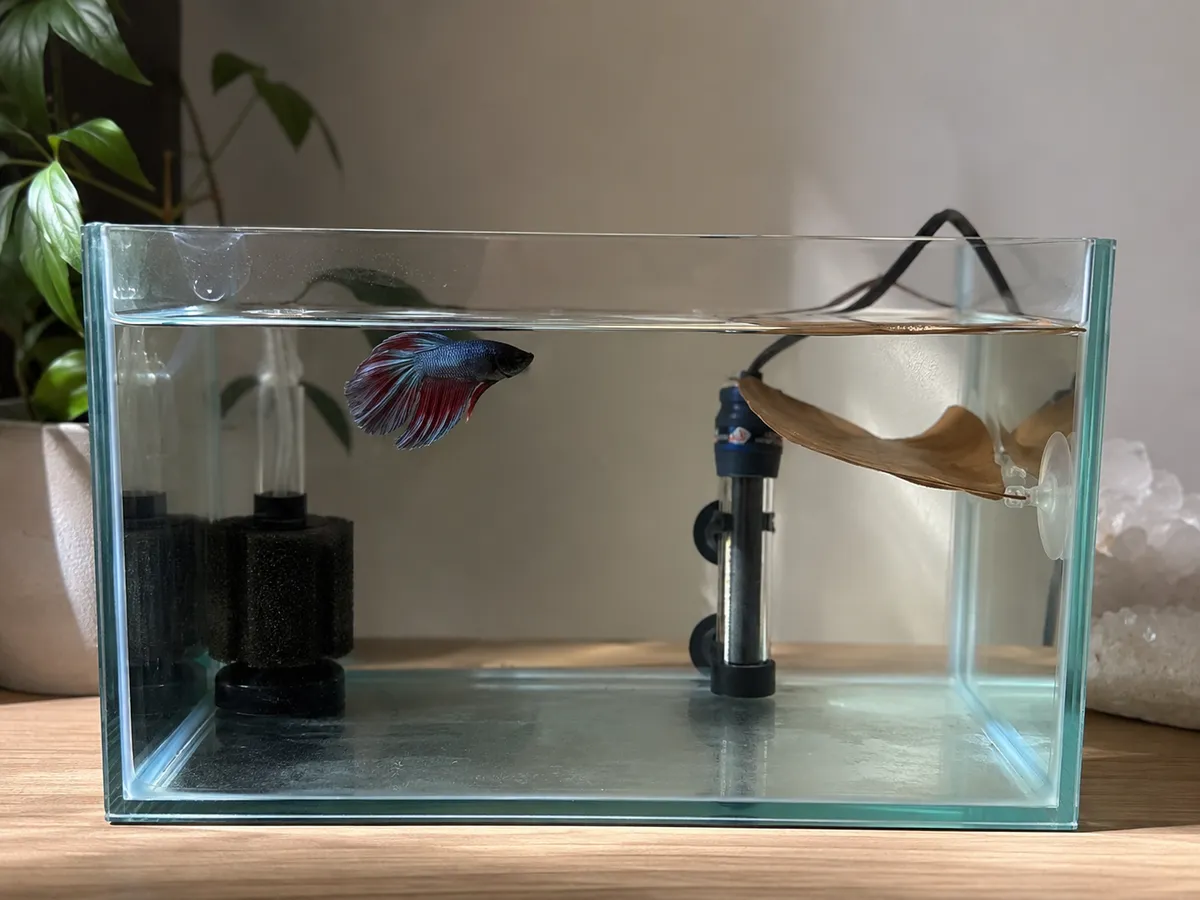
Use a separate thermometer, not just the heater dial. In small tanks, low flow can create temperature pockets. Place the heater near gentle circulation and check the temperature away from the heater.
Food mistakes that cause buoyancy trouble
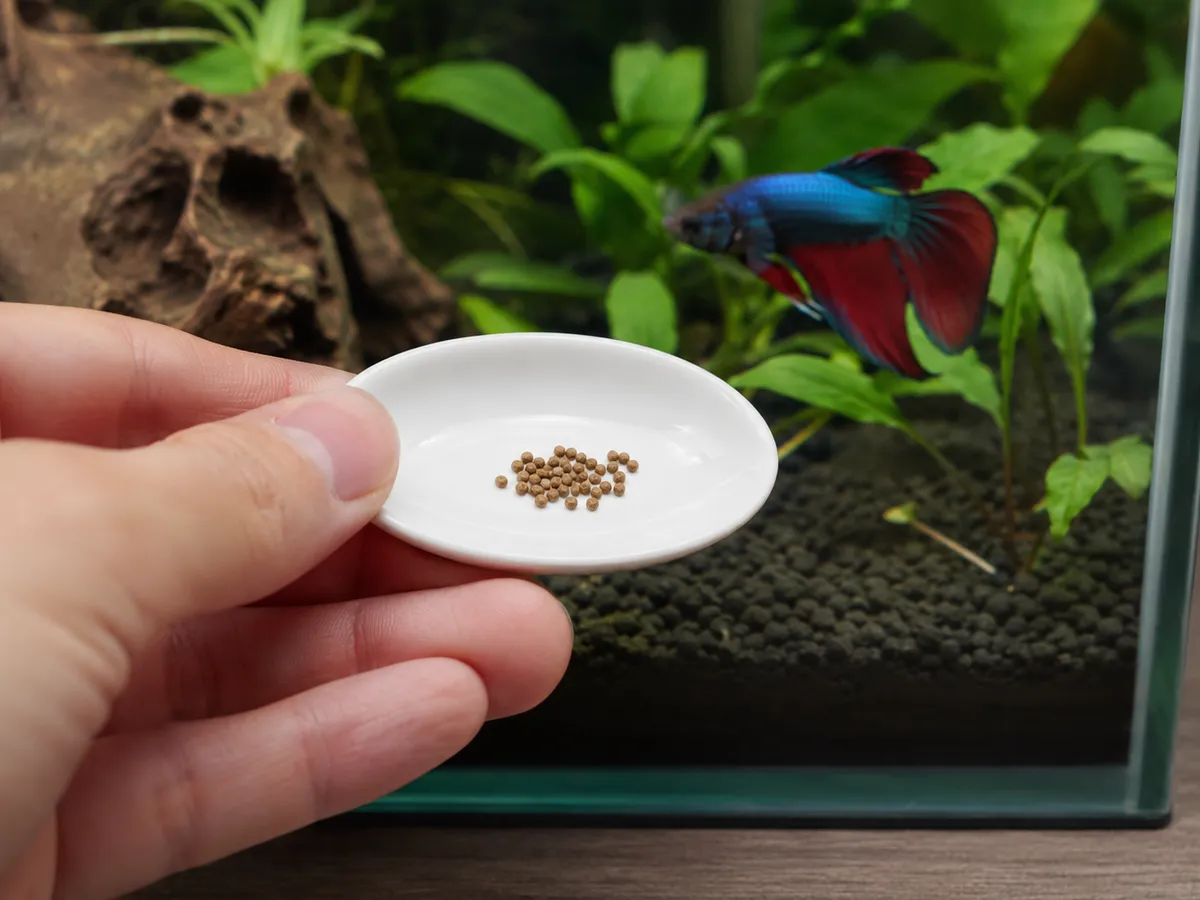
Large pellets, stale pellets, overfeeding, dry foods that swell, and too many rich frozen foods can all contribute to digestive pressure. Feed tiny portions. A betta’s stomach is small. Remove uneaten food within five minutes. If the fish spits food, do not assume it is picky; test water and check food freshness.
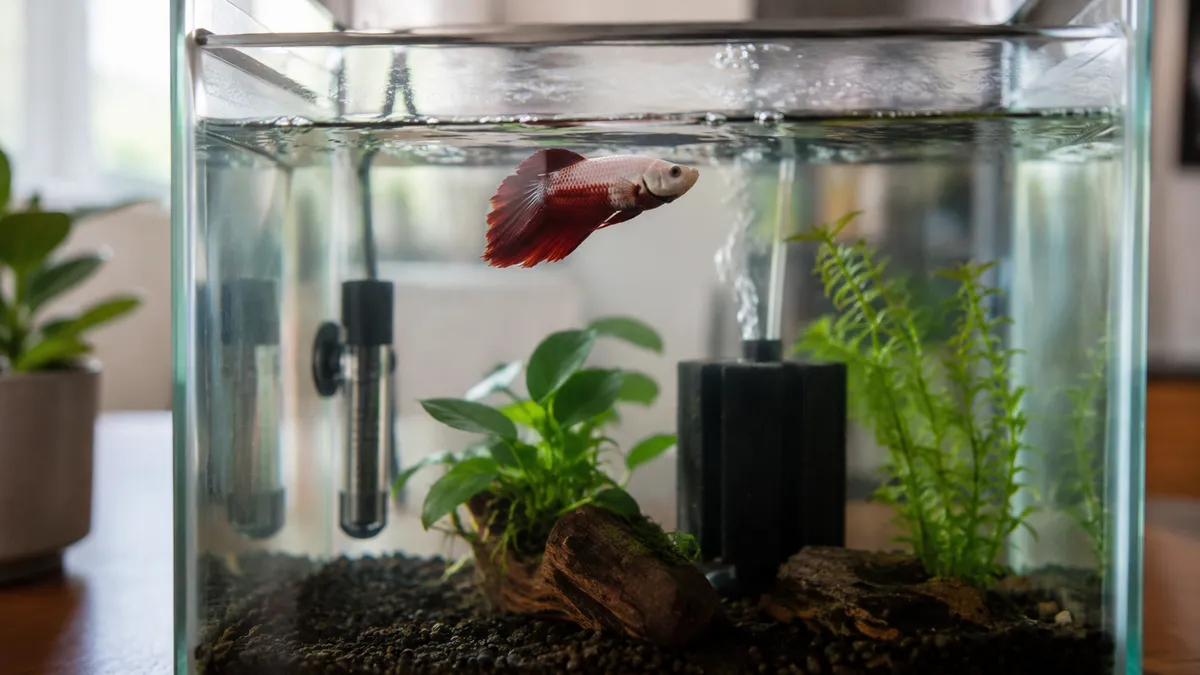
Fasting for 24 hours can help mild post-meal bloating, but repeated fasting without fixing the cause is not treatment. Do not feed peas as a universal cure. Bettas are insectivorous/carnivorous fish, and peas are often poor advice for them.
When to use a hospital tank
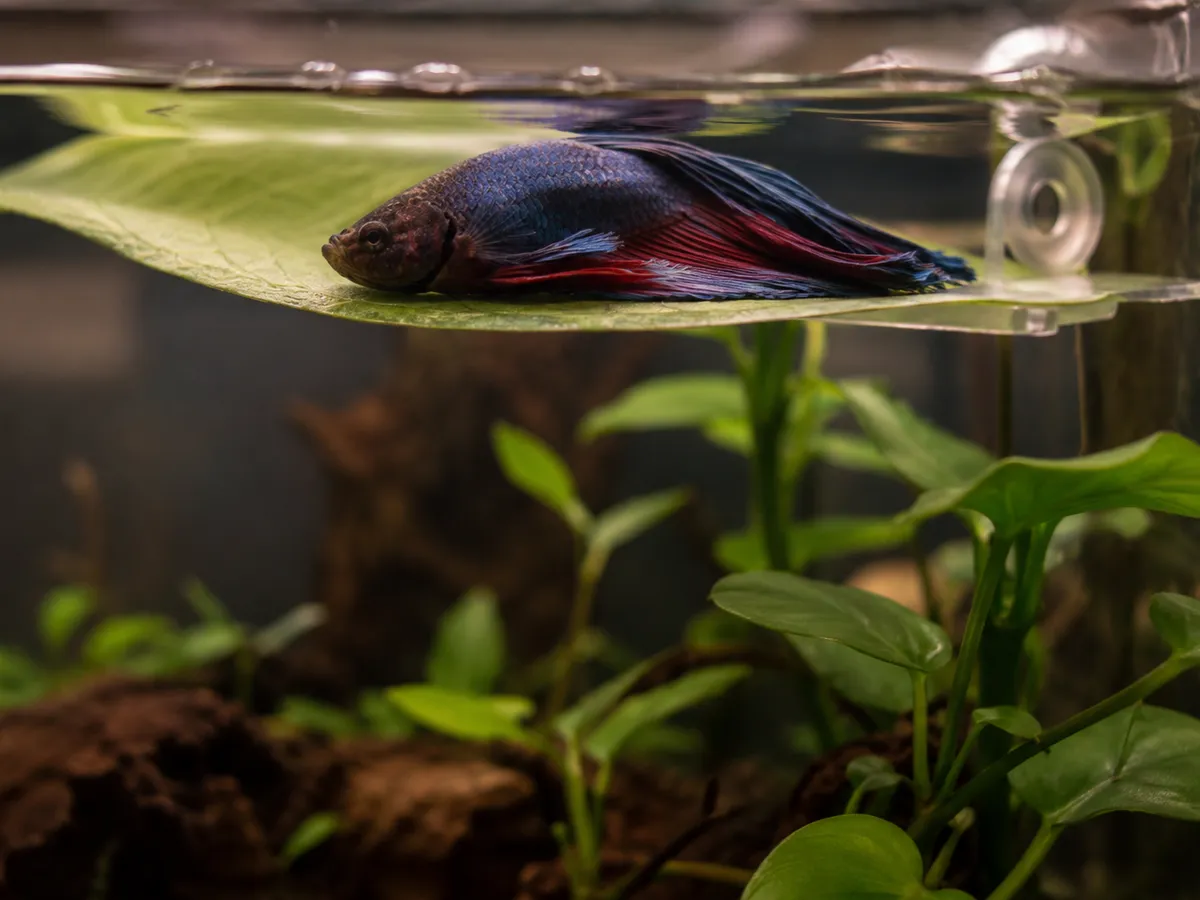
Use a shallow hospital tank if the betta cannot reach the surface easily. Keep water clean, warm, and oxygenated. Reduce water depth enough that the fish can breathe without exhausting itself. Add a soft resting place near the surface, such as a broad leaf or betta hammock.
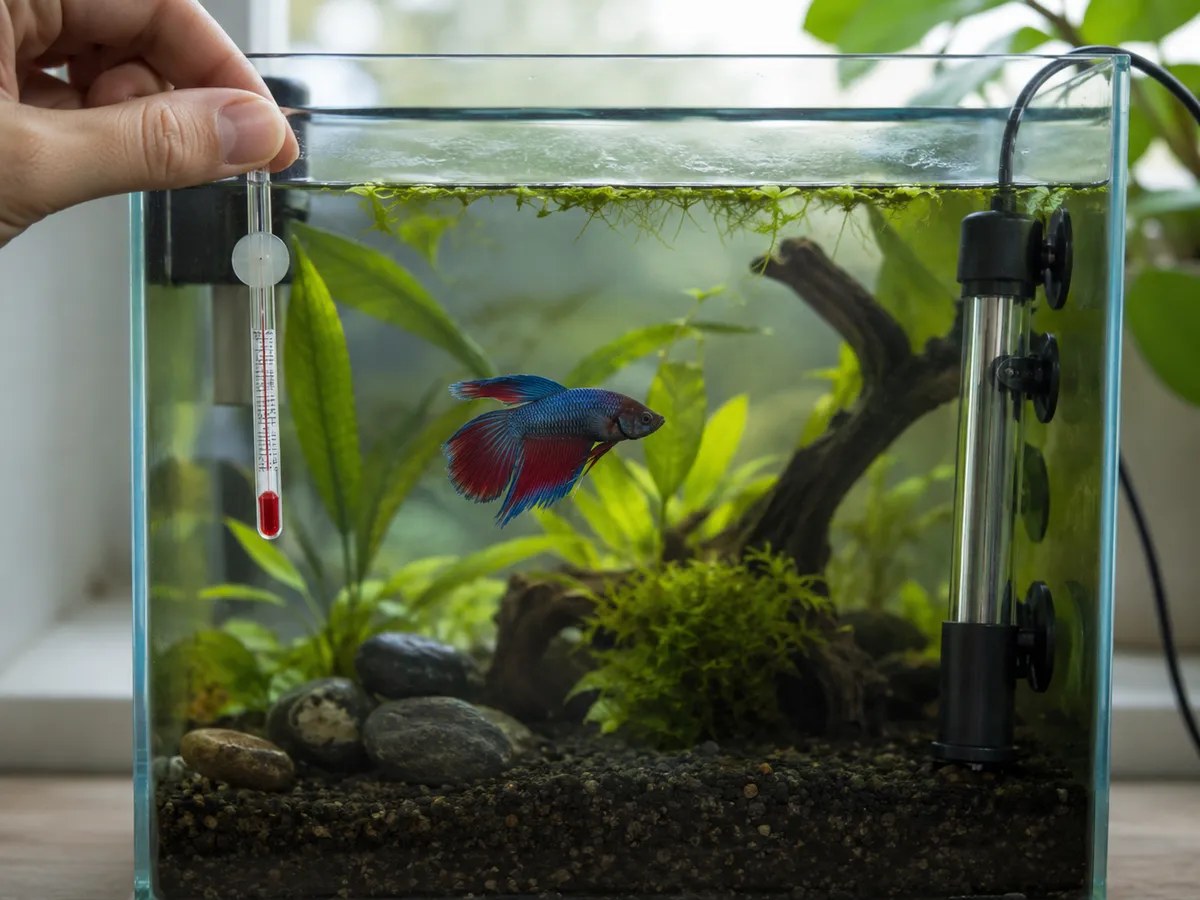
Avoid strong current. A struggling betta should not fight a filter. A gentle sponge filter or air stone with controlled flow is usually safer than a harsh hang-on-back waterfall.
Medication: only when signs point there
If there are signs of infection—redness, sores, severe swelling, fin rot, cloudy eyes, or worsening lethargy—medication may be needed. But do not medicate every buoyancy issue by default. Some medications affect the biofilter or oxygen demand. Treat in a hospital tank when possible, and follow labels carefully.
Practical recovery plan
Test water. Verify stable temperature. Stop feeding for a short period if the fish is bloated but otherwise stable. Resume with tiny portions. Remove leftovers quickly. Keep the tank quiet. Improve aeration if breathing is heavy. Use a hospital tank if the fish cannot reach the surface. Escalate only if severe symptoms appear.
The biggest beginner mistake is treating buoyancy like a single disease. It is a symptom. Find the pressure point: water, temperature, food, infection, or body condition.
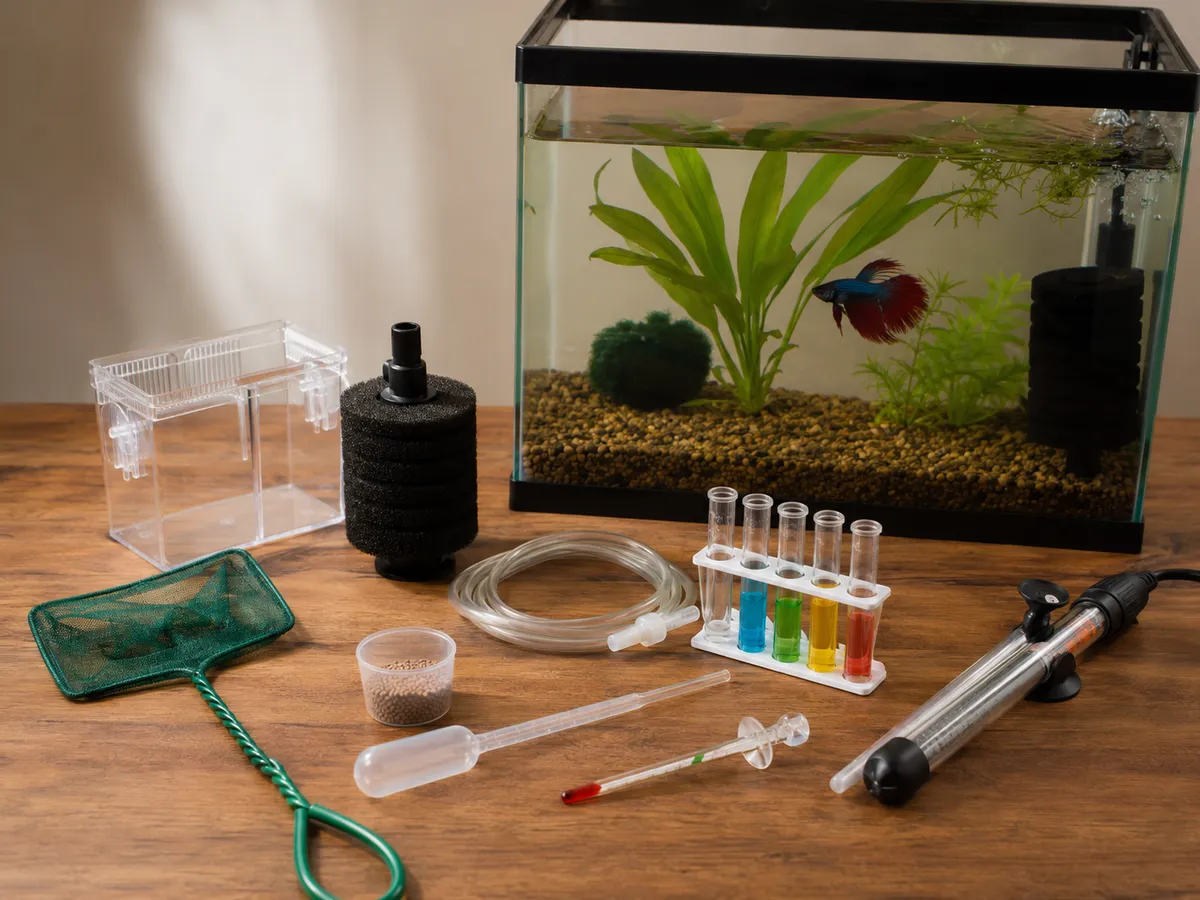
Useful tools for betta buoyancy recovery
Betta Buoyancy Recovery Kit
- Liquid water test kit for ammonia, nitrite, nitrate, and pH
- Accurate thermometer and adjustable heater
- Small shallow hospital tank or recovery container
- Gentle sponge filter or air stone with control valve
- Betta leaf hammock or near-surface resting support
- Tiny measuring spoon or feeding ring for portion control
- Turkey baster or pipette for removing uneaten food quickly
FAQ
Is swim bladder disease always caused by overfeeding?
No. Overfeeding is common, but buoyancy problems can also come from temperature stress, water quality, infection, injury, organ swelling, or body shape.
Should I feed peas to a betta with swim bladder issues?
Peas are not a universal betta cure and are often poor advice. Bettas do better with correct portions, fasting when appropriate, clean warm water, and cause-based care.
How long should I fast a bloated betta?
For mild bloating, 24 hours is a cautious starting point. Longer fasting should not replace water testing or veterinary help if the fish is worsening.
Should I use aquarium salt?
Do not use salt as a generic answer. Salt can stress some setups and does not fix every cause of buoyancy trouble.
When is it an emergency?
Pineconing scales, severe swelling, open sores, gasping, inability to reach the surface, or rapid decline should be treated as urgent.
Can cold water make a betta float or sink badly?
Cold water can slow digestion and overall metabolism, which may worsen buoyancy problems linked to constipation or stress. Check the actual water temperature with a thermometer, not only the heater setting, and warm the tank gradually if it is too cool.
Should I move a buoyancy-troubled betta to shallow water?
A shallow hospital setup can help if the betta is exhausted or struggling to reach the surface. Keep it heated, filtered or gently aerated, and clean. Shallow water is support, not a cure, so still test water and look for the underlying cause.
How do I know if this is constipation or something more serious?
Constipation often comes with recent overfeeding, a round belly, and otherwise normal color and behavior. Redness, pineconing scales, severe lethargy, rapid breathing, open sores, or repeated sinking/floating after water correction may point to a more serious problem.
Can overfeeding cause swim bladder problems?
Overfeeding is a common trigger, especially with dry pellets that expand or when uneaten food pollutes the tank. Use very small portions, remove leftovers within five minutes, and consider water testing whenever appetite or buoyancy changes.
When should I avoid medication?
Avoid random medication when the betta is mainly bloated, constipated, or stressed by water conditions. Medication can add stress and may damage the biofilter. Test water, correct temperature, reduce feeding briefly when appropriate, then escalate only when symptoms point to infection or parasites.
Related Guides
- Best Betta Fish Food
- Best Heater for Betta Tank
- Betta Fish Bloated
- Betta Not Eating
- Ammonia, Nitrite, and Nitrate
Author Box
Written by the Healthy Aquariums editorial team for beginner fishkeepers who want practical, water-first advice. Our guidance prioritizes water testing, stable husbandry, careful observation, and avoiding treatment decisions that can damage the biofilter.
Editorial Note
This guide is educational fishkeeping content, not a veterinary diagnosis. If fish are dying quickly, showing severe lesions, or failing to respond to basic water correction, contact an aquatic veterinarian or experienced local fish professional. Always read medication labels and never mix medications unless the manufacturer or a qualified professional specifically says it is safe.
References
- University of Florida IFAS. “Stress—Its Role in Fish Disease.” https://ask.ifas.ufl.edu/publication/FA005
- Merck Veterinary Manual. “Environmental Diseases of Aquatic Animals in Aquatic Systems.” https://www.merckvetmanual.com/exotic-and-laboratory-animals/aquatic-systems/environmental-diseases-of-aquatic-animals-in-aquatic-systems